
Why Retargeting Should Be the Most Important August Campaign Move
August is when too many travel brands let valuable audience signals go cold.
All summer, travelers have been watching videos, opening emails, clicking offers, reading itineraries, comparing rates, browsing attractions, exploring destination guides, and abandoning booking paths.
That activity is not just campaign performance data. It is future demand. The problem is that many marketers treat those behaviors as reporting metrics instead of retargeting opportunities.
That is a mistake.
Retargeting should be one of the most important August campaign moves because the audience has already shown interest. The question is whether the next message is strong enough to move them closer to action.
Summer Engagement Is Not Over When Summer Ends
A traveler who clicked a July campaign may still be valuable in August. They may have delayed the trip because of price, timing, family schedules, weather, or uncertainty. They may still be open to a late-summer getaway, fall weekend, sports trip, or shoulder-season visit.
The fact that they did not convert immediately does not mean the audience failed. It may mean the message, timing, or offer needs to change.
That is why retargeting should not simply repeat the same ad.
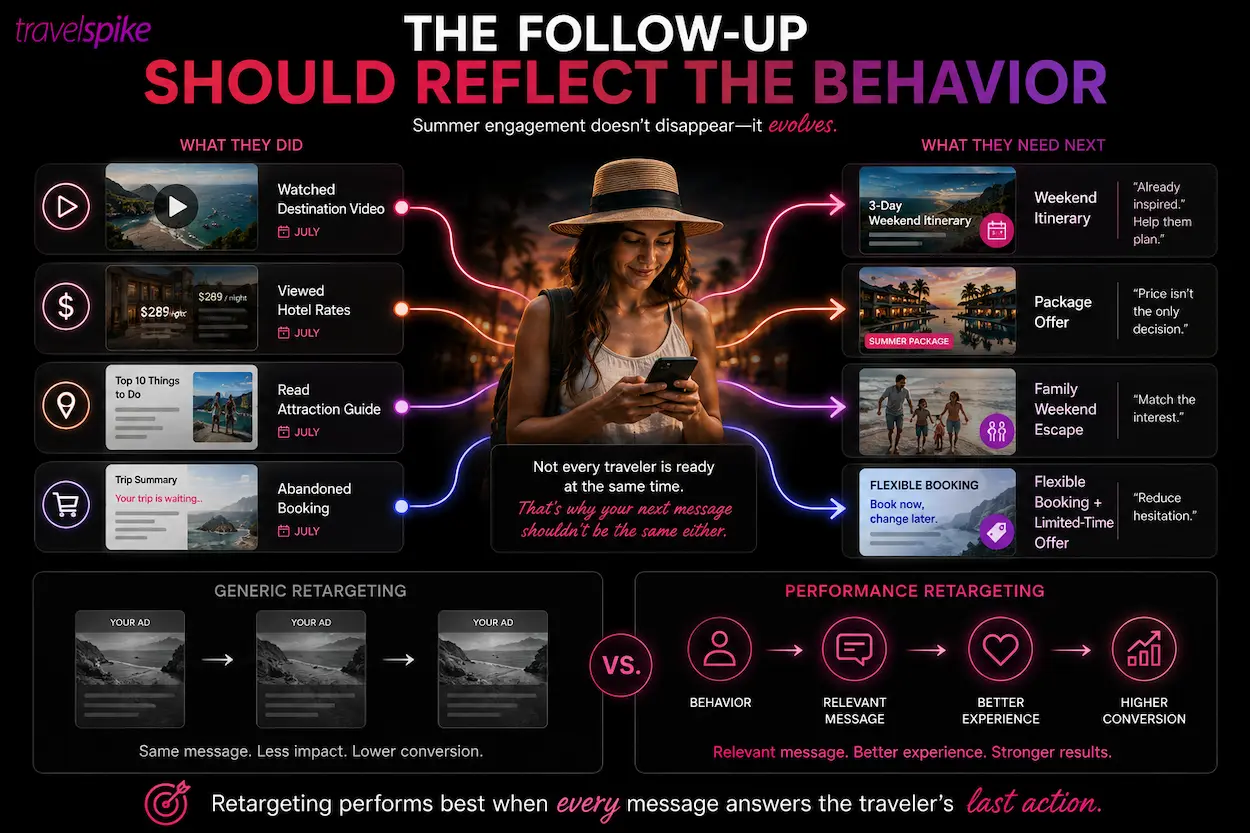
A traveler who already watched a video does not need the same inspiration again. They may need an itinerary. A traveler who viewed rates may need a package. A traveler who clicked an attraction guide may need a family weekend offer. A traveler who abandoned a booking path may need reassurance, flexibility, or urgency.
The follow-up should reflect the behavior.
The Friction Is Real
Travel marketers should assume a certain amount of drop-off.
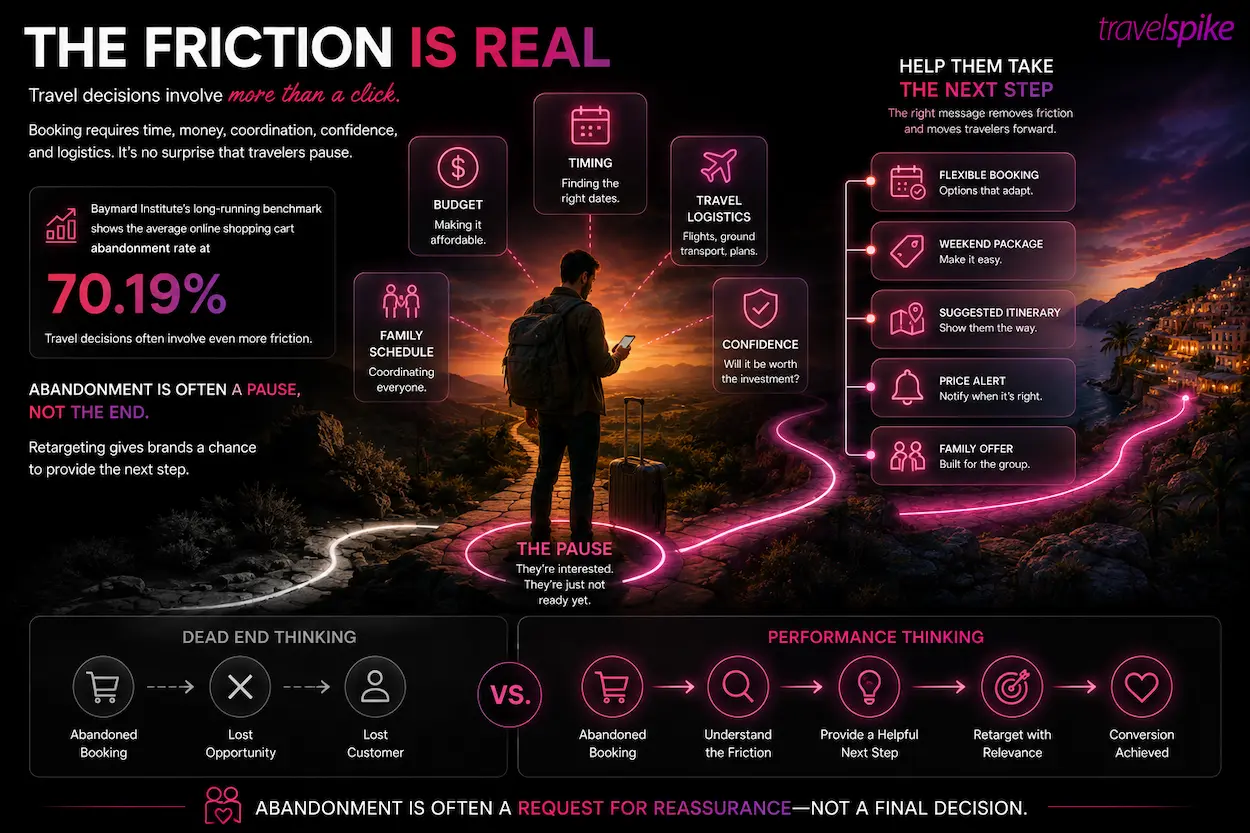
Booking requires time, money, coordination, confidence, and logistics. That makes travel decisions more complex than many ecommerce purchases.
Even outside travel, Baymard Institute’s long-running benchmark puts the average online shopping cart abandonment rate at 70.19%. Travel decisions often involve even more friction because they’re tied to dates, transportation, lodging, activities, and group coordination, making a seamless path to conversion even more important.
That means abandonment is not always a dead end. It is often a signal that the traveler needs a better next step.
Retargeting gives brands a chance to provide that step.
Segment by Intent Depth
Not every retargeting audience should be treated equally.
A site visitor is not the same as a booking abandoner. A video viewer is not the same as someone who downloaded an itinerary. An email opener is not the same as someone who clicked a hotel package.
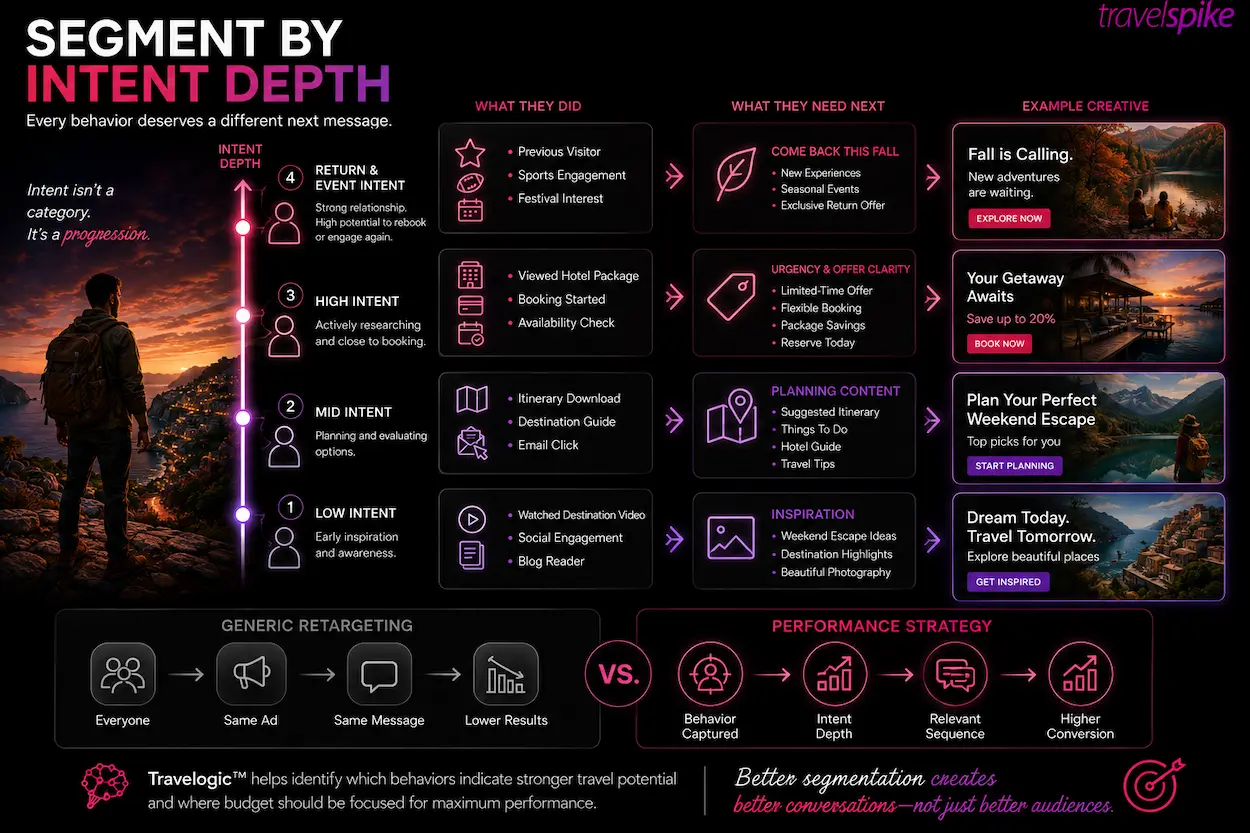
August campaigns should segment audiences by intent depth.
- Low-intent audiences may need inspiration.
- Mid-intent audiences may need planning content.
- High-intent audiences may need urgency or offer clarity.
- Past visitors may need a reason to return.
- Event-engaged audiences may need a fall sports or festival angle.
This is where Travelogic™ can support smarter performance strategy by helping identify which behaviors indicate stronger travel potential and where budget should be focused.
Retargeting should not be a blunt reminder. It should be a sequence.
Use Creative Progression
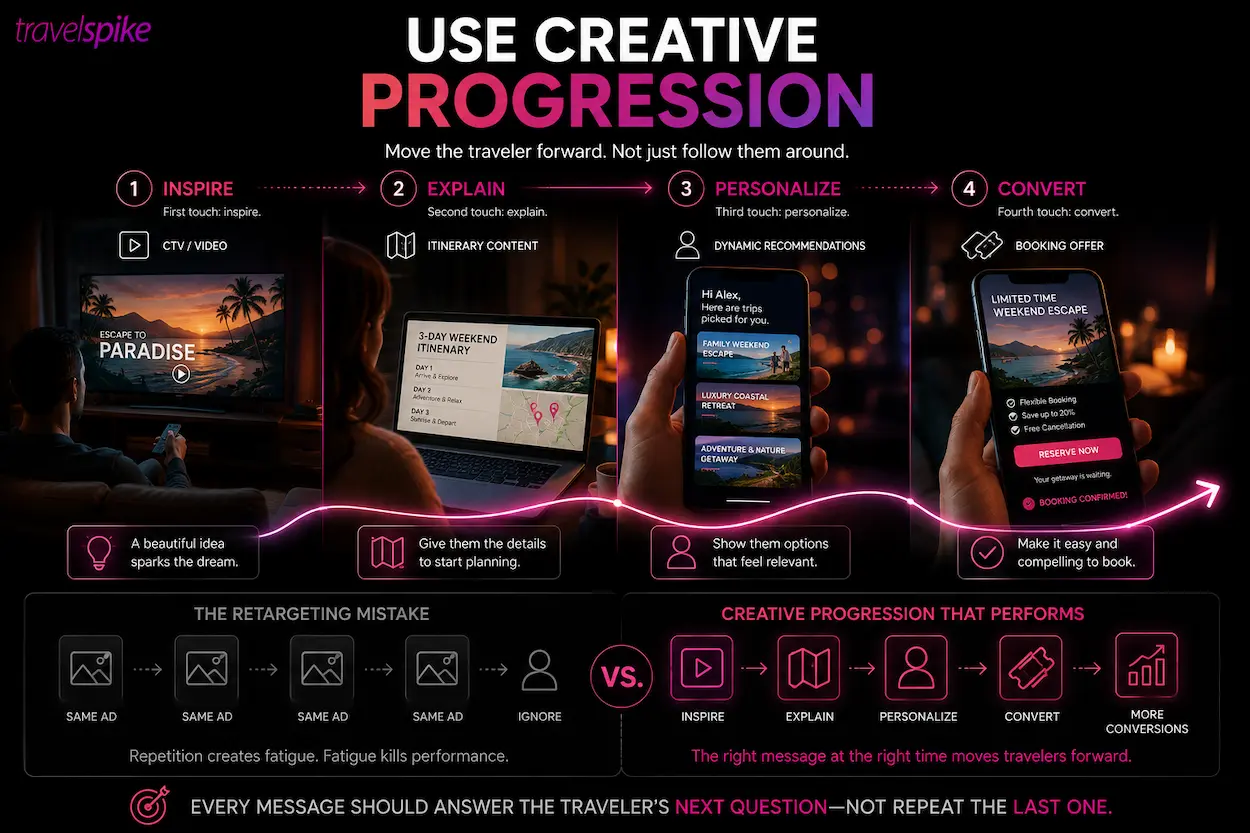
The most common retargeting mistake is showing the same creative again and again. That creates fatigue. Better retargeting uses creative progression.
- First touch: inspire.
- Second touch: explain.
- Third touch: personalize.
- Fourth touch: convert.
A destination might start with a CTV or video message, then retarget with a seasonal itinerary, then a hotel or attraction package, then a booking-focused offer. A hotel might start with lifestyle creative, then promote location, then value, then availability. An attraction might start with experience, then show proof, then promote tickets.
The goal is to move the traveler forward, not just follow them around.
Connect Retargeting to Fall Demand
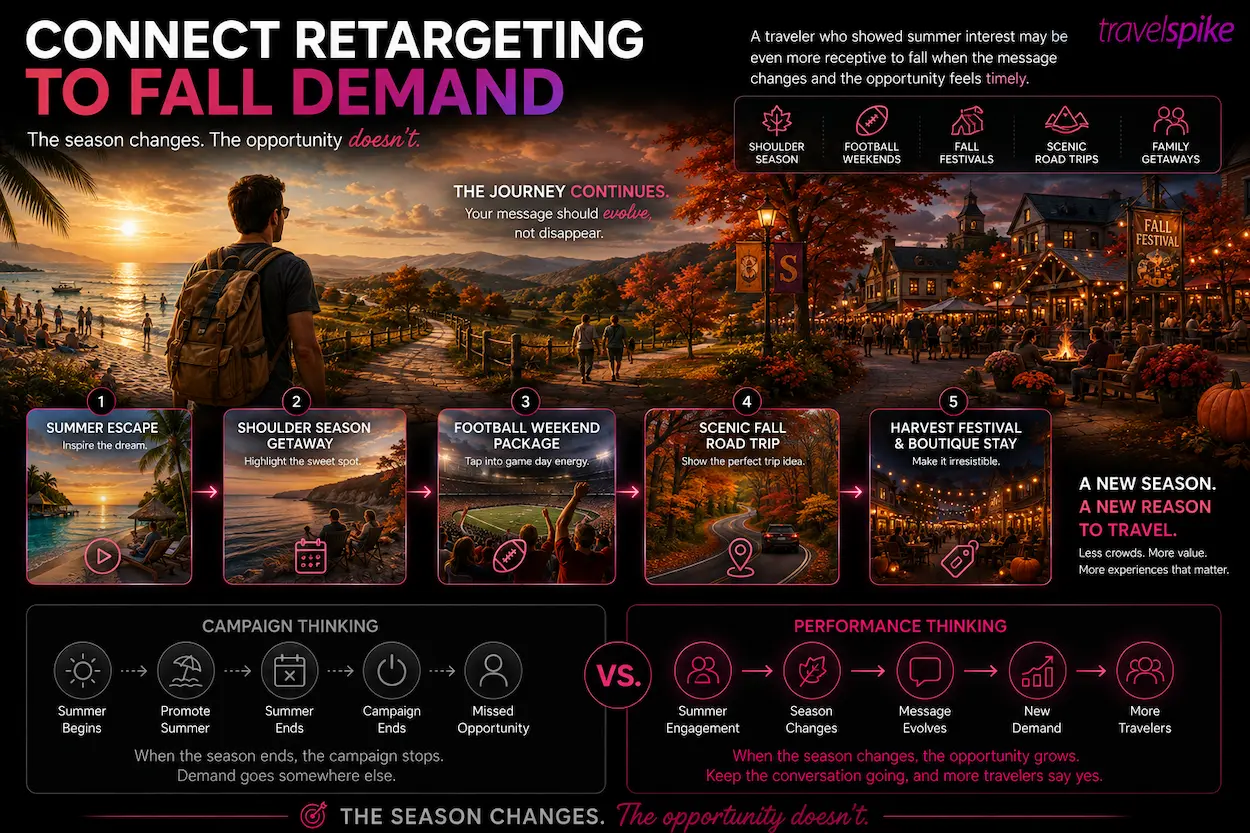
August retargeting should not focus only on last-minute summer conversion. It should also build fall demand.
This is especially relevant for shoulder season, NFL and college football weekends, fall festivals, road trips, outdoor travel, heritage tourism, and family getaways before the school year fully takes over.
A traveler who showed summer interest may be more receptive to fall if the message changes. Instead of saying “book summer,” say “come when crowds thin out.” Instead of pushing a peak-season rate, promote a fall weekend. Instead of generic destination creative, show a specific trip idea.
The shift from summer to fall is not a campaign ending. It is a messaging opportunity.
Retarget Across Channels
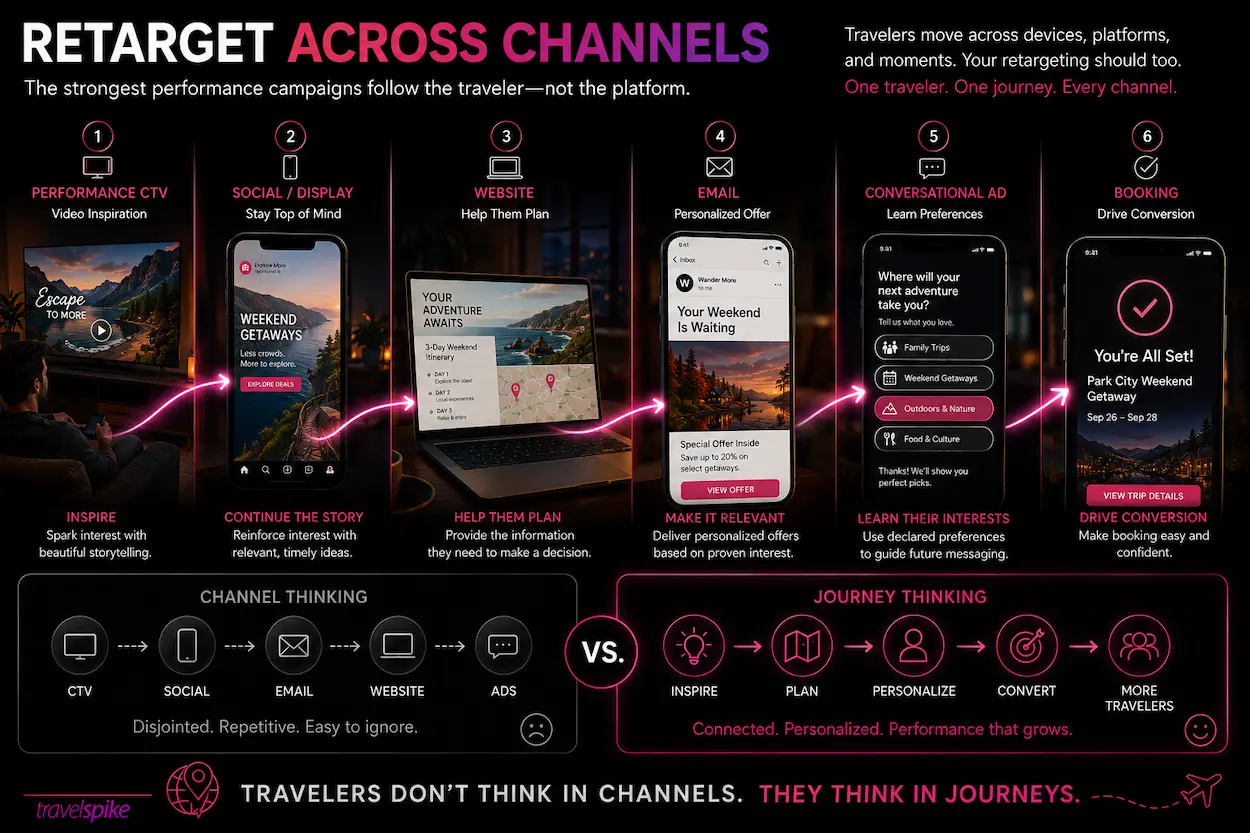
Retargeting should not live in one channel.
Video viewers can be retargeted with display or email. Site visitors can be retargeted with social or CTV. Email clickers can be moved into custom audiences. Itinerary readers can be served offer-based creative. Conversational ad respondents can receive messages based on declared interests.
That cross-channel sequencing matters because travelers do not make decisions in one place.
They move across devices, platforms, and moments.
Performance improves when retargeting follows the decision journey instead of relying on one repeated ad format.
The Takeaway
August is the month to stop wasting warm audiences.
Summer engagement has already created signals. Retargeting turns those signals into action.
The travel brands that perform best will not simply chase new impressions. They will make better use of the audiences they already paid to reach.
That means segmenting by behavior, changing the message, reducing friction, and connecting summer interest to fall opportunity.
Retargeting is not cleanup.
In August, it may be the smartest performance move a travel brand can make.