What Labor Day Travel Signals Reveal About September Performance
Labor Day is approaching, and the traveler behavior it reveals should not disappear into a recap deck.
For travel marketers, Labor Day is useful because it compresses many of the pressures shaping the rest of the fall: higher costs, shorter decision windows, heavier road traffic, last-minute planning, family schedules, and a quick shift from summer trips into shoulder-season consideration.
That makes Labor Day less of an isolated holiday and more of a performance signal.
The brands that use it well will not simply ask, “How did the campaign perform?” They will ask better questions: which audiences showed the strongest intent, which feeder markets moved, which messages created action, which travelers browsed but did not book, and which signals should be carried into September?
AAA’s 2026 Labor Day travel analysis showed that domestic airfare was up 2% year over year, averaging $750 per roundtrip ticket, while flights to top domestic destinations were 20% higher and averaged nearly $800. Domestic hotel bookings were also 9% more expensive than the prior Labor Day weekend. AAA also noted that Labor Day road travel tends to be concentrated in a shorter window, creating heavier overlap between holiday travelers and normal commuter traffic.
That is the environment travel brands are operating in now.
Demand exists, but the traveler is more selective.
Labor Day Shows Who Is Still Willing to Move
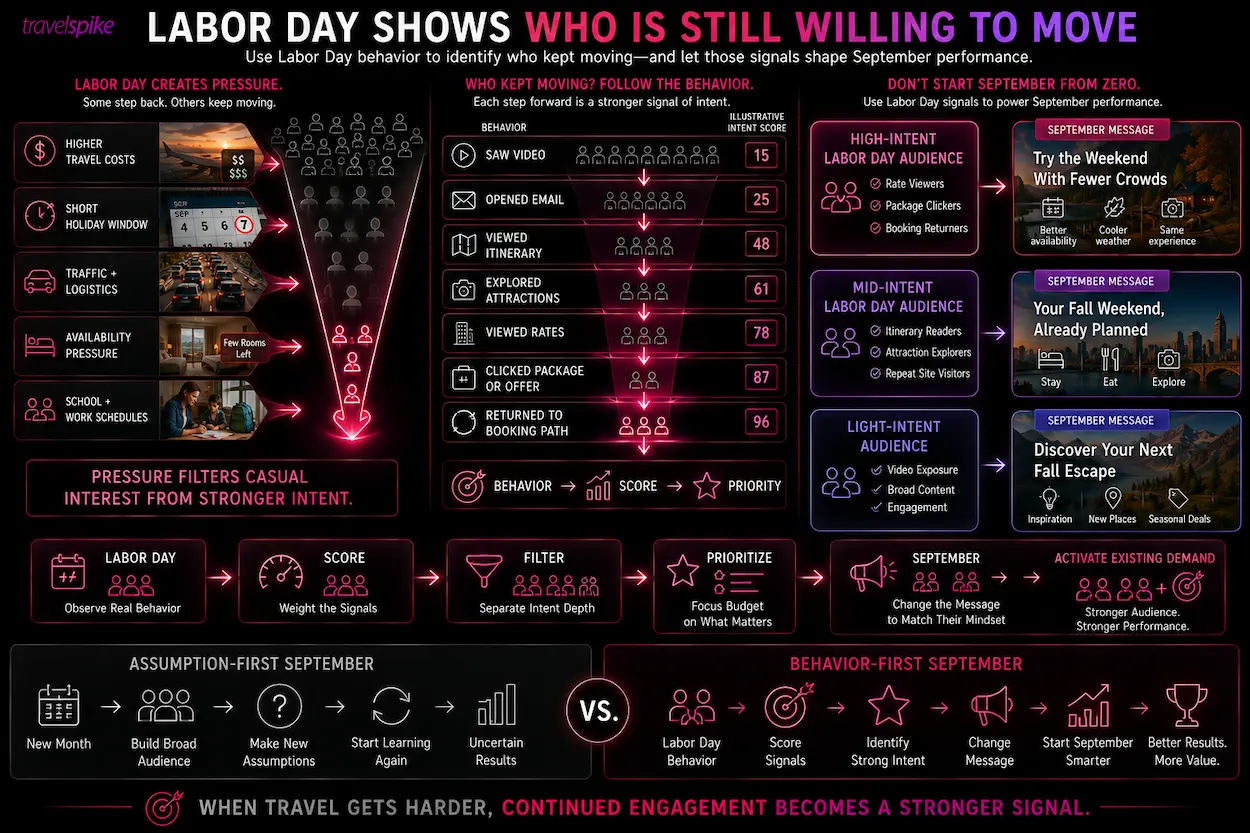
The most valuable Labor Day insight is not only how many people traveled. But also who still moved despite price pressure.
When costs rise and travel windows tighten, engagement becomes more meaningful. A traveler who still clicked a hotel package, viewed rates, downloaded an itinerary, opened destination emails, explored attraction content, or returned to a booking path is giving the brand a stronger signal than a casual summer browser.
Those behaviors should be scored.
High-intent Labor Day audiences should not be treated the same as general awareness audiences. Someone who clicked a specific offer should be weighted differently than someone who only saw a video. Someone who looked at availability should be prioritized differently than someone who read a broad travel article.
This is where September performance planning should begin: not with new assumptions, but with real behavior from the holiday window.
Filter the Audience for Fall
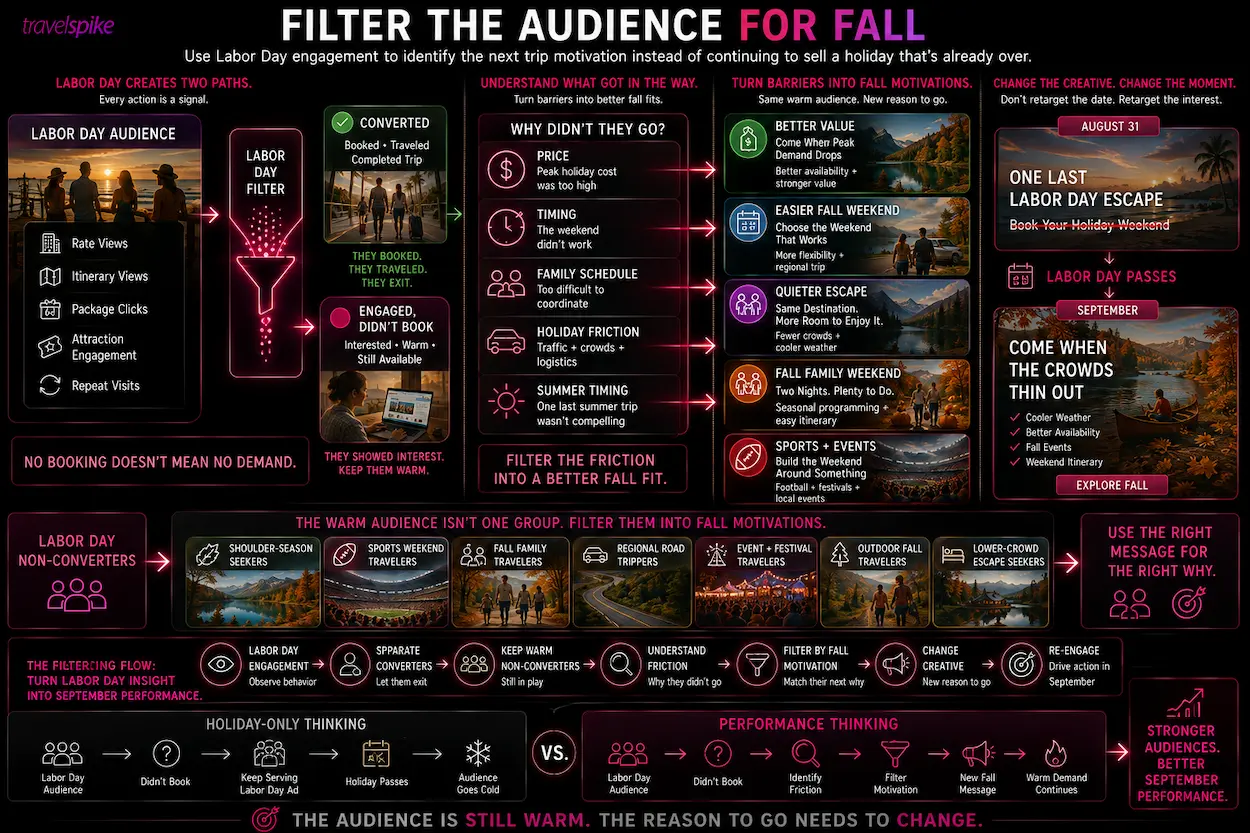
Labor Day also gives marketers a natural filtering moment. Some travelers were true holiday buyers. They acted, traveled, and exited the campaign cycle.
Others were interested but did not convert. That second group may be even more valuable for September.
Why did they not book? Maybe the price was too high. Maybe the timing was wrong. Maybe family schedules got in the way. Maybe they were not ready for one last summer trip but are open to a fall weekend, football getaway, shoulder-season stay, or lower-crowd experience.
The next message should reflect that.
Do not keep serving “Labor Day getaway” creative after the holiday has passed. Filter those audiences into new fall motivations: fewer crowds, better timing, cooler weather, sports weekends, family-friendly fall programming, local events, or regional road trips.
The audience is still warm. The reason to go needs to change.
Measure Action, Not Just Traffic
Labor Day campaigns can generate plenty of activity. But activity is not the same as performance.
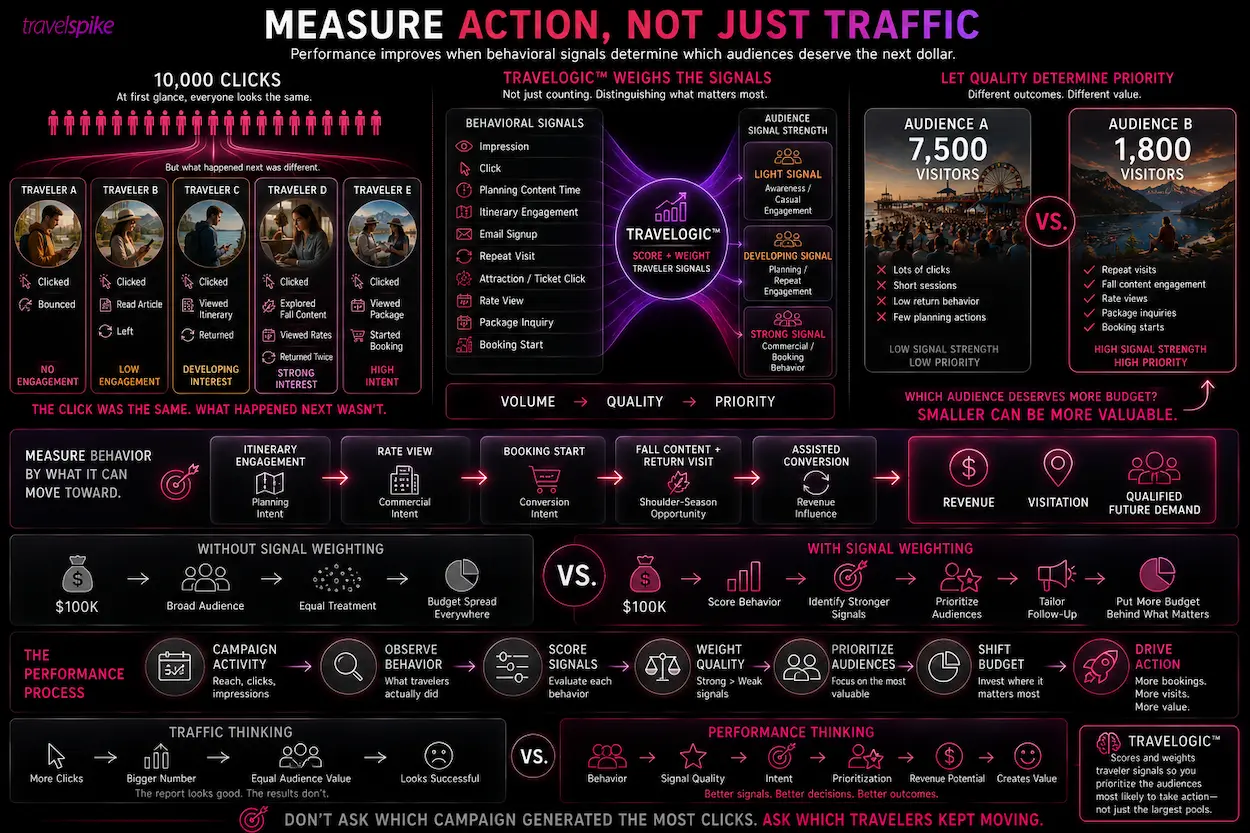
Travel brands should look beyond impressions, clicks, and open rates. The better action signals include rate views, booking starts, itinerary engagement, attraction ticket clicks, package inquiries, email signups, repeat visits, time on planning content, and assisted conversions.
The goal is to understand which behaviors suggest future revenue or visitation.
A cheap click that does nothing is not a win. A smaller audience that returns twice, engages with fall content, and enters a booking path is worth more.
Travelogic™ can help make this shift by scoring and weighting traveler signals so marketers can prioritize the audiences most likely to take action instead of spreading budget evenly across broad pools.
September Is the Follow-Up Window
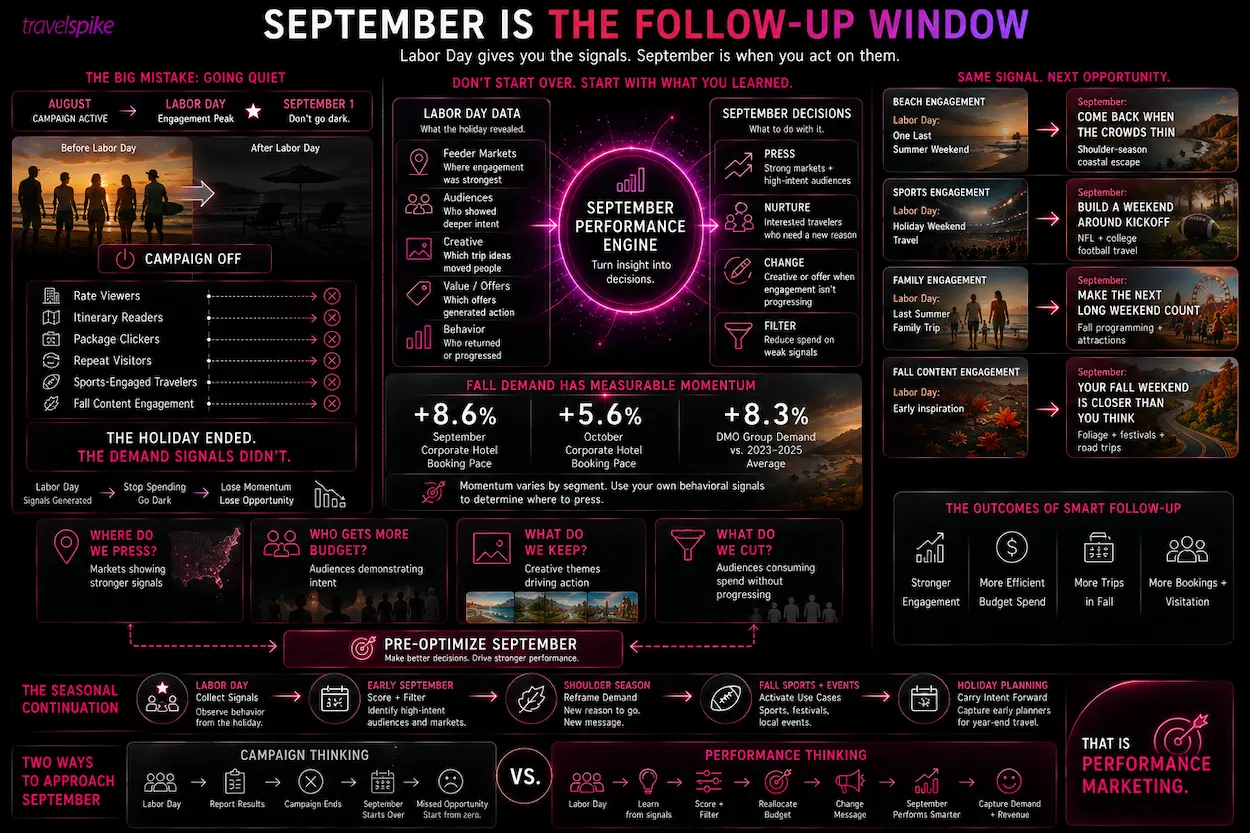
The biggest mistake after Labor Day is going quiet.
Labor Day is the end of summer psychologically, but it is the beginning of a new performance window for travel brands. September gives marketers a chance to reframe the same audience around fall, shoulder season, sports travel, events, and holiday planning.
U.S. Travel’s July 2026 insights dashboard showed corporate hotel booking pace running 8.6% ahead for September and 5.6% ahead for October, while DMO group demand was 8.3% above the 2023–2025 average. That does not mean every segment is strong, but it does show that fall demand has measurable momentum in key categories.
Travel brands should use Labor Day data to decide where to press.
Which markets deserve more budget? Which audiences deserve a stronger offer? Which creative themes should become fall campaigns? Which travelers should be removed from spend because they are not showing enough intent?
That is performance marketing.
The Takeaway
Labor Day should not be treated as a campaign ending. It should be treated as a signal engine.
The brands that perform in September will be the ones that score Labor Day behavior, filter audiences by intent, weight the strongest signals, and move quickly into the next reason to travel.
Summer attention is not over. It just needs to be converted into fall action.