
Travelogic™ and the New Language of Travel Performance
Travel marketing needs a better vocabulary.
For too long, the industry has leaned on broad words like targeting, reach, awareness, and impressions. Those words are not useless, but they do not fully describe what performance marketers actually need to do now.
Modern travel performance requires sharper language.
- Score the signal.
- Filter the audience.
- Weight the behavior.
- Pre-optimize the campaign.
- Prioritize the market.
- Qualify the intent.
- Measure the action.
That is the language of performance, and it matters because travel decisions are getting harder to read.
The traveler journey now runs through AI search, social video, CTV, email, travel content, creator recommendations, event calendars, review sites, and booking engines. By the time a traveler shows obvious purchase intent, they may have already been influenced by several invisible touchpoints.
Travel brands need systems that interpret behavior before the last click.
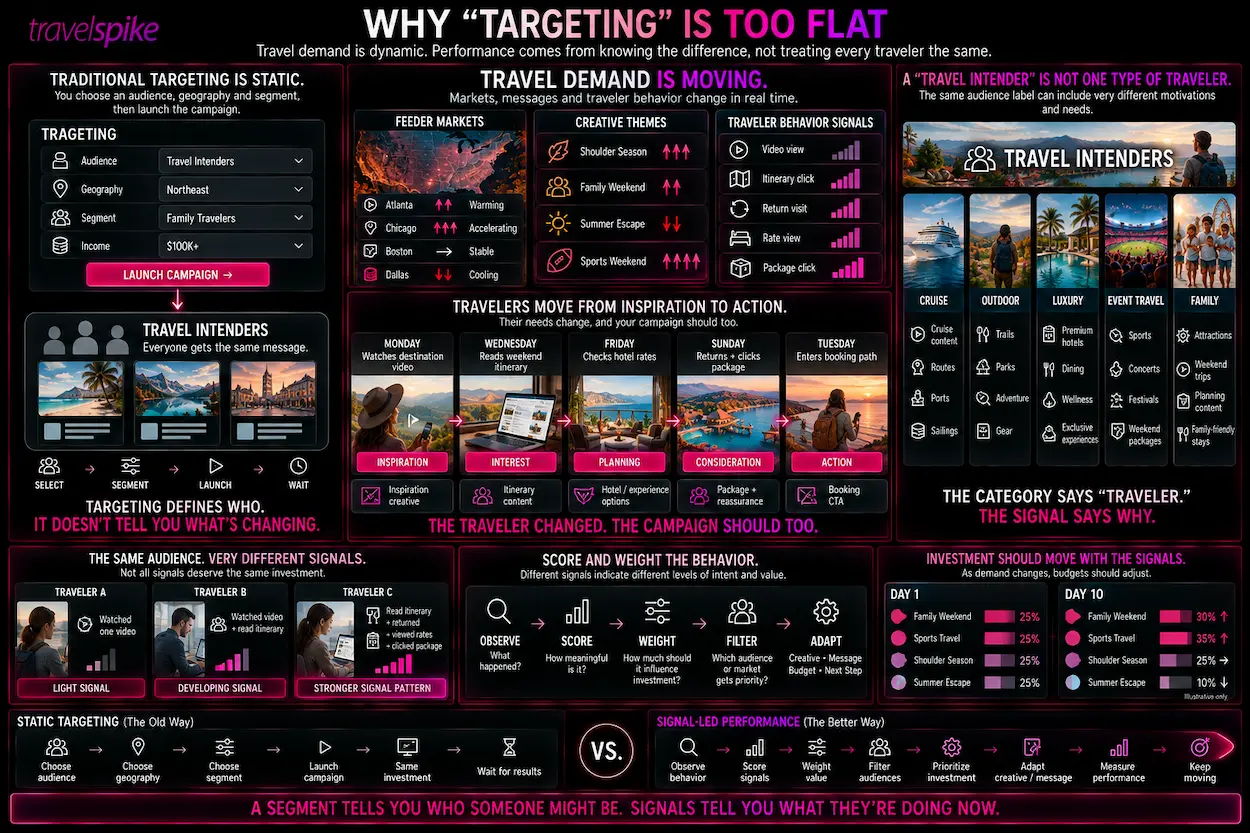
Why “Targeting” Is Too Flat
Traditional targeting often implies a static decision.
Choose an audience. Choose a geography. Choose a segment. Launch the campaign.
But travel demand is not static.
A feeder market can warm up quickly. A creative theme can start producing stronger engagement. A shoulder-season message can outperform a summer message. A family segment may need planning content while a sports segment needs weekend packages. A traveler may move from inspiration to action over multiple touchpoints.
That is why scoring and weighting matter, not all signals deserve the same investment.
A traveler who watches a video once is not the same as a traveler who clicks an itinerary, returns to the site, and views rates. A broad “travel intender” is not the same as someone engaging with cruise content, outdoor trips, luxury stays, or event travel.
Performance comes from knowing the difference.
Travelogic™ Helps Make Signals Actionable
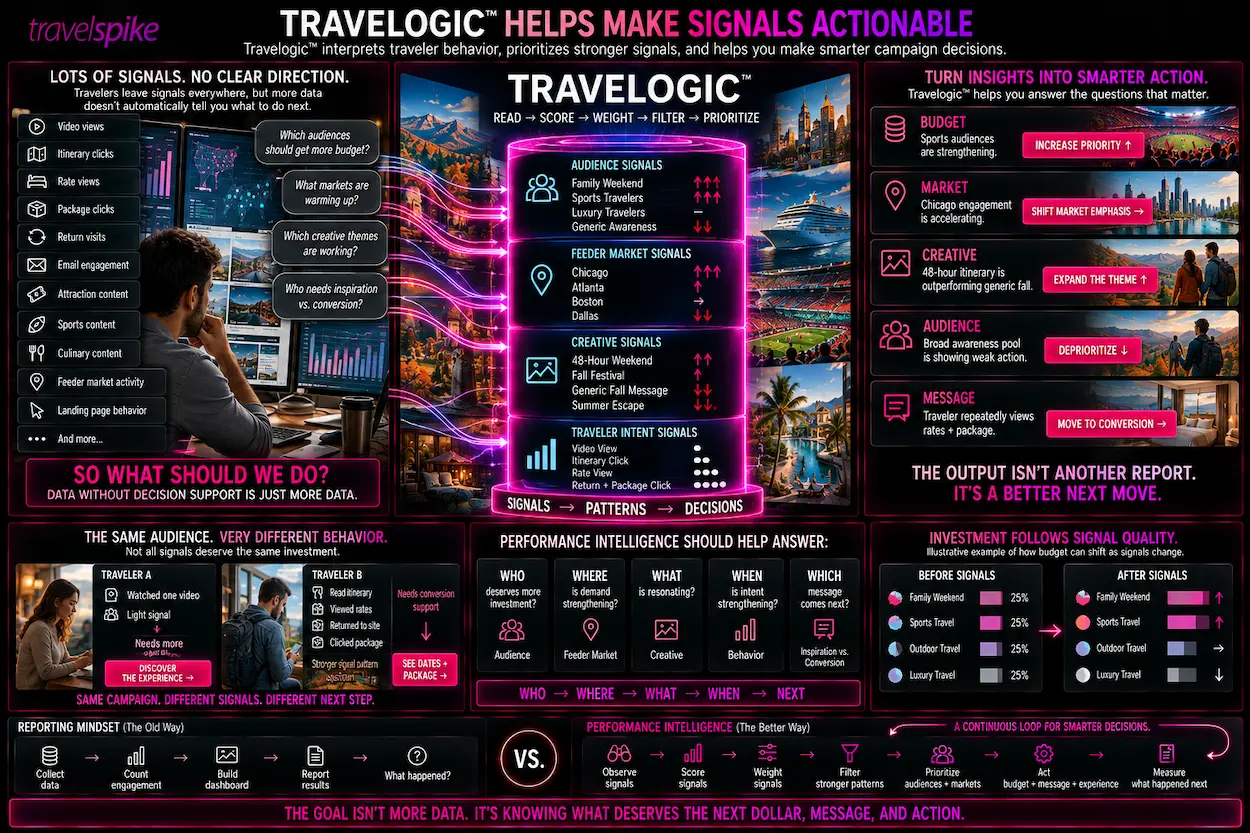
Travelogic™ should be understood as part of a larger performance discipline: reading traveler behavior and using those signals to make smarter decisions.
The goal is not more data for the sake of more data, the goal is better action.
Which audiences should receive more budget? Which should be deprioritized? Which feeder markets are showing stronger movement? Which creative themes are producing qualified engagement? Which travelers need inspiration and which need conversion messaging?
That is the role of performance intelligence.
It helps brands stop treating all engagement equally.
The Market Is Moving Unevenly
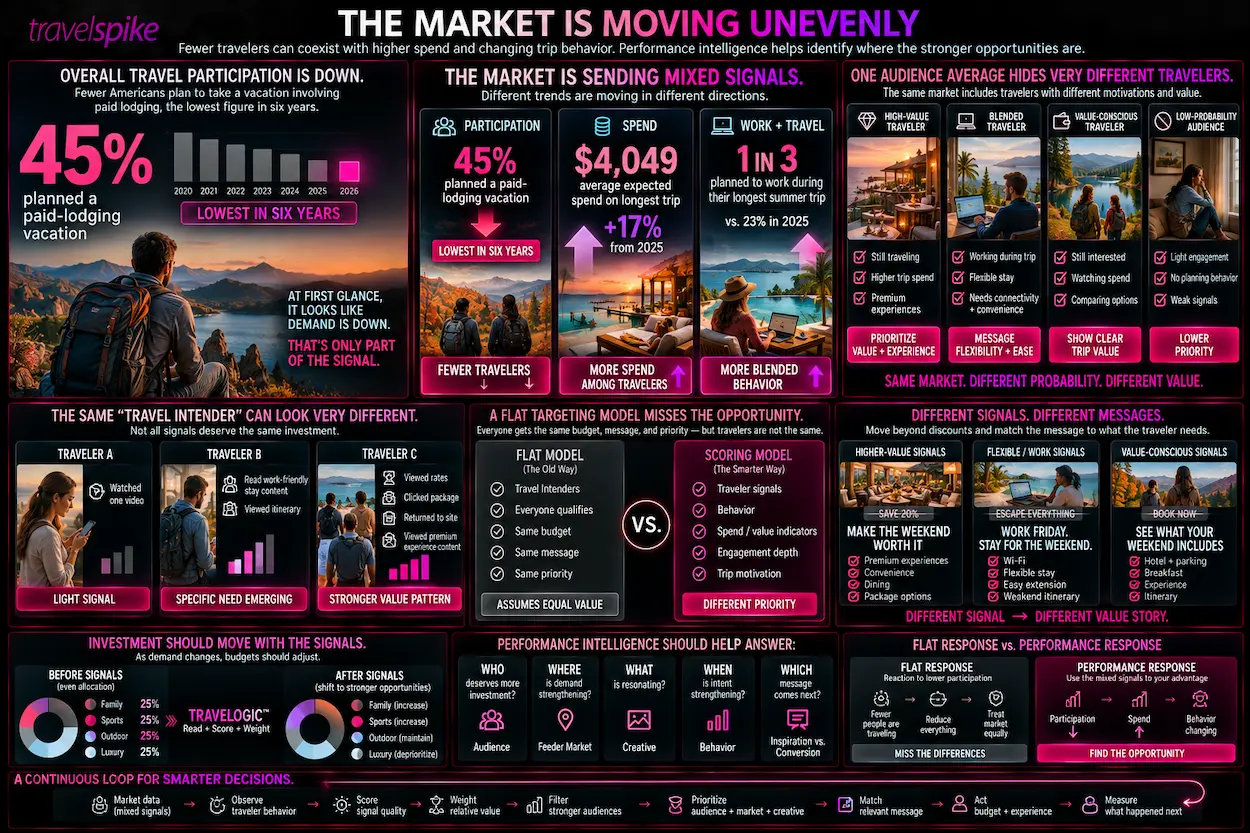
This is especially important because travel demand is not behaving evenly across traveler segments.
Deloitte’s 2026 travel survey found that 45% of Americans planned to take a vacation involving paid lodging, the lowest figure in six years, while those who did travel expected to spend an average of $4,049 on their longest trip, up 17% from 2025. Deloitte also noted that one-third of travelers planned to work during their longest summer trip, up from 23% in 2025.
That is a mixed signal. Fewer people may be traveling, but many who do travel are spending more and blending trips with work, flexibility, and personal value.
A flat targeting model misses that.
A scoring model can separate high-value travelers from low-probability audiences and help marketers adjust messaging accordingly.
Performance Means Moving Budget With Behavior
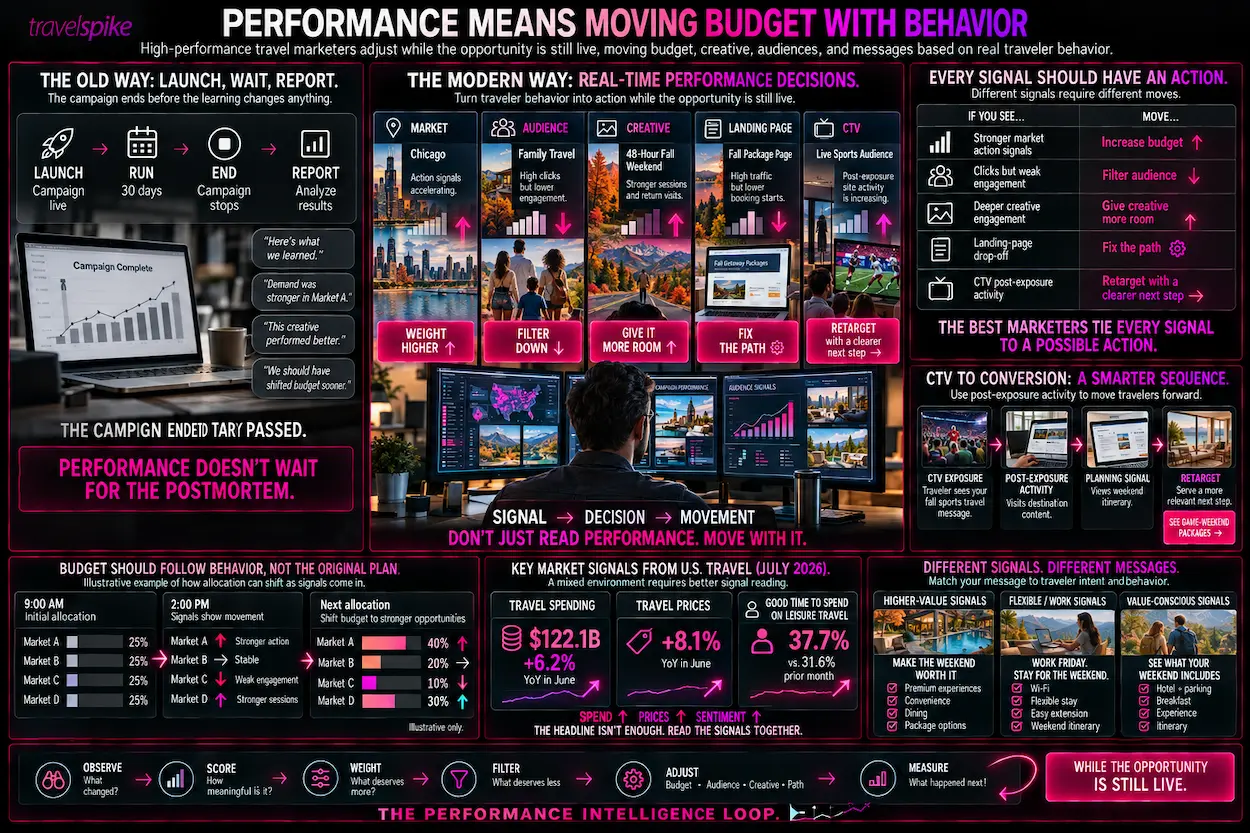
High-performance travel marketers do not wait until a campaign is finished to learn.
They adjust while the opportunity is still live.
If one market produces stronger action signals, weight it higher. If one audience clicks but does not engage, filter it down. If a creative theme creates deeper sessions, give it more room. If a landing page fails to convert, fix the path. If a CTV audience shows post-exposure activity, retarget with a clearer next step.
Performance is not only about reporting, it is about movement.
U.S. Travel’s July 2026 dashboard update showed travel spending rose 6.2% year over year in June to $122.1 billion, while travel prices rose 8.1%, suggesting higher prices were an important factor in nominal spending growth. Traveler sentiment also improved, with 37.7% saying it was a good time to spend on leisure travel, up from 31.6% the prior month.
That kind of mixed environment requires better signal reading.
The Takeaway
The future of travel performance is not just better targeting. It is better scoring, filtering, weighting, and pre-optimization.
Travelogic™ gives travel brands a way to interpret behavior earlier and act with more precision. That matters in a market where discovery is fragmented, costs are pressured, and traveler intent is harder to see.
The brands that perform will not treat every audience equally. They will prioritize the signals that point toward action.