
Shoulder Season Starts Before Summer Ends
Shoulder season does not begin when summer is over. For smart travel marketers, it starts in August.
That is when summer behavior is still active, but fall intent is beginning to form. Travelers are finishing vacations, comparing costs, thinking about school schedules, watching fall sports calendars, browsing festivals, and looking for trips that feel easier, cheaper, or less crowded than peak summer.
This is one of the most valuable performance windows of the year.
U.S. Travel forecasts domestic leisure travel spending will reach $909 billion in 2026, but also notes that travelers are expected to shift toward shorter-duration and lower-cost trips, including regional and drive-market travel, in response to higher costs. That is exactly the kind of behavior shoulder season can capture.
The question is whether travel brands will wait too long to act.
August Behavior Is a Signal
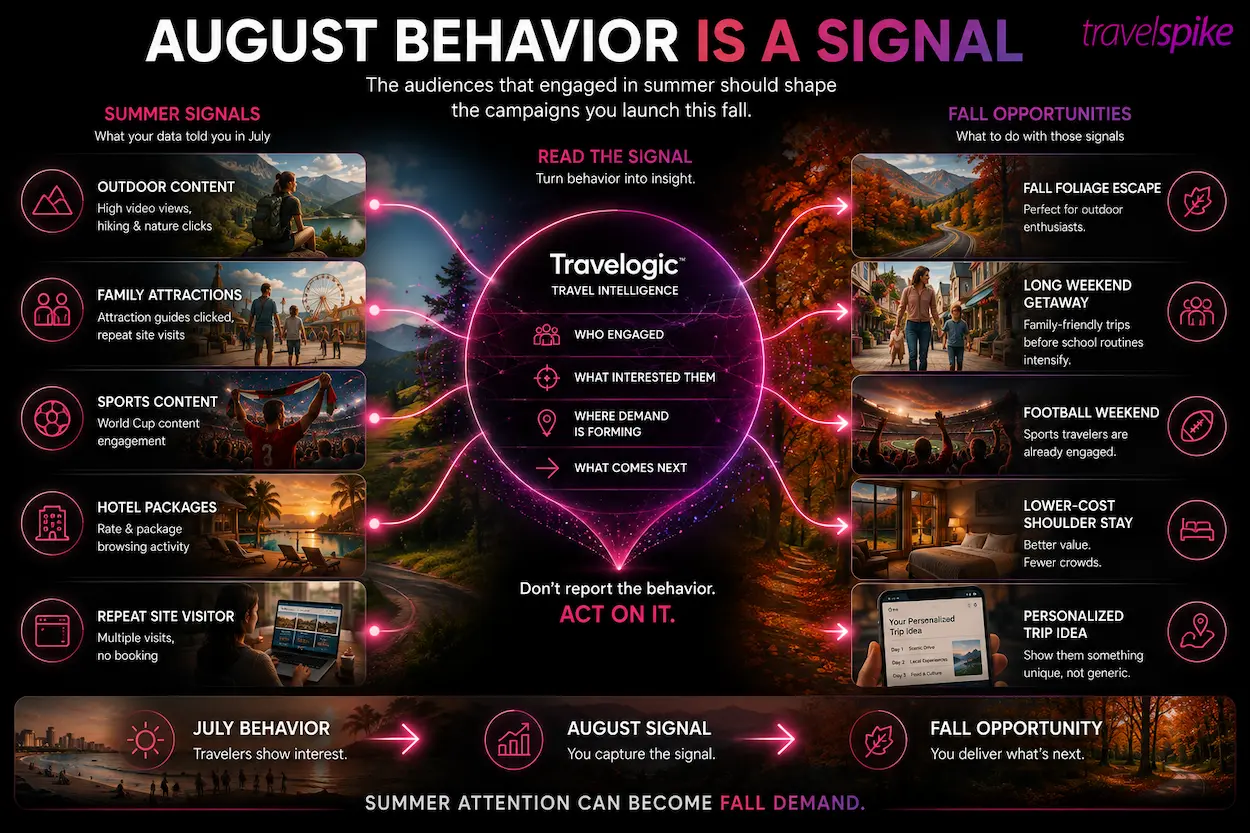
By August, marketers should know which summer audiences are responding.
Which feeder markets clicked? Which creative themes worked? Which audiences watched video? Which travelers engaged with family content, outdoor content, event content, or hotel packages? Which site visitors came back more than once but did not book?
Those signals should not sit in a summer recap. They should become the foundation for shoulder-season campaigns.
A traveler who engaged with outdoor content in July may be a strong fall foliage prospect. A family who clicked attraction content may be open to a long weekend before school routines settle. A sports traveler who engaged with World Cup content may respond to football weekend messaging. A budget-conscious traveler who browsed but did not book may be waiting for a lower-crowd, lower-cost moment.
Summer attention can become fall demand if marketers move quickly.
Shoulder Season Needs Its Own Value Proposition
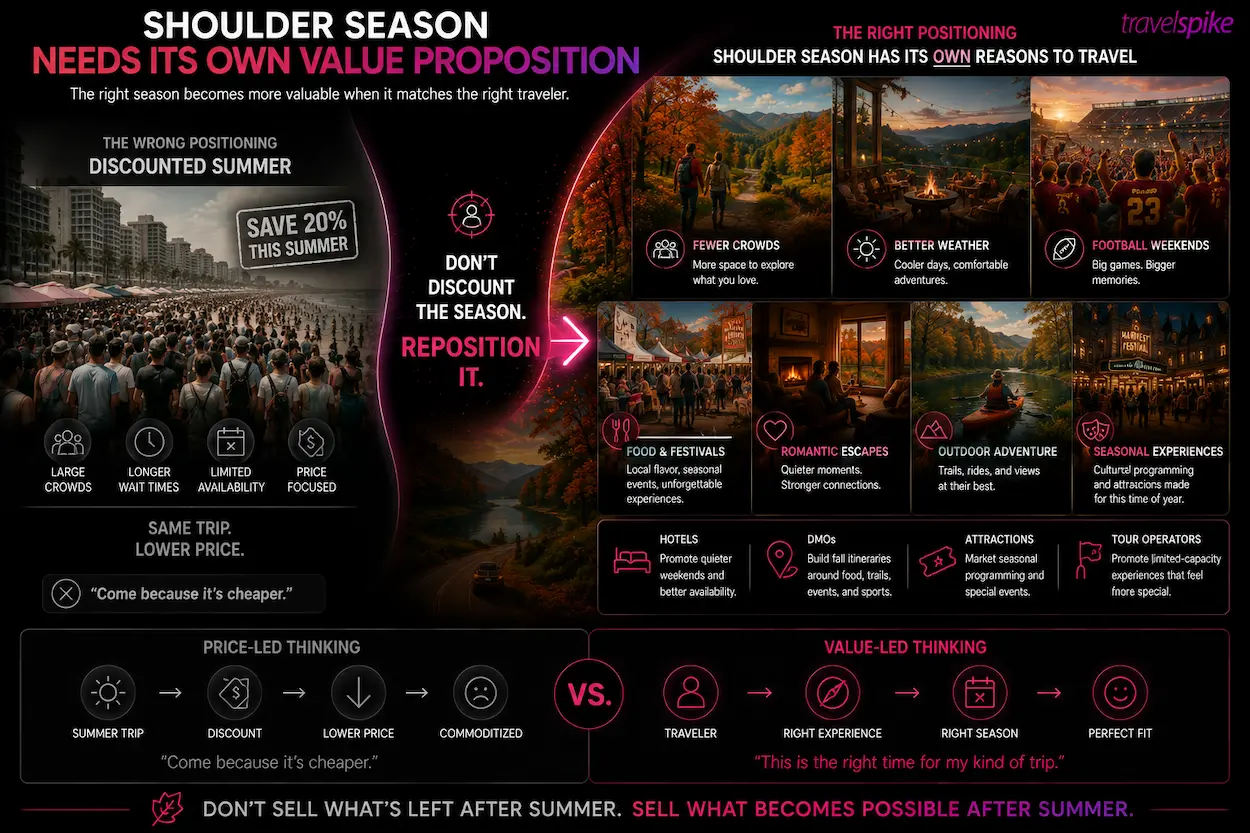
Many brands make the mistake of treating shoulder season as “discounted summer.” That is not enough.
Shoulder season has its own reasons to travel: cooler weather, fewer crowds, festivals, fall colors, football weekends, culinary events, cultural programming, romantic getaways, and easier short trips.
The strategy should be to position shoulder season as a better fit for certain travelers, not merely a cheaper alternative.
A hotel can promote quieter weekends and better availability. A DMO can build fall itineraries around food, trails, events, or sports. An attraction can market seasonal programming. A tour operator can promote limited-capacity experiences that feel more special outside peak demand.
The message should not be “come because summer is over.” It should be “come because this is the right time for your kind of trip.”
Performance Requires Segmentation
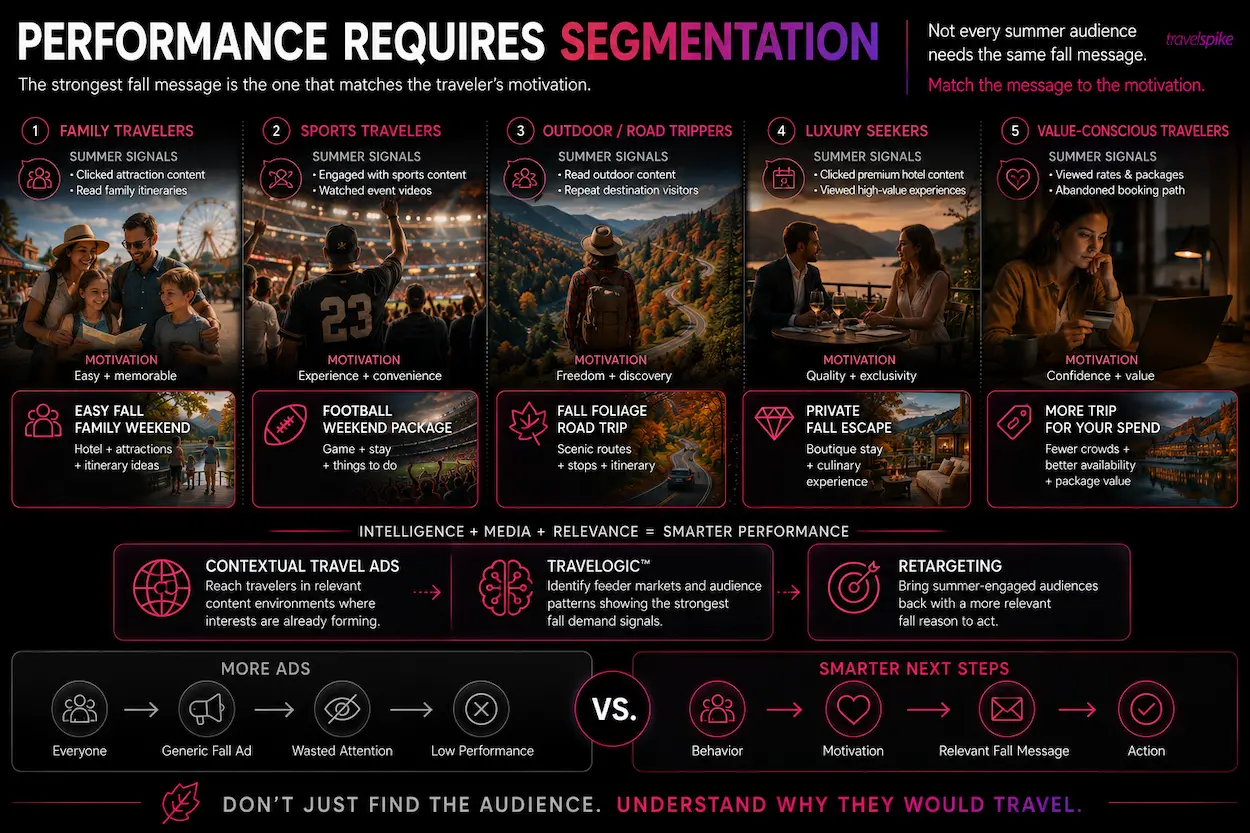
Not every summer audience should receive the same fall message.
A traveler who engaged with family content needs a different shoulder-season offer than someone who clicked luxury escape content. A road tripper needs convenience and timing. A sports traveler needs weekend packaging. A value-conscious traveler needs proof that the trip is worth the spend.
This is where performance strategy matters.
Segment by behavior: video viewers, email clickers, itinerary readers, repeat visitors, booking abandoners, event-engaged audiences, and high-value content consumers.
Then match the fall message to the motivation.
Contextual Travel Ads can support shoulder-season demand by reaching travelers in relevant content environments. Travelogic™ can help identify feeder markets and audience patterns showing the strongest signals. Retargeting can bring summer-engaged audiences back with a more relevant fall reason to act.
This is not about pushing more ads. It is about pushing smarter next steps.
Do Not Wait Until September
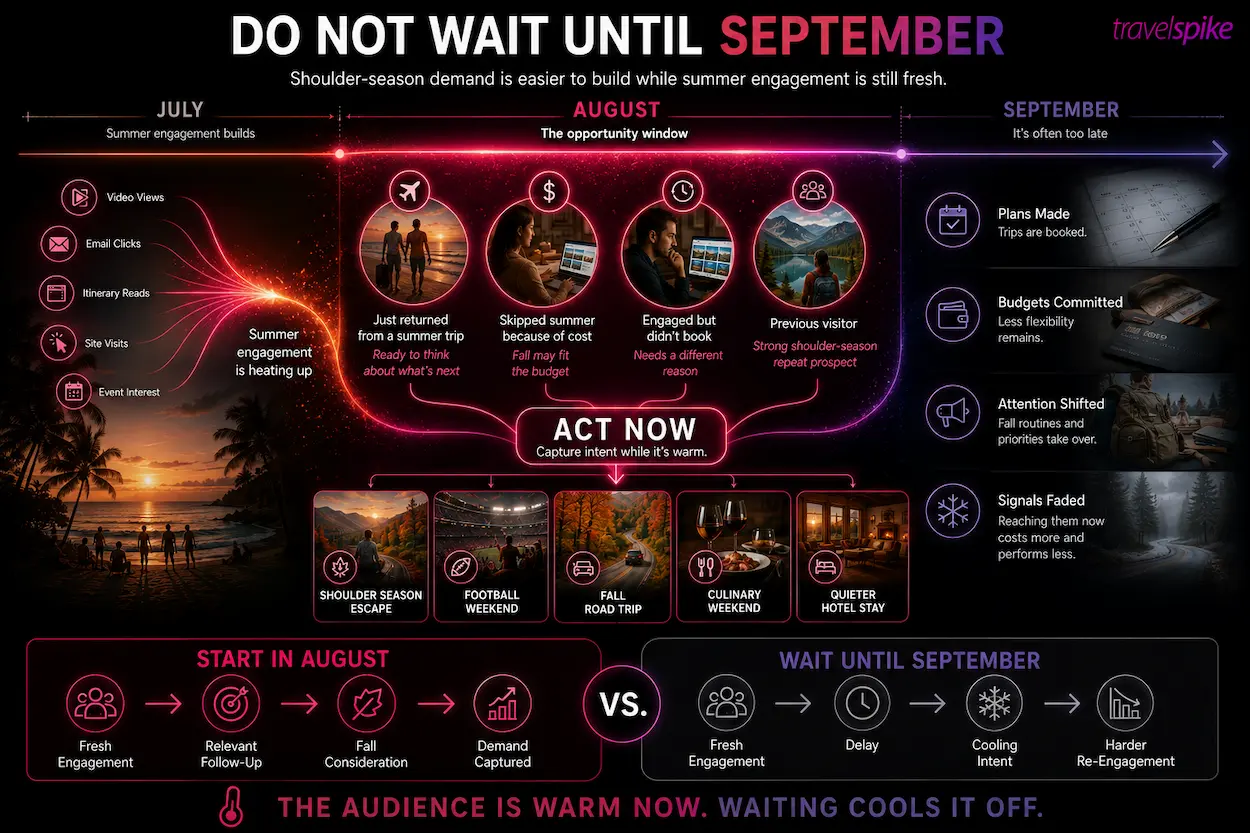
September is often too late to begin building shoulder-season demand.
By then, travelers may have already made plans, budgets may be committed, and attention may have shifted. August gives marketers a head start while summer engagement is still fresh.
That timing matters.
A traveler who just returned from a summer trip may be thinking about the next one. A traveler who skipped summer because of cost may be open to fall. A traveler who engaged but did not convert may need a different reason. A traveler who visited once may be a strong repeat target for a quieter season.
The audience is warm now. Waiting cools it off.
Co-Op Can Make Fall More Compelling
Shoulder season is also a strong co-op opportunity.
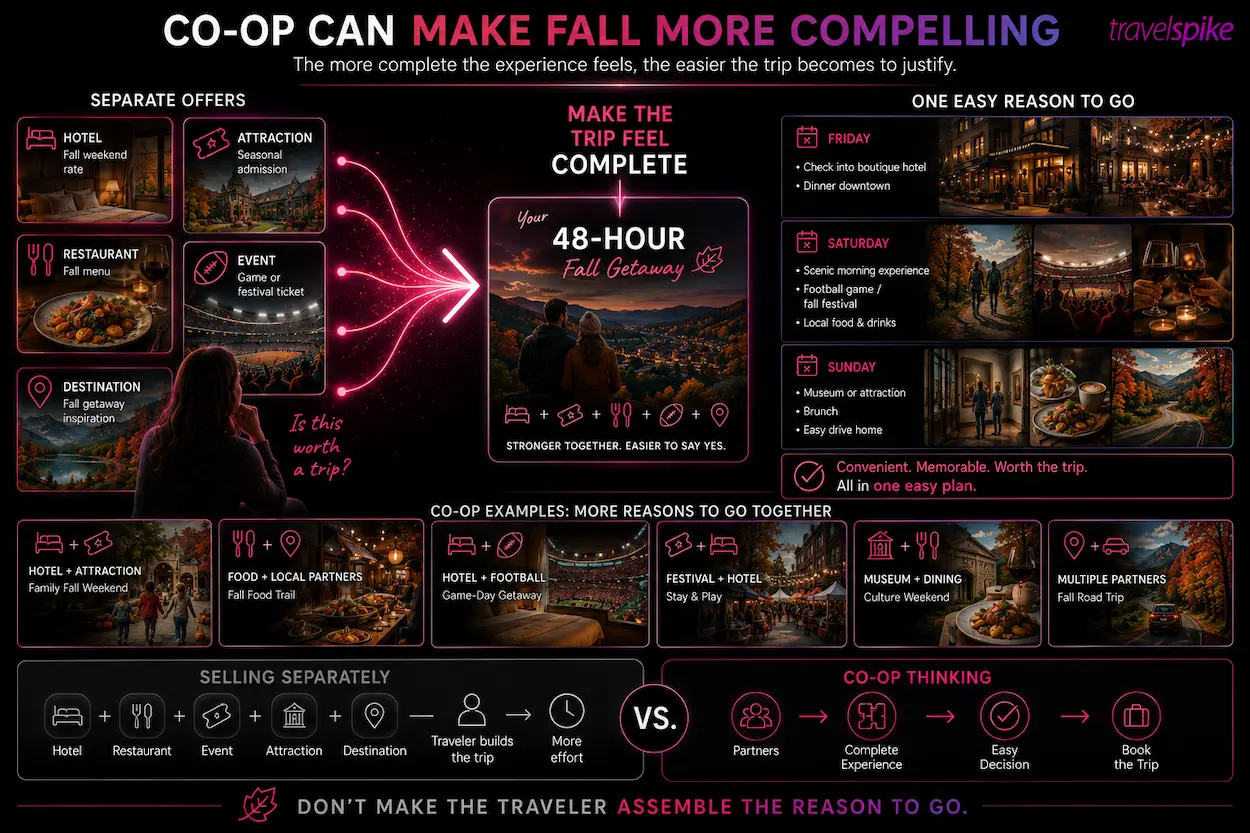
A destination, hotel, attraction, restaurant, and event partner can create a more complete fall trip than any one brand can sell alone. This is especially useful for shorter regional trips, where travelers want an easy reason to go.
- A hotel plus attraction package.
- A fall food trail.
- A football weekend itinerary.
- A festival stay-and-play offer.
- A museum and dining weekend.
- A road trip route with partner stops.
The more complete the experience feels, the easier it is for travelers to justify the trip.
The Takeaway
Shoulder season is not a backup plan. It is a performance opportunity.
August gives travel brands the live behavioral data, warm audiences, and timing needed to convert summer engagement into fall action.
The brands that win shoulder season will not wait for demand to soften. They will use August to shape demand before competitors even start asking where summer went.