
Set-Jetting Is an $8B Travel Opportunity. MicroAdventure Helps Brands Create It.
Travel demand is no longer created only by travel ads. It is created by stories.
A television show, film, documentary, creator series, or streaming moment can introduce a destination to millions of people before that destination ever appears in a search query. A city, coastline, hotel, small town, historic district, restaurant, or attraction can become desirable simply because people saw it on screen and wanted to experience it for themselves.
That is the power of set-jetting. But set-jetting is also proving something bigger for travel marketers: storytelling is not a soft awareness tactic. It is demand creation.
That is exactly why MicroAdventures matters.
The business case is already visible. Expedia reports that set-jetting could become a potential $8 billion industry in the U.S. alone, with an estimated $8.45 billion impact if applied across the U.S. adult population. The same research found that 53% of travelers say their desire to take a set-jetting trip increased in the past year, and 81% of Gen Z and Millennial travelers now plan getaways based on what they’ve seen on screen. Forbes recently reinforced the same point, framing TV- and film-driven tourism as a multi-billion-dollar travel business. This is the behavior MicroAdventures are built to capture: travelers are not just watching stories. They are acting on them.
MicroAdventures give travel brands a way to create their own story-driven demand instead of waiting for Hollywood, Netflix, HBO, or a major studio to make a destination famous. It takes the same behavioral truth behind set-jetting — people travel because stories make places feel meaningful — and turns it into a more intentional, ownable strategy for destinations, hotels, attractions, and tourism partners.
Set-jetting shows the market is ready. MicroAdventures give travel brands a way to act on it.
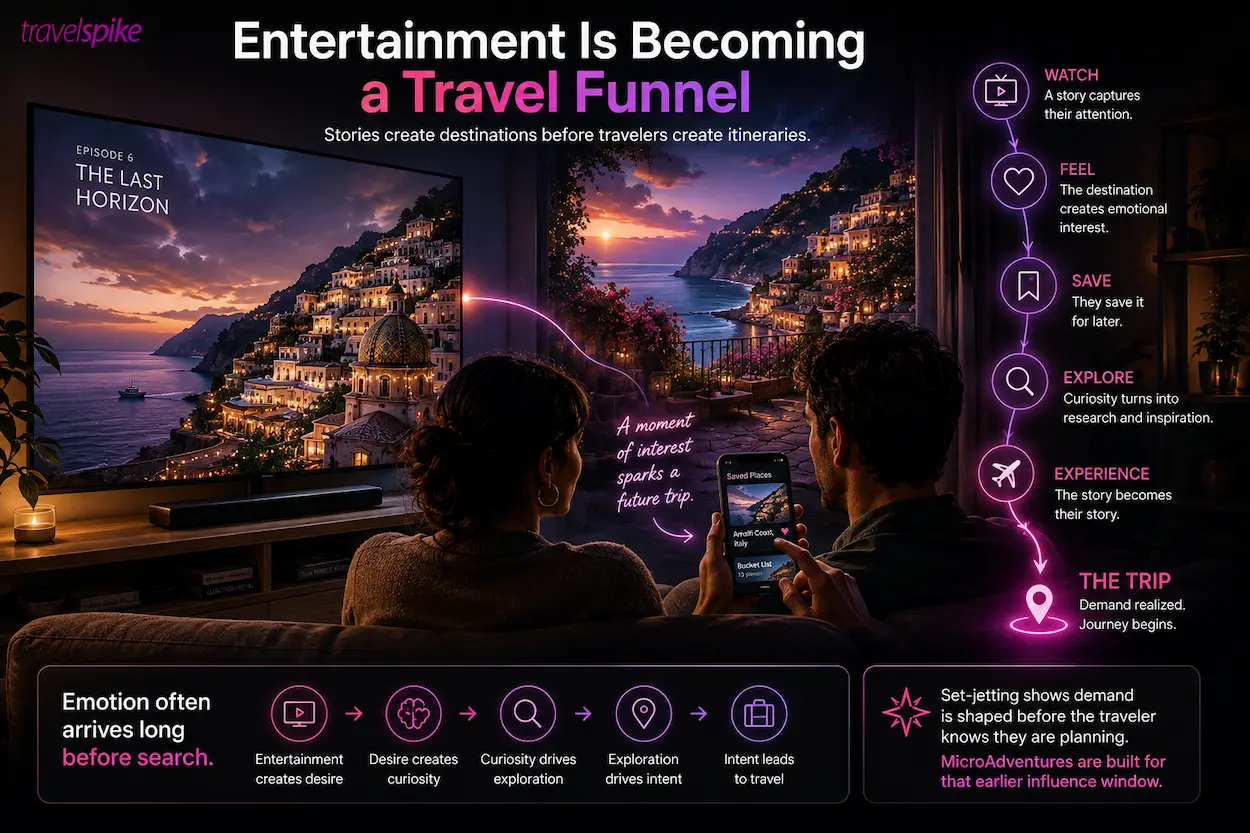
Entertainment Is Becoming a Travel Funnel
For years, travel marketers talked about the funnel as if it began when someone started planning a trip. But set-jetting proves the journey can begin much earlier.
A traveler may not be searching for flights. They may not be comparing hotels. They may not be actively planning a vacation at all. They may simply be watching a show.
Then something happens. A location catches their attention. A street feels familiar. A hotel feels aspirational. A beach looks worth saving. A small town feels like the kind of place they want to visit. The story creates emotional interest before any traditional travel intent signal appears.
That is why entertainment has become such a powerful pre-booking influence. It creates the desire before the search.
For travel brands, this matters because many campaigns are still built too close to the booking moment. They wait for intent to become visible. They wait for the traveler to search. They wait for demand to show up in paid media platforms.
But set-jetting shows demand is often shaped before the traveler knows they are planning.
MicroAdventures are built for that earlier influence window.
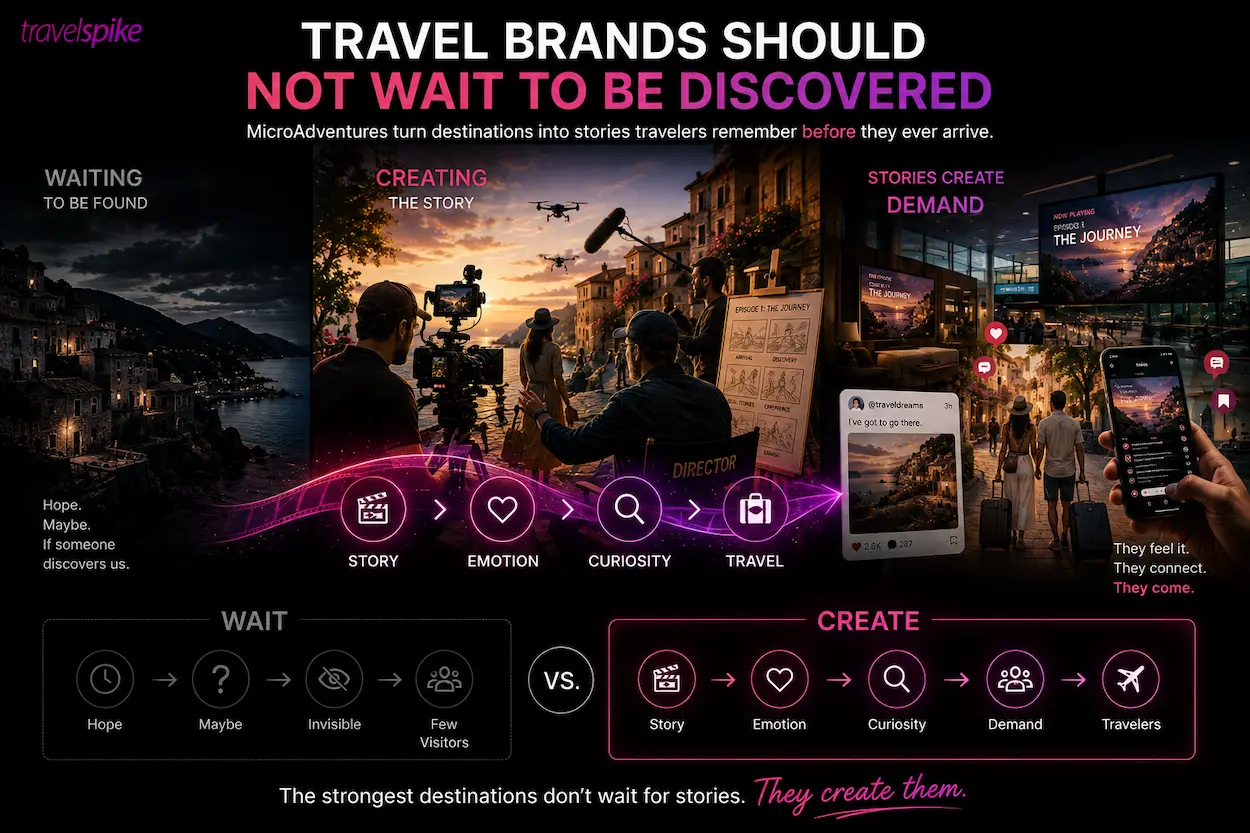
Travel Brands Should Not Wait to Be Discovered
The easiest version of set-jetting is passive. A production films somewhere. The show becomes popular. Travelers notice. The destination benefits. That can be powerful, but it is not a reliable strategy.
Most travel brands cannot wait around hoping a major production selects them, features them in the right way, and creates enough cultural momentum to drive visitation.
MicroAdventures change that equation.
Instead of waiting to be discovered, a destination can create its own episodic story. A hotel can build a narrative around a romantic escape, family getaway, wellness weekend, or luxury experience. An attraction can show what discovery feels like behind the scenes. A tour operator can turn an itinerary into a cinematic journey. A DMO can bring together lodging, restaurants, attractions, and local characters into one story-led experience.
The point is not to copy television. The point is to understand why television works. It gives people a reason to emotionally enter a place before they physically arrive.
That is what strong travel marketing should do.
MicroAdventures Turn a Place Into a Plot
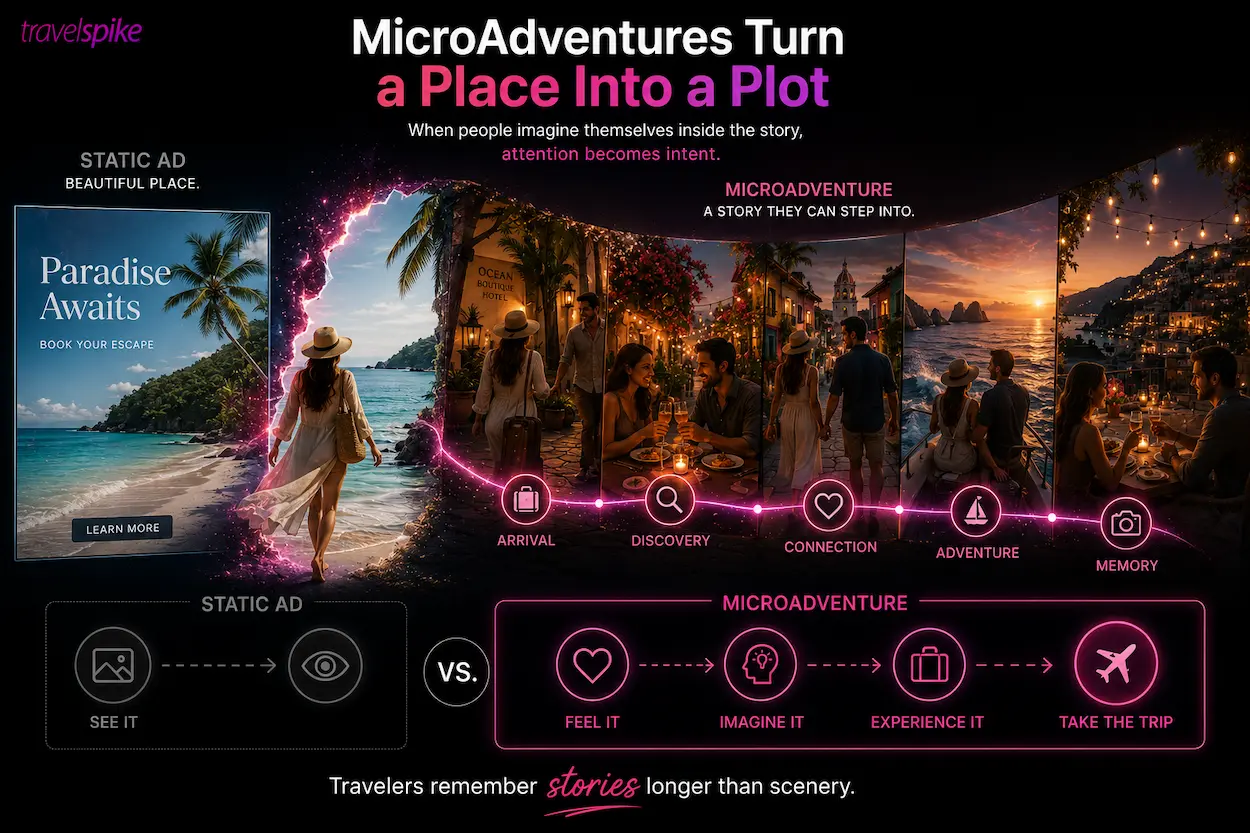
Most travel ads show a destination. MicroAdventures give the destination movement.
That difference matters.
A beach can look beautiful in an ad. But a story about a couple arriving for a long weekend, finding a hidden restaurant, taking a boat out at sunset, and discovering something unexpected gives the beach emotional context.
A museum can promote an exhibit. But a story that follows a family, a local guide, or a behind-the-scenes moment makes the attraction feel more personal.
A hotel can show a room. But a story can show what the stay makes possible.
That is the performance advantage of serialized storytelling. It does not only say, “Come here.” It helps the traveler imagine why they would go, who they would go with, what they would do, and how the trip would feel.
That is how attention becomes intent.
This Is Bigger Than Filming Locations
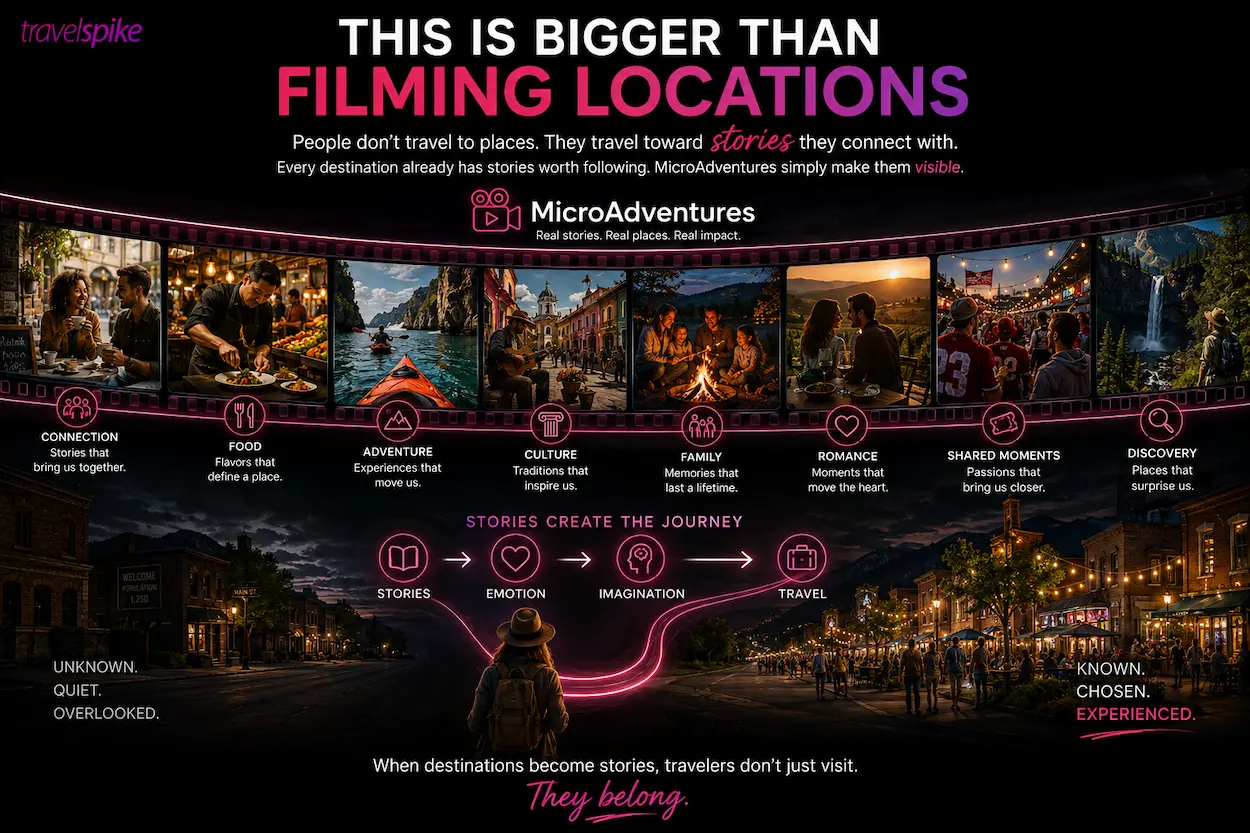
The larger lesson from set-jetting is not only that people visit places from shows and movies. The lesson is that people travel toward stories they connect with.
That can include film locations, but it can also include: local food stories, outdoor adventures, creator-led journeys, heritage experiences, family itineraries, sports weekends, road trips, small-town discoveries, cultural festivals, and hidden gems.
That is where MicroAdventures become valuable. It gives travel brands a format for packaging those experiences into something watchable, memorable, and campaign-ready.
A destination does not have to wait for a streaming series to make it interesting. It can build a MicroAdventure around the reasons travelers already care: connection, discovery, nostalgia, escape, status, romance, family, culture, or adventure.
That is especially important for smaller markets.
Major destinations already have awareness. Smaller and mid-sized destinations often need a stronger reason to enter the traveler’s imagination. MicroAdventures can create that reason by turning the destination into a story people can follow.
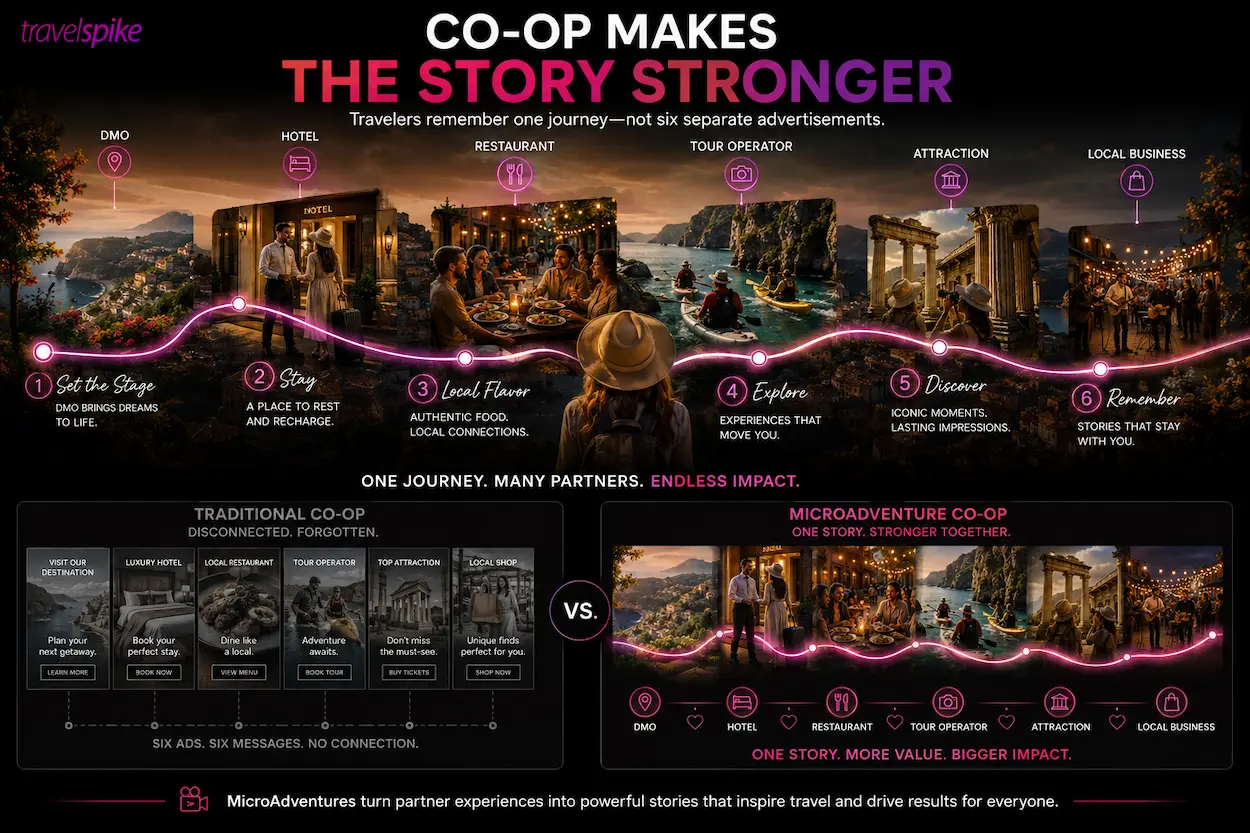
Co-Op Makes the Story Stronger
MicroAdventures also fits naturally into co-op marketing because travelers do not experience a trip through one brand.
A destination sets the stage. A hotel provides the stay. An attraction creates the memory. A restaurant adds local flavor. A tour operator creates movement. A local business adds authenticity.
Together, those partners can create a richer story than any one of them could build alone.
That matters because set-jetting does not only benefit the exact filming location. It can lift the surrounding travel ecosystem: hotels, restaurants, guides, attractions, shops, transportation, and local experiences.
MicroAdventures can do the same intentionally. Instead of scattered partner ads, the campaign becomes a connected travel story. That gives the traveler a clearer reason to go and gives partners a stronger shared marketing asset.
The Takeaway
Set-jetting is not just a trend about fans visiting filming locations. It is proof that story drives travel behavior.
People are choosing destinations based on what they watch, share, save, and emotionally connect with long before they search or book. Forbes covering set-jetting as a multi-billion-dollar travel business only reinforces what travel marketers should already be seeing: entertainment is influencing real-world visitation.
MicroAdventures are Travelspike’s answer to that shift.
It gives destinations, hotels, attractions, and tourism partners a way to create story-led demand instead of waiting for cultural moments to happen to them.
Because the future of travel marketing will not belong only to brands that advertise places.
It will belong to brands that make travelers care enough to imagine themselves there.