Seasonal Attractions Need a Performance Funnel, Not Just Foot Traffic
Seasonal attractions are built to create urgency.
Halloween haunts, pumpkin events, holiday lights, winter festivals, immersive pop-ups, zoo nights, aquarium events, museum programming, and themed family experiences all work because they give visitors a limited-time reason to go.
But foot traffic alone is not the full opportunity.
For attractions, the bigger performance question is what happens before, during, and after the visit.
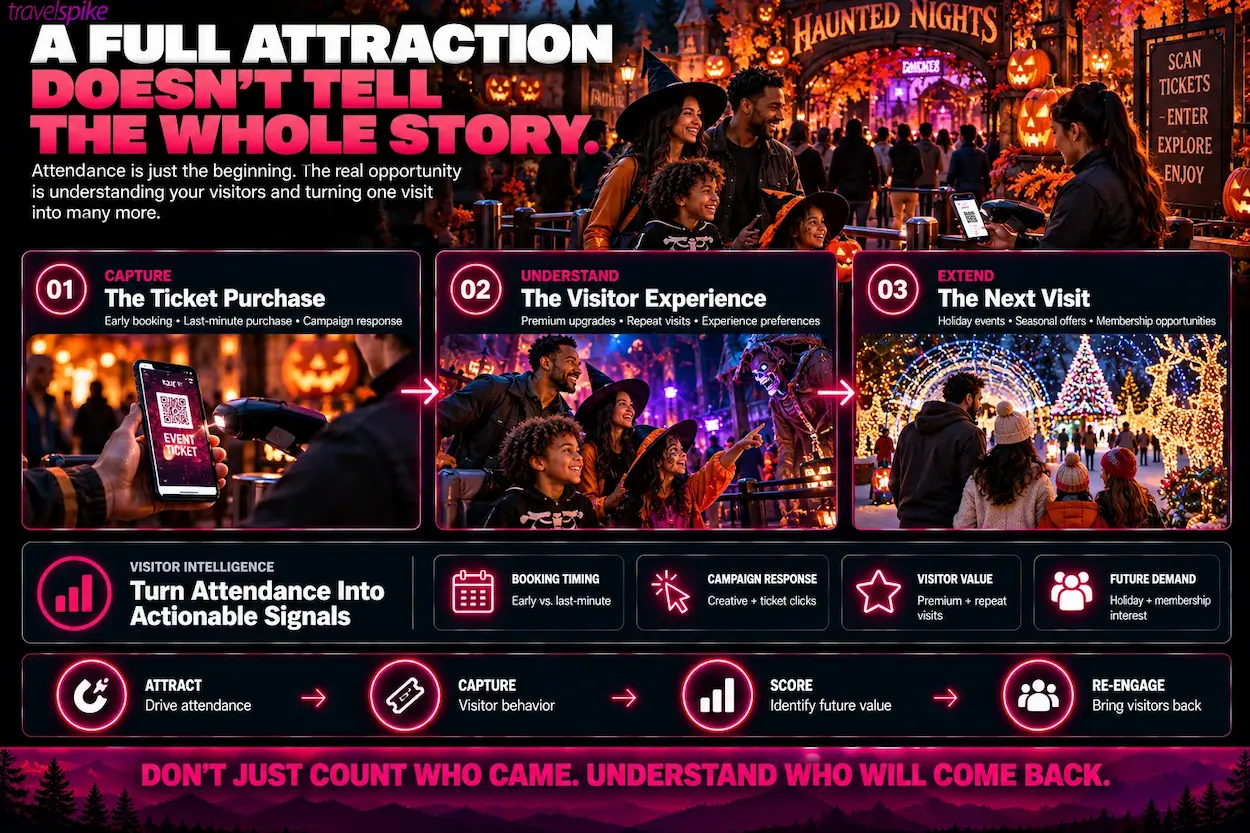
Did the visitor buy online or at the gate? Did they add food, parking, merchandise, or a premium upgrade? Did they join an email list? Did they return for a second seasonal event? Did they become a member? Did they tell someone else? Did they come back for holiday programming?
That is why seasonal attractions need a funnel.
Attendance Is Only the First Step
A busy October night can feel like success, but attendance without audience intelligence leaves value on the table.
Attractions should be asking:
- Which visitors bought early?
- Which ones waited until the last minute?
- Which creative drove ticket clicks?
- Which audiences bought premium experiences?
- Which families returned?
- Which visitors engaged with holiday events after Halloween?
- Which guests are likely membership prospects?
Those answers turn a seasonal spike into a longer performance strategy. The goal is not only to sell one ticket, the goal is to score the visit and build the next action.
The Experience Has to Match the Promise
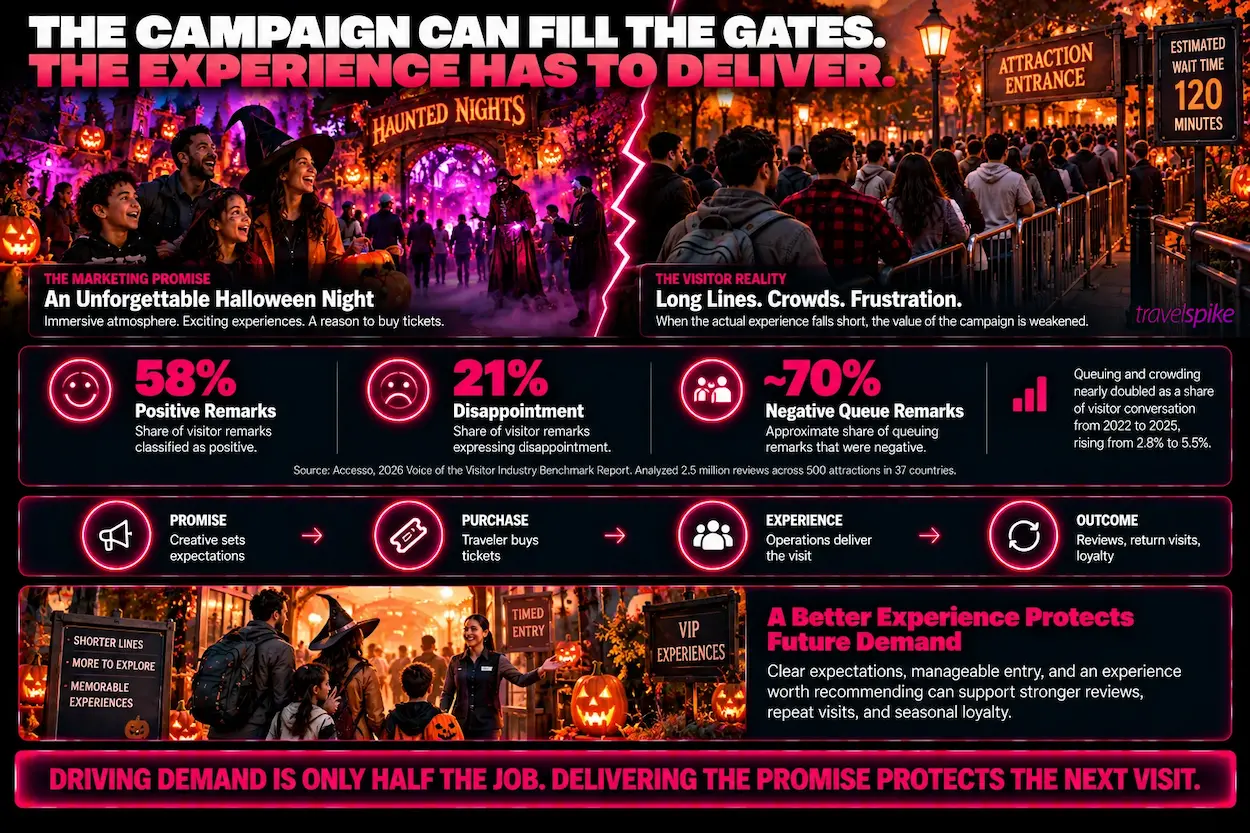
Seasonal attractions often depend on anticipation. Visitors arrive with expectations created by the ad, the website, social media, reviews, and word of mouth.
If the experience breaks, the performance funnel breaks too.
Accesso’s 2026 Voice of the Visitor benchmark report analyzed 2.5 million reviews across 500 attractions in 37 countries and found that positive remarks have slipped to 58%, negative remarks have climbed to 25%, and disappointment has reached approximately 21%. The report also found that queuing and crowding nearly doubled as a share of visitor conversation from 2022 to 2025, rising from 2.8% to 5.5% of all remarks, with roughly 70% of queuing remarks negative.
That matters for seasonal attractions because limited-time events can create capacity pressure. A great campaign can drive demand, but the experience still has to handle it.
Operational Friction Is a Marketing Problem
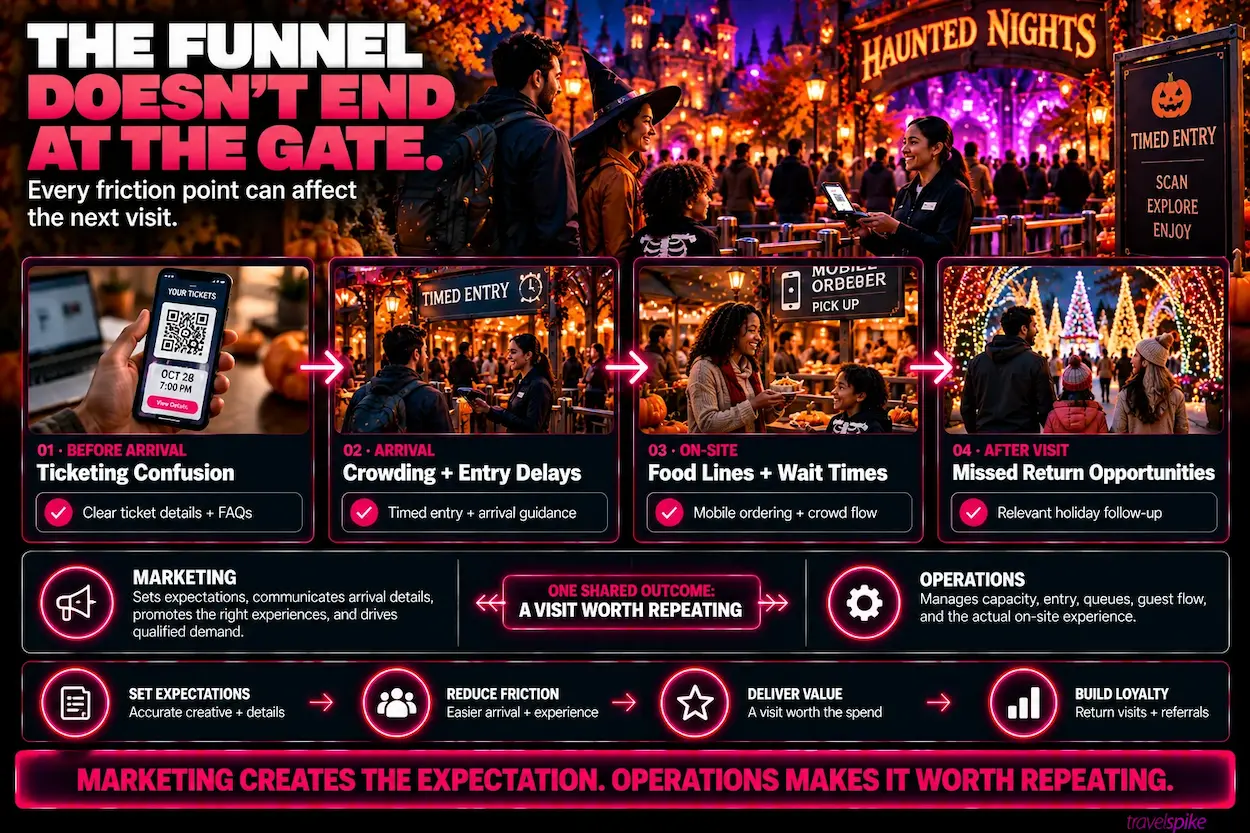
Queues, crowding, ticketing friction, parking confusion, unclear entry times, and food lines are not just operations issues.
They affect future marketing performance.
A disappointed visitor may not complain loudly. They may simply not come back. They may not click the holiday event. They may ignore the membership offer. They may tell friends the experience was not worth it.
That means marketers need to work with operations before the event launches.
Timed entry, clearer ticketing, pre-arrival emails, better FAQs, crowd management, mobile ordering, and expectation-setting creative can all improve performance because they reduce friction.
The best seasonal funnel does not overpromise, it creates demand the attraction can fulfill.
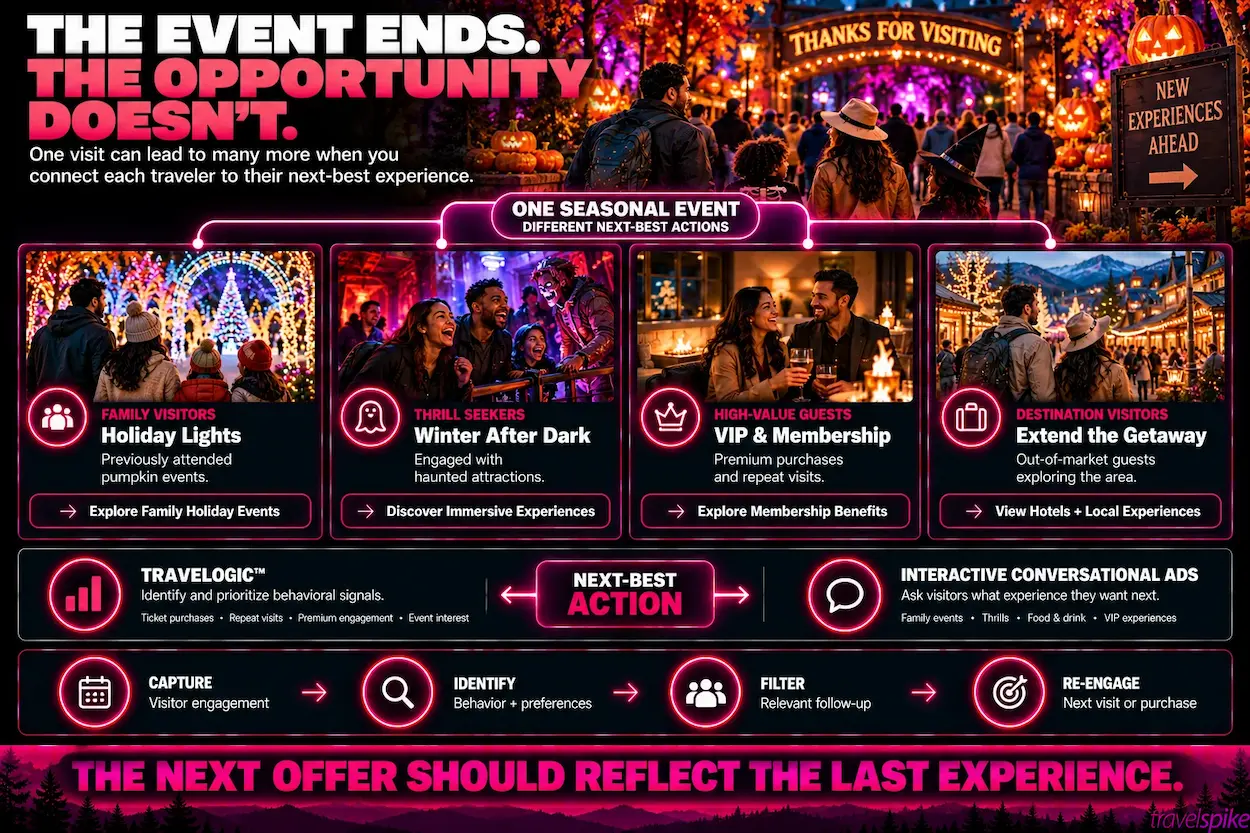
Filter Visitors by Next-Best Action
Not every seasonal visitor should receive the same follow-up.
A family that attends a pumpkin event may be a good fit for holiday lights. A haunt visitor may be a better fit for an adults-only winter event or immersive experience. A high-spending guest may be a membership or VIP prospect. A local visitor may be a repeat-event prospect. A tourist may need partner offers for hotels, restaurants, or nearby attractions.
The post-visit audience should be filtered.
Travelogic™ can help identify high-value signals, while Interactive Conversational Ads can help attractions ask visitors what kind of experience they want next.
That could be family-friendly events, thrill experiences, food and drink, holiday programming, behind-the-scenes access, or membership value.
The Takeaway
Seasonal attractions should not measure success only by foot traffic. The real opportunity is to turn seasonal attention into a performance funnel.
That means scoring visitor signals, filtering audiences by motivation, reducing operational friction, and building clear next steps from ticket purchase to repeat visit.
A seasonal event may last a few weeks, the audience value can last much longer.