
Performance Marketing for the Value-Conscious Traveler
Travelers are still spending. But they are also more selective.
That is the tension travel brands need to understand heading into September. Demand is active, but travelers are scrutinizing value more carefully. They are comparing prices, shortening trips, choosing drive markets, looking for flexibility, and deciding whether a trip feels worth the cost.
That does not mean travel marketing should turn into discount marketing. It means performance marketing has to prove value faster.
NerdWallet’s 2026 Summer Travel Report found that 45% of Americans planned to take a summer vacation requiring a flight or paid lodging, with expected average spending of $3,940 on flights and lodging. That represents more than 120 million travelers and over $475 billion in projected spend. At the same time, Deloitte found that only 45% of Americans planned summer vacations involving paid lodging, the lowest level in six years, while those still traveling expected to spend an average of $4,069 on their longest summer trip.
So the market is not dead. But it is divided.
Value Is Not the Same as Cheap
The value-conscious traveler is often misunderstood.
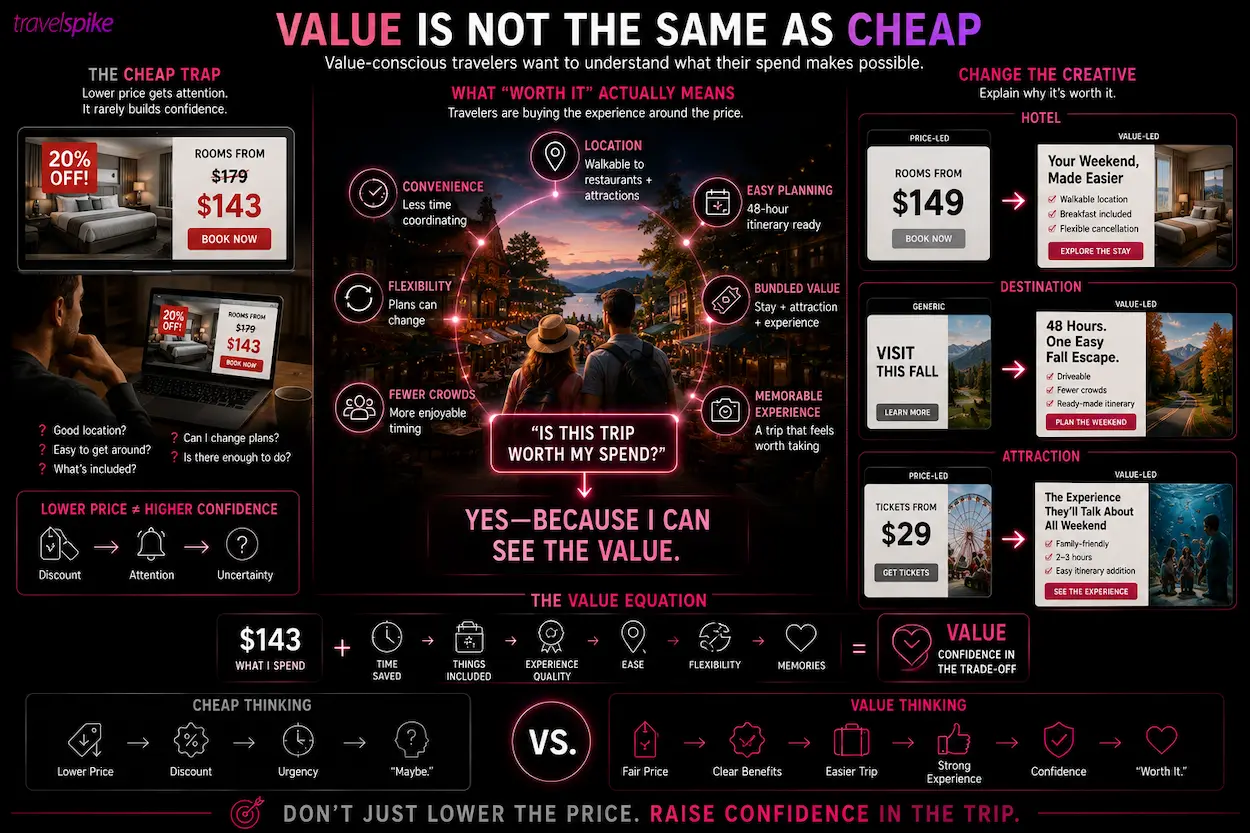
Many brands assume this audience only wants the lowest price. But the more accurate read is that they want confidence. They want to feel the trip is worth the spend.
That is a different creative challenge.
A discount can create urgency, but it does not always create confidence. A lower rate may get attention, but it may not answer the traveler’s real question: will this trip be worth it?
Performance marketing needs to address that question directly.
That means messaging around convenience, location, flexibility, bundled value, memorable experiences, fewer crowds, easier planning, and stronger itinerary payoff.
– A hotel should not only promote the room rate. It should explain what makes the stay easier.
– A destination should not only say “visit.” It should show how the trip fits a traveler’s budget and time.
– An attraction should not only sell tickets. It should show why the experience is worth adding to the itinerary.
Shorter Trips Need Stronger Reasons
As travelers shift toward shorter-duration and regional trips, marketing has to become more specific.
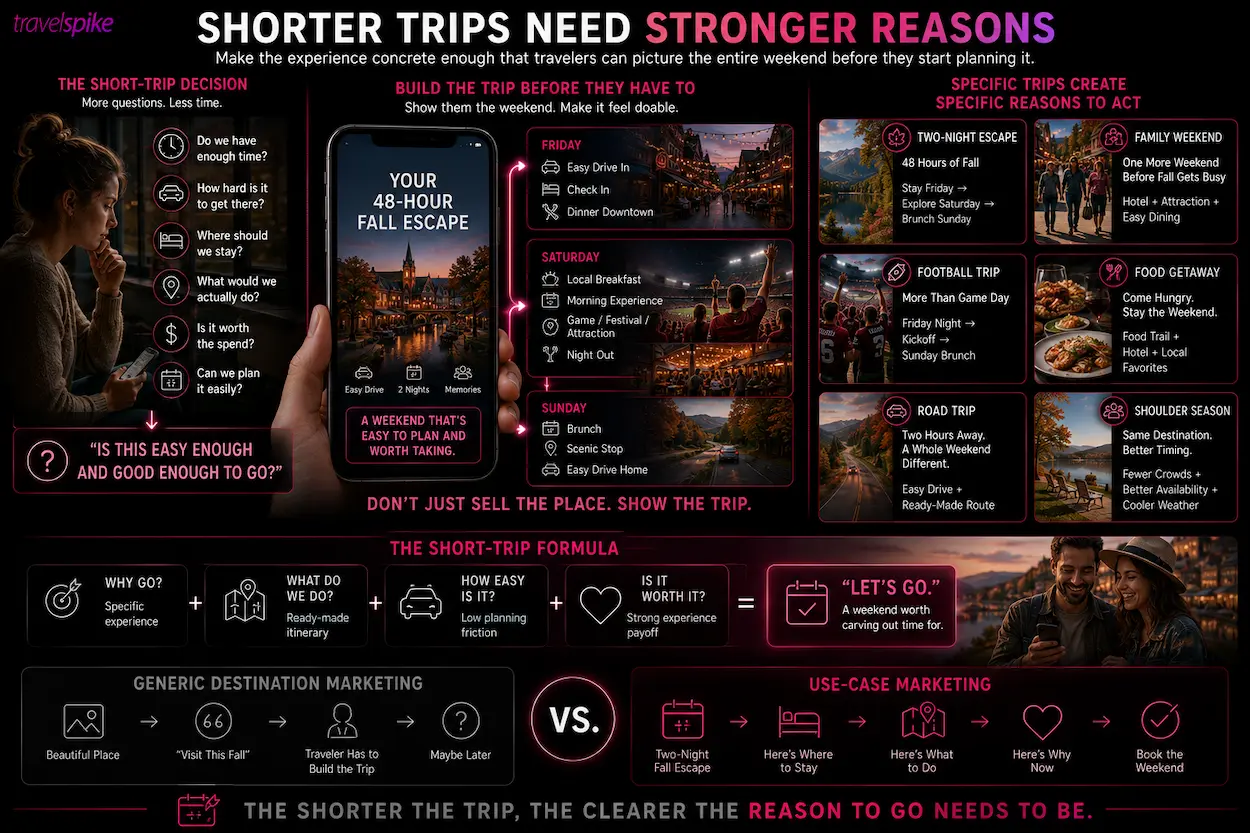
A weekend trip needs a sharper reason than a weeklong vacation. There is less time to justify the effort. The traveler needs to know what they will do, where they will stay, how easy it is, and why it is worth carving out the time.
This is where travel brands should lean into use-case messaging:
- A two-night fall escape.
- A family weekend before school gets busy.
- A football trip with things to do before kickoff.
- A food-focused getaway.
- A road trip that feels easy to plan.
- A shoulder-season visit with fewer crowds.
The more concrete the trip feels, the more likely the traveler is to act.
Performance Starts With Audience Differences
Not every value-conscious traveler is motivated by the same thing.
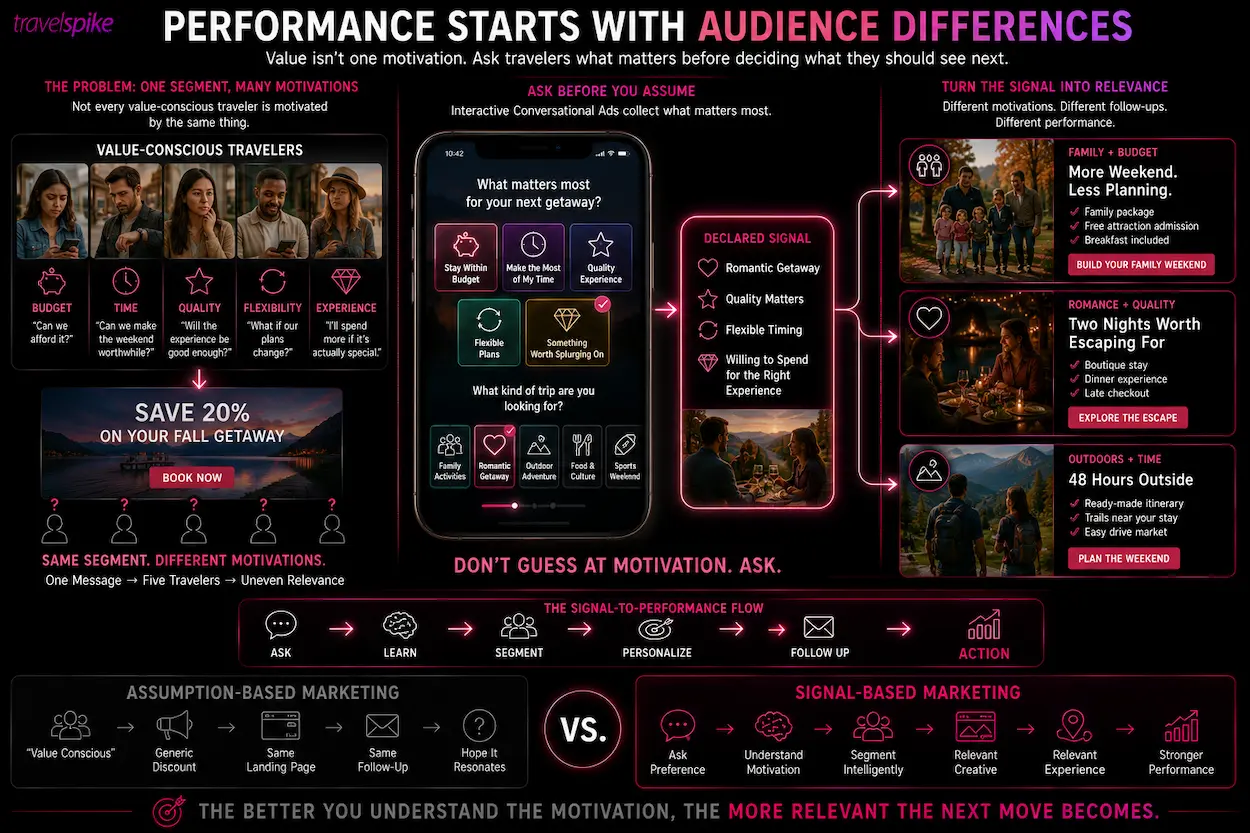
Some are protecting budget. Some are protecting time. Some are protecting quality. Some are protecting flexibility. Some are willing to spend more if the experience feels elevated.
Performance marketing has to separate those motivations.
Interactive Conversational Ads can help by asking travelers what they care about before pushing them into one generic path. A traveler who selects “family activities” should not receive the same follow-up as someone who selects “romantic getaway” or “outdoor adventure.”
Those direct signals make the next message more relevant. And relevance is what improves performance.
Context Can Reduce Wasted Spend
Broad travel targeting can waste budget when audiences are cautious.
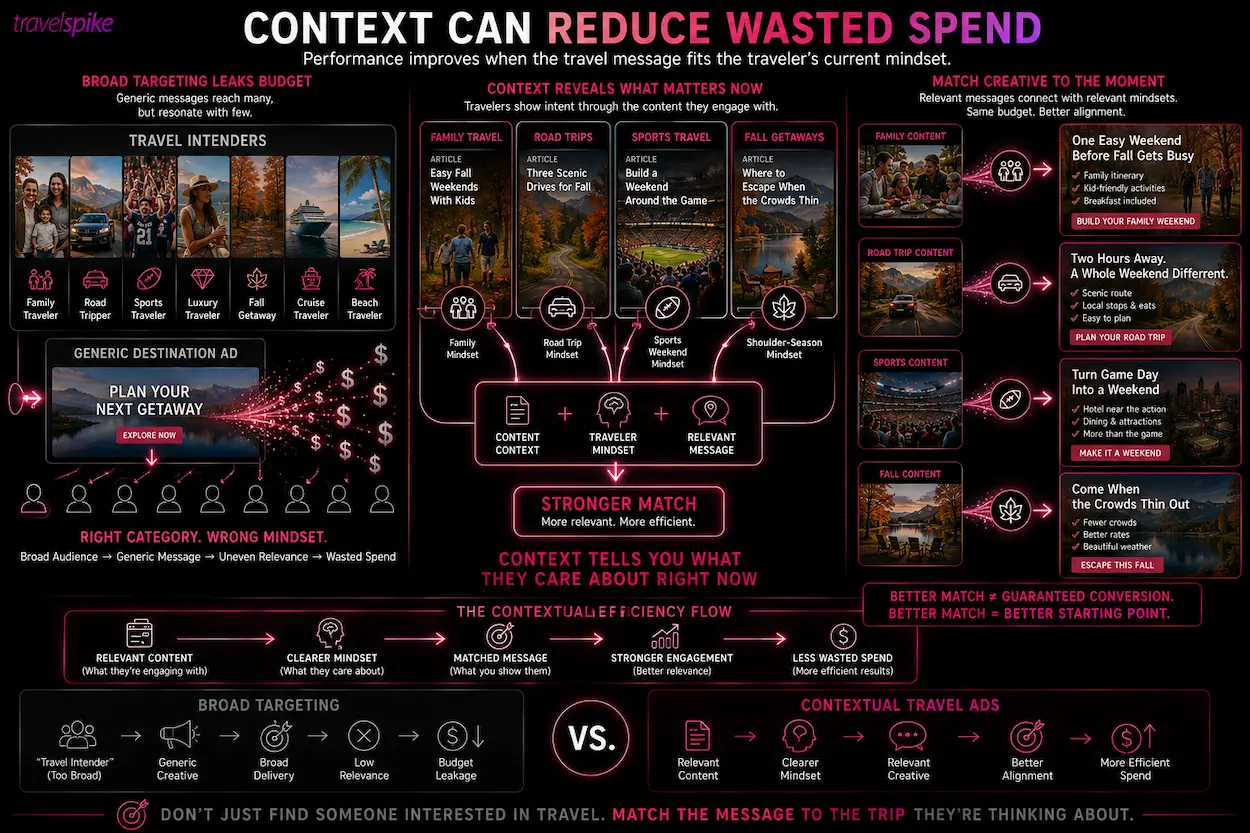
If the message is generic, the brand pays to reach people who may technically be “travel intenders” but are not interested in that specific trip type.
Contextual Travel Ads can help align messages with relevant traveler mindsets. Someone engaging with family travel content, road trip content, fall getaway content, or sports travel content is already showing a clearer signal than a broad audience segment alone.
That does not guarantee conversion. But it improves the match between message and mindset.
Performance depends on that match.
Creative Should Show the Payoff
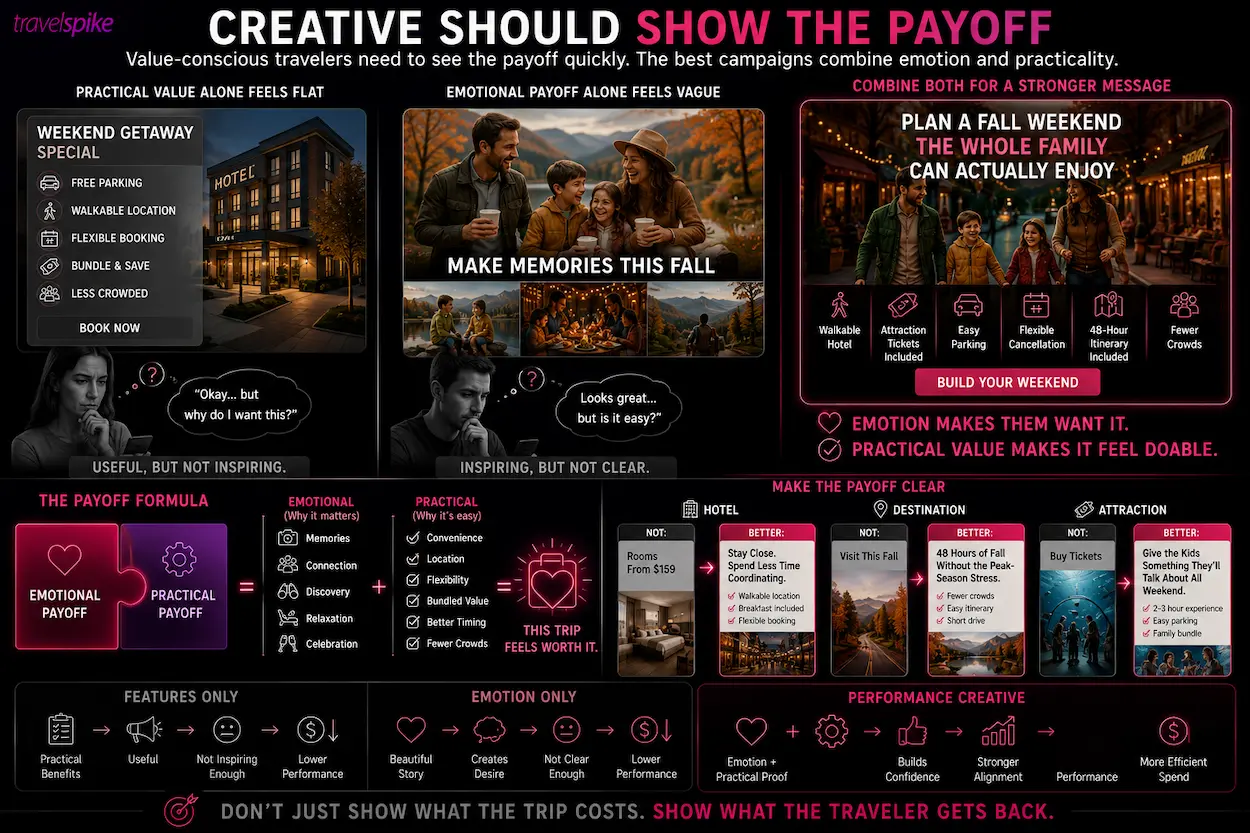
Value-conscious travelers need to see the payoff quickly. That payoff can be emotional or practical.
- Emotional payoff: memories, connection, discovery, relaxation, celebration.
- Practical payoff: easy parking, walkable location, bundled tickets, flexible booking, fewer crowds, better timing.
The best campaigns combine both.
For example, “Plan a fall weekend the whole family can actually enjoy” is stronger than “Book now.” It speaks to the emotional and practical value at the same time.
The Takeaway
The value-conscious traveler is not necessarily a low-value traveler. They may still spend. They may still book. They may still choose premium experiences.
But they need stronger proof.
Travel brands that perform in September and beyond will not simply discount harder. They will message smarter, segment better, reduce friction, and show travelers why the trip is worth the spend.
Value is not about being cheap. It is about making the decision feel right.