
July Is the Moment to Turn Active Summer Demand Into Shoulder Season Opportunity
By July, summer travel is fully active. Travelers are on the road, in airports, checking into hotels, visiting attractions, attending events, extending trips, changing plans, and sharing experiences in real time.
For many travel brands, that creates a temptation to focus only on immediate summer performance. But July is also one of the most important planning windows for shoulder season.
The reason is simple: summer behavior gives marketers the best live signal of what travelers may do next.
Memorial Day already showed how strong the season could be. AAA projected 45 million Americans would travel at least 50 miles from home over Memorial Day weekend, setting a new Memorial Day record, with 39.1 million traveling by car and 3.66 million flying. U.S. Travel also forecasts domestic leisure travel spending will reach $909 billion in 2026 while noting that travelers are expected to shift toward shorter, lower-cost trips—including regional and drive-market travel—as higher costs influence travel decisions.
That creates a clear strategic opportunity. Do not wait until August to build fall demand.
Use July behavior to shape it now.
Summer Engagement Reveals Fall Intent
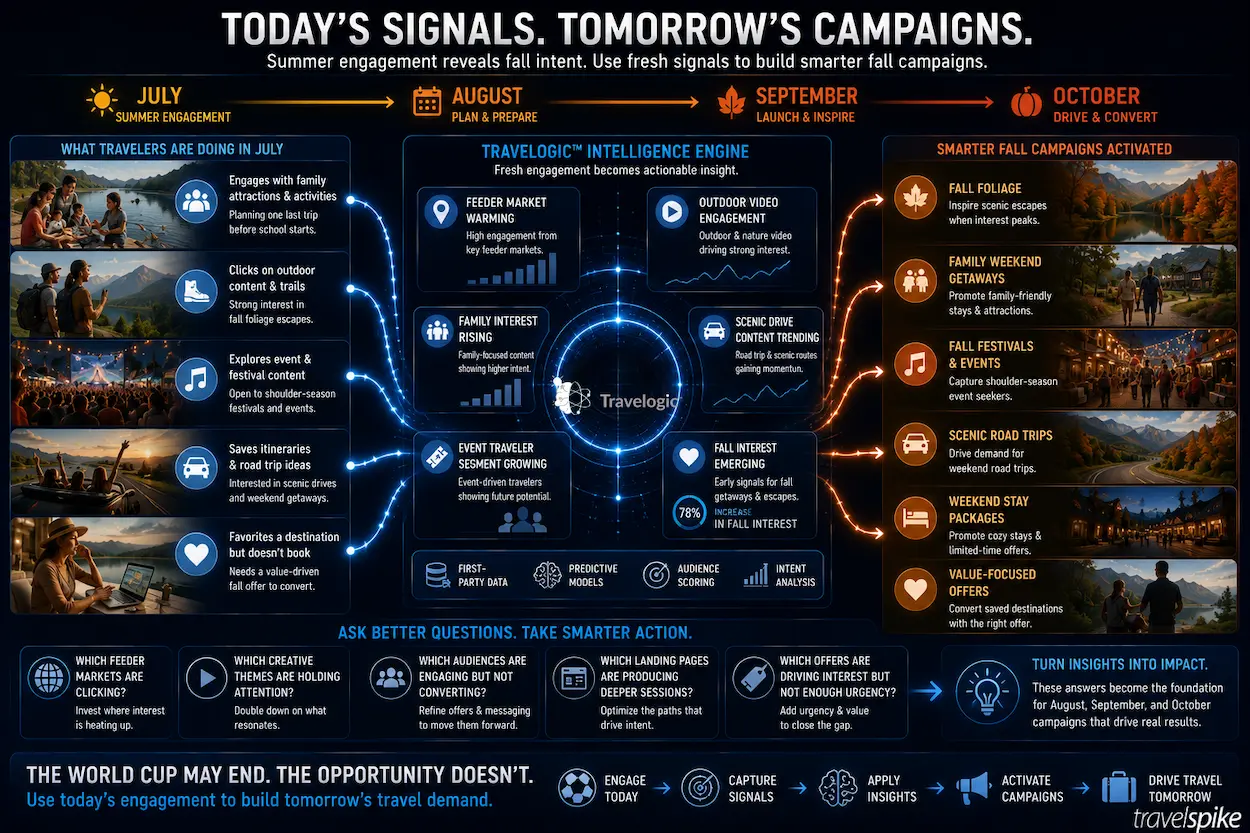
A traveler who clicks on outdoor content in July may be a strong fall foliage prospect. A traveler engaging with family attractions may be planning one last trip before school starts. A traveler who explores event content may be open to shoulder-season festivals. A traveler who saves a destination but does not book may need a lower-cost fall message.
These signals are valuable because they are fresh.
July engagement tells marketers what people are actually responding to, not what teams predicted months earlier.
That is why campaign reporting should not sit in a weekly dashboard without action. It should inform the next wave of messaging.
Which feeder markets are clicking? Which creative themes are holding attention? Which audiences are engaging but not converting? Which landing pages are producing deeper sessions? Which offers are generating interest but not enough urgency?
Those answers should become the foundation for August, September, and October campaigns.
Shoulder Season Should Not Be a Discount Strategy Only
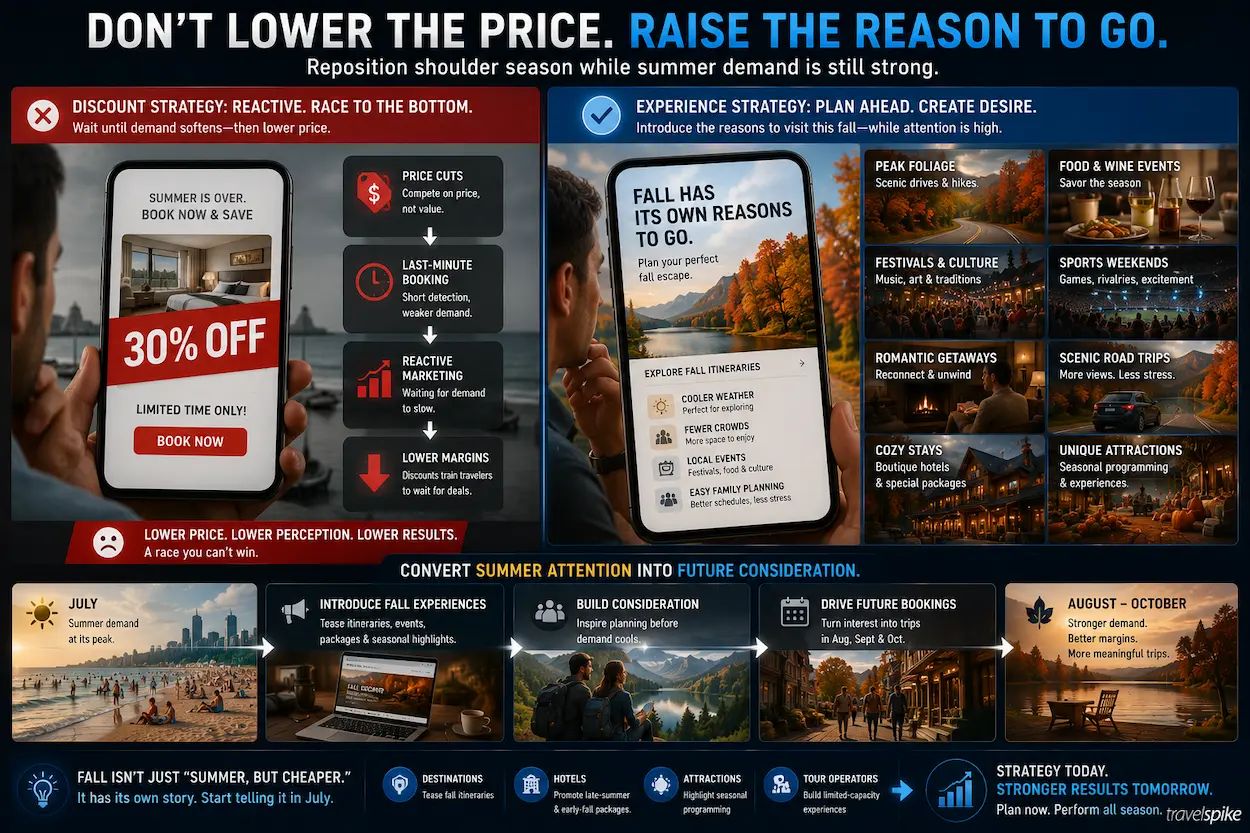
Many brands approach shoulder season by waiting until demand softens and then lowering price.
That is not strategy. It is reaction.
The better approach is to reposition shoulder season while summer demand is still active.
Fall is not just “summer, but cheaper.” It has its own reasons to travel: cooler weather, fewer crowds, festivals, food events, foliage, sports weekends, cultural programming, romantic getaways, and easier family planning after peak-season congestion.
Travel brands should begin introducing those reasons in July.
A destination can tease fall itineraries. A hotel can promote late-summer and early-fall packages. Attractions can highlight seasonal programming. Tour operators can build limited-capacity experiences around weather, events, or cultural moments.
The goal is to convert summer attention into future consideration.
Retarget Summer Audiences With New Reasons to Go
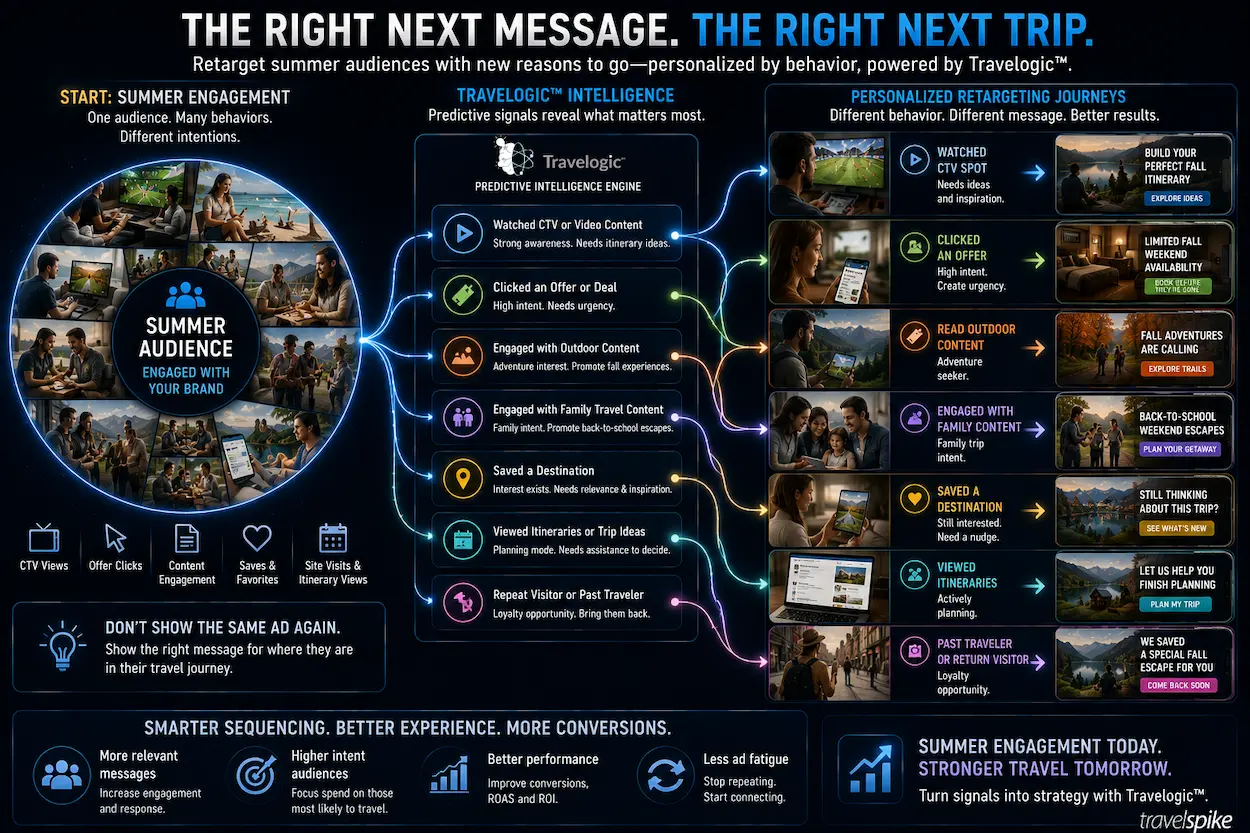
One of the smartest July moves is building retargeting pools based on summer engagement and then changing the message.
Do not show every summer visitor the same “book now” ad again. Segment them by behavior.
Someone who watched a CTV spot may need a stronger itinerary message. Someone who clicked an offer may need urgency. Someone who read outdoor content may need a fall adventure angle. Someone who engaged with family travel content may need a back-to-school weekend message.
This is where Travelogic™ can support smarter sequencing. Instead of treating every engaged traveler equally, predictive intelligence can help identify which signals point toward near-term travel, future travel, or specific experience categories.
That makes retargeting more useful and less repetitive.
Use July to Diagnose Channel Quality
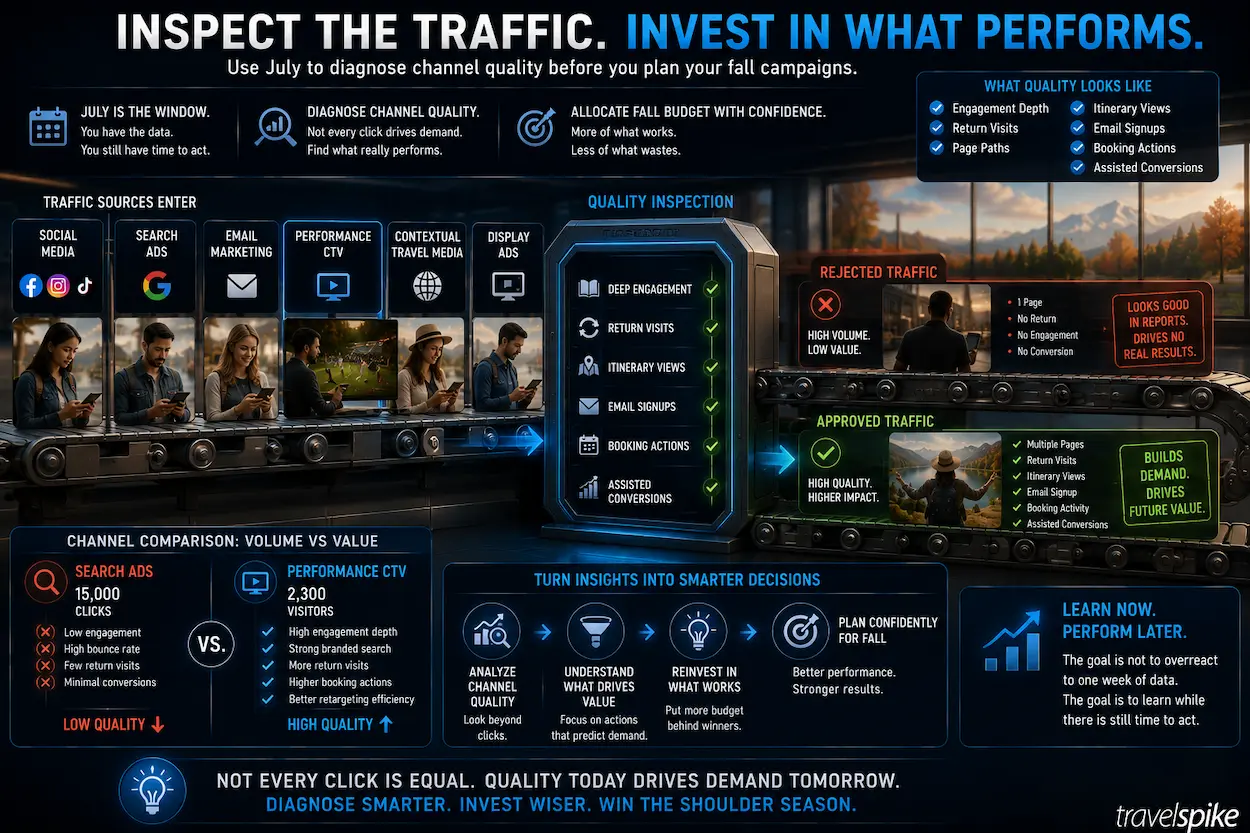
Summer campaigns can generate plenty of clicks. But not every click is equal.
July is the right time to identify which channels are producing quality traffic and which are simply inflating volume.
Look at engagement depth, return visits, page paths, booking actions, email signups, itinerary views, and assisted conversions. If a channel produces cheap clicks but no meaningful behavior, it may not deserve more fall budget. If a higher-attention channel like Performance CTV drives branded search, site visits, or retargeting efficiency, it may deserve a stronger role in the next campaign phase.
The goal is not to overreact to one week of data. The goal is to learn while there is still time to act.
Connect Summer Events to Fall Planning
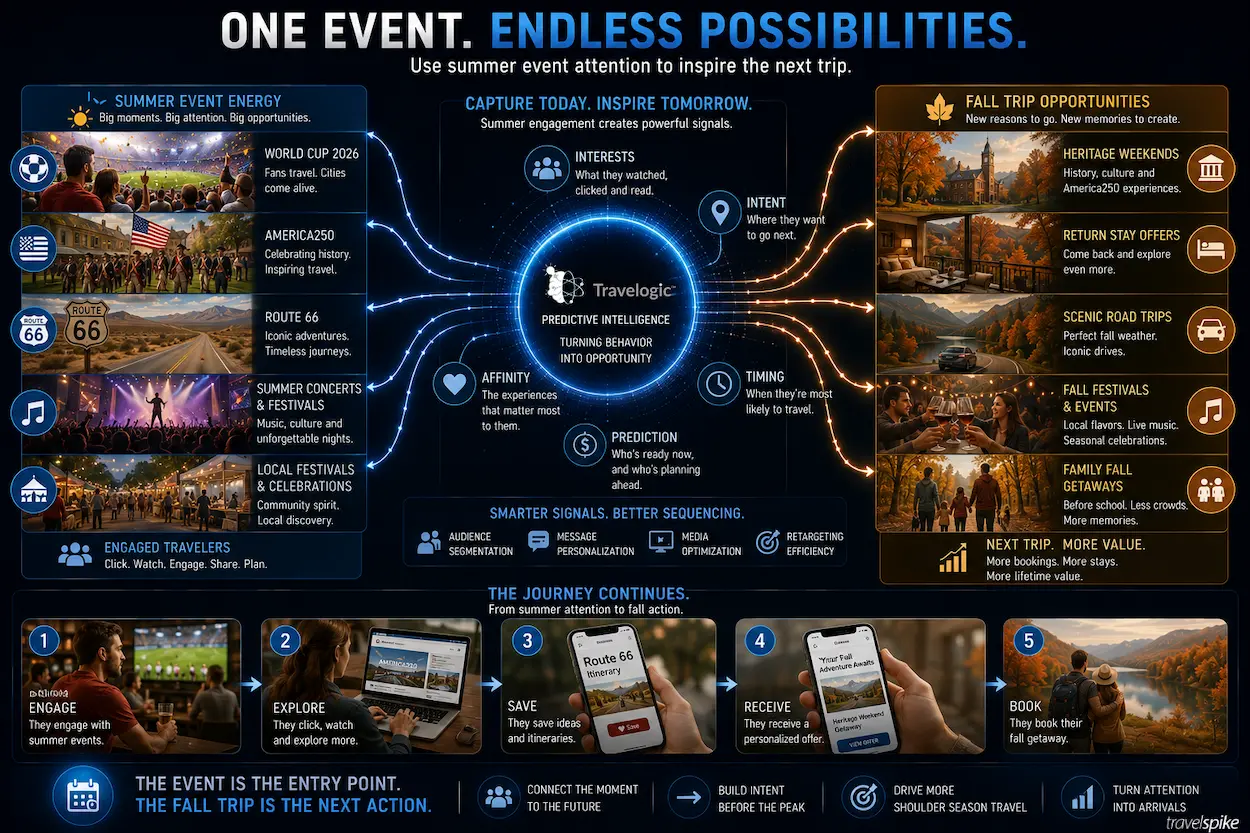
July is filled with event energy: World Cup, America250, Route 66, concerts, sports, festivals, and local celebrations.
Travel brands should use that attention to build future demand.
For example, a destination using America250 content in July can retarget heritage travelers with fall history weekends. A hotel near a major event can retarget visitors with a return-trip offer. An attraction seeing strong summer family engagement can promote fall programming before families finalize their school-year calendars.
The summer event is the entry point.
The fall trip is the next action.
The Takeaway
July is not just peak-season execution. It is a live research window.
The brands that use July well will not only improve summer performance. They will build better shoulder-season campaigns with fresher data, clearer audience segments, stronger creative, and more relevant reasons to travel.
Summer demand is active.
The smartest marketers are already using it to shape what comes next.