
Interactive Conversational Ads Help Travel Brands Map the Reason to Go
Travel performance depends on relevance, not abstract relevance. Practical relevance.
The traveler needs to see the right message, at the right moment, with the right reason to act, and then land in the right experience. That sounds obvious, but many campaigns still treat travelers too broadly.
A family traveler sees the same creative as a luxury traveler. A sports traveler lands on the same page as a romantic weekend traveler. Someone looking for attractions is sent to a generic destination homepage. Someone interested in food and culture gets a broad “visit now” message.
That is how performance leaks.
Interactive Conversational Ads can help travel brands solve that problem by asking travelers what they care about and using those responses to guide creative, copy, landing pages, resources, and booking paths.
This matters because discovery is becoming more complex. Phocuswright reports that 56% of U.S. travelers used AI for planning, booking or in-destination assistance for at least one trip in the past 12 months, while generative AI platforms reached 33% usage specifically for trip research. As travelers use AI tools and answer engines to narrow options earlier, brands need better direct signals once a traveler engages.
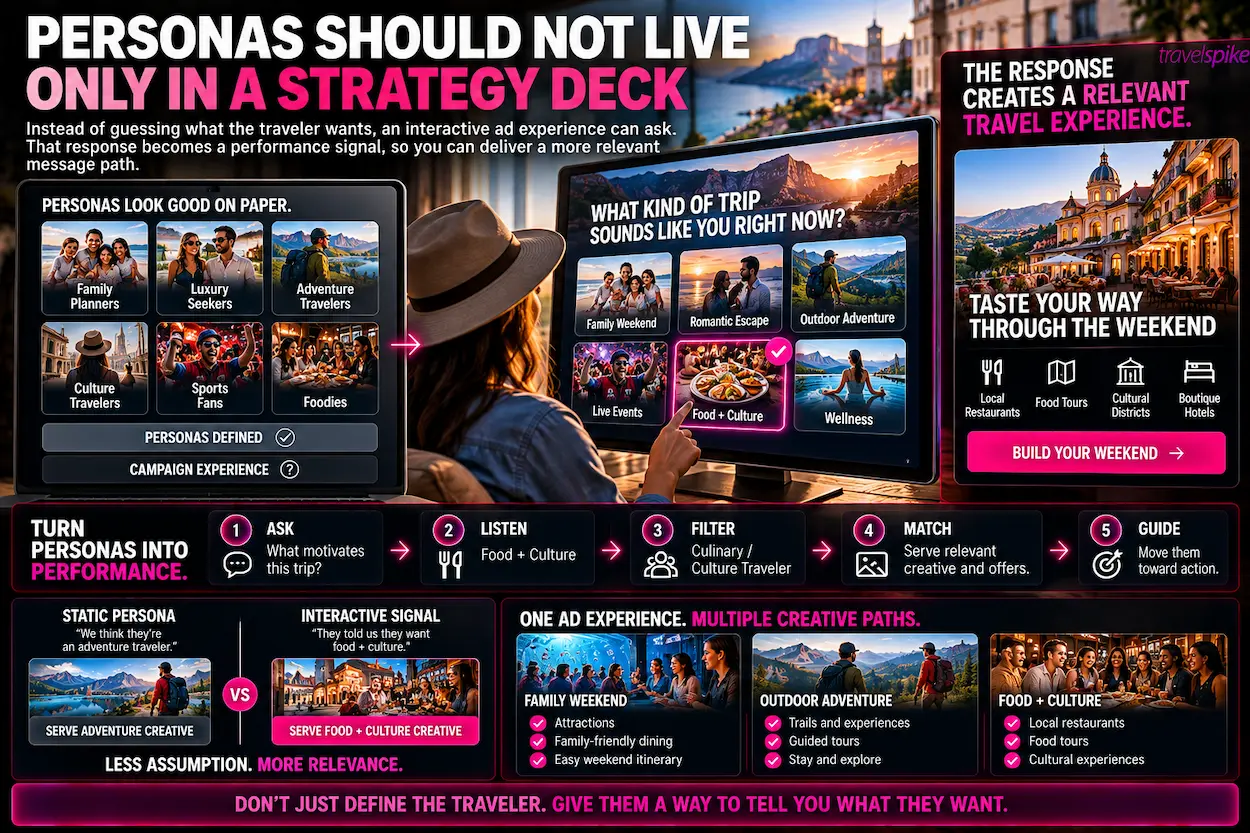
Personas Should Not Live Only in a Strategy Deck
Travel brands love building personas.
Family planners. Luxury seekers. Adventure travelers. Culture travelers. Sports fans. Foodies. Cruise shoppers. Road trippers. Budget-conscious travelers.
The problem is that those personas often stay disconnected from the actual campaign experience.
Interactive Conversational Ads make personas actionable.
Instead of guessing what the traveler wants, the ad experience can ask. Are they looking for a family-friendly weekend, a romantic escape, outdoor adventure, live events, food and culture, history, shopping, wellness, or value?
That response becomes a performance signal. The brand can then filter the traveler into a more relevant message path.
DCO Needs Better Inputs
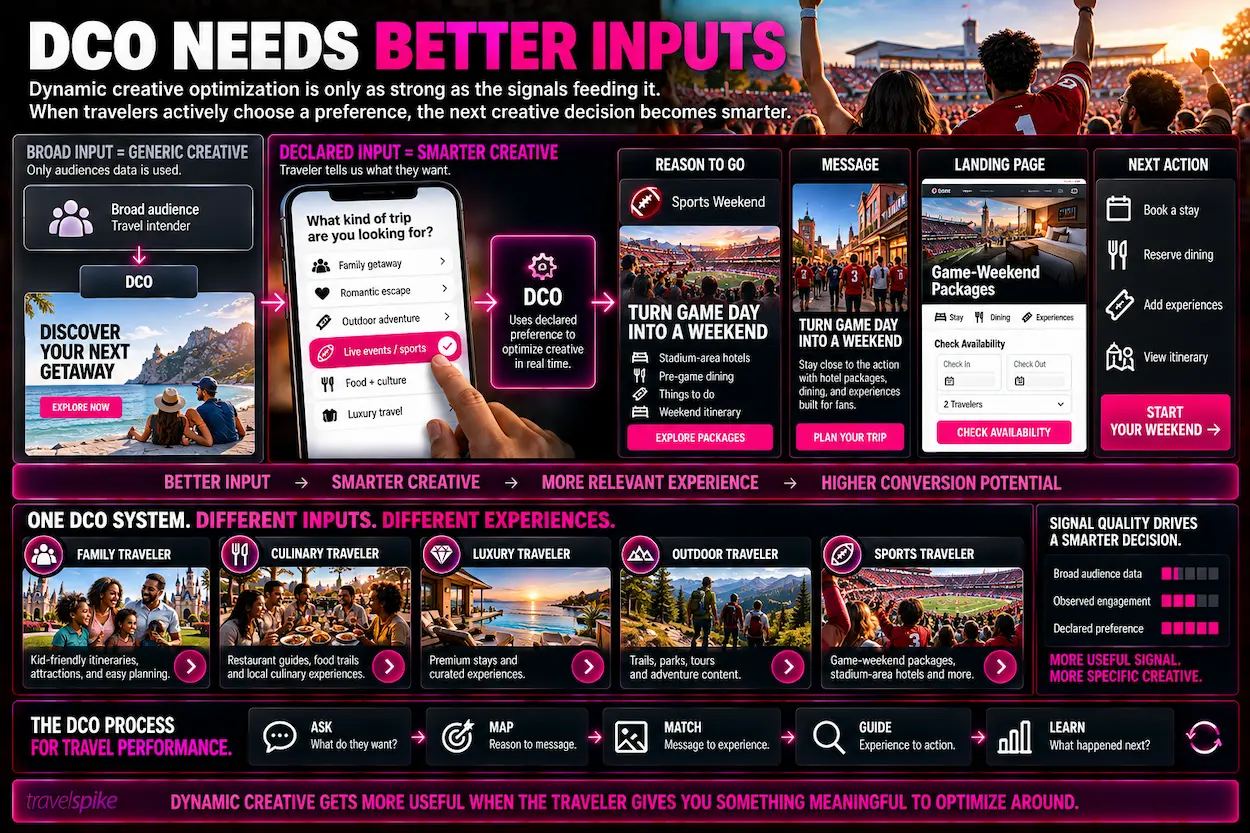
Dynamic creative optimization is only as strong as the signals feeding it.
If the only signal is broad audience data, the creative may still feel generic. But when a traveler actively chooses a preference inside a conversational experience, the next creative decision becomes smarter.
- A family traveler can be guided to kid-friendly itineraries.
- A sports traveler can be guided to game-weekend hotel packages.
- A culinary traveler can be guided to restaurant guides or food trails.
- A luxury traveler can be guided to premium stays and curated experiences.
- An outdoor traveler can be guided to trails, parks, tours, or adventure content.
That is DCO logic applied to the travel journey.
- The reason to go maps to the message.
- The message maps to the landing page.
- The landing page maps to the next action.
That is how performance improves.
Creative and Copy Should Filter Intent
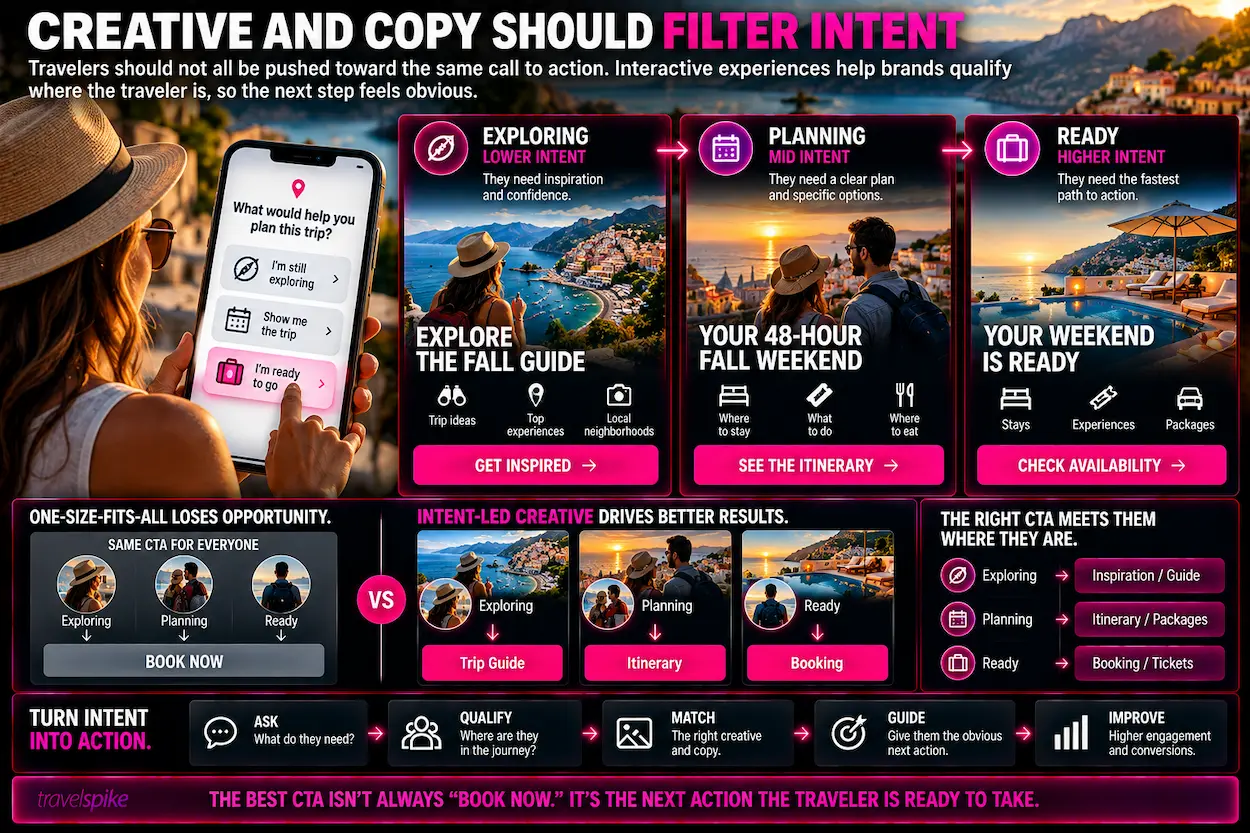
Travelers should not all be pushed toward the same call to action.
Some are ready to book. Some need a guide. Some need an itinerary. Some need pricing. Some need inspiration. Some need proof that the trip is worth the spend.
Interactive experiences help brands qualify where the traveler is.
A low-intent traveler may be sent to a trip guide. A mid-intent traveler may be sent to an itinerary or package page. A high-intent traveler may be sent directly to booking, tickets, or inquiry.
The point is not to make the ad feel complicated, but to make the next step feel obvious.
Experiences Are Becoming a Bigger Part of the Decision
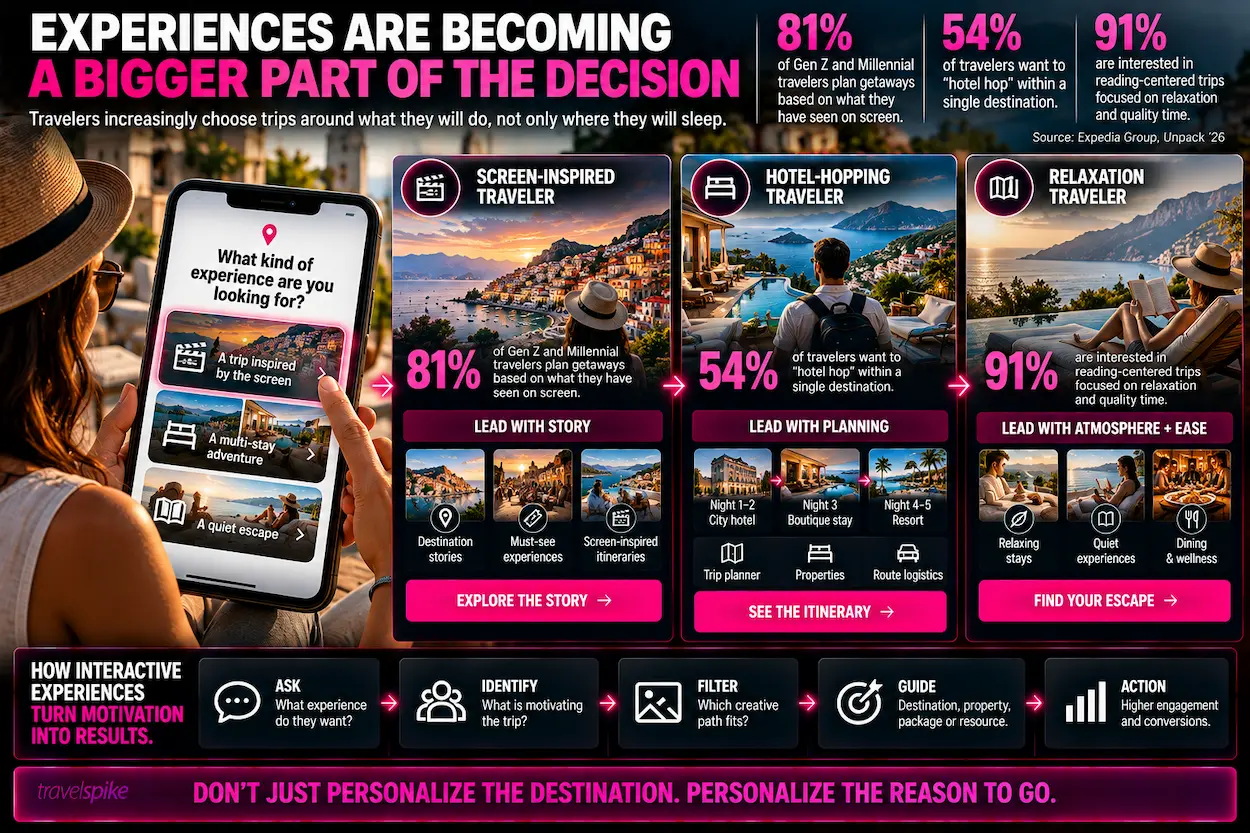
This is especially important because travelers increasingly choose trips around what they will do, not only where they will sleep.
Expedia Group’s Unpack ’26 report found that 81% of Gen Z and Millennial travelers plan getaways based on what they have seen on screen, while 54% of travelers want to “hotel hop” within a single destination and 91% are interested in reading-centered trips focused on relaxation and quality time.
Those are different trip motivations, therefore they require different creative paths.
A traveler inspired by entertainment needs a story. A traveler hotel hopping needs planning support. A traveler seeking relaxation needs atmosphere and ease.
Interactive Conversational Ads help brands identify those motivations earlier and guide travelers toward the right destination content, property, package, or resource.
The Takeaway
Performance marketing is not only about finding the right audience, it’s about guiding the right traveler into the right experience.
Interactive Conversational Ads help travel brands move beyond broad personas and capture direct intent signals. Those signals can shape creative, copy, landing pages, DCO logic, retargeting, and booking paths.
The result is a smarter journey, not one message for everyone.
A filtered, scored, more relevant path from interest to action.