
How Travel Media Buyers Can Find High-Intent Audiences Beyond Standard DSP Segments
A media director with hotel, destination, cruise, or attraction accounts has plenty of ways to buy impressions. The harder assignment is finding audiences with genuine travel intent, understanding where ads appear, and showing clients which decisions improved performance.
Broad travel-interest segments can be a useful starting point. Yet the label alone rarely tells a buyer whether someone is researching a cruise, comparing a weekend getaway, or reading a travel article out of curiosity. Audience quality becomes more important when every client wants clearer connections between media exposure and commercial results.
That makes the evaluation of travel-specialist media partners a practical part of modern agency planning.
Ask Where the Inventory Actually Comes From
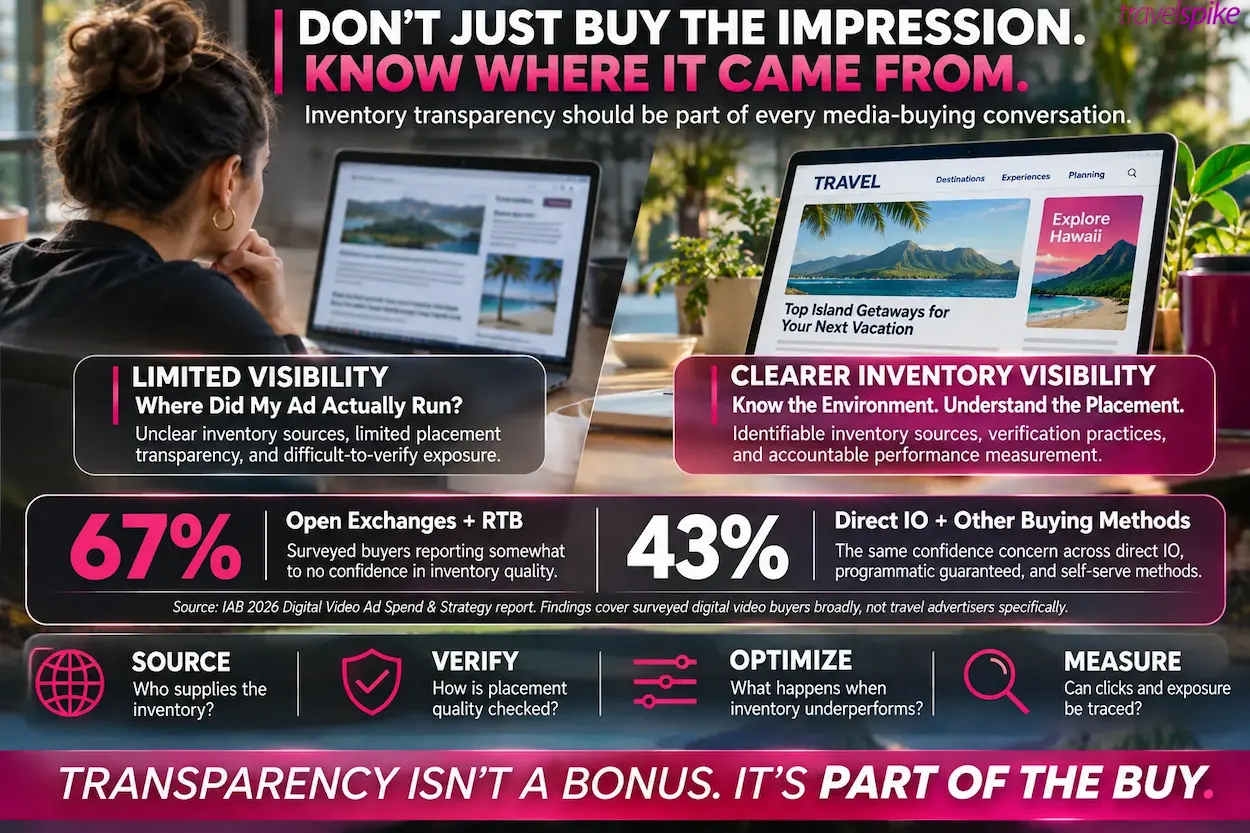
The IAB’s 2026 Digital Video Ad Spend & Strategy report found that 67% of surveyed buyers had somewhat to no confidence in inventory quality on open exchanges and real-time bidding. Even among direct-IO, programmatic-guaranteed, and self-serve methods, the figure was 43%.
These results cover digital video buyers broadly, rather than travel advertisers specifically. Still, the underlying questions matter to an agency protecting a tourism client’s budget: Who owns or supplies the inventory? What verification is available? What happens when a placement underperforms? Can the buyer understand the source of a click or exposure?
A travel-specific partner should make the distribution environment and the measurement approach clear before the campaign begins.
Separate Broad Interest From Travel Planning Signals
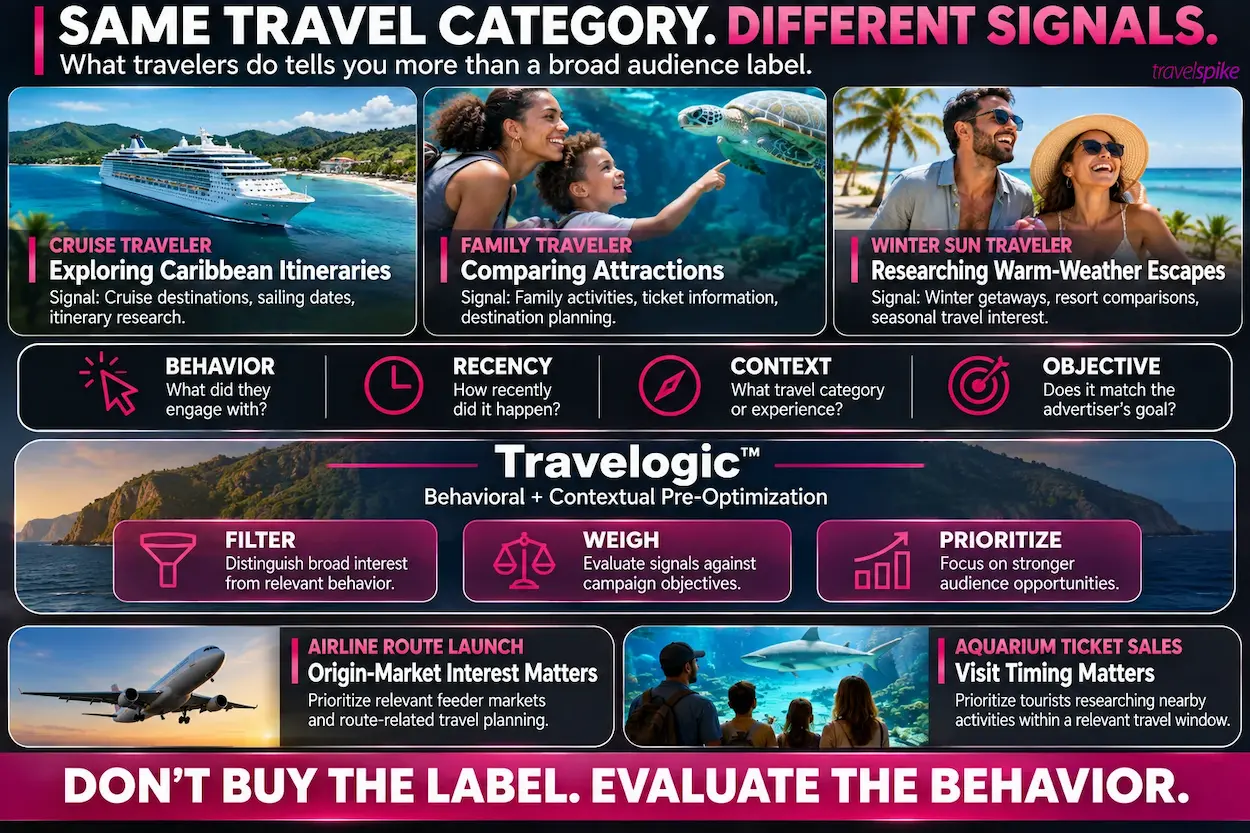
Travel intent is easier to work with when the agency knows what produced it. A visitor reading about Caribbean cruises, a family comparing destination attractions, and a consumer exploring winter sun are signaling distinct motivations.
Useful evaluation questions include how audiences are formed, how recently they demonstrated a relevant behavior, which travel categories they engaged with, and how those signals can guide campaign weighting. The quality of a signal also depends on the advertiser’s objective: an airline route launch may need origin-market interest, while an aquarium may need tourists arriving within a specific window.
Travelogic™ helps frame pre-optimization around these kinds of behavioral and contextual signals, so the media plan can place more weight on credible demand rather than static labels alone.
Look Beyond the Standard Buying Path
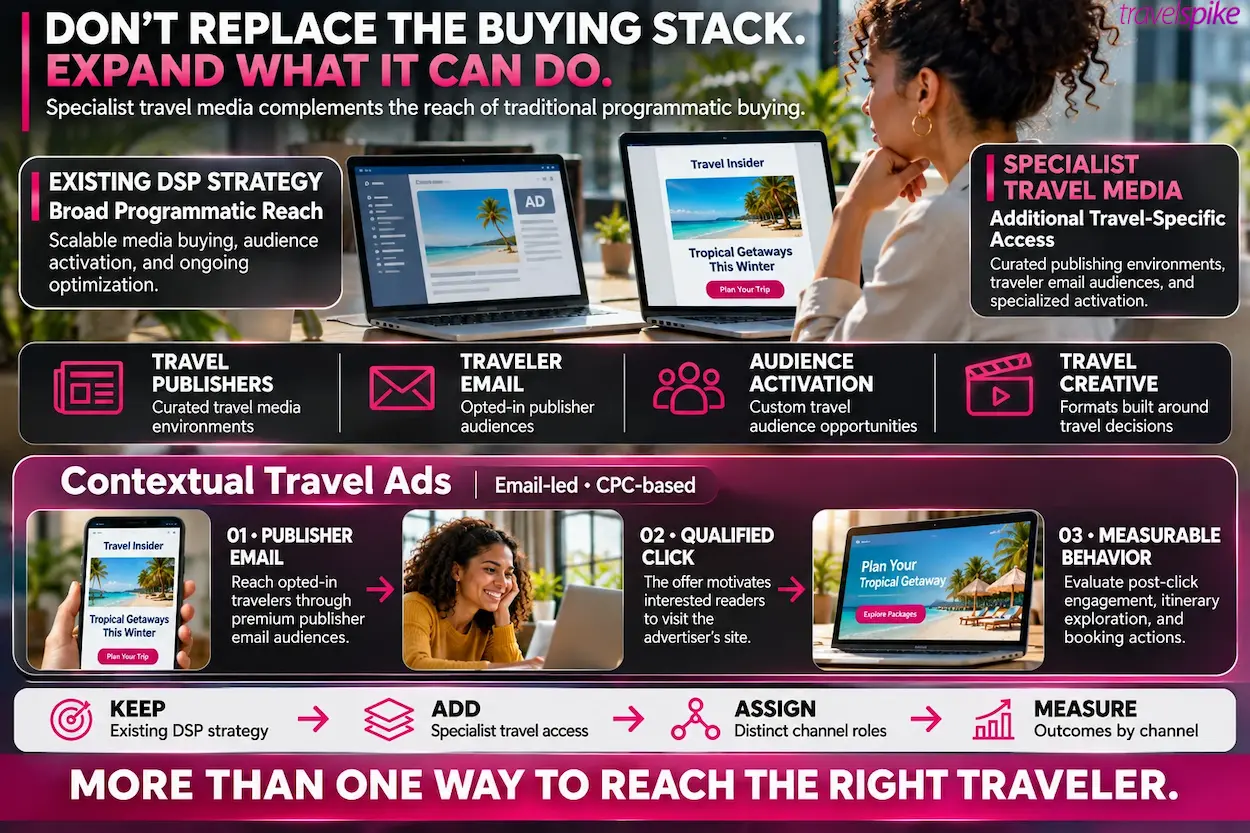
Agencies should ask what a specialist contributes that the existing DSP plan cannot easily reproduce. Possibilities include curated travel publishing environments, opted-in traveler email audiences, custom audience activation, or creative formats designed for travel decisions.
For instance, Travelspike’s Contextual Travel Ads offer click-based access to premium travel publisher email audiences. That gives a buyer another path to qualified traffic from people engaging with travel-related content, with a clear cost-per-click mechanism. The right landing page then turns that visit into measurable behavior.
This complements broader programmatic media instead of requiring the agency to replace its buying stack. Each channel should have a distinct role and a measurement plan that reflects it.
Build the Brief Around the Client’s Real Outcome
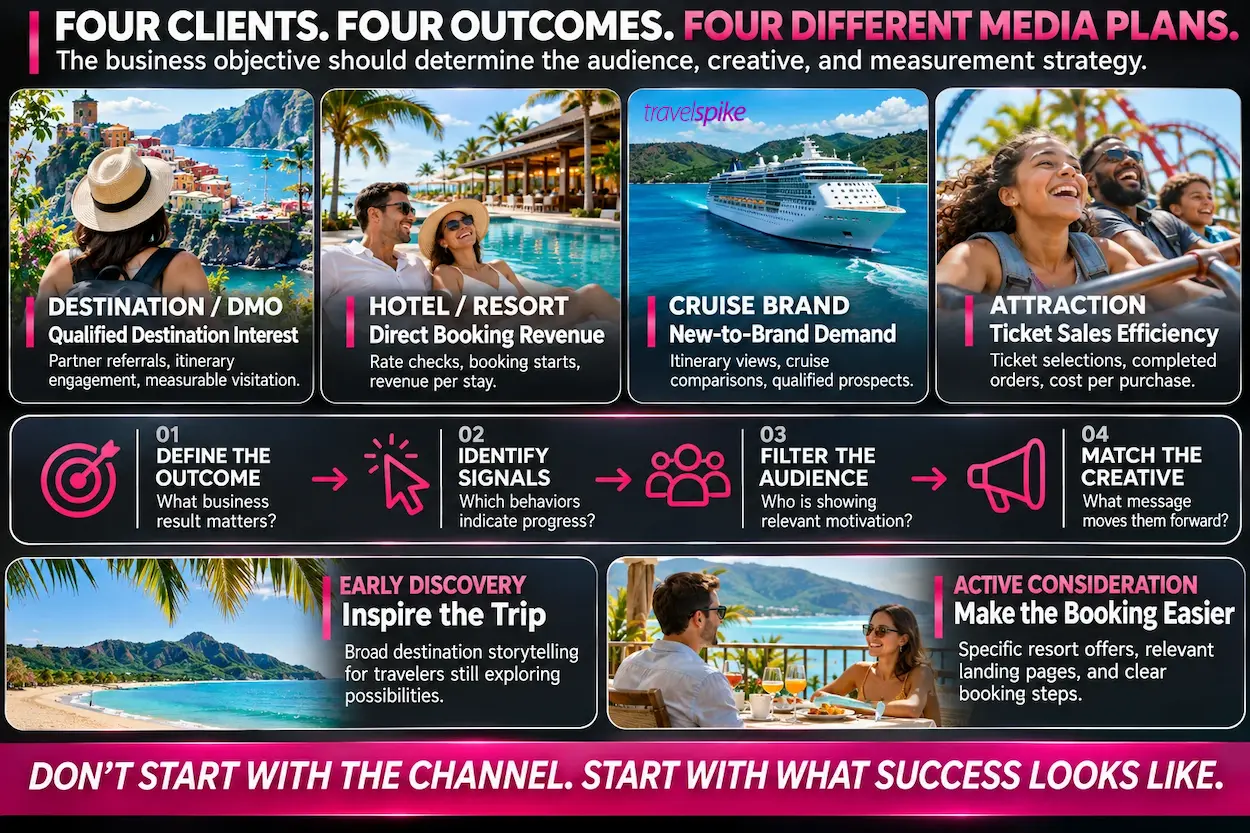
A DMO may want qualified destination interest, partner referrals, and measurable visitation. A resort may prioritize direct booking starts and revenue per stay. A cruise brand may want new-to-brand prospects viewing specific itineraries. An attraction may care about cost per ticket order.
Put those outcomes in the brief before choosing audiences and formats. Then identify the useful signals on the way to conversion: rate checks, itinerary views, email signups, ticket selections, booking starts, and repeat site visits.
This also improves creative. A broad travel message may suit early discovery; a specific resort offer belongs with travelers evaluating that kind of stay. Filter audiences by motivation and guide each group to a page that continues the promise made in the ad.
Ask Tough Questions About Attribution
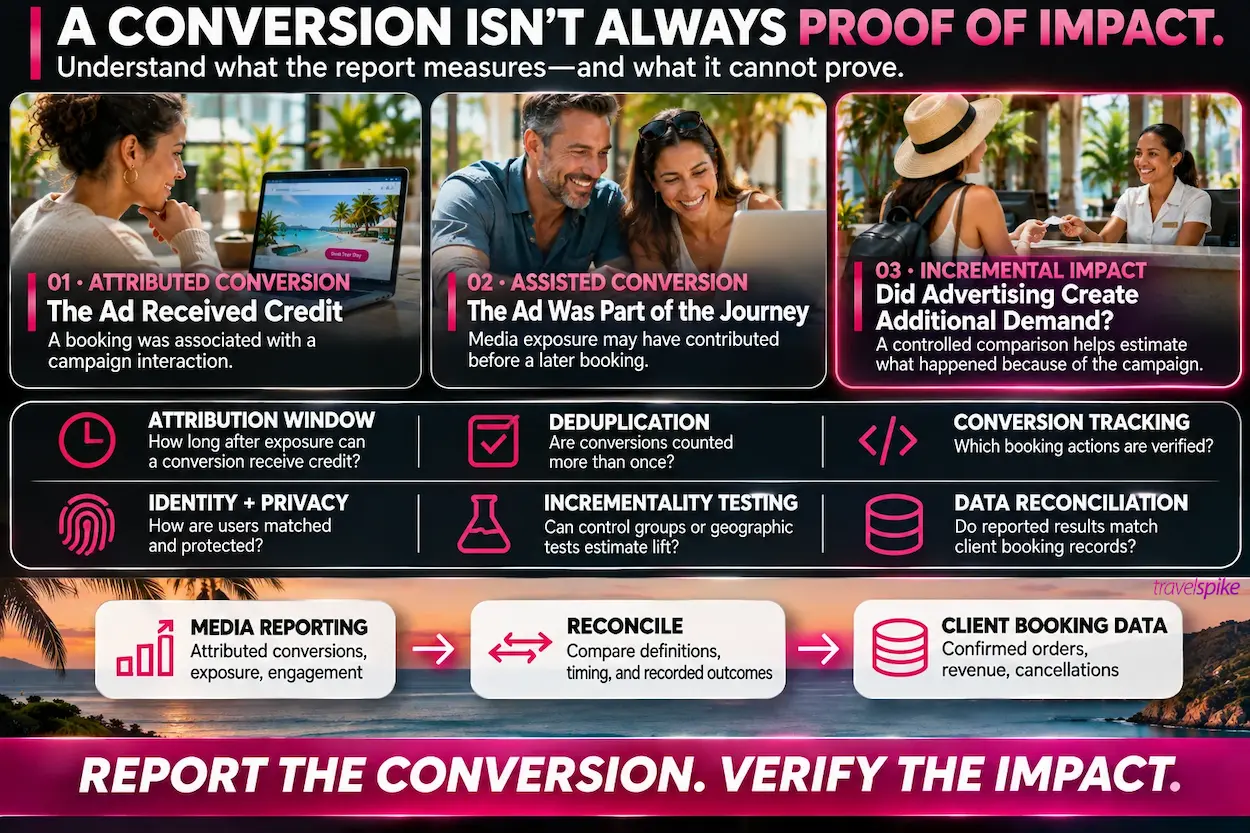
A vendor’s report should explain what it measured, how it connected outcomes to media, and where uncertainty remains. An exposed user returning to book later may be a meaningful assisted conversion, but that is different from verified incremental revenue.
Ask about view-through windows, deduplication, conversion pixels, identity resolution, privacy controls, and whether control-group or geographic tests are possible. Confirm who can access the underlying reporting and whether results can be reconciled with the client’s analytics or booking system.
Strong reporting allows an agency to defend a decision in a client meeting and improve the next campaign with evidence.
Use a Scorecard for Vendor Selection
Compare potential partners on audience evidence, inventory transparency, creative flexibility, operational support, reporting quality, and fit for the client’s goal. Include commercial terms and minimums, but avoid letting the lowest CPM decide the entire plan.
A provider that helps an airline reach active route prospects or an attraction acquire online ticket buyers may justify a different price than undifferentiated reach. Test with an agreed outcome, review signal quality, and adjust weighting as results emerge.
Travel agencies and media buying teams earn client trust by making disciplined choices about supply. The best specialist partners help them explain where the traveler came from, why the audience was relevant, and what happened after the ad.