
How to Measure Destination Marketing ROI Beyond Clicks and Impressions
A destination marketing organization can deliver millions of impressions, strong video completion rates, and growing website traffic while still facing a difficult question from its board:
How much visitation and economic activity did our advertising actually generate?
That question is becoming central to how destinations plan campaigns, evaluate media partners, and communicate their value to hotels, attractions, local businesses, and public stakeholders.
The challenge is that tourism decisions unfold over weeks or months. A traveler might see a destination video, read an article, compare accommodations, talk to family, and book through a third-party platform. Much of that journey happens outside the DMO’s own website.
Measuring return requires connecting several kinds of evidence.
Start With the Economic Outcomes Stakeholders Care About
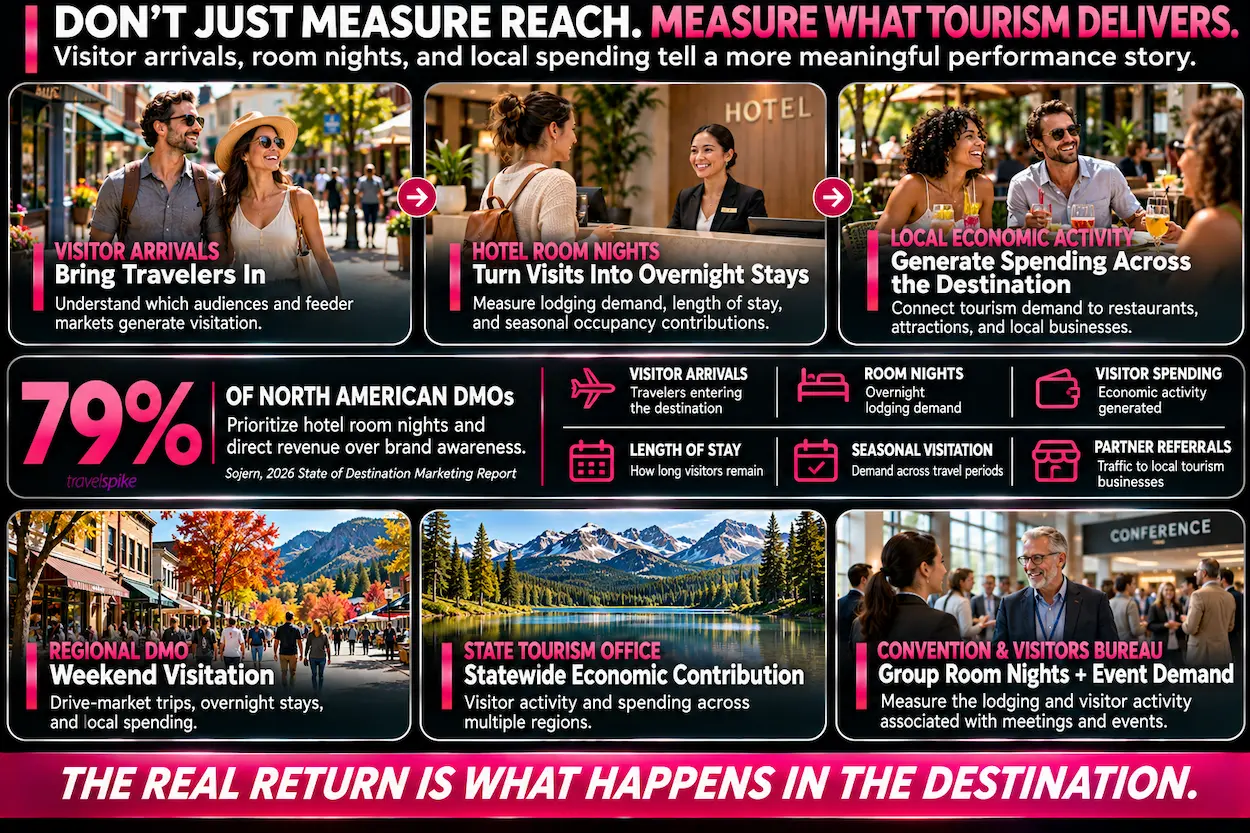
A destination’s reporting framework should begin with the outcomes it is responsible for influencing.
Those may include visitor arrivals, overnight stays, hotel room nights, average visitor spending, length of stay, seasonal visitation, or referrals to local tourism partners.
The emphasis will vary by organization. A small regional DMO may care about weekend visitation from nearby drive markets. A state tourism office may need to demonstrate economic contribution across several regions. A convention and visitors bureau may focus on group room nights and event-related demand.
In Sojern’s 2026 State of Destination Marketing Report, 79% of North American DMOs surveyed prioritized hotel room nights and direct revenue over brand awareness.
The finding reflects the growing importance of commercial outcomes in tourism marketing decisions.
Build a Measurement Plan Before Launching Media
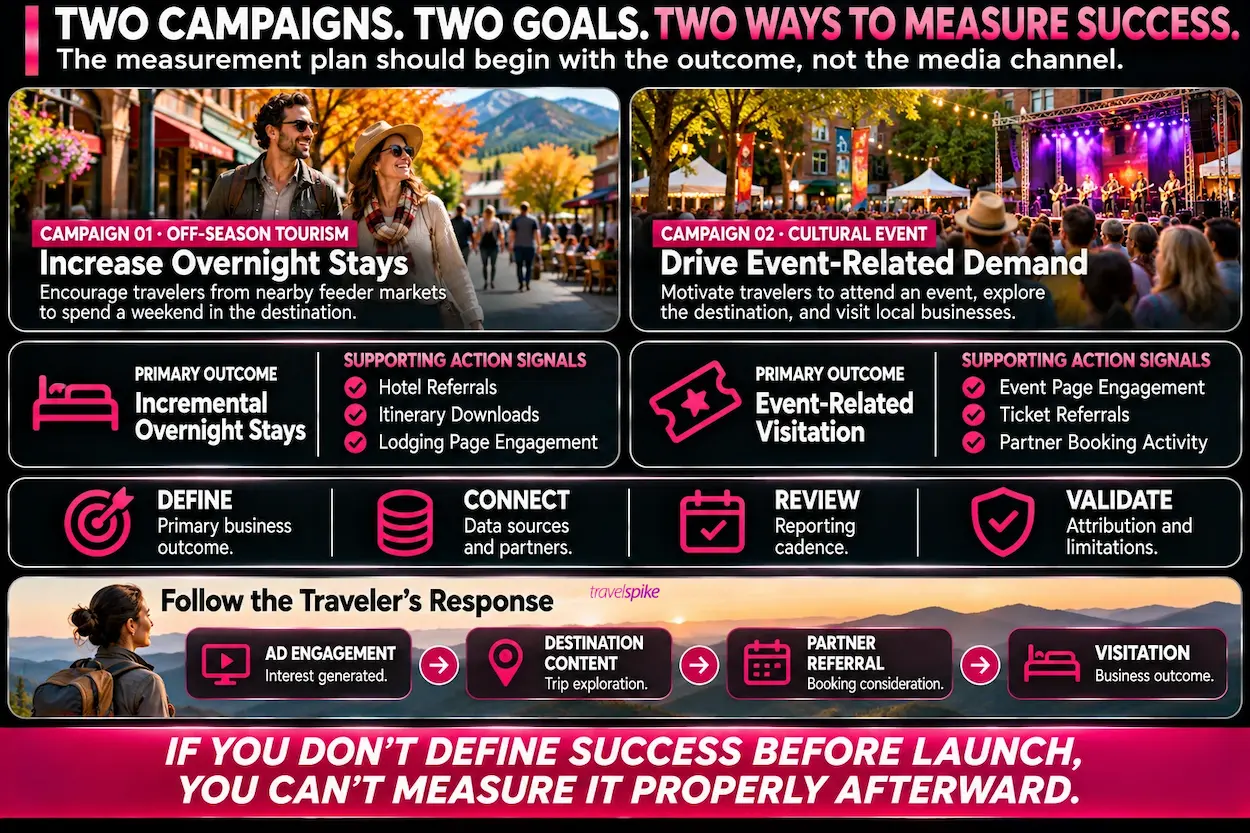
Each campaign should have a defined outcome and supporting action signals. Consider a campaign designed to increase weekend visitation during a quieter season.
The primary objective might be incremental overnight stays. Supporting signals could include hotel referrals, itinerary downloads, lodging-page engagement, attraction offer clicks, and repeat visits from priority feeder markets.
A separate campaign promoting a major cultural event may measure ticket referrals, event page activity, partner bookings, and nearby visitor movement.
These activities help explain how people respond to the campaign. They also reveal where the booking journey loses momentum.
The measurement plan should specify which data partners and participating businesses can provide, how often results will be reviewed, and what the organization can reasonably attribute to its advertising.
Understand What Each Measurement Method Can Prove
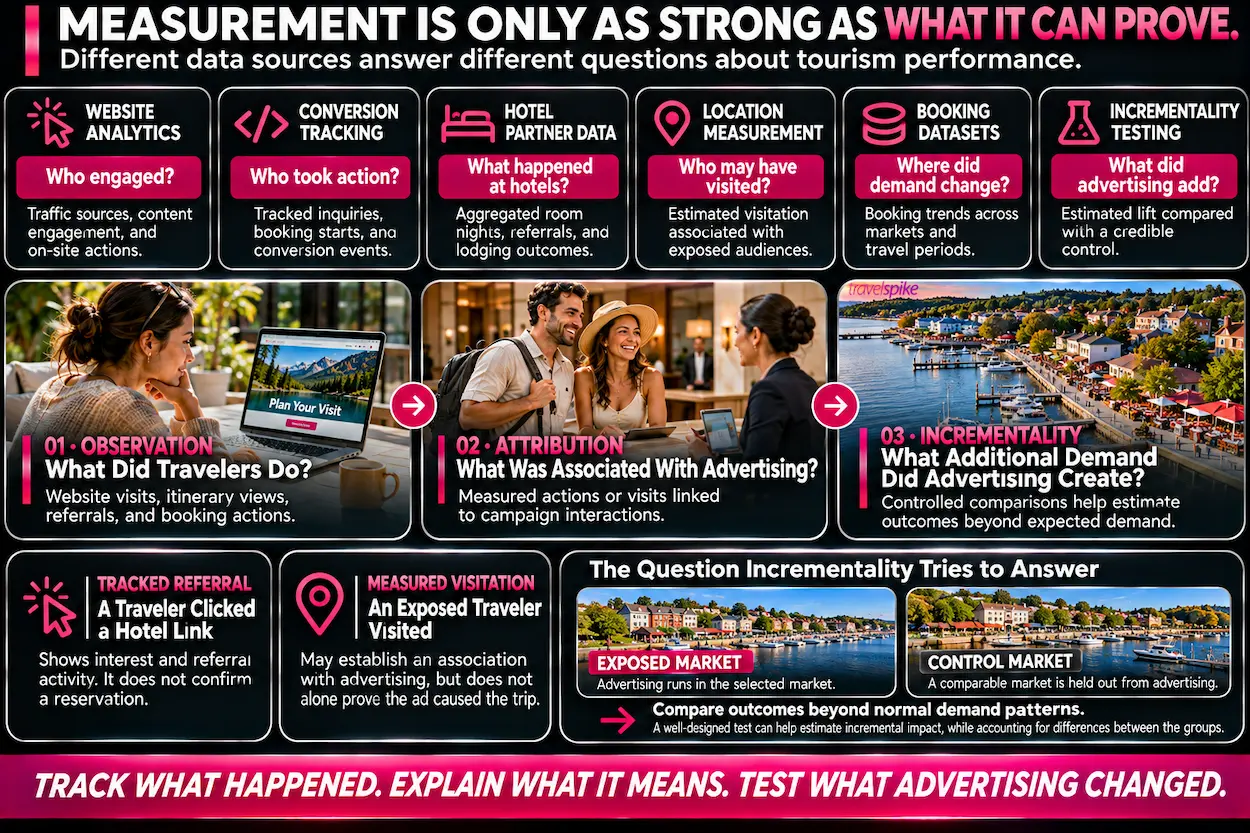
Different methods answer different questions.
Website analytics reveals which sources bring engaged visitors and which actions occur on owned pages. Conversion pixels can connect certain campaign interactions with tracked booking or inquiry events. Hotel partners may share aggregated room-night or referral outcomes.
Privacy-conscious location measurement can estimate visits from exposed audiences, depending on the data quality and methodology. Booking datasets may help identify changes in demand across feeder markets.
Incrementality testing can add another layer. A comparable market, audience holdout, or other credible control can help estimate what happened because of advertising rather than ordinary seasonal demand.
These methods have limitations. A tracked hotel referral does not guarantee a reservation. A visit observed after ad exposure does not automatically mean the campaign caused it.
Clear explanations make a performance report more credible.
Score Markets by Their Contribution
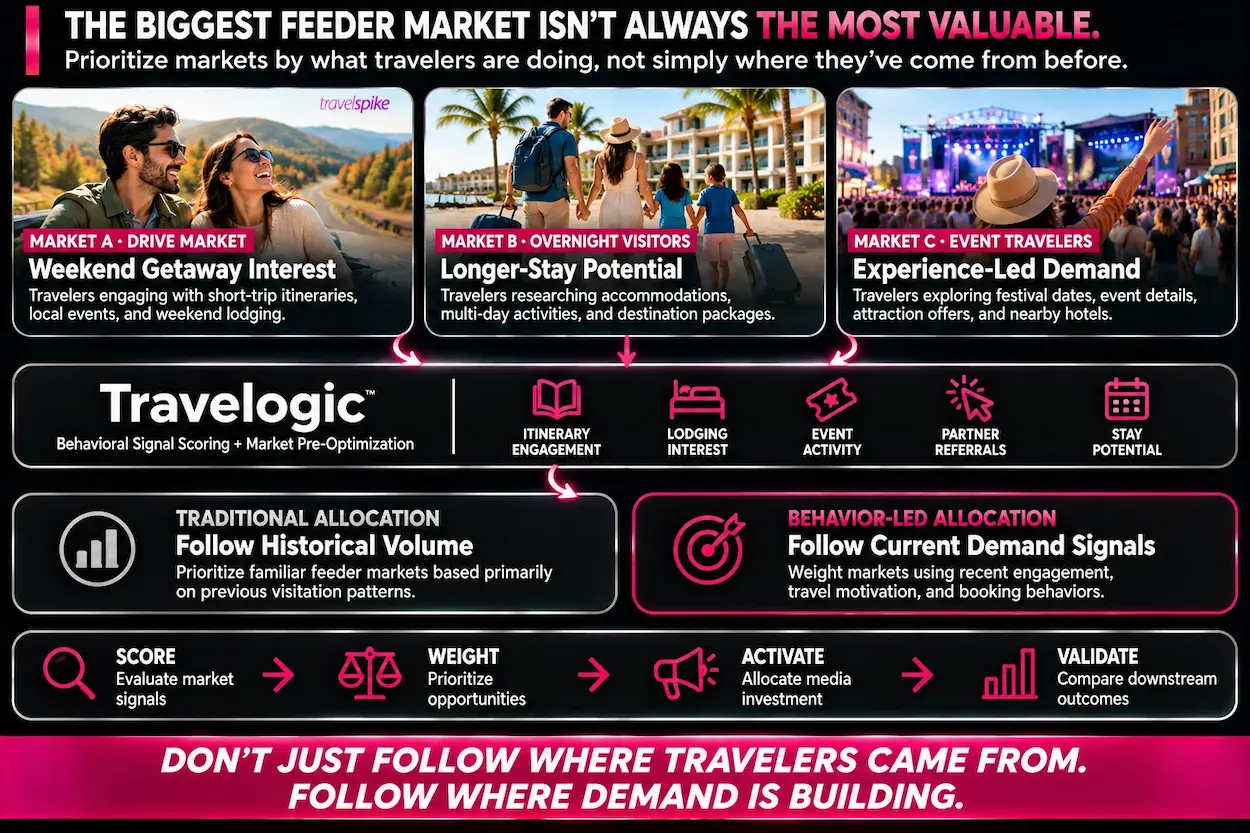
Many destinations allocate media according to familiar feeder markets or historical visitor volumes. A stronger performance plan also considers what those markets are doing now.
Which markets are generating deeper itinerary engagement? Where are travelers exploring lodging and event content? Which markets are producing meaningful partner referrals? Where does the campaign appear to be reaching visitors who stay longer or contribute more economic value?
Travelogic™ can help destinations pre-optimize campaigns by scoring and weighting relevant behavioral signals before budgets are distributed across markets.
Campaign teams can then test whether stronger-scoring markets produce better downstream results.
This gives the DMO a more responsive planning process and useful evidence for future investment decisions.
Make Partner Participation Part of the Measurement System
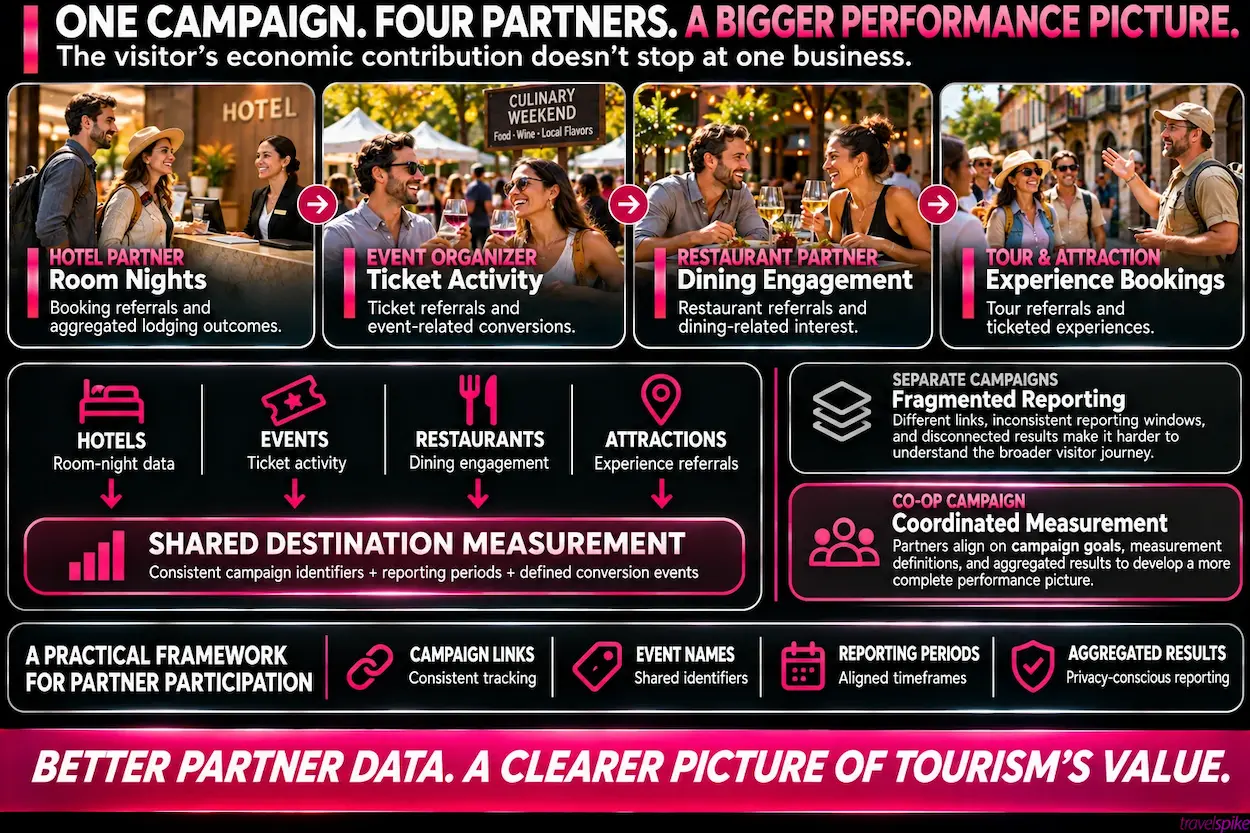
A destination’s economic impact extends across many businesses, so reporting becomes stronger when hotel, attraction, event, and tourism partners contribute.
Partners can use consistent campaign links, agreed event names, shared reporting periods, and clearly defined conversion events. Where appropriate, they can provide aggregated booking or ticket data without exposing personal customer records.
Co-op campaigns are particularly useful for this approach because partners share both a promotional objective and an incentive to understand performance.
For example, a culinary weekend campaign could connect hotel referrals, ticketed experiences, and restaurant-related engagement. The resulting data gives a fuller picture of the visitor’s path.
Report What Worked and What Still Needs Testing
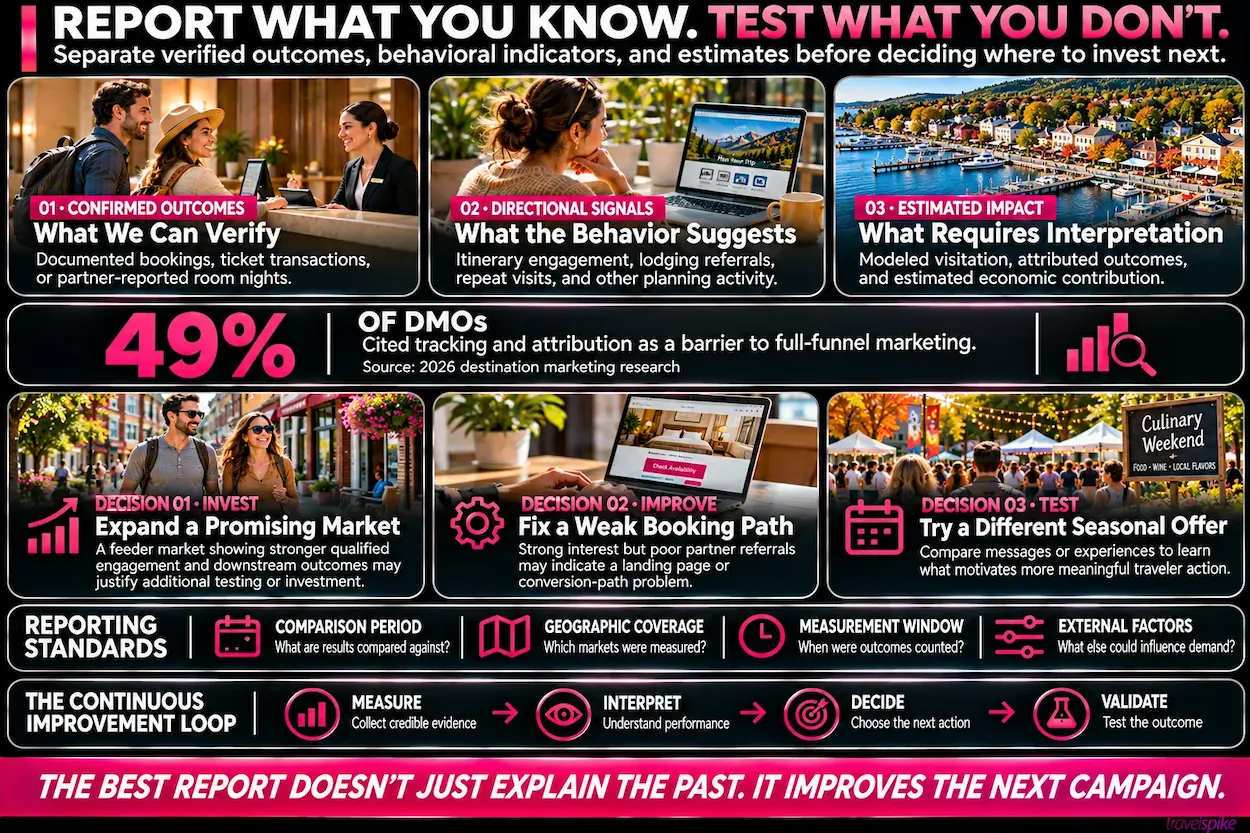
The 2026 destination marketing research also points to a practical obstacle: 49% of DMOs cited tracking and attribution as a barrier to full-funnel marketing.
A strong report should therefore distinguish confirmed outcomes, directional indicators, and estimates. It should explain the comparison period, geographic coverage, measurement window, and any major factors that could affect results.
Stakeholders deserve to know which markets performed well, which messages generated meaningful action, and what the organization learned.
It is also worth showing the next decision. Will the DMO increase investment in a promising feeder market, revise an underperforming landing page, or test a different seasonal offer?
Connect Reporting to the Next Campaign
The most useful performance report helps the team make a better media decision.
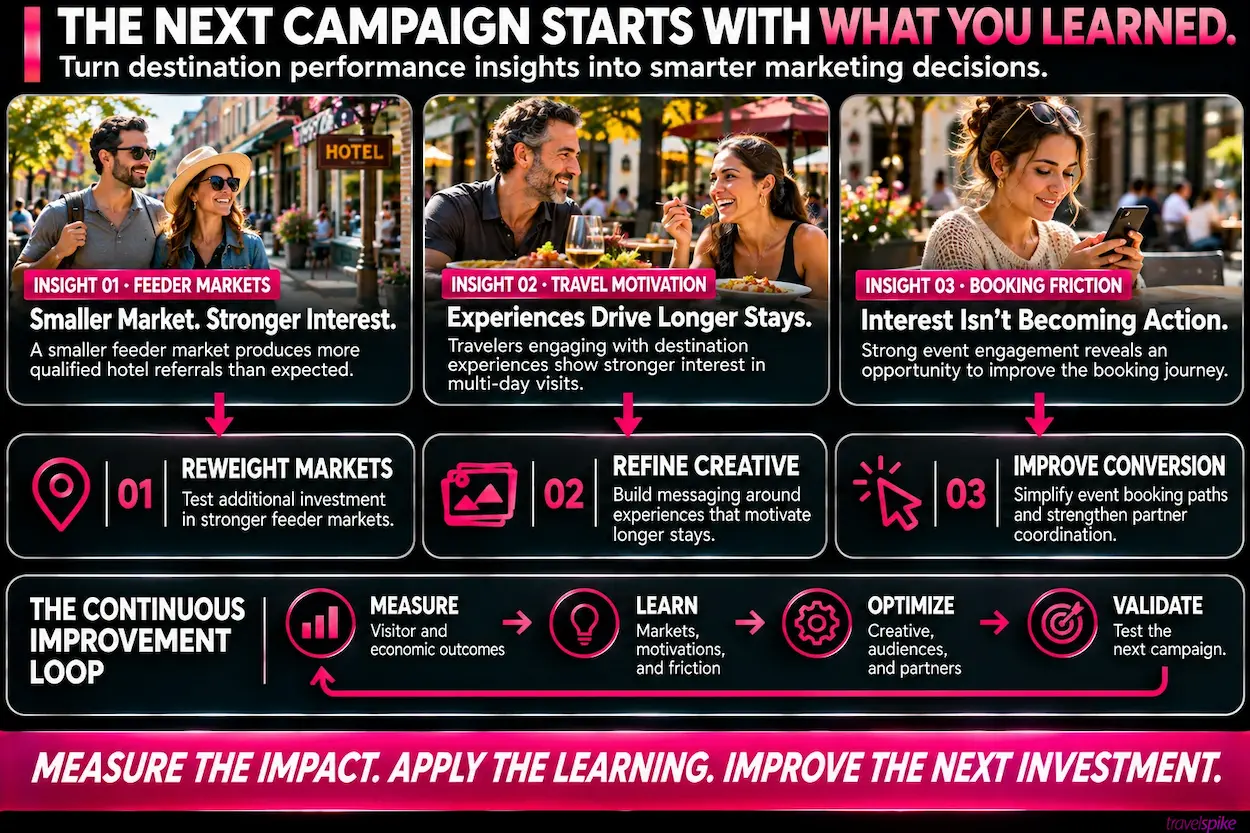
A destination may discover that a smaller market generates more hotel referrals, that a particular experience motivates longer stays, or that an event campaign needs a stronger booking path.
Those findings should feed directly into creative development, audience filtering, market weighting, and partner planning.
Measuring destination marketing ROI becomes more practical when the campaign is designed around the evidence stakeholders need from the beginning. With a clear measurement framework, DMOs can explain their contribution to visitation and local business activity while improving how future budgets are invested.
The Takeaway
Measuring destination marketing ROI requires connecting advertising performance to the outcomes that matter most: visitation, hotel room nights, visitor spending, and local economic impact. By scoring traveler intent, evaluating feeder-market performance, and combining campaign data with partner insights, DMOs can make smarter media investments, demonstrate their value to stakeholders, and build stronger campaigns that drive measurable tourism growth.