How to Increase Online Ticket Sales for Tourist Attractions Without Relying on Discounts
An attraction can have a full calendar, strong visitor reviews, and a recognizable name while still struggling to sell enough tickets online. The usual response is to spend more on ads or offer a bigger discount. Both can create activity, but neither addresses the entire booking journey.
For a marketing director at a theme park, aquarium, museum, zoo, or science center, the more useful question is: Where are potential visitors getting stuck between discovering the experience and purchasing a ticket?
That question leads to a performance plan covering audience quality, the reason to visit, and the checkout itself.
Understand the Value of the Online Buyer
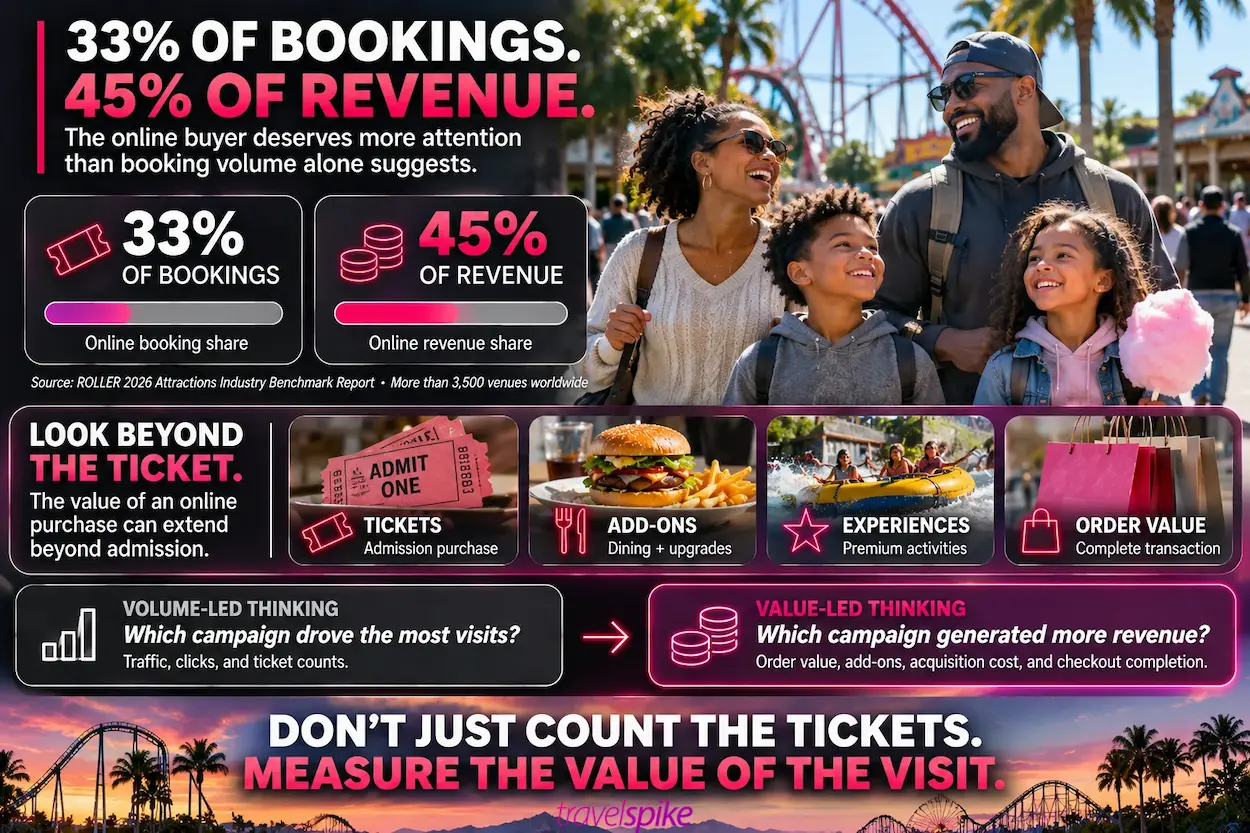
ROLLER’s 2026 Attractions Industry Benchmark Report, drawing on data from more than 3,500 venues worldwide using its platform, found that online bookings represented 33% of bookings but 45% of revenue. This pattern suggests that digital transactions deserve attention well beyond the size of the online buyer pool. It also makes average order value worth tracking alongside ticket volume.
Start with a simple breakdown: online tickets sold, revenue per order, add-on purchases, paid-media cost per purchase, and the percentage of booking sessions that reach checkout. Then separate weekday visitors, weekend visitors, special-event buyers, families, members, and out-of-town guests where data allows.
A campaign bringing in many low-value visits can look successful in a traffic report while contributing little to revenue. Reviewing the complete purchase helps reveal which audiences and messages deserve more investment.
Score Visitor Signals Before Increasing Spend
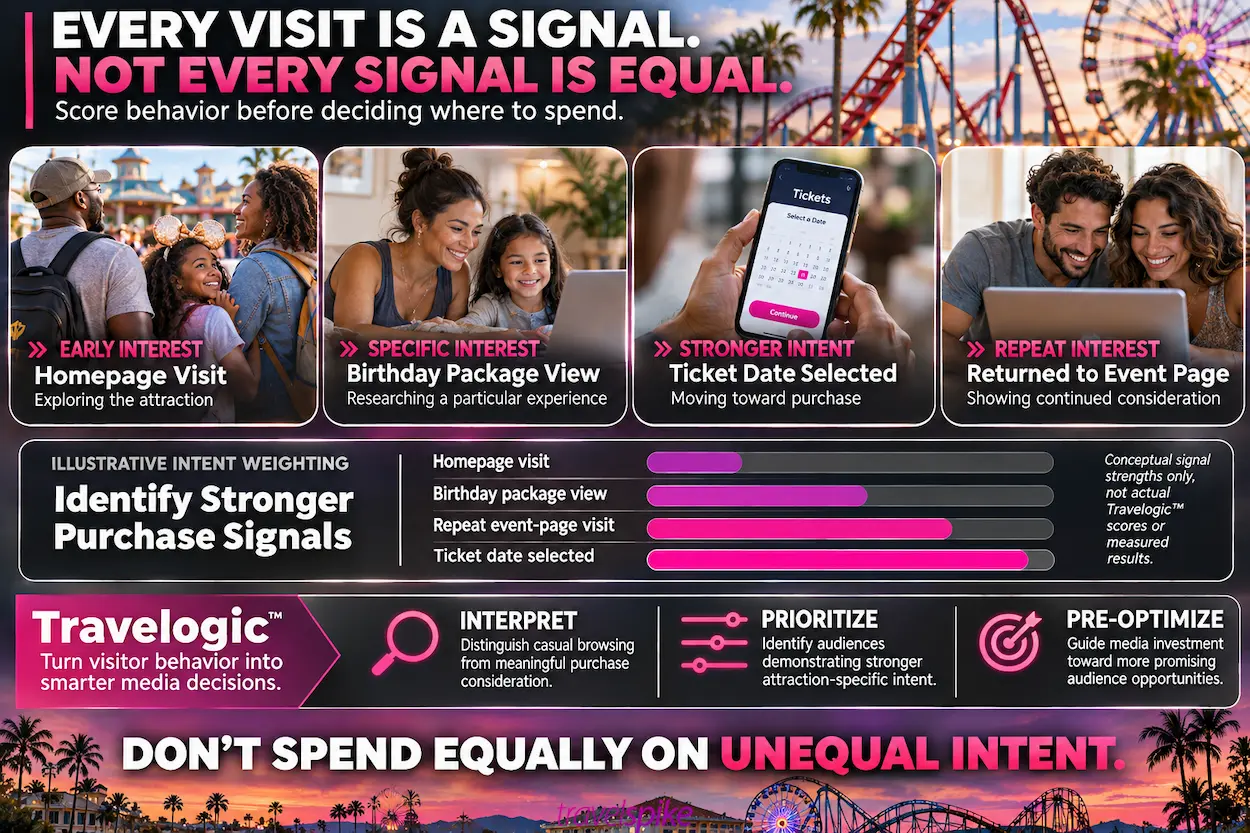
A visitor browsing admission prices has shown a different level of interest from someone watching an awareness video. A parent exploring birthday packages has different needs from a traveler researching attractions near a hotel. Assign practical weights to these signals instead of treating every site visitor as equally ready to purchase.
For example, a completed ticket-price view followed by a date selection could carry more weight than a single homepage visit. Someone who returns to an event page twice may be worth a reminder about availability. Visitors who engage with general destination content may need an itinerary or an explanation of why the attraction belongs on their trip.
Travelogic™ can support this kind of pre-optimization by helping marketers interpret traveler behavior and prioritize stronger audience opportunities before spending is spread too broadly.
Make the Mobile Purchase Easy
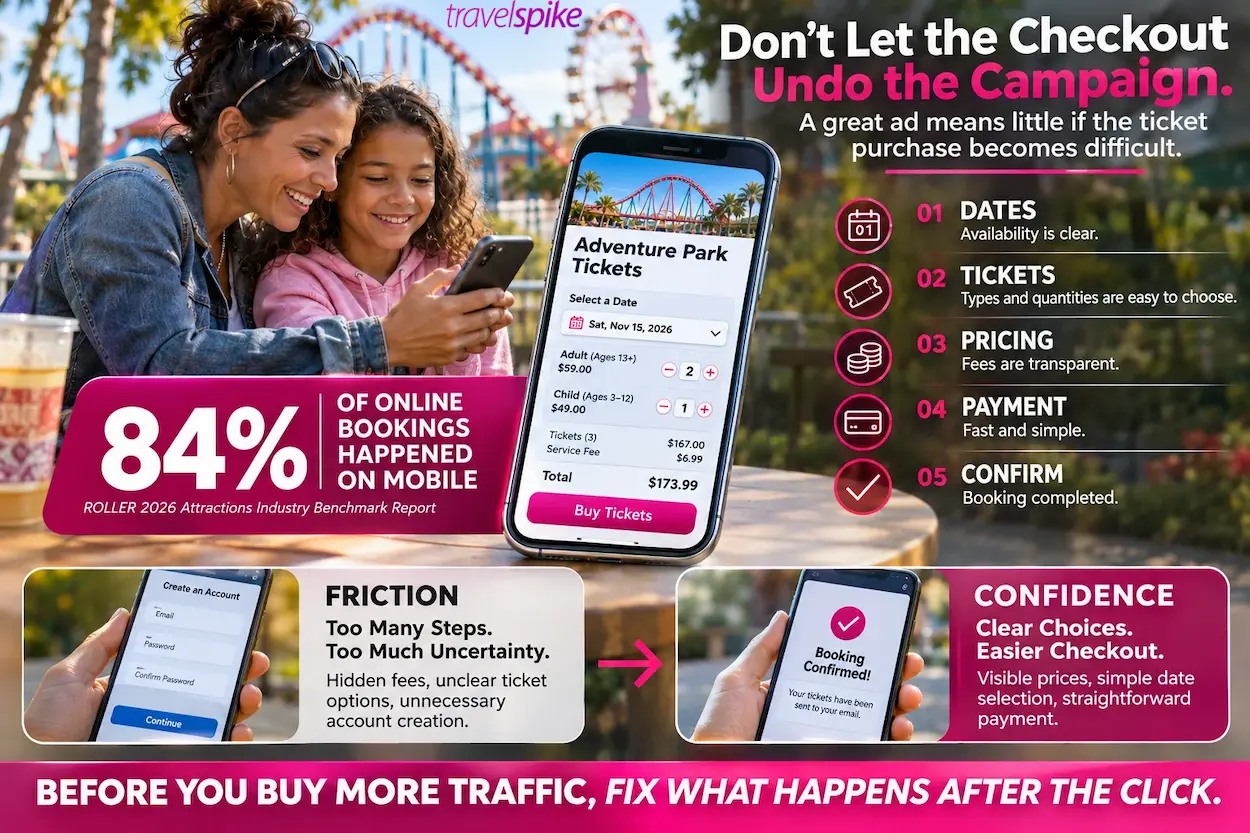
The checkout deserves the same attention as the advertisement. In the same ROLLER benchmark, 84% of online bookings happened on mobile. A visitor who taps an ad while planning dinner or comparing weekend activities needs a purchase path that works comfortably on a phone.
Test the journey yourself. Can a visitor see the ticket price and available dates immediately? Are mandatory fees clear? Is the purchase button visible without hunting? Can a family understand ticket types, age requirements, parking, and entry policies before checkout? Does the payment process work without repeated data entry?
Marketing teams should watch for specific drop-off points: date selection, ticket quantity, account creation, payment, and confirmation. Improving one weak step may be more economical than raising the media budget.
Match Creative to the Reason for Visiting
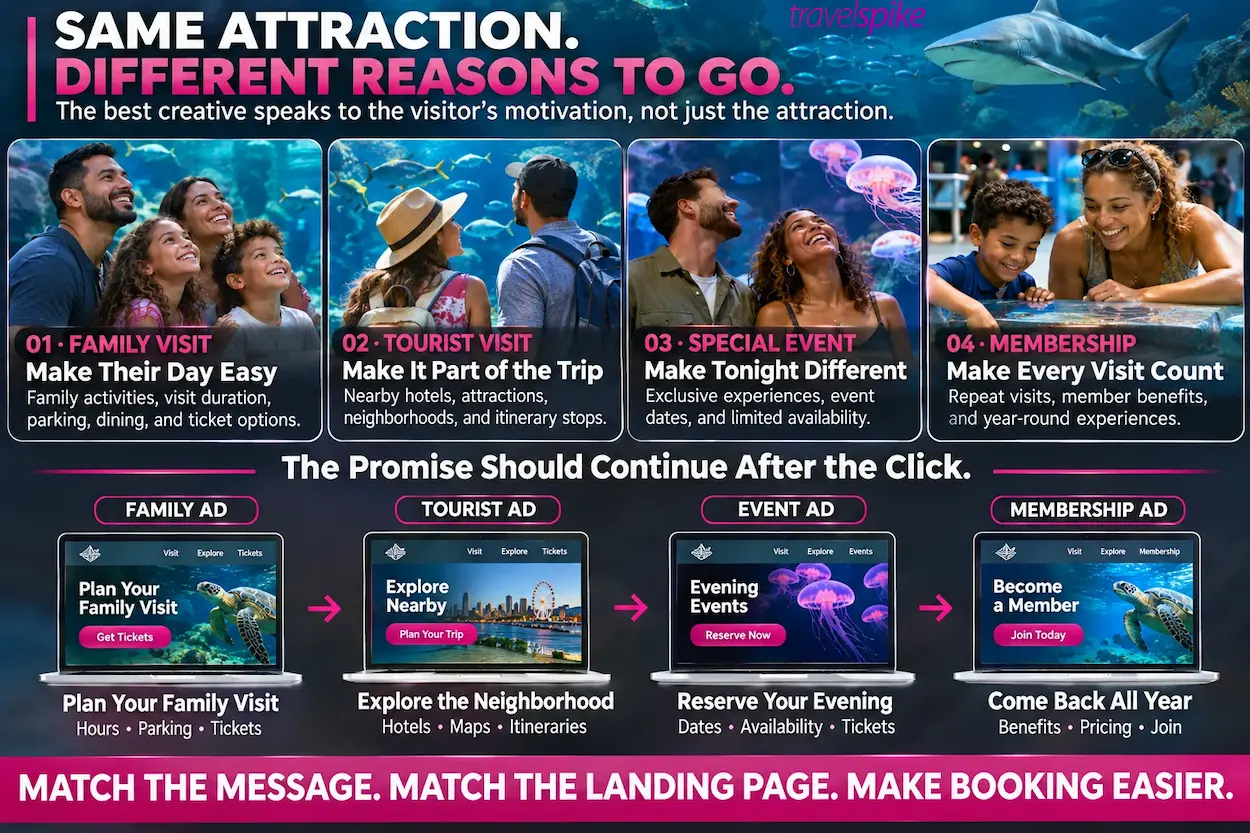
An aquarium can serve school-break families, tourists, date-night couples, and local members, but each group has a different reason to go. Performance creative should reflect those motivations.
For a family, show how the visit fits into an easy day. For a tourist, connect the attraction to nearby hotels, neighborhoods, and itinerary stops. For a special-event buyer, emphasize what makes this visit different and when it ends. For a prospective member, explain the value of coming back.
The landing page should continue that exact conversation. A family-themed ad should lead to family planning details. An evening-event ad should show event dates and ticket availability. This simple alignment reduces the work visitors must do before purchasing.
Extend Attraction Creative Beyond Social Media
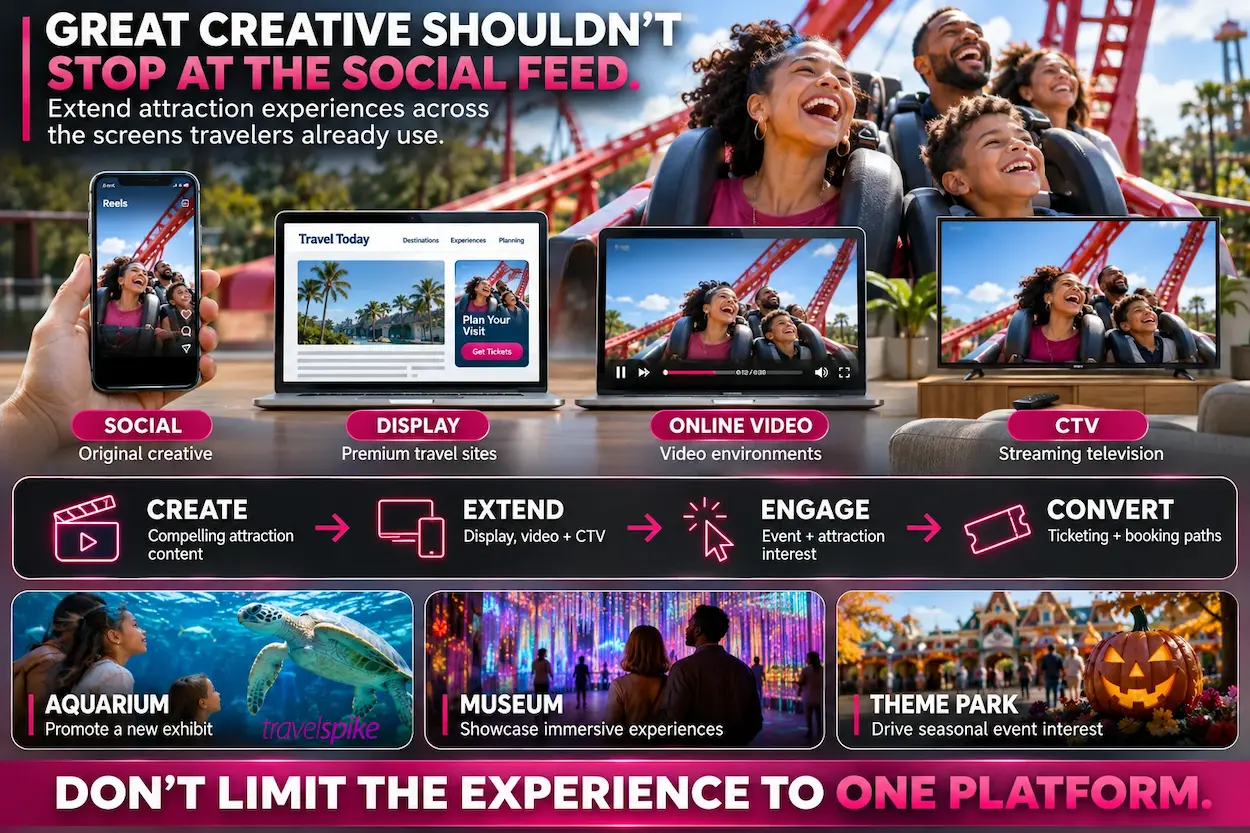
Attractions already have some of the most compelling visual content in travel marketing. A roller coaster in motion, an immersive museum exhibit, a close-up animal encounter, or a seasonal event can give visitors an immediate reason to experience it themselves.
Travelspike’s Social Everywhere allows attractions to extend existing social creative into display, online video, and CTV across premium travel environments, reaching audiences beyond traditional social feeds.
That gives attractions more opportunities to put engaging content in front of potential visitors and connect it directly to ticketing pages, event offers, or booking experiences.
An aquarium could promote a new exhibit, while a theme park could showcase an upcoming seasonal event. Each campaign can use creative that reflects the visitor’s motivation, with engagement and ticket purchases helping marketers evaluate performance.
Build a Repeatable Ticket-Sales Scorecard
Review performance weekly by audience, market, creative, and landing page. Track cost per ticket order, revenue per order, checkout completion, premium add-ons, and repeat purchases. For out-of-town traffic, monitor meaningful actions such as date views and itinerary downloads when the purchase happens later.
Keep the analysis honest: a click does not guarantee a visit, and an attributed purchase does not automatically prove that advertising created incremental demand. Where possible, compare exposed and unexposed groups or test markets to understand lift.
Growing online ticket revenue becomes more manageable when the team can identify exactly which signals, messages, and booking steps improve sales. That gives attraction marketers a practical way to make every media dollar work harder without making the discount the centerpiece of every campaign.