
Fall Travel Needs Stronger Reasons to Book
Fall travel demand is real, but it is not automatic.
Travelers are still spending, still planning, and still looking for reasons to get away. But they are also more selective. They are comparing value, timing, flexibility, trip length, and experience quality before they commit.
That means travel brands cannot rely on generic fall messaging.
“Book your fall getaway” is not enough. Performance marketing needs to give travelers a stronger reason to act.
That is the fall challenge.
Travelers still value trips. But they need the decision to feel worth it.
Fall Is Not Just “After Summer”
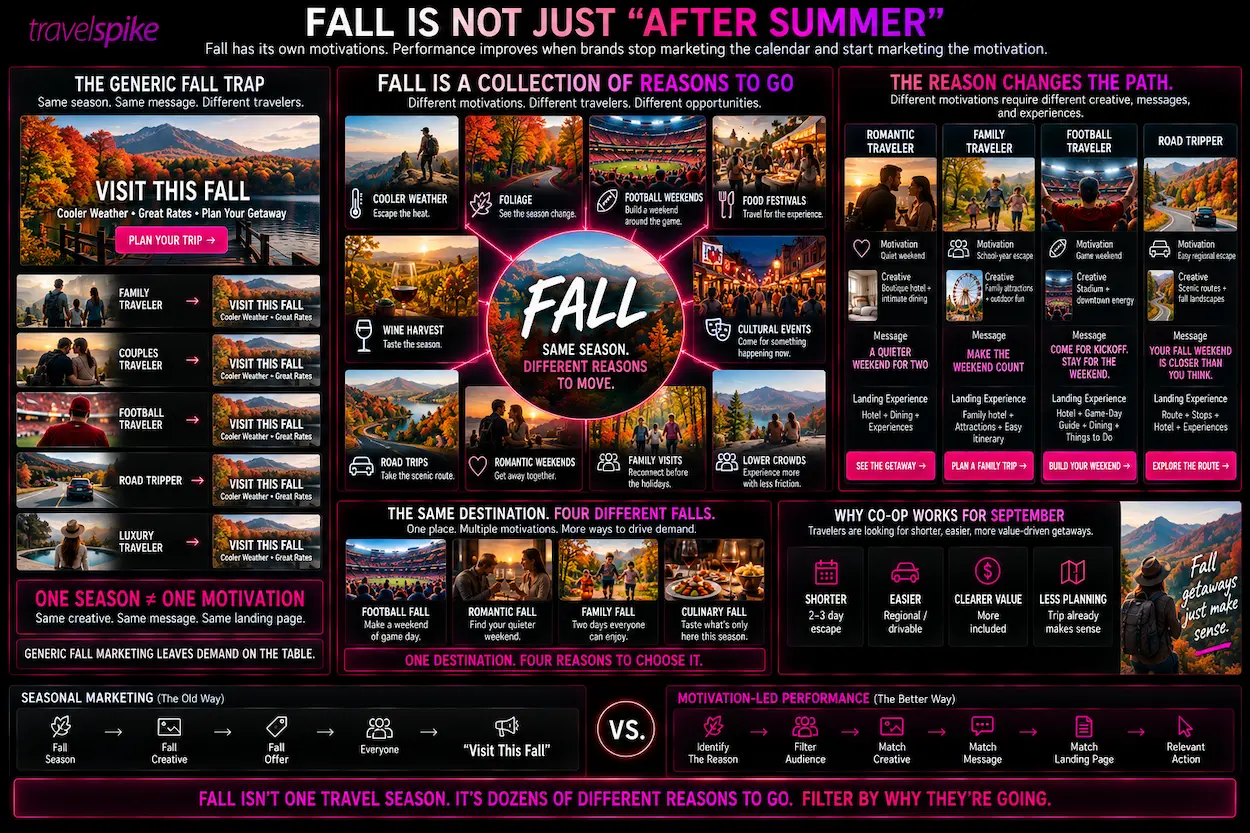
Fall has its own motivations.
Cooler weather. Shorter trips. Football weekends. Food festivals. Foliage. Cultural events. Wine harvests. Family visits. Romantic weekends. Road trips. Lower crowds. Better pace.
Each of these is a different reason to go. The mistake is treating fall as one generic season.
A couple planning a romantic weekend does not need the same message as a family looking for a school-year escape. A road tripper does not need the same creative as a luxury traveler. A college football visitor does not need the same landing page as someone planning a quiet shoulder-season stay.
Performance requires filtering audiences by motivation.
The Creative Has to Reduce Doubt
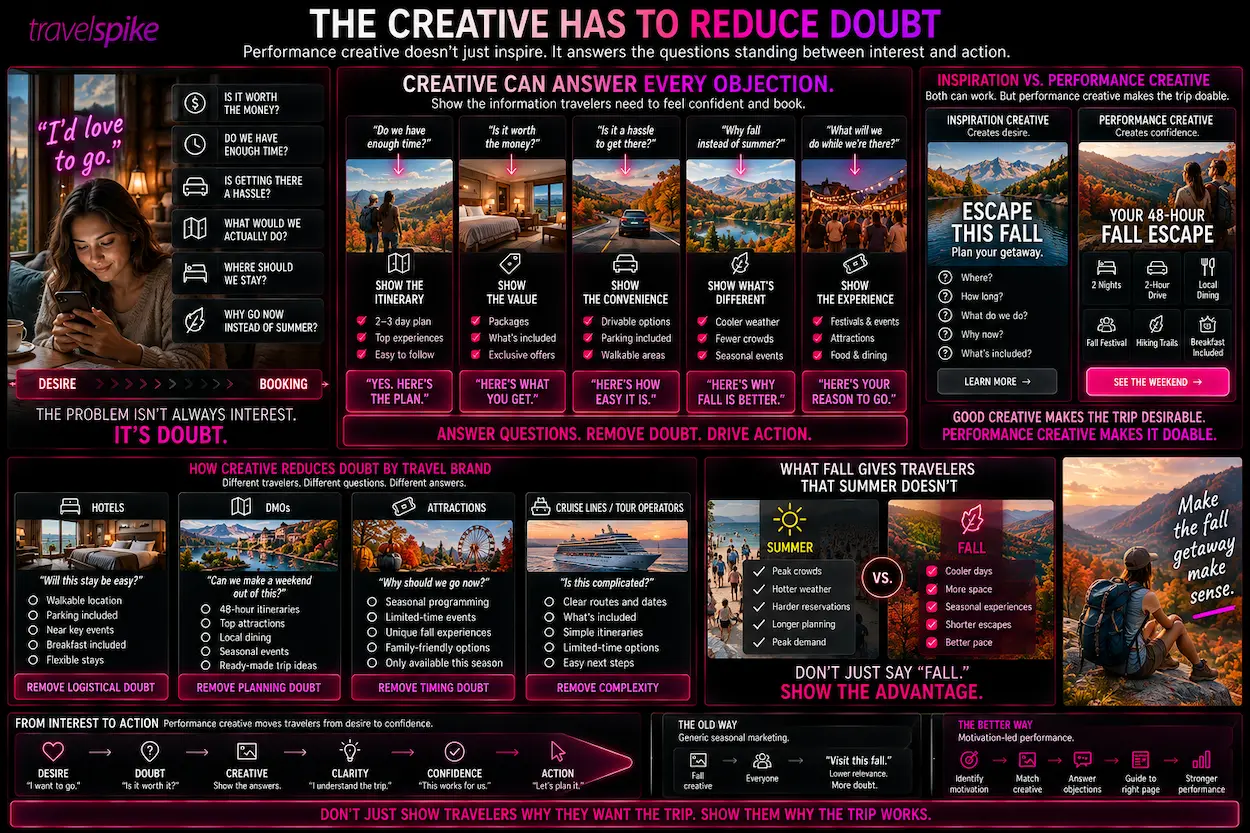
Many fall travelers are not asking whether travel sounds nice. They are asking whether it is worth the money and effort.
That means creative should reduce doubt quickly.
- Show the itinerary.
- Show the convenience.
- Show the value.
- Show what is different in fall.
- Show why the trip works in two or three days.
- Show what the traveler gets that they cannot get in peak summer.
For hotels, that may mean location, parking, flexible stays, packages, amenities, or proximity to events. For DMOs, it may mean ready-made weekend itineraries. For attractions, it may mean seasonal programming. For cruise lines and tour operators, it may mean limited-time routes or lower-friction planning.
Performance creative does not only inspire.
It answers objections.
Shorter Trips Need Clearer Paths
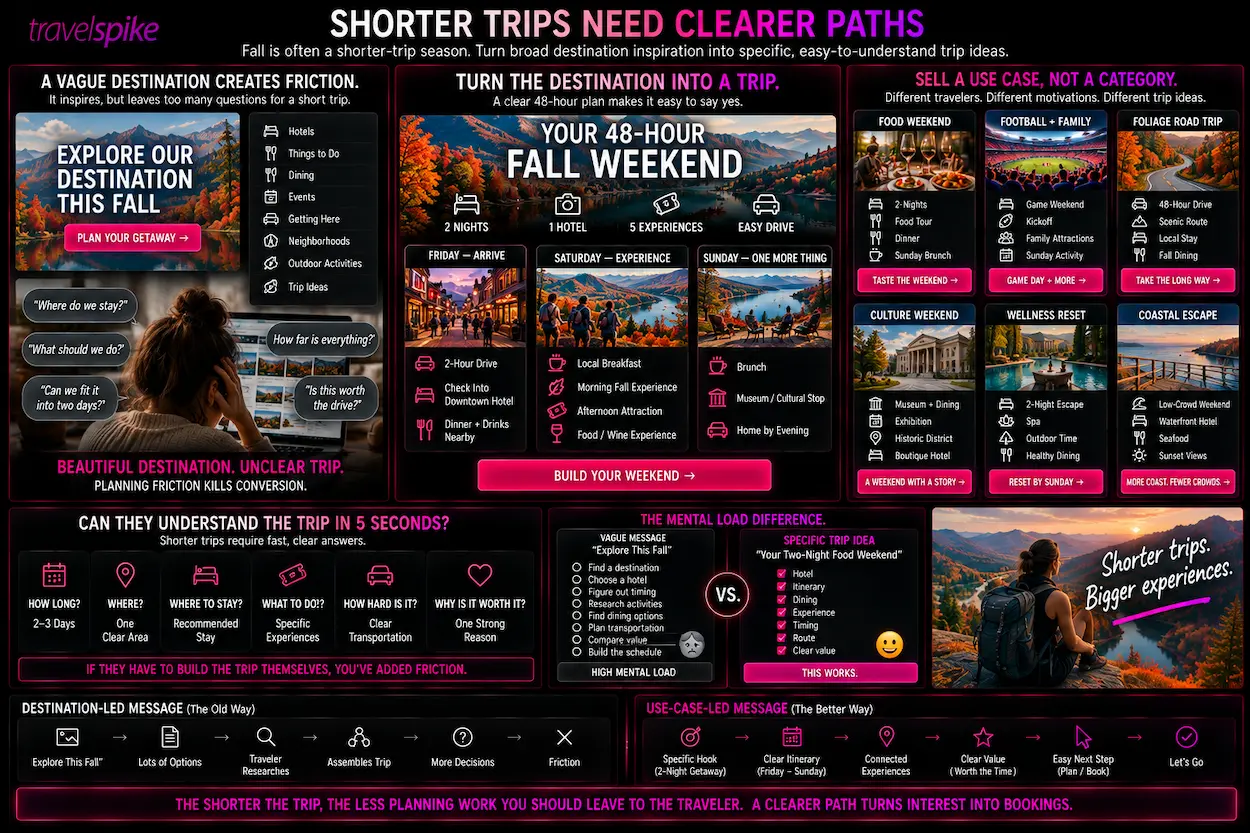
Fall is often a shorter-trip season, that puts pressure on the campaign.
A traveler planning a quick weekend needs to understand the trip fast. Where do they stay? What do they do? How easy is it to get there? What makes it worth leaving home?
A vague destination message creates friction, a specific trip idea removes it.
Instead of “Explore our destination this fall,” try a message built around a concrete use case: a two-night food weekend, a football trip with family activities, a foliage road trip, a museum-and-dining getaway, a wellness reset, or a low-crowd coastal stay.
The clearer the trip becomes, the easier it is to book.
Score Value Signals
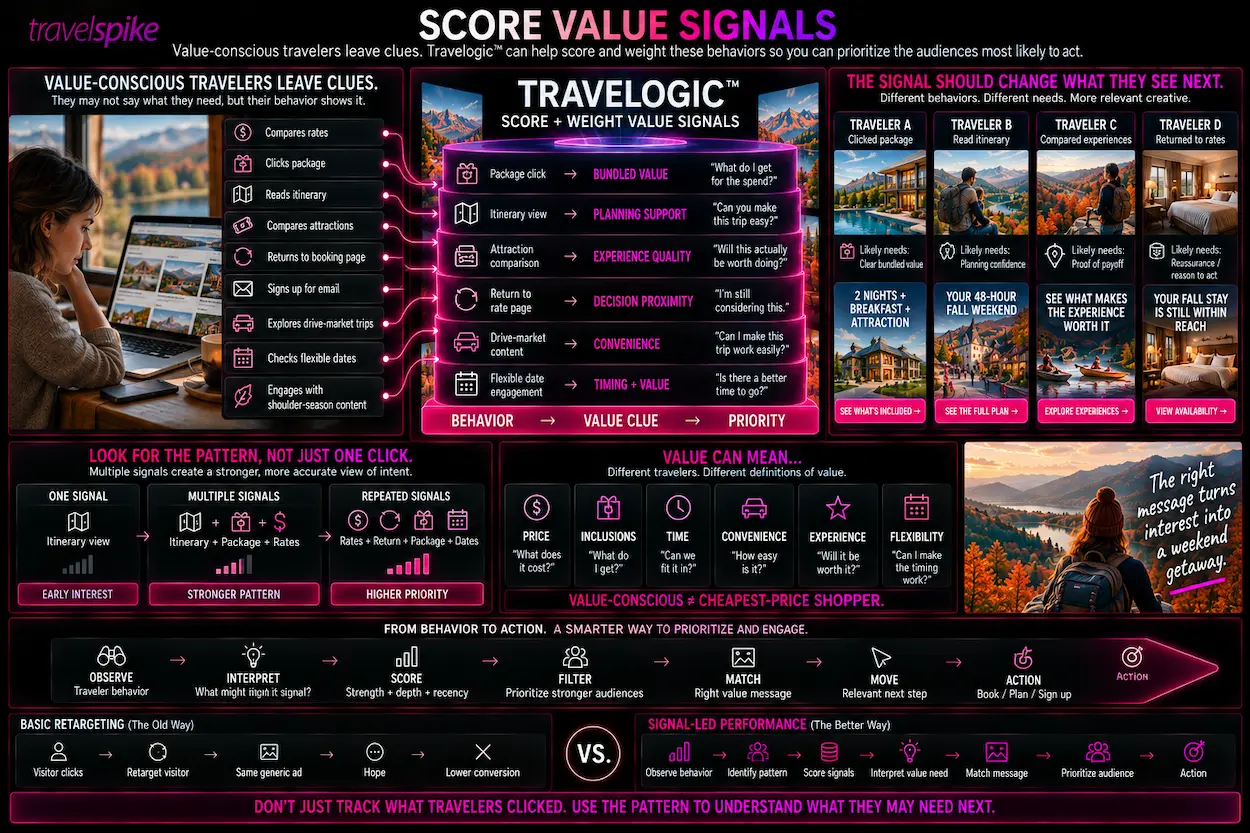
Value-conscious travelers leave clues.
They compare rates. They click packages. They engage with “things to do” content. They return to booking pages. They sign up for email. They look at drive-market itineraries. They engage with flexible dates or shoulder-season content.
Those signals should be scored.
A traveler who clicks a package may care about bundled value. A traveler who reads an itinerary may need planning support. Someone who compares attractions may need proof of experience quality. Someone who returns to a rate page may need urgency or reassurance.
Travelogic™ can help score and weight these behaviors so brands can prioritize the audiences most likely to act.
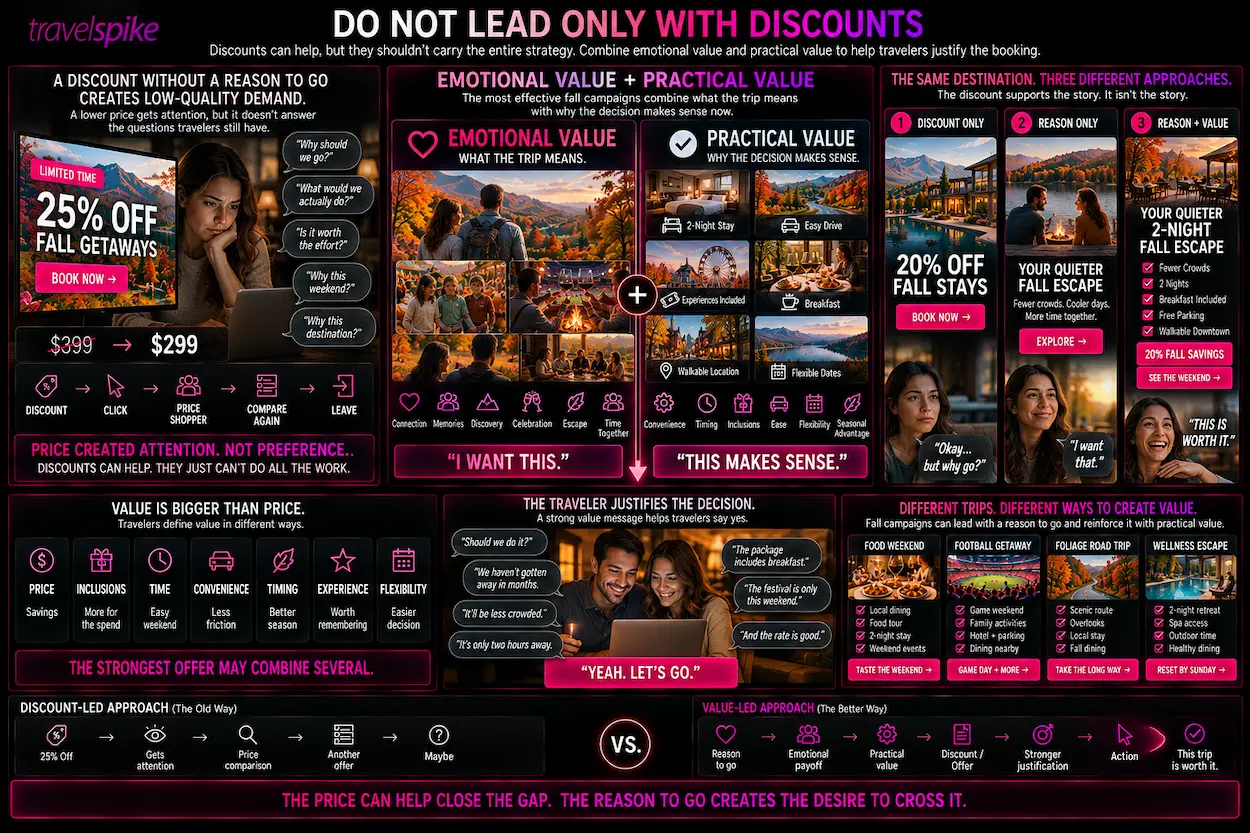
Do Not Lead Only With Discounts
Discounts can help, but they should not carry the entire strategy.
A discount without a reason to go may create low-quality demand. A strong reason to go with a clear value message can create better traveler action.
The most effective fall campaigns combine emotional value and practical value.
- Emotional value is what the trip means.
- Practical value is why the decision makes sense now.
Together, they help travelers justify the booking.
The Takeaway
Fall travel needs stronger reasons to book. Travelers are still moving, but they are filtering decisions through cost, timing, convenience, and emotional payoff.
The brands that perform will not rely on generic seasonal creative. They will score traveler signals, filter by motivation, weight the strongest intent, and give each audience a reason that makes fall feel like the right time to go.
In performance marketing, the reason to go is not decoration.
It is the conversion strategy.