
Fall Sports Are a Performance Channel for Travel Brands
Fall sports are not just a media moment, they are a travel behavior engine.
NFL Sundays, college football Saturdays, rivalry weekends, alumni trips, away games, tailgates, hotel stays, restaurant visits, attraction add-ons, and group travel all create measurable demand. For travel brands, the opportunity is not only to reach fans.
It is to convert sports attention into traveler action.
The NFL closed the 2025 regular season averaging 18.7 million viewers per game across TV and digital, its second-highest regular-season average since Nielsen began tracking in 1988 and up 10% from the prior season. Reuters also reported that every weekly NFL package grew year over year, including Thursday Night Football, Sunday Night Football, Monday Night Football, CBS, and Fox.
That is not generic reach, it’s repeated, emotional, appointment-based attention.
Sports Creates Trip Intent
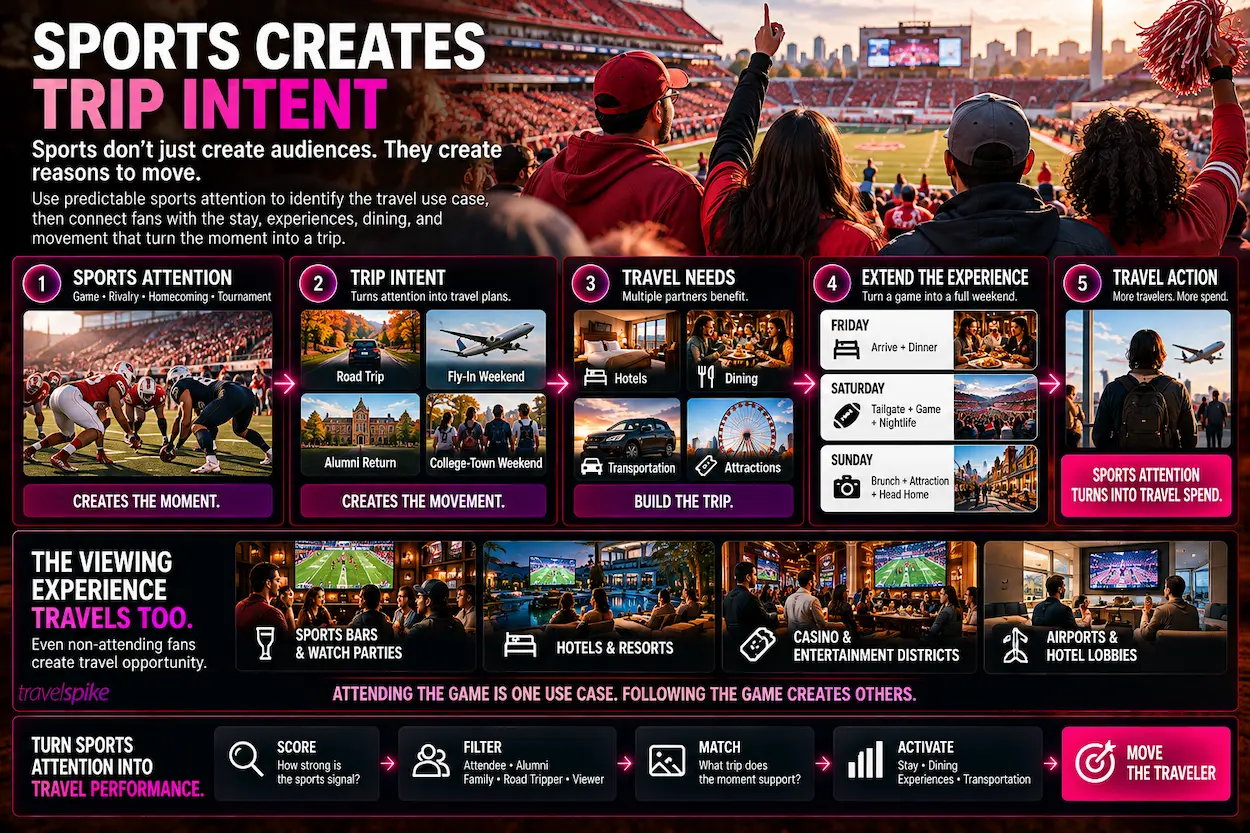
Travel marketers sometimes treat sports as separate from travel planning and that is a mistake. Sports create reasons to move.
A fan may travel to attend a game. A family may visit a college town for the weekend. Alumni may return for homecoming. Friends may plan a road trip around a rivalry. Visitors may need hotels, transportation, restaurants, attractions, and things to do before and after kickoff.
Even non-attending fans create opportunity. Watch parties, sports bars, resorts, casino properties, entertainment districts, airports, and hotel lobbies all become part of the viewing experience.
The point is not that every travel brand should suddenly become a football brand.
The point is that fall sports creates predictable attention windows and travel use cases. Performance marketers should score those moments, filter audiences by likely behavior, and match the message to the trip.
Live Sports CTV Should Not Be Treated Like Old TV
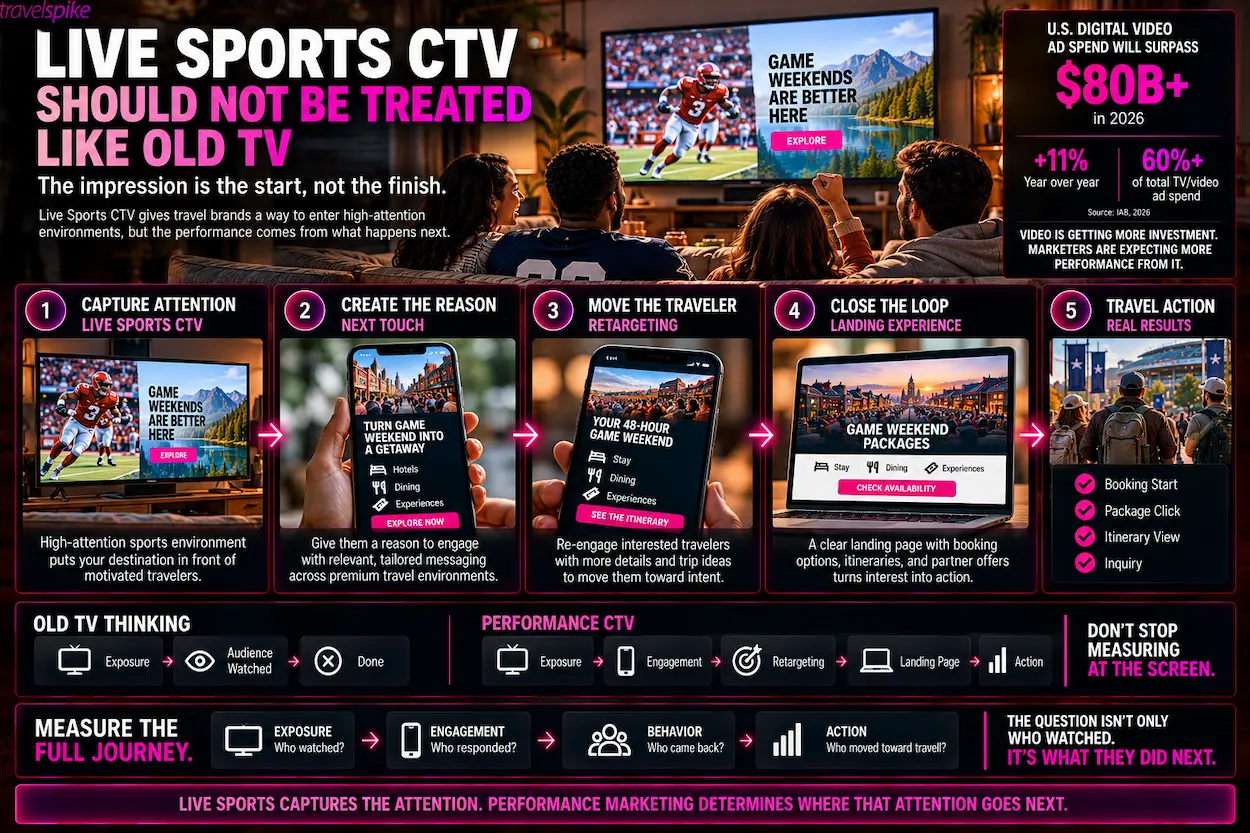
Live Sports CTV gives travel brands a way to enter high-attention environments, but the performance comes from what happens next.
- The first exposure captures attention.
- The next touch gives the traveler a reason to engage.
- Retargeting moves them toward action.
- The landing page closes the loop with a clear path.
That is the difference between awareness and performance.
IAB projects U.S. digital video ad spend will surpass $80 billion in 2026, growing 11% year over year and exceeding 60% of total TV/video ad spend for the first time. IAB also noted that marketers are demanding performance from video as signal loss and AI-driven traffic create more pressure on measurement.
Travel brands should apply that same expectation to fall sports. The question is not only who watched. The question is what action the audience took after watching.
Use Sports Moments to Filter Motivation
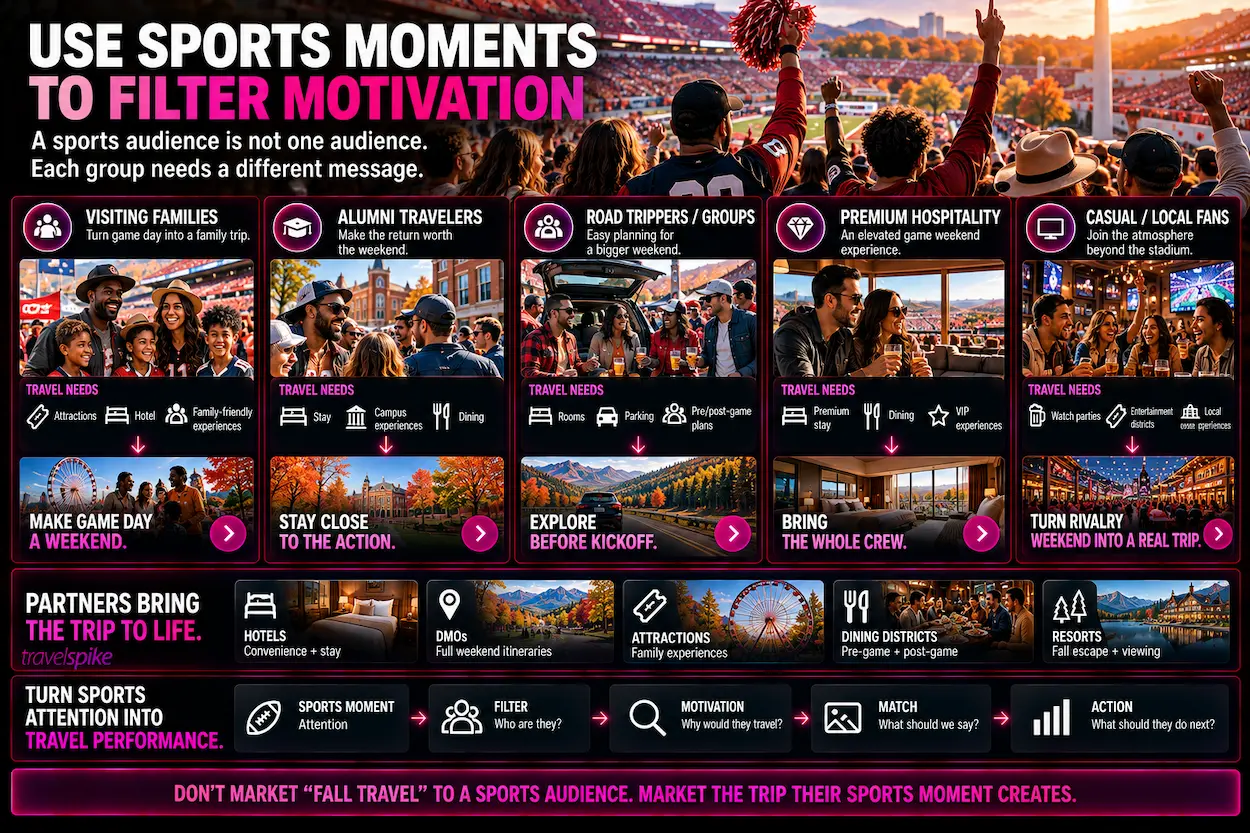
A sports audience is not one audience. There are game attendees, alumni travelers, visiting families, local fans, road trippers, group travelers, premium hospitality buyers, and casual viewers who simply enjoy the weekly ritual.
Each group needs a different message.
A hotel near a stadium can focus on convenience and availability. A DMO can promote a full weekend itinerary. An attraction can capture families traveling with fans. A restaurant district can connect pre-game and post-game plans. A resort can promote football viewing as part of a fall escape.
The creative should not say “travel this fall” in a generic way.
It should answer a specific use case:
- Make game day a weekend.
- Stay close to the action.
- Explore before kickoff.
- Bring the whole crew.
- Turn rivalry weekend into a real trip.
That is performance copy.
College Football Adds Regional Power
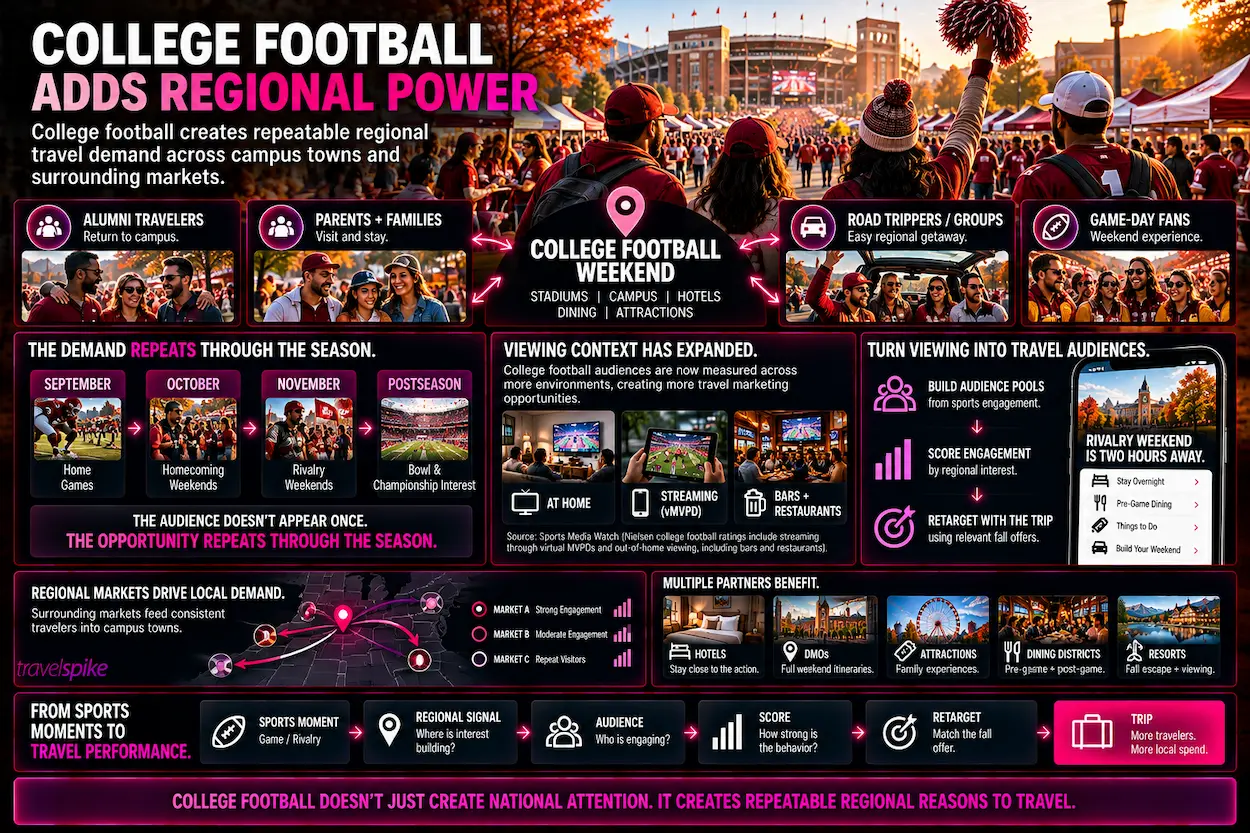
College football is especially valuable because the travel behavior is deeply regional and repeatable.
Fans return to campus towns. Parents visit students. Alumni travel for homecoming. Rivalry weekends create compression. Smaller cities and regional destinations see demand that may not appear in national travel trend reports but matters locally.
Sports Media Watch notes that Nielsen college football ratings now include streaming through virtual MVPDs and out-of-home viewing, including bars and restaurants, which reinforces how sports audiences are increasingly measured across the environments where travel brands can influence them.
That matters because the viewing context has expanded. Travel brands can use that context to build audience pools, score engagement, and retarget viewers with relevant fall travel offers.
The Takeaway
Fall sports should be treated as a performance channel for travel brands. The opportunity is not just to run ads around football. It is to connect live sports attention to real travel behaviors: weekend stays, road trips, attractions, restaurants, events, and repeat visitation.
The brands that perform will not buy sports media generically.
They will score the moment, filter the audience, weight the intent signals, and move viewers toward measurable action.