
Experiences Are Becoming the Trip Driver. Travel Marketers Need to Plan Around That.
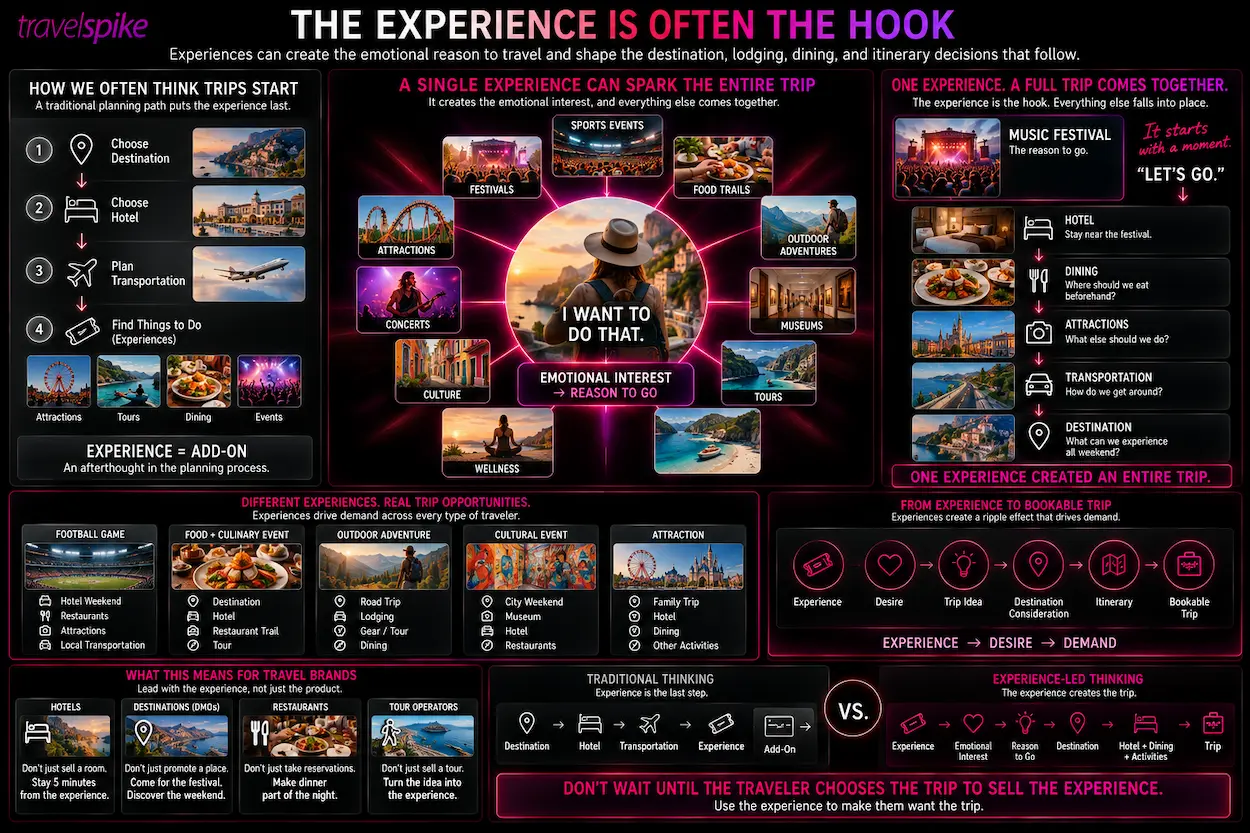
Travelers are no longer choosing trips only by destination or hotel. They are choosing trips around what they want to experience.
That shift matters for every travel brand: DMOs, hotels, attractions, tour operators, cruise lines, airlines, OTAs, restaurants, and event partners. The destination still matters. The room still matters. The transportation still matters. But the reason to go is increasingly tied to what the traveler will do once they arrive.
That makes experiences a performance driver.
Phocuswright and Arival report that in-destination experiences reached $271 billion in gross booking value in 2025 and are projected to exceed $340 billion by 2029. The sector is growing at an 8% nominal CAGR from 2023 to 2029, compared with 5% for travel overall.
That is not a side category. It is central to how travel decisions are being made.
The Experience Is Often the Hook
A traveler may choose a destination because of a festival, attraction, tour, sports event, food trail, outdoor adventure, museum, concert, wellness experience, or cultural moment.
That means the experience often creates the first point of emotional interest.
A hotel may be booked because it is close to the experience. A destination may be chosen because the experience makes the trip feel worth it. A restaurant may become part of the itinerary because the trip has a theme. A tour operator may turn a vague idea into a bookable plan.
Travel marketers should not treat experiences as add-ons after lodging or destination selection. They should use experiences to shape demand earlier.
Score the Reason to Go
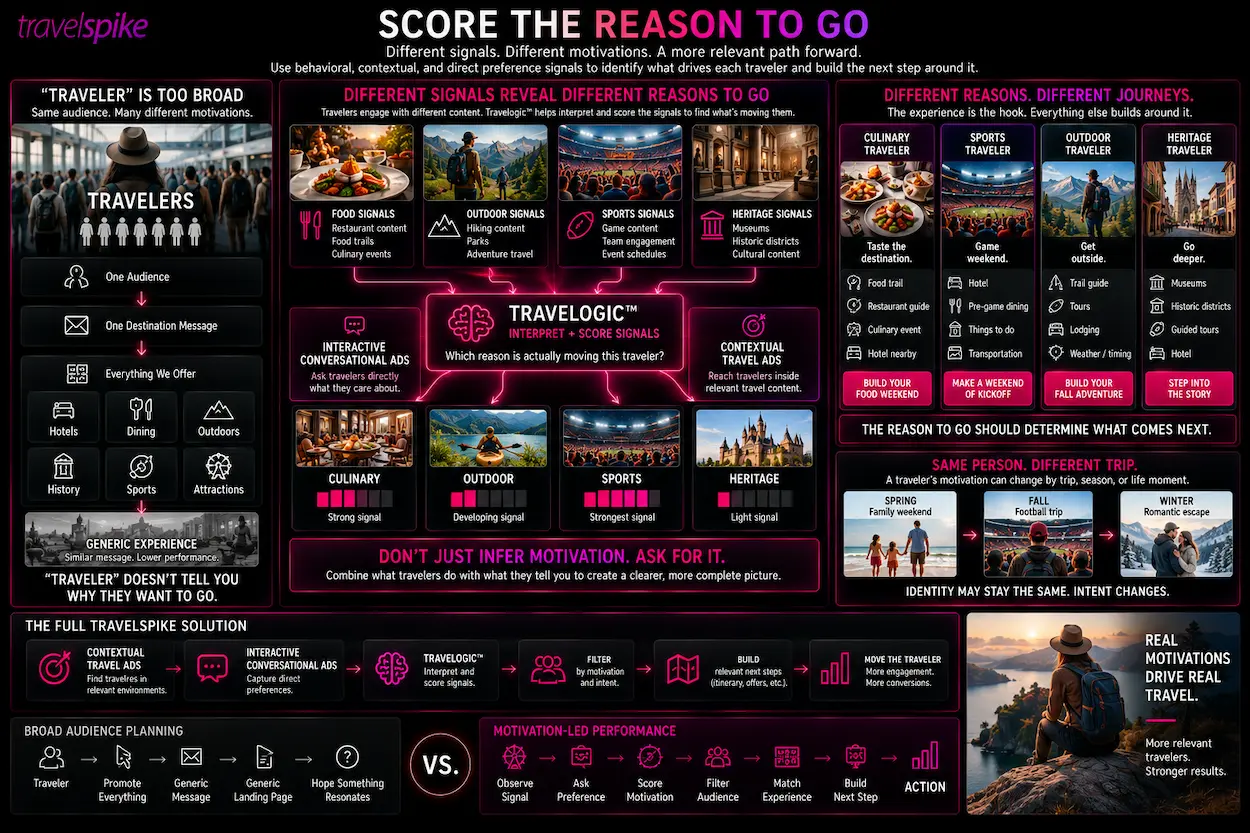
If experiences are driving decisions, marketers need to score which reasons to go are producing action.
A traveler engaging with food content is signaling something different from a traveler clicking outdoor adventure. A traveler watching sports content may need a weekend itinerary. A traveler reading about heritage tourism may need museums, historic districts, tours, and hotels connected into one path.
This is where broad audience planning fails. The same person may be a “traveler,” but their motivation changes by trip.
Travelogic can help interpret those signals, while Interactive Conversational Ads can ask travelers directly what they care about. Contextual Travel Ads can then reach people inside travel environments that align with those motivations.
The strategy is not to promote everything to everyone. It is to filter the reason to go and build the next step around it.
Attractions Need to Be in the Planning Window Earlier
Attractions and tours often suffer from late discovery.
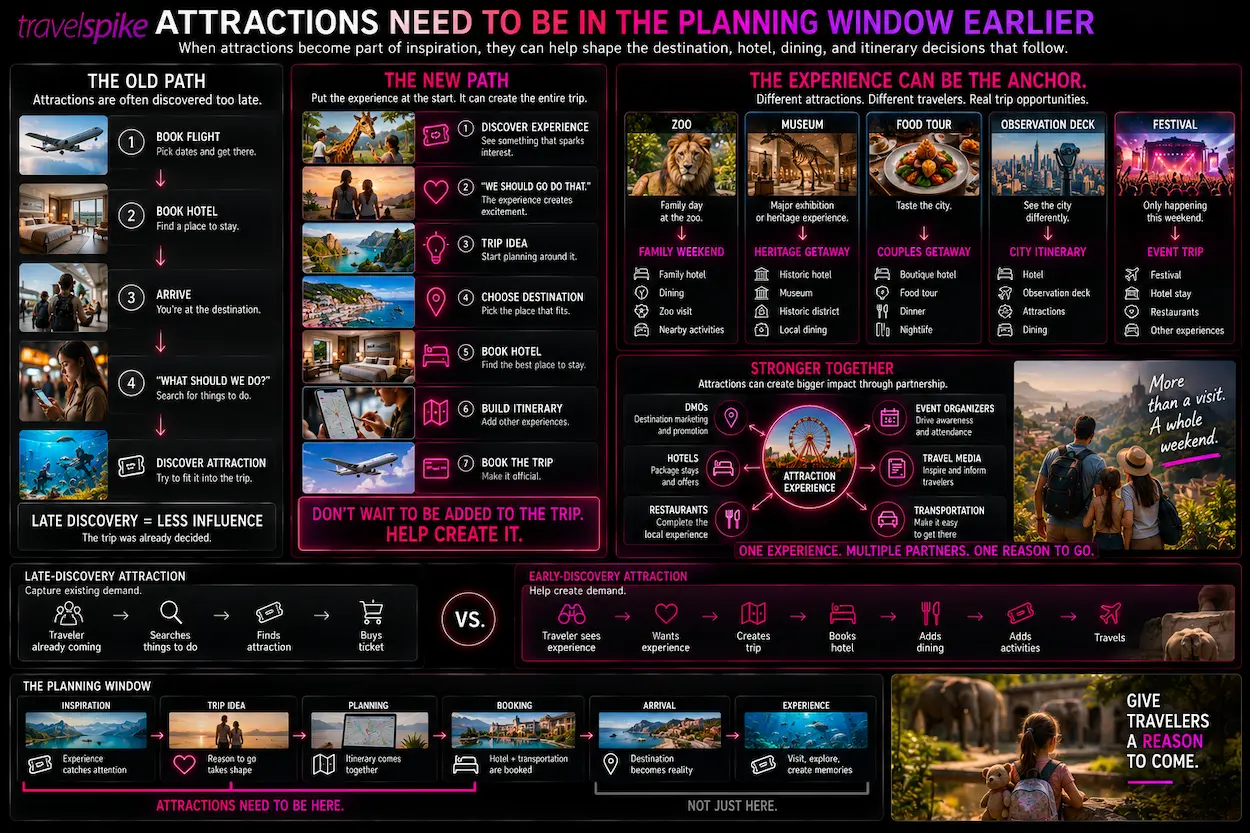
Travelers may book flights and hotels first, then search for things to do later. But that is changing. As experiences become a stronger part of trip inspiration, attractions need to appear earlier in the planning journey.
That does not mean every attraction needs a massive media budget.
It means attractions should work more closely with DMOs, hotels, restaurants, event organizers, and travel media partners to become part of the trip idea before arrival.
A zoo can anchor a family weekend. A museum can anchor a heritage trip. A food tour can anchor a couples getaway. An observation deck can anchor a city itinerary. A local festival can create the reason for a hotel stay.
The experience should not wait to be discovered after check-in.
It should help create the booking.
The Booking Path Still Needs Work
The experiences category is growing, but it remains fragmented.
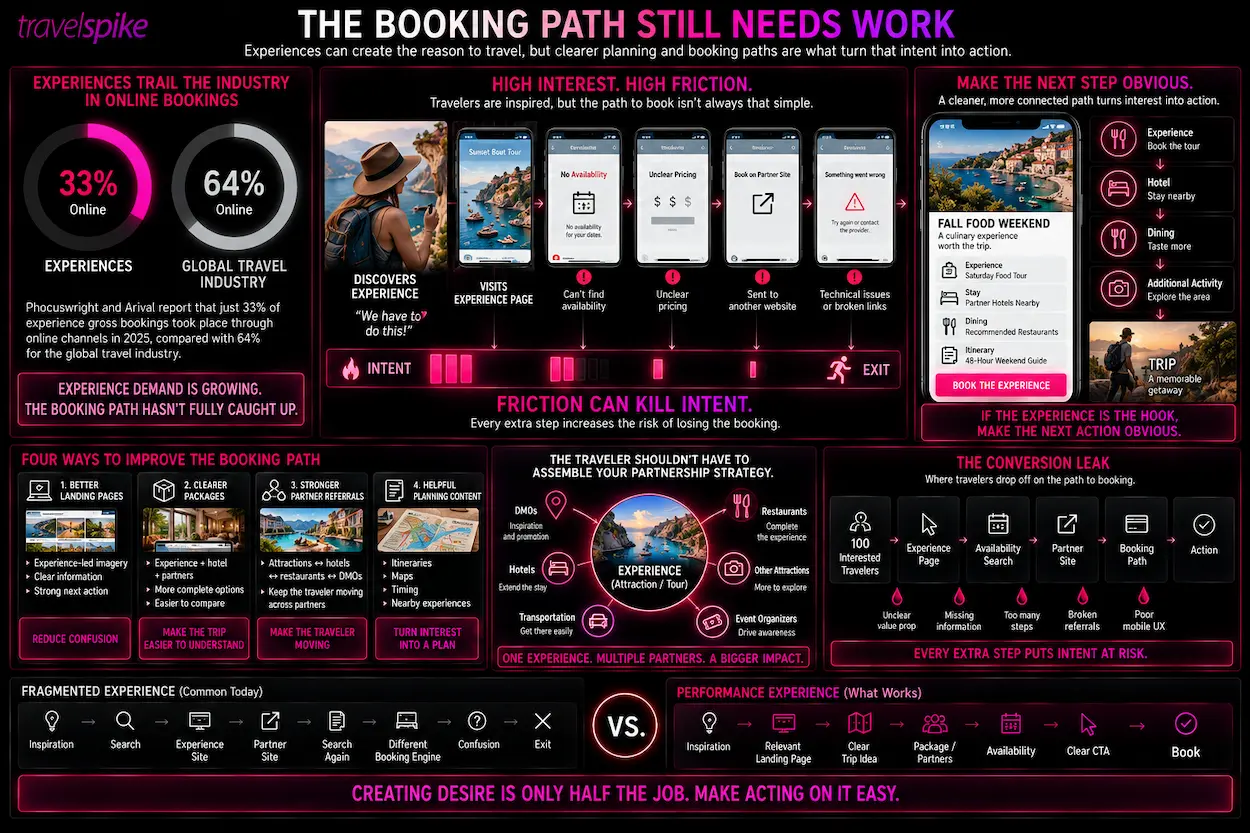
Phocuswright and Arival also report that just 33% of experience gross bookings took place through online channels in 2025, compared with 64% for the global travel industry.
That gap matters.
It means many travelers are interested in experiences, but the path to book is not always as clean as hotels or flights. For performance marketers, this creates both a problem and an opportunity.
The problem: friction can kill intent.
The opportunity: better landing pages, clearer packages, stronger partner referrals, and more helpful trip-planning content can improve conversion.
If an experience is the hook, the brand has to make the next action easy.
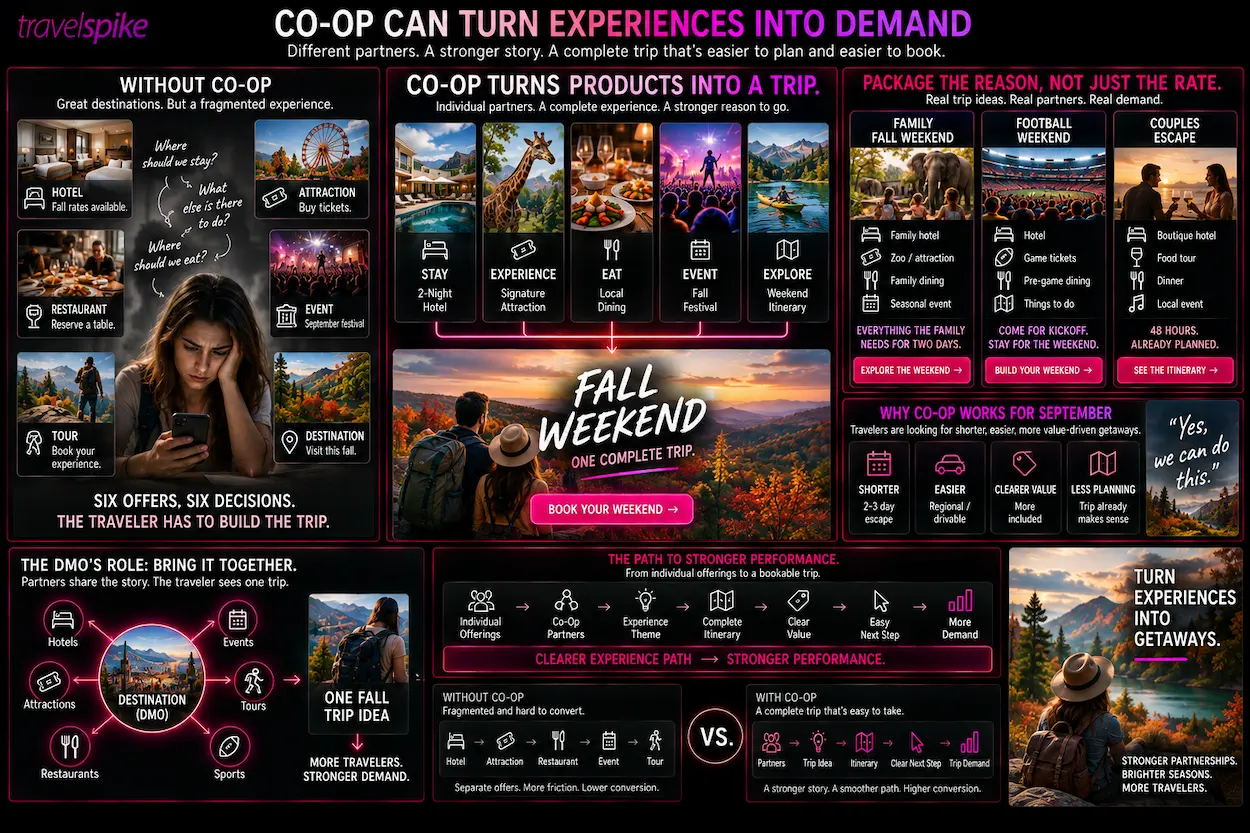
Co-Op Can Turn Experiences Into Demand
Experiences become more powerful when they are packaged.
A hotel plus an attraction is easier to book than a hotel alone. A destination itinerary with restaurants, events, and tours is more useful than a generic visitor guide. A sports weekend with lodging and things to do can convert better than a stand-alone game-day message.
Co-op turns individual offerings into a complete trip.
That is especially important in September, when travelers may be looking for shorter, easier, more value-driven fall escapes.
The clearer the experience path, the stronger the performance.
The Takeaway
Experiences are not just what travelers do after they arrive. They are increasingly why travelers choose to go.
Travel brands that want stronger performance need to score experience signals, filter audiences by motivation, and connect the reason to go with the right landing page, package, or booking path.
The brands that win will not only sell destinations.
They will sell the experience that makes the destination worth choosing.