
Cruise Demand Is Getting Younger, More Social, and More Experience-Led
Cruise marketing is changing because the cruise traveler is changing.
The old picture of cruise demand was too narrow. It leaned heavily on retirees, long itineraries, traditional loyalty, and broad destination interest. Those audiences still matter, but cruise demand is expanding into younger, more social, more experience-driven segments.
That creates a performance opportunity.
Cruise brands, ports, destinations, and travel marketers need to score intent differently. A younger traveler considering a three-night cruise with friends is not behaving like a retiree comparing longer itineraries. A multigenerational family is not looking for the same content as a solo traveler. A first-time cruiser may need reassurance, while an experienced cruiser may need a reason to try a different ship, port, or shore experience.
The Cruise Lines International Association reported that global cruise passenger volume reached a historic high of 37.2 million in 2025, with nearly 90% of cruisers saying they intend to sail again. CLIA also reported that about one-third of cruise travelers are under age 40, and roughly one-third of cruise trips are multigenerational.
That is not one audience. That is a mix of trip motivations.
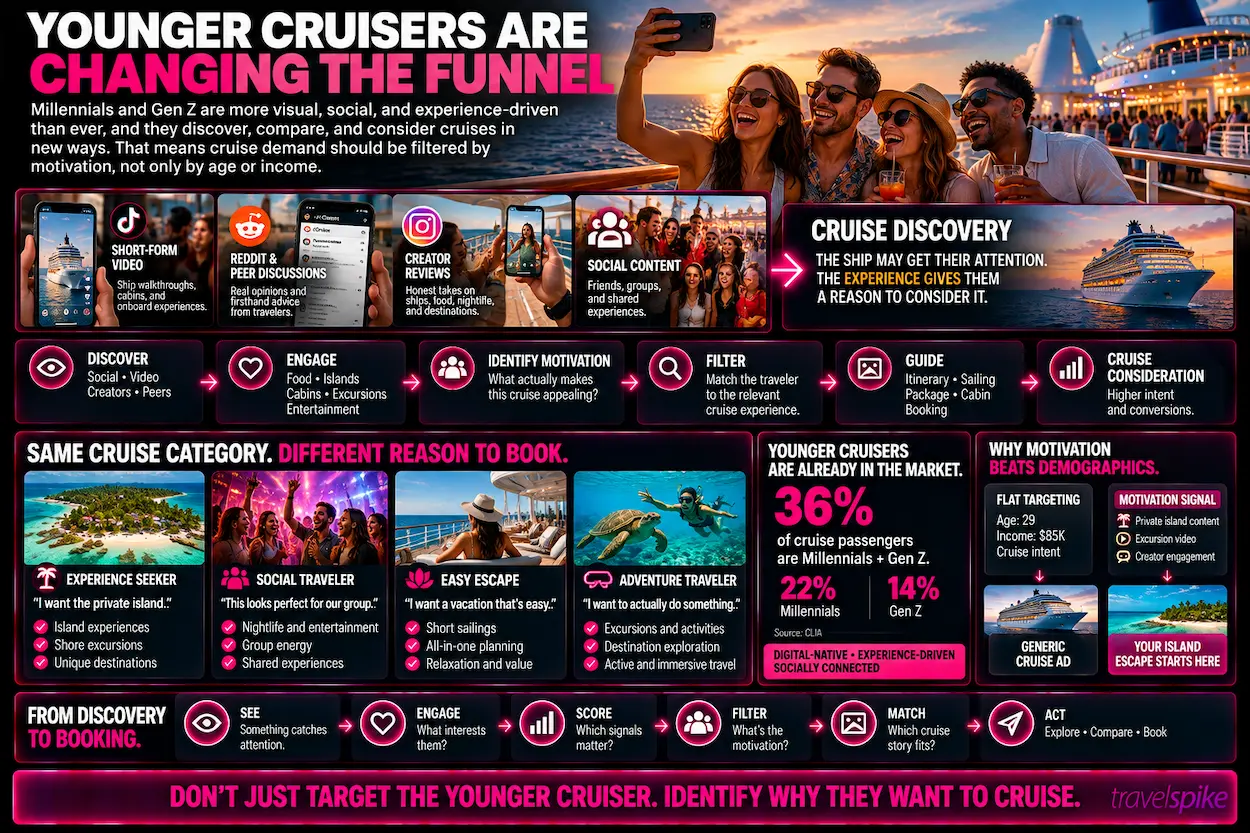
Younger Cruisers Are Changing the Funnel
CLIA says Millennials and Gen Z now make up roughly 36% of all cruise passengers, with Millennials at 22% and Gen Z at 14%. CLIA also describes emerging 21-to-39-year-old cruisers as digital natives looking for experience-driven, socially connected travel.
That matters because the path to cruise consideration is more visual, social, and peer-influenced than ever.
Younger travelers may discover a ship on TikTok, compare cabins through short-form video, read Reddit threads, check creator reviews, or decide based on onboard food, nightlife, private islands, shore excursions, wellness, entertainment, or group energy.
For performance marketers, the lesson is clear: cruise demand should be filtered by motivation, not only by age or income.
A traveler may be cruise-curious because they want: a short getaway, a social trip, a family trip, a private island experience, a destination sampler, luxury value, adventure, wellness, entertainment, or an easy vacation where planning feels contained.
Each one needs a different message.
The Shore Experience Matters More
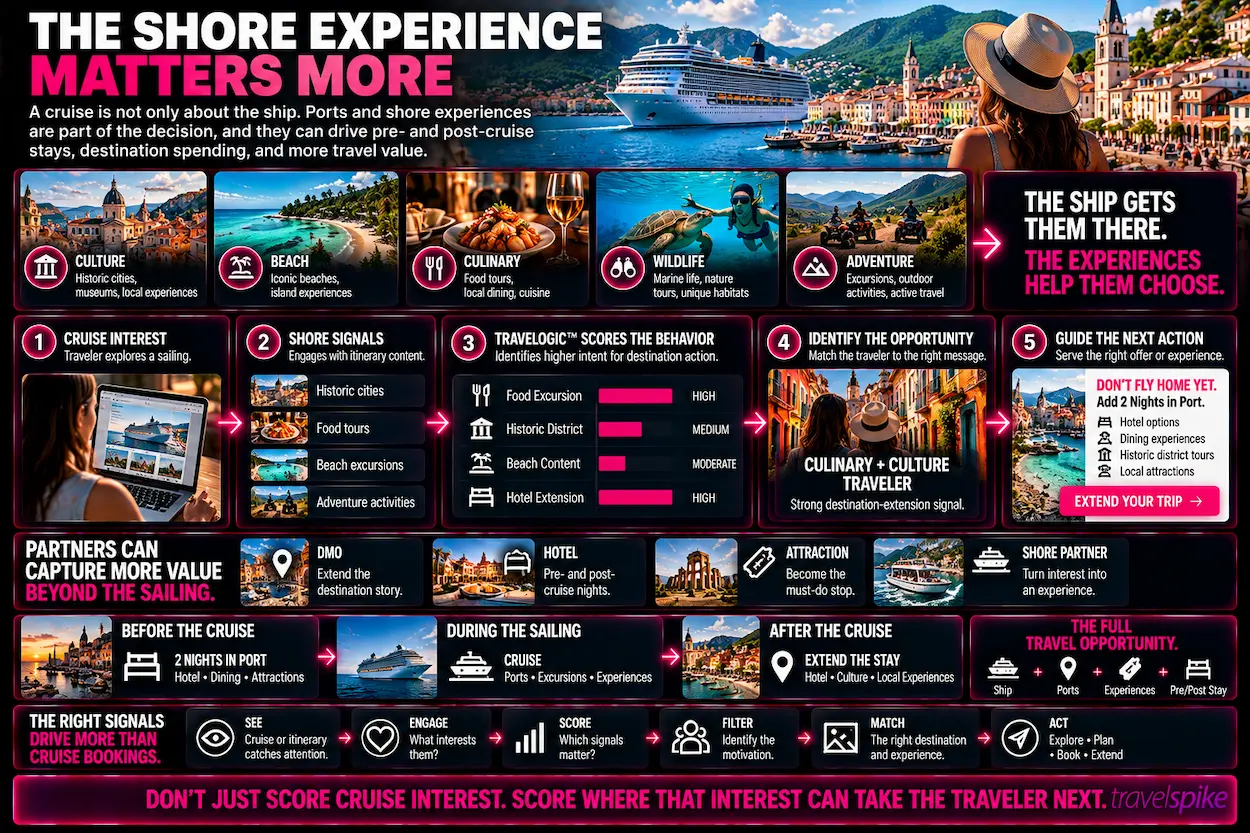
A cruise is not only about the ship. Ports and shore experiences are part of the decision. A traveler may choose a sailing because the itinerary includes cultural stops, beaches, culinary excursions, wildlife, historic cities, or adventure activities.
That creates opportunity for destinations and shore partners.
A port city can use cruise interest to build post-cruise stays. An attraction can position itself as the must-do shore experience. Hotels can speak to pre- and post-cruise nights. DMOs can build content around how to extend the trip before or after the sailing.
Travelogic™ can help score these signals by identifying which traveler behaviors suggest higher likelihood to move from cruise interest to destination action.
First-Time Cruisers Need Different Creative
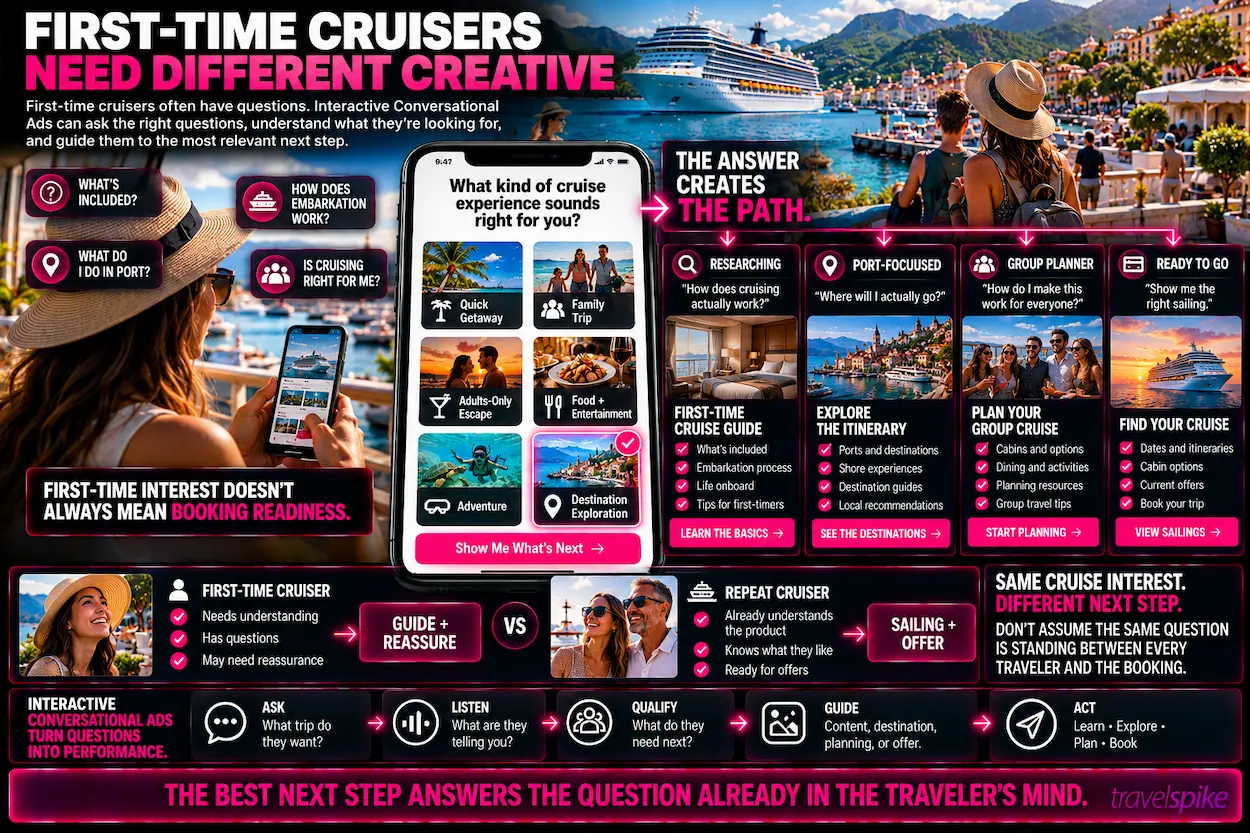
A first-time cruiser may not need the same sales message as a repeat cruiser.
They may need help understanding value, what is included, how embarkation works, what shore excursions look like, how short cruises differ from longer itineraries, and whether cruise is a good fit for their travel style.
That is where Interactive Conversational Ads can help.
The ad can ask the traveler what kind of cruise experience they want: quick getaway, family trip, adults-only escape, food and entertainment, adventure, luxury, or destination exploration. The response can then filter the traveler to the right content path.
- A high-intent traveler can move toward offers or booking.
- A research-stage traveler can get a beginner guide.
- A port-focused traveler can receive destination content.
- A group traveler can see planning resources.
That is how performance improves: the next step matches the question in the traveler’s mind.
Cruise Marketers Should Buy Audience, Not Just Attention
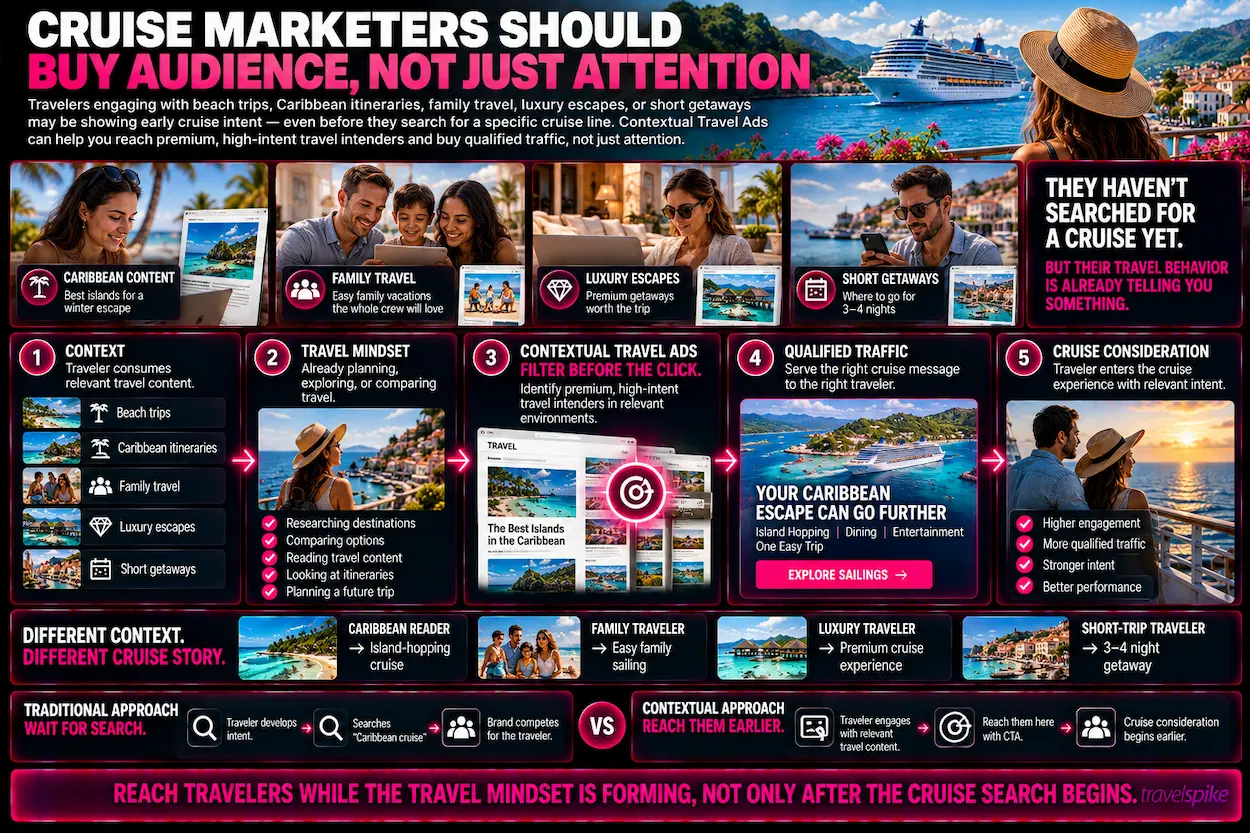
Contextual Travel Ads can also help cruise brands reach premium, high-intent travel intenders while they are consuming travel content. Someone engaging with beach trips, Caribbean itineraries, family travel, luxury escapes, or short getaways may be showing early cruise intent even before searching for a specific cruise line.
That is where CTA can help buy qualified traffic. The goal is not to chase every traveler. It is to filter the audience before the click and drive traffic from people already in a travel-planning mindset.
The Takeaway
Cruise demand is growing, but it is also becoming more layered.
Younger travelers, multigenerational groups, first-time cruisers, short-trip planners, and experience-seekers are all shaping the category in different ways.
The brands that perform will not market cruise as one broad product. They will score intent, filter motivations, weight the strongest behaviors, and guide each traveler toward the cruise experience that makes sense for them.
Cruise is not just transportation or lodging at sea. It is an experience platform, and the marketing needs to reflect that.