
Co-Op Marketing Is How Travel Brands Turn Shoulder Season Into Shared Demand
Shoulder season is built for co-op marketing. The reason is simple: fall trips are rarely driven by one brand alone.
A traveler may choose a destination because of an event, book a hotel because of location, visit an attraction because it fits the itinerary, eat at local restaurants, attend a game, take a tour, and extend the trip because the full experience feels easy.
No single partner owns that journey, but multiple partners can influence it together. That makes co-ops one of the smartest performance strategies for September and October.
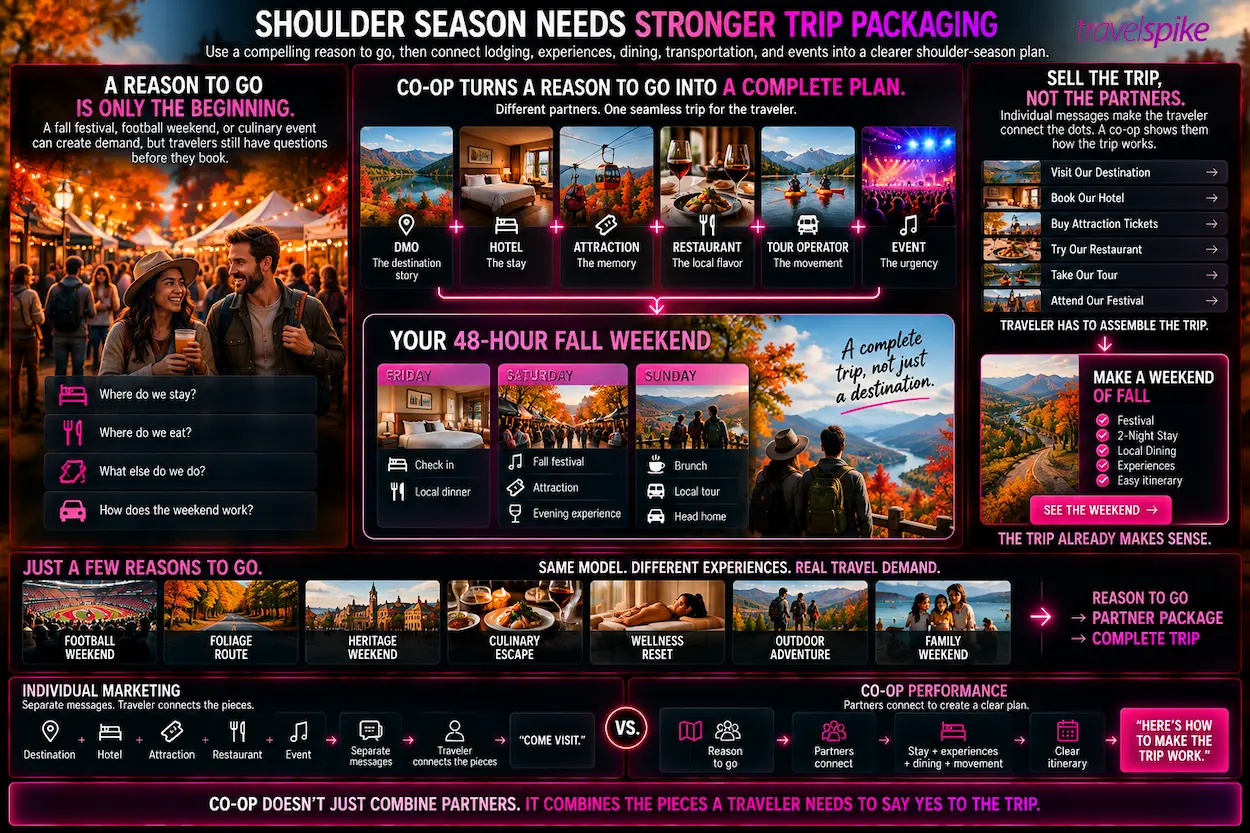
Shoulder Season Needs Stronger Trip Packaging
During peak season, demand can sometimes carry itself. During shoulder season, the trip often needs a clearer reason.
That reason may be a fall festival, football weekend, heritage event, foliage route, culinary experience, museum exhibit, wellness escape, outdoor adventure, or family weekend.
Co-ops helps turn that reason into a complete plan.
A DMO can provide the destination story. A hotel can provide the stay. An attraction can create the memory. A restaurant can add local flavor. A tour operator can create movement. An event partner can create urgency.
Together, the campaign becomes more useful for the traveler. Instead of “come visit,” the message becomes “here is how to make the trip work.”
That is a performance advantage.
Shared Demand Should Be Scored Together
Co-ops often fails because partners focus too much on contribution and not enough on traveler behavior. The better approach is to score shared demand.
Which audiences are engaging? Which feeder markets are moving? Which partner offers are driving clicks? Which itinerary themes are producing deeper site behavior? Which packages are generating inquiries or bookings? Which audiences should be filtered into fall, sports, family, culture, or luxury segments?
A co-op campaign should not be a logo swap, it should be a shared performance system.
That means partners need aligned objectives, clear creative roles, agreed audience segments, and reporting that shows action signals across the journey.

Sports Tourism Shows the Scale of Shared Demand
Sports is one of the clearest examples of why co-op matters.
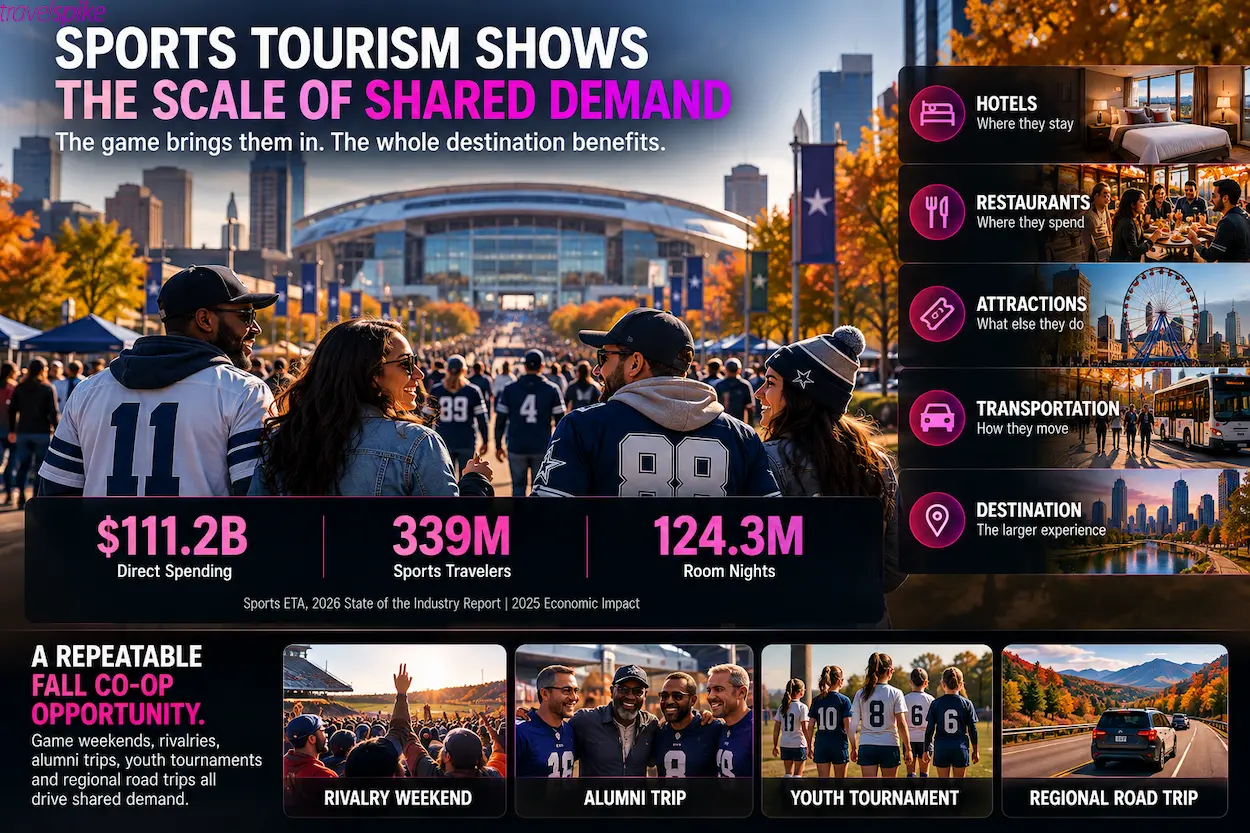
Sports ETA’s 2026 State of the Industry Report found that sports tourism generated $111.2 billion in direct spending and $274.5 billion in total economic impact in 2025. The report also found that 339 million sports travelers generated 124.3 million room nights.
That demand does not benefit only stadiums. It benefits hotels, restaurants, transportation providers, attractions, shopping districts, venues, DMOs, and local businesses.
Fall sports gives travel partners a repeatable co-op framework: game weekends, rivalry travel, alumni trips, youth sports tournaments, tailgates, watch parties, and regional road trips.
A hotel should not market alone. An attraction should not market alone. A DMO should not carry the whole story alone. The traveler sees the whole trip.
The marketing should too.
Experiences Make Co-Op More Valuable
Co-ops are also powerful because experiences are becoming a bigger part of why people travel.
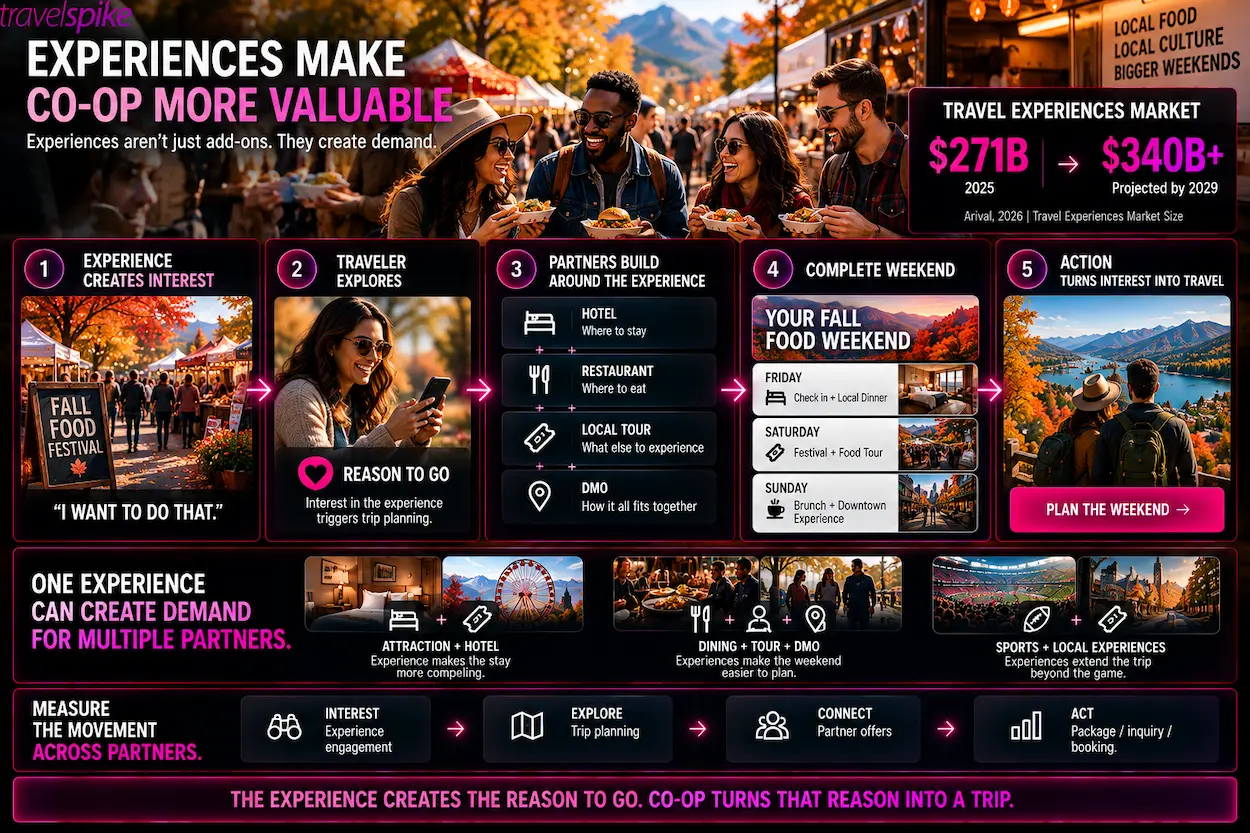
Arival reports that the travel experiences market reached $271 billion in 2025 and is projected to exceed $340 billion by 2029.
That means attractions, tours, events, and activities are not secondary add-ons. They are demand creators.
A hotel partnered with a strong attraction can make the stay more compelling. A destination partnered with restaurants and tours can make a weekend easier to plan. A sports event partnered with local experiences can extend the visit beyond the game.
The performance goal is to connect interest to action across partners.
Filter the Message by Trip Type
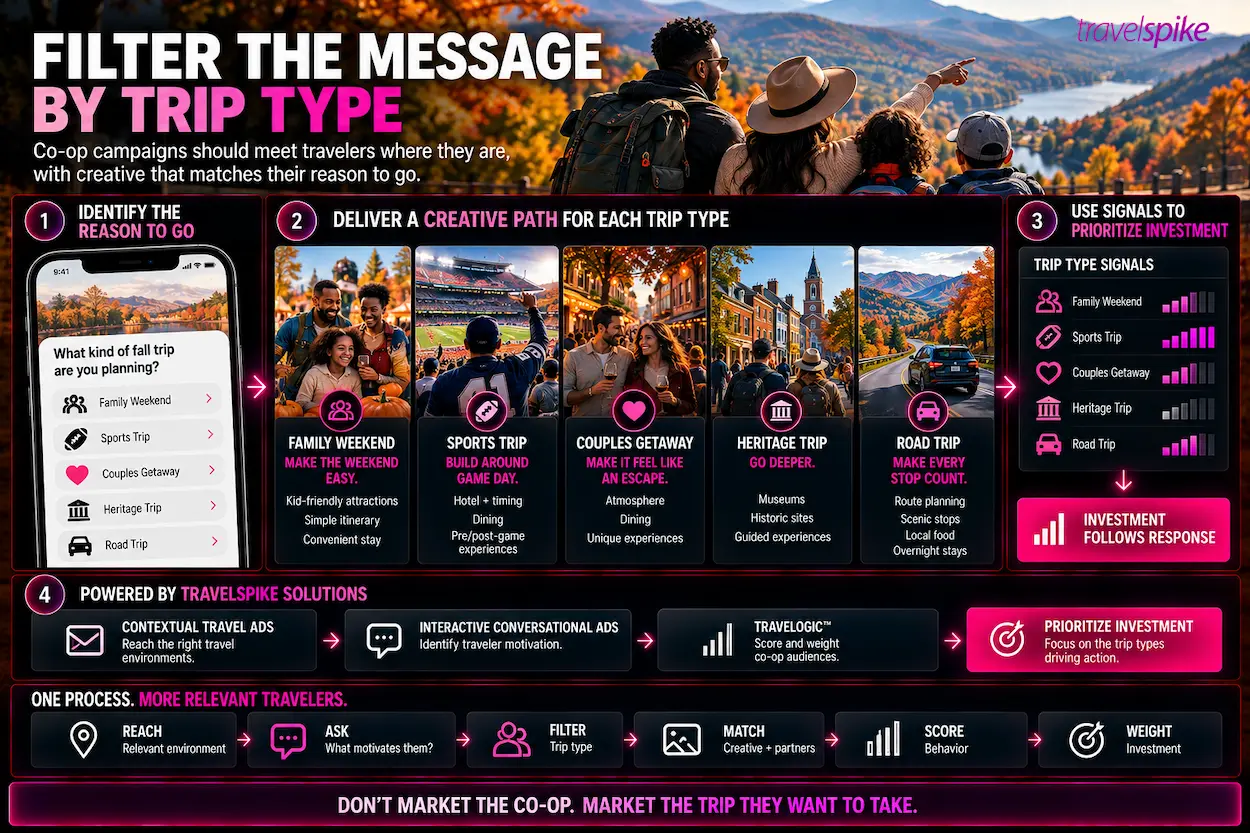
Co-op campaigns should not use one message for everyone.
A family fall weekend needs ease and kid-friendly planning. A sports trip needs timing, lodging, and pre/post-game experiences. A couples getaway needs atmosphere. A heritage traveler needs depth. A road tripper needs route logic and stops.
Each trip type should have its own creative path.
This is where Interactive Conversational Ads can help identify traveler motivation, while Contextual Travel Ads can reach people in relevant travel environments. Travelogic™ can help score and weight which co-op audiences deserve more investment.
Co-ops work best when the campaign is built around the traveler’s reason to go.
The Takeaway
Shoulder season is not a time for isolated marketing, it is a time for connected demand creation.
The travel brands that perform will build co-op campaigns around real traveler use cases, shared audience signals, partner value, and measurable action. Hotels, DMOs, attractions, restaurants, tours, and event partners all benefit when the trip feels complete.
The traveler is not buying one ad, they are buying the idea of a trip.
Co-ops make that idea easier to believe, easier to plan, and easier to book.