
AI Is Compressing Travel Discovery. Here’s How Brands Should Pivot.
AI is not eliminating travel demand. It is compressing the path travelers take to discover, compare, and decide. That distinction matters.
Travel marketers are hearing a lot about AI reducing website traffic, search clicks, and publisher referrals. Those concerns are real. When AI-generated answers summarize information directly inside search results, travelers may get what they need without clicking through to as many websites.
Pew Research Center found that Google users were less likely to click links when an AI summary appeared in search results compared with search pages without one. In travel specifically, Phocuswright reports that nearly four in 10 U.S. travelers have used generative AI when researching trips in the past 12 months, an 11-point increase in one year.
So yes, discovery is changing. But travelers are still planning. They are still comparing. They are still booking. They are just doing more of the early work inside AI tools, social feeds, video platforms, answer engines, and recommendation environments.
That means travel brands need to pivot.
Stop Measuring Discovery Only by Clicks
The first adjustment is mental.
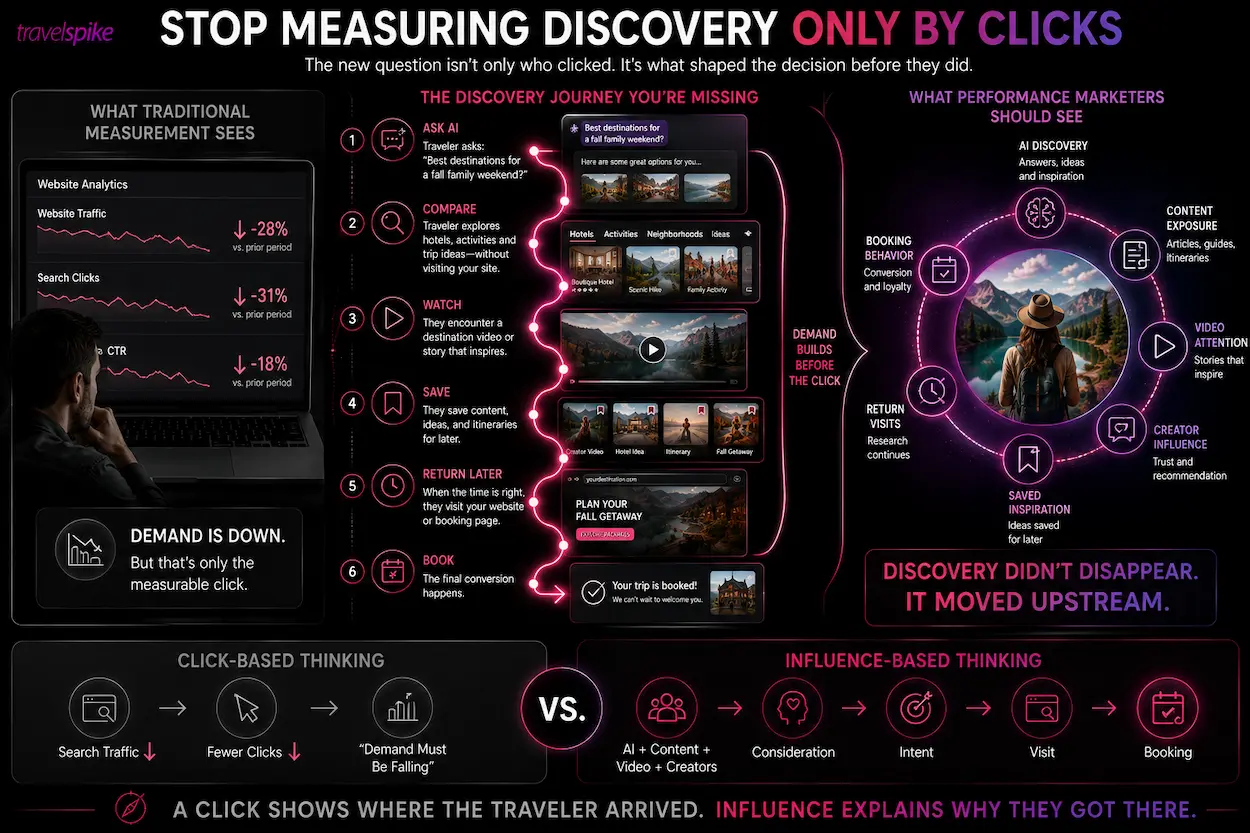
A decline in search traffic does not automatically mean a decline in traveler interest. It may mean more of the discovery journey is happening before the click.
A traveler might ask AI for family-friendly destinations, compare hotels through an AI answer, save a creator video, watch a destination story, and only later visit a booking page. If the brand only measures the final click, it misses the influence that shaped the decision.
That is why travel marketers need to stop treating traffic volume as the only sign of demand.
The stronger question is: where is the traveler being influenced before they reach us?
Build Content AI Can Understand and Travelers Can Trust
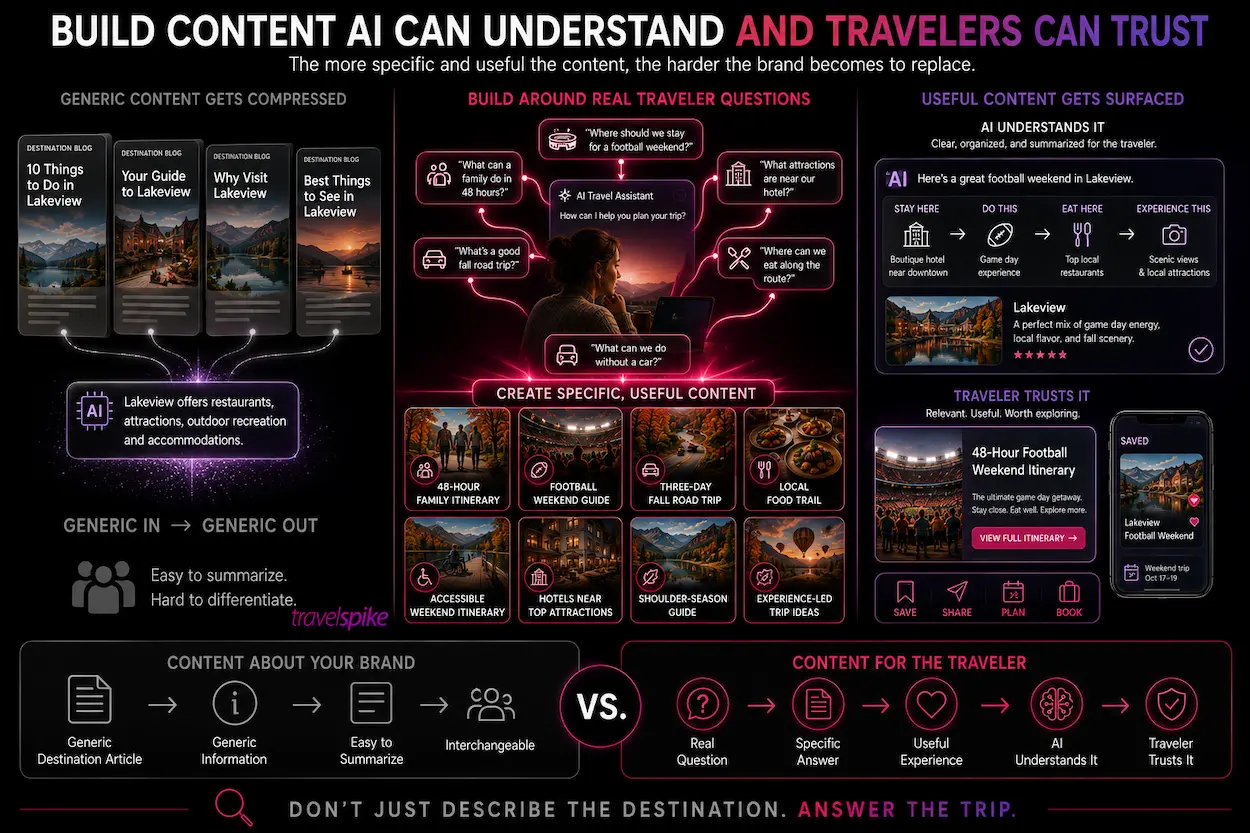
AI is making generic travel content less valuable.
If a blog post only says what every other destination guide says, AI can summarize it easily. The brand becomes interchangeable.
Travel brands need more specific, structured, useful content.
That means content around real traveler use cases: family weekends, road trips, event travel, fall escapes, attractions near hotels, accessible itineraries, food trails, sports weekends, seasonal guides, and experience-led trip ideas.
This helps in two ways.
First, it gives travelers more useful reasons to engage. Second, it gives AI systems clearer information to understand, summarize, and potentially surface.
Content should not just describe the brand.
It should answer the questions travelers are actually asking.
Use Contextual Travel Ads to Reach Before Search
If search becomes more compressed, contextual visibility becomes more important.
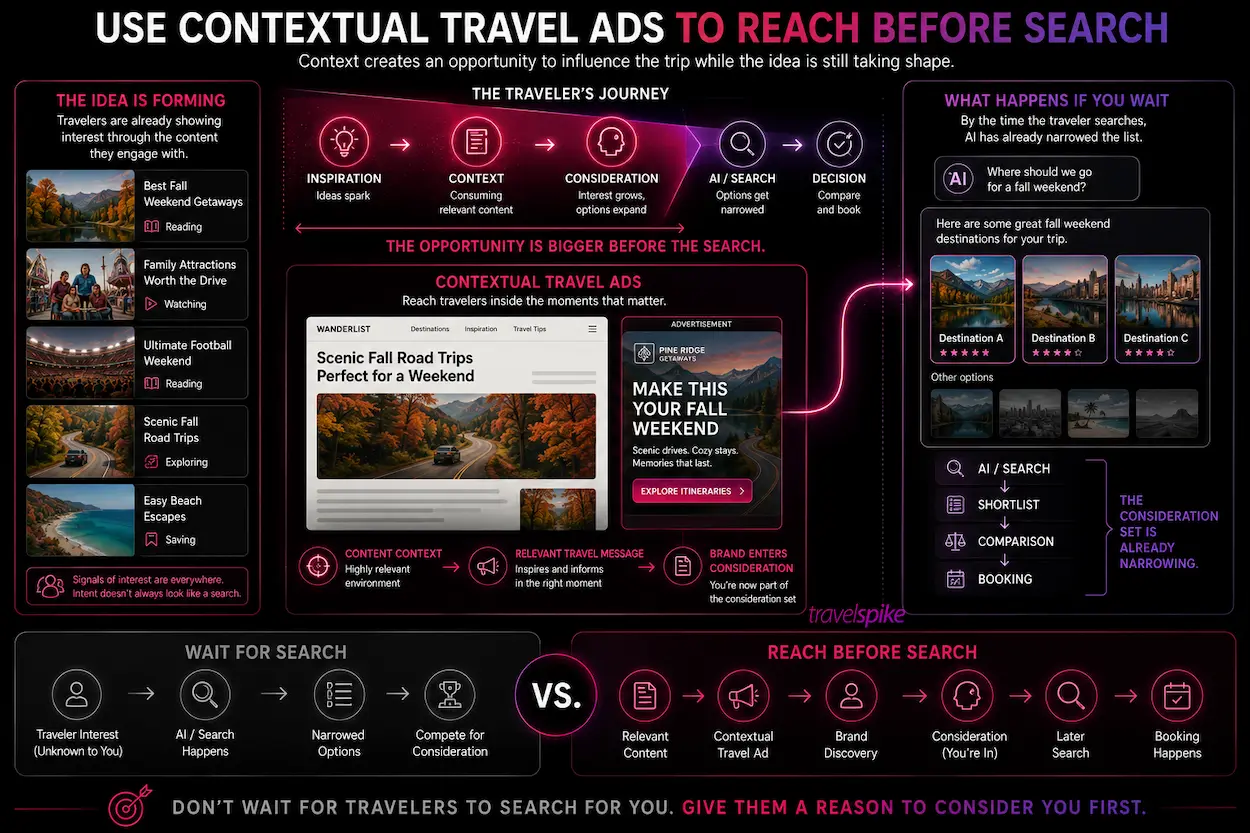
Contextual Travel Ads can help brands reach travelers inside relevant travel environments before they express obvious intent through search. A traveler reading about fall getaways, family attractions, sports weekends, road trips, or beach escapes is already showing context-driven interest.
That context matters because it catches the traveler while the idea is still forming.
In an AI-shaped discovery environment, waiting until a traveler searches may be too late. By then, the AI answer may have already narrowed the consideration set.
Contextual advertising helps travel brands show up earlier, where inspiration and intent are still being built.
MicroAdventures Can Create Demand AI Cannot Replace
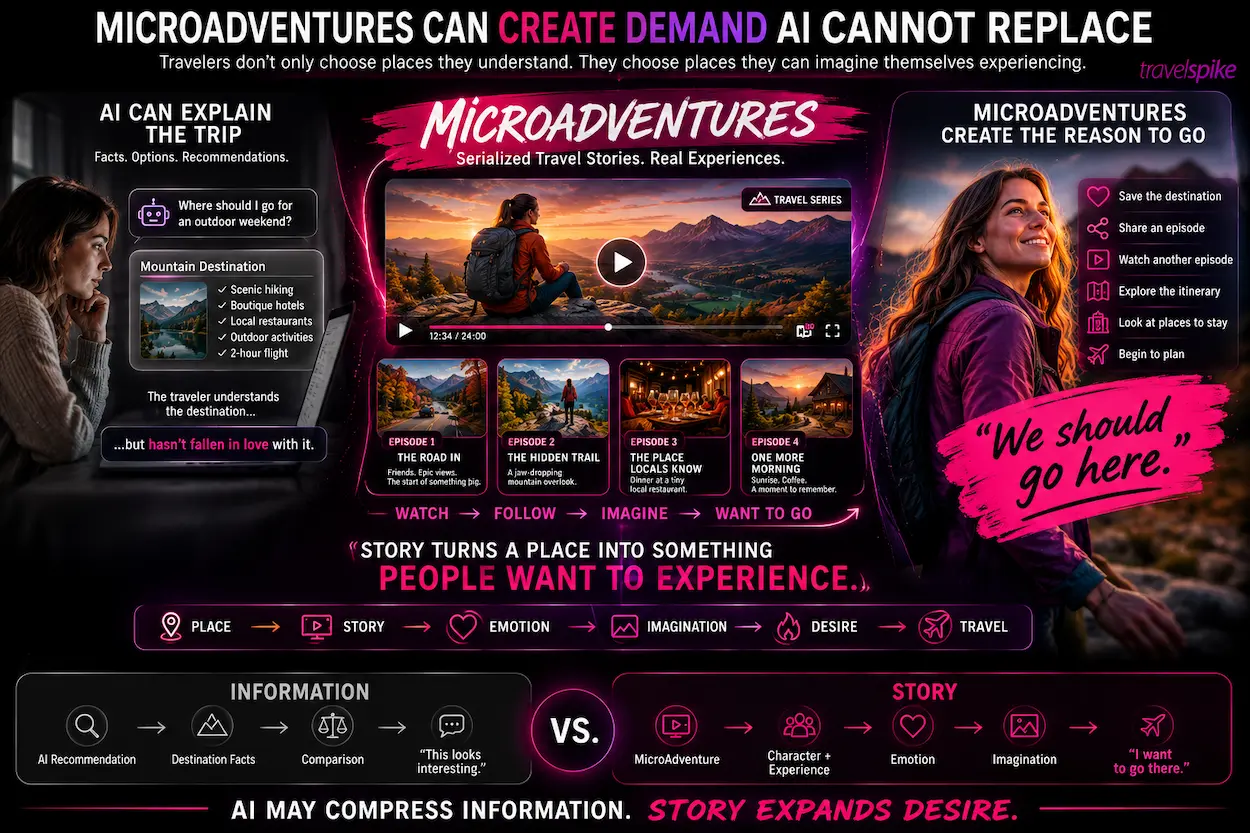
AI can recommend a destination. But it cannot make a traveler emotionally care on its own.
That is where storytelling becomes a stronger pivot.
MicroAdventures gives travel brands a way to create serialized, watchable travel stories that build emotional interest before the booking window. Instead of waiting for travelers to discover a destination through AI, brands can create their own reason to be discovered.
This matters because travel is emotional. People do not only book based on facts. They book based on how a trip feels in their imagination.
MicroAdventure-style storytelling can turn a hotel, attraction, destination, or itinerary into something travelers want to follow, share, and experience.
AI may compress information. Story expands desire.
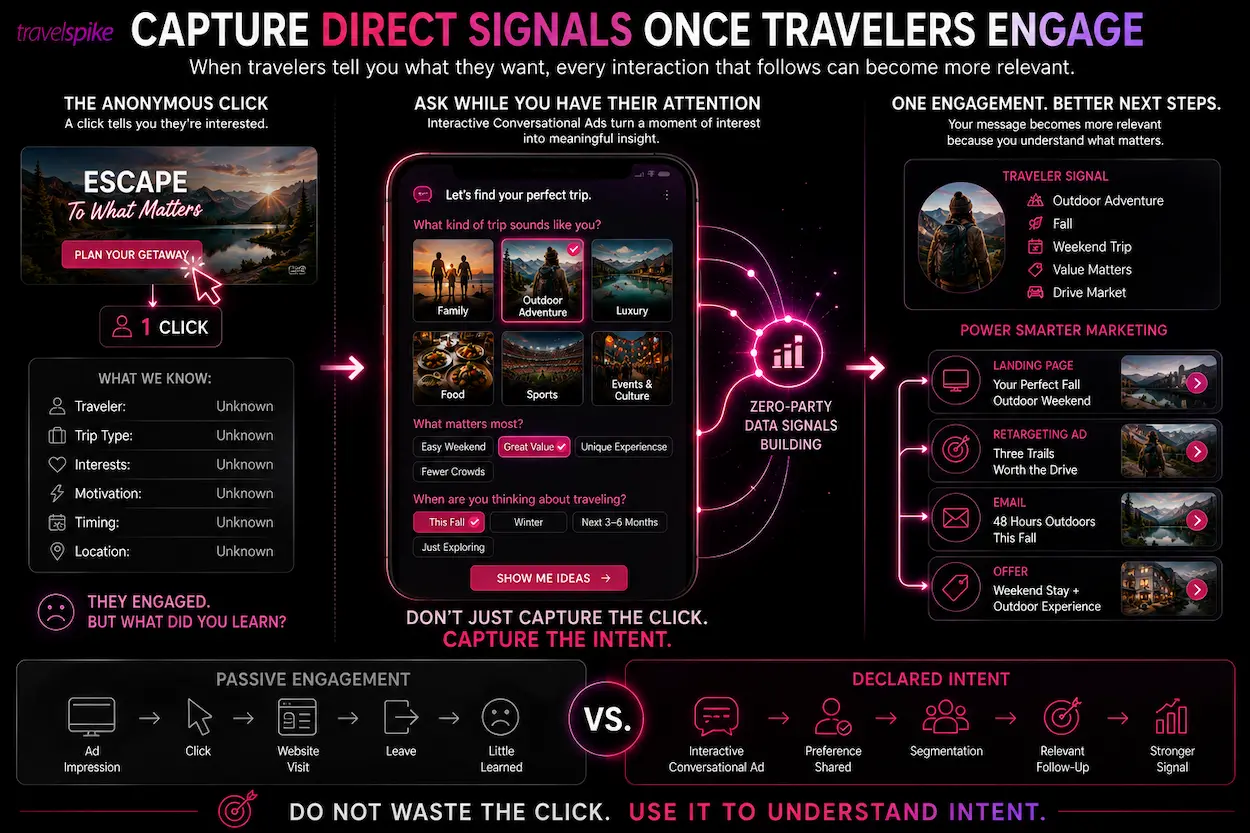
Capture Direct Signals Once Travelers Engage
As discovery fragments, direct traveler signals become more valuable.
Interactive Conversational Ads can help brands ask travelers what they care about: family travel, outdoor adventure, luxury, food, sports, events, affordability, or culture. That zero-party data can guide follow-up messaging, landing pages, and retargeting.
This is important because AI may reduce some passive browsing behavior. When a traveler does engage directly, brands need to learn more from that moment.
Do not waste the click. Use it to understand intent.
The Takeaway
AI is compressing discovery, but it is not killing travel demand.
Travelers are still moving. They are still booking. They are still looking for experiences worth their time and money.
The brands that adapt will stop depending only on traditional search traffic. They will build clearer content, stronger contextual visibility, better direct signals, and more emotional storytelling.
In the AI era, the goal is not simply to win the click.
It is to influence the traveler before the click becomes harder to earn.