
Shoulder Season Is a Performance Opportunity, Not a Discount Season
Shoulder season has often been treated like a softer period. Fewer crowds. Lower rates. Lighter demand. A chance to fill gaps after summer.
That view is becoming outdated.
For many travel brands, September and October are no longer simply fallback months. They are becoming a strategic performance window where travelers are actively looking for better timing, cooler weather, stronger value, fewer crowds, and more intentional experiences.
The opportunity is not just to discount.
The opportunity is to score demand while it is still forming and filter audiences into the fall travel motivations that actually move them.
Reuters reported that Air Canada expects record September and October revenue as premium travelers increasingly avoid summer heat and crowds in Europe and Japan. The airline said the shift toward fall travel began two or three years ago but has accelerated, with premium leisure and corporate demand helping strengthen months once considered slower than peak summer.
That is the larger signal: shoulder season is becoming more competitive.
The Traveler Has Changed
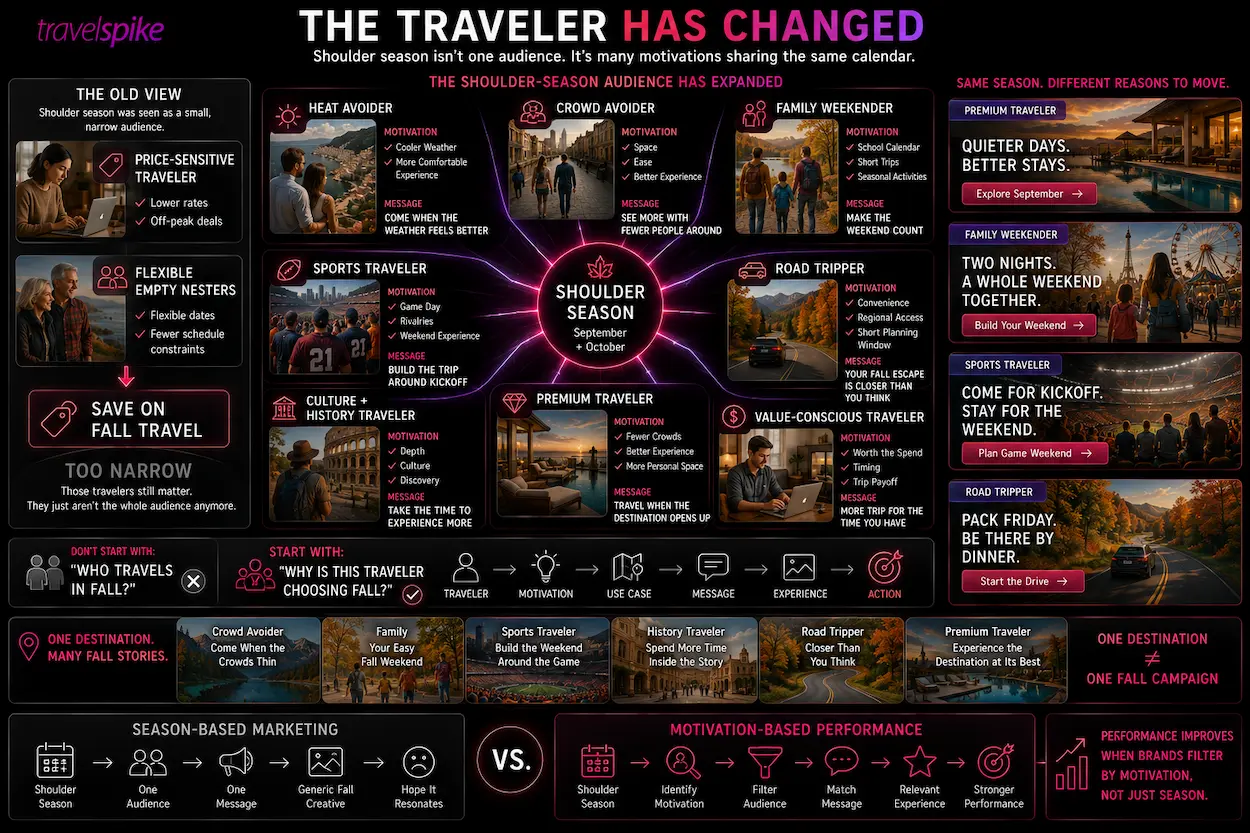
Shoulder season used to be driven mainly by price-sensitive travelers and empty nesters with flexible schedules. Those groups still matter, but the audience is broader now.
Some travelers are avoiding extreme heat. Some are trying to escape peak-season congestion. Some are choosing fall because school schedules, remote work, sports weekends, festivals, and events make short trips easier. Others are still traveling in September because summer costs pushed them out of earlier booking windows.
The point is that shoulder season is not one audience. It is a mix of motivations. That means the media strategy cannot be generic.
A premium traveler avoiding crowds needs a different message than a budget-conscious family. A football traveler needs a different path than a couple looking for a quieter weekend. A road tripper needs convenience. A history traveler needs depth. An attraction visitor needs a reason to add the experience to the itinerary.
Performance improves when brands filter by motivation, not just season.
Shoulder Season Requires a Better Reason to Go
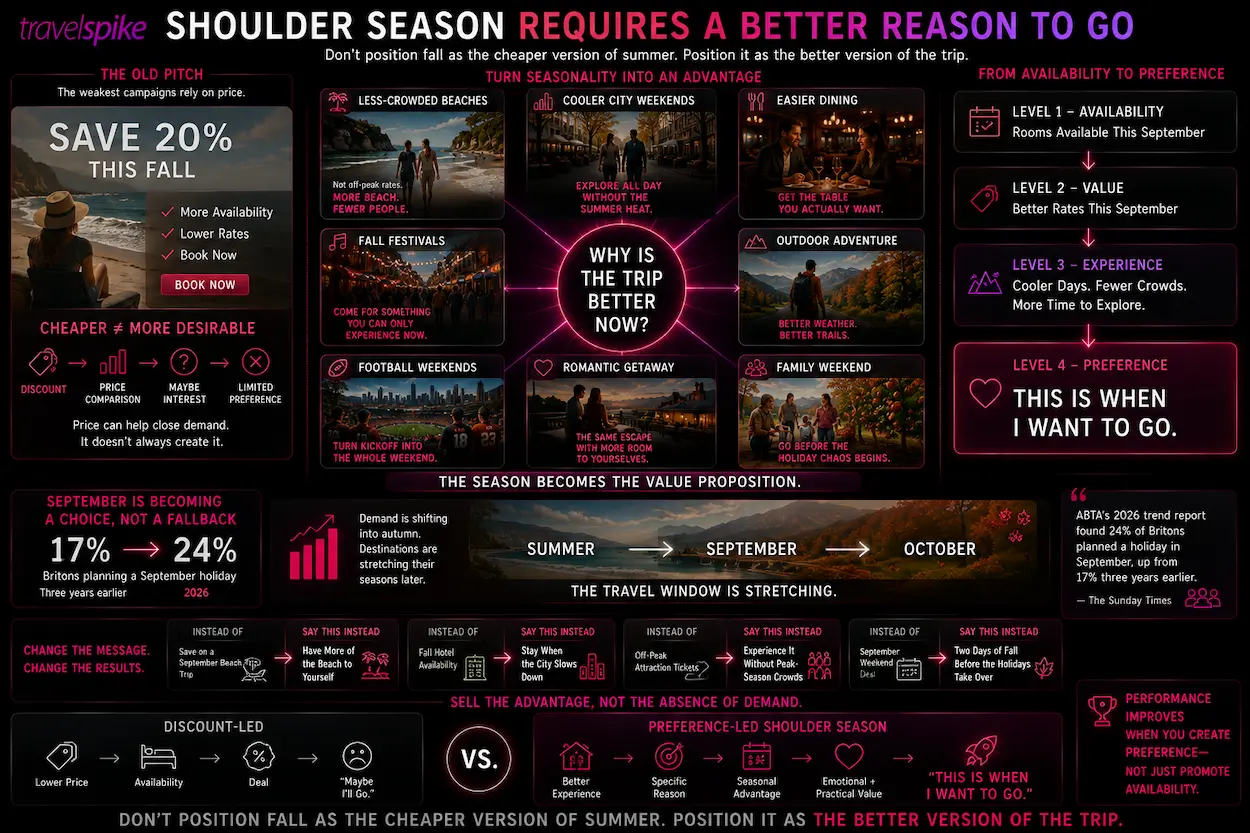
The weakest shoulder-season campaigns rely on “come now, it’s cheaper.” That can work in some cases, but it limits the value of the season.
A stronger strategy positions shoulder season as the better version of the trip for certain travelers.
Less crowded beaches. Cooler city weekends. Easier restaurant reservations. Fall festivals. Outdoor adventure. Football weekends. Culinary events. Family trips before holiday chaos. Romantic getaways after peak demand.
These are not discounts. They are reasons.
The Sunday Times reported that ABTA’s 2026 trend report found 24% of Britons planned a holiday in September, up from 17% three years earlier, while the Advantage Travel Partnership said fall bookings were very strong. The same report also noted that some destinations are stretching their seasons later because demand is shifting into autumn.
That matters for marketers because the shoulder-season message has to move beyond “availability.”
It needs to create preference.
Score Summer Engagement Into Fall Intent
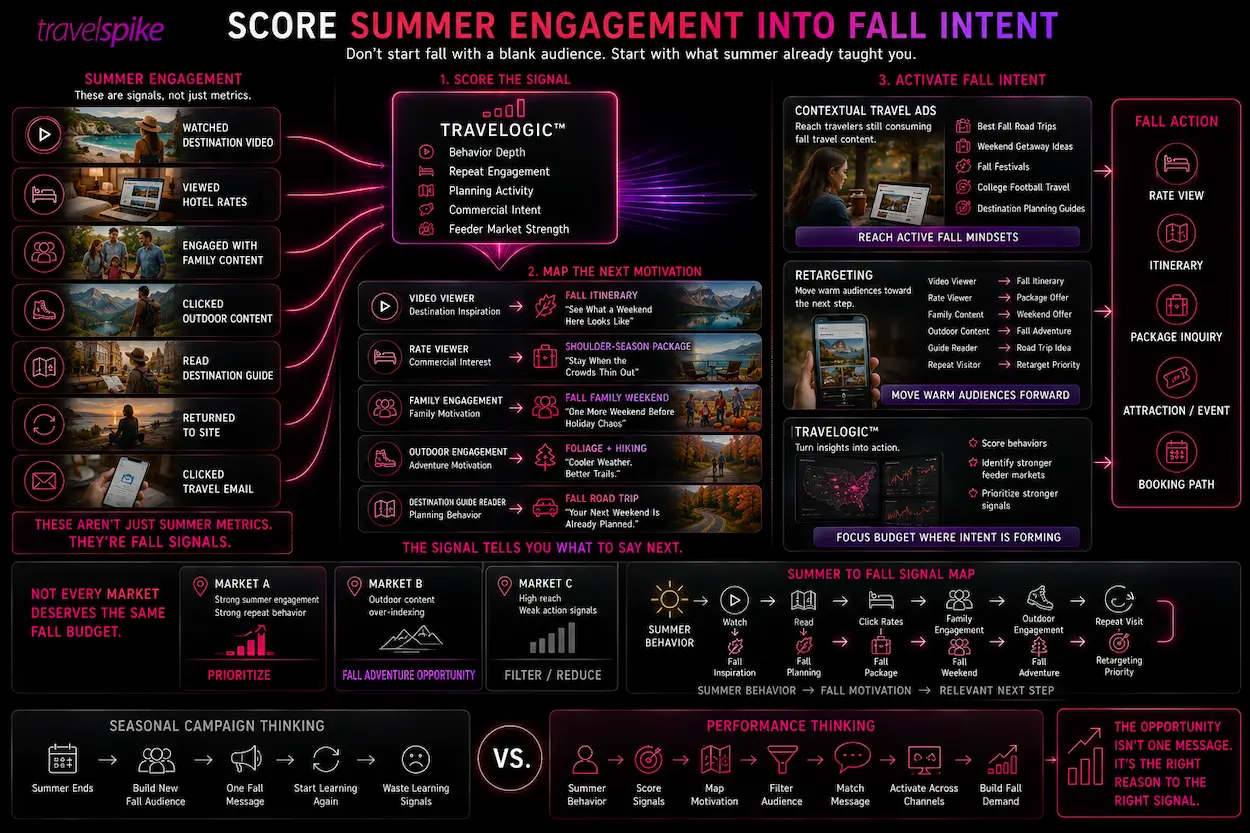
August and September performance should be built from the signals summer already created.
A traveler who watched a destination video may need a fall itinerary. Someone who clicked hotel rates may need a shoulder-season package. Someone who engaged with family content may need a weekend-before-the-holidays message. Someone who clicked outdoor content may be ready for fall hiking, foliage, or cooler-weather adventure.
That is the job now: score summer behavior and map it into fall intent.
Travelogic™ can help prioritize which audiences are showing stronger action signals and which feeder markets deserve more budget. Contextual Travel Ads can help reach travelers still consuming fall travel content, road trip ideas, event coverage, and destination planning content. Retargeting can move warm audiences toward the next step.
The performance opportunity is not in blasting one fall message.
It is in matching the right reason to the right signal.
Optimize for Revenue Quality
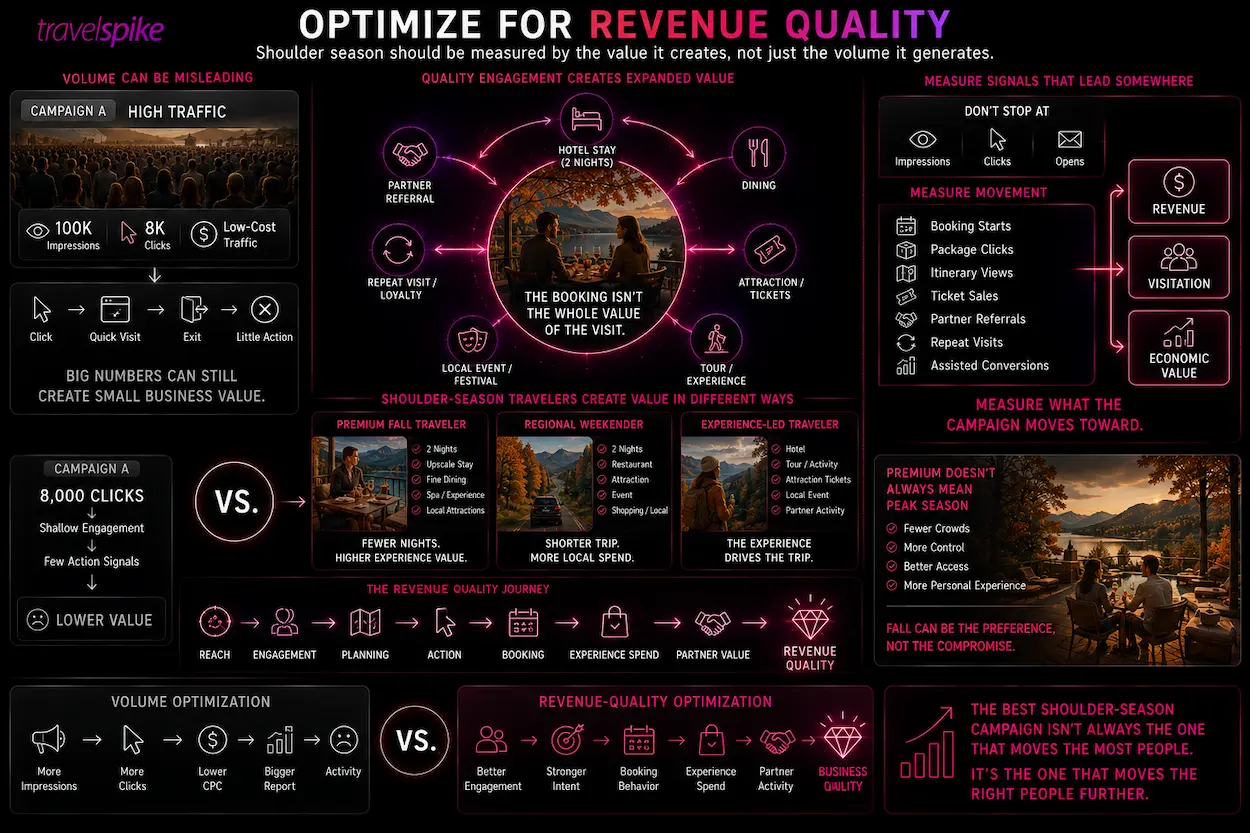
Shoulder season should not be judged only by volume.
Some of the most valuable shoulder-season travelers may book fewer nights but spend more on experiences. Some may travel regionally but add attractions, dining, tours, or events. Some may be premium travelers choosing fall specifically because it feels easier and more controlled.
The right measurement should include booking starts, package clicks, itinerary views, ticket sales, partner referrals, repeat visits, and assisted conversions.
A shoulder-season campaign that drives fewer clicks but higher-quality engagement may be outperforming a larger awareness campaign that creates little action.
That distinction matters.
The Takeaway
Shoulder season is no longer just the quiet space between summer and the holidays. It is a performance window.
The brands that win will not rely only on discounts. They will score demand, filter audiences by motivation, weight the strongest signals, and create specific reasons to travel now.
The opportunity is not to fill empty space.
It is to convert changing traveler behavior into measurable fall action.