Labor Day Is the Final Summer Performance Window for Travel Brands
Labor Day is often treated like the end of summer. For travel marketers, that is the wrong way to look at it.
Labor Day is not just a closing weekend. It is a final high-intent performance window before traveler behavior shifts into fall, shoulder season, football weekends, regional trips, school-year routines, and holiday planning.
That makes it valuable for more than last-minute bookings. It is a moment to score demand, filter audiences by intent, and turn end-of-summer attention into measurable action.
Travel demand is still active heading into the holiday weekend, but travelers are making decisions with more pressure around cost, timing, traffic, and value. AAA’s 2026 Labor Day booking analysis found that average domestic airfare is up 2% year over year, averaging $750 for a roundtrip ticket. For the most popular domestic Labor Day destinations, airfare is nearly 20% higher than last year, averaging $790. Domestic hotel bookings are also 9% more expensive than last Labor Day weekend.
That is the performance challenge.
Travelers still want the trip. But brands have to make the decision feel worth it.
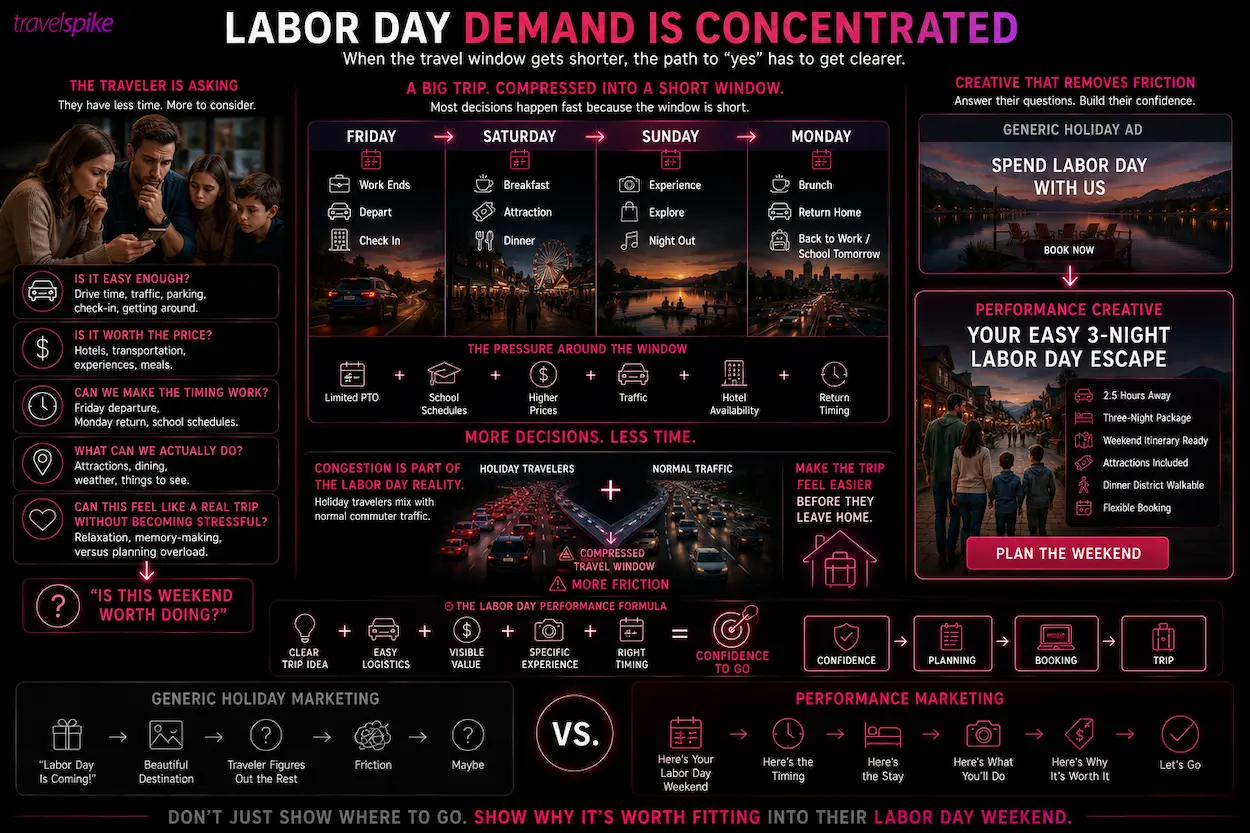
Labor Day Demand Is Concentrated
Labor Day behaves differently than longer summer travel periods.
It is compressed. Most travelers are working around a short holiday window, school schedules, limited PTO, and predictable return timing. That means decisions happen quickly, routes get crowded, and the value proposition has to be clear.
AAA’s analysis also notes that Labor Day travel is often concentrated into a shorter window, with heavy congestion expected as holiday travelers mix with normal commuter traffic. That matters for hotels, attractions, DMOs, tour operators, restaurants, and transportation partners because the traveler is not simply asking, “Where should I go?”
They are asking:
- Is it easy enough?
- Is it worth the price?
- Can we make the timing work?
- What can we actually do once we get there?
- Can this feel like a real trip without becoming stressful?
Performance marketing has to answer those questions fast.
Score the Audience Before You Spend
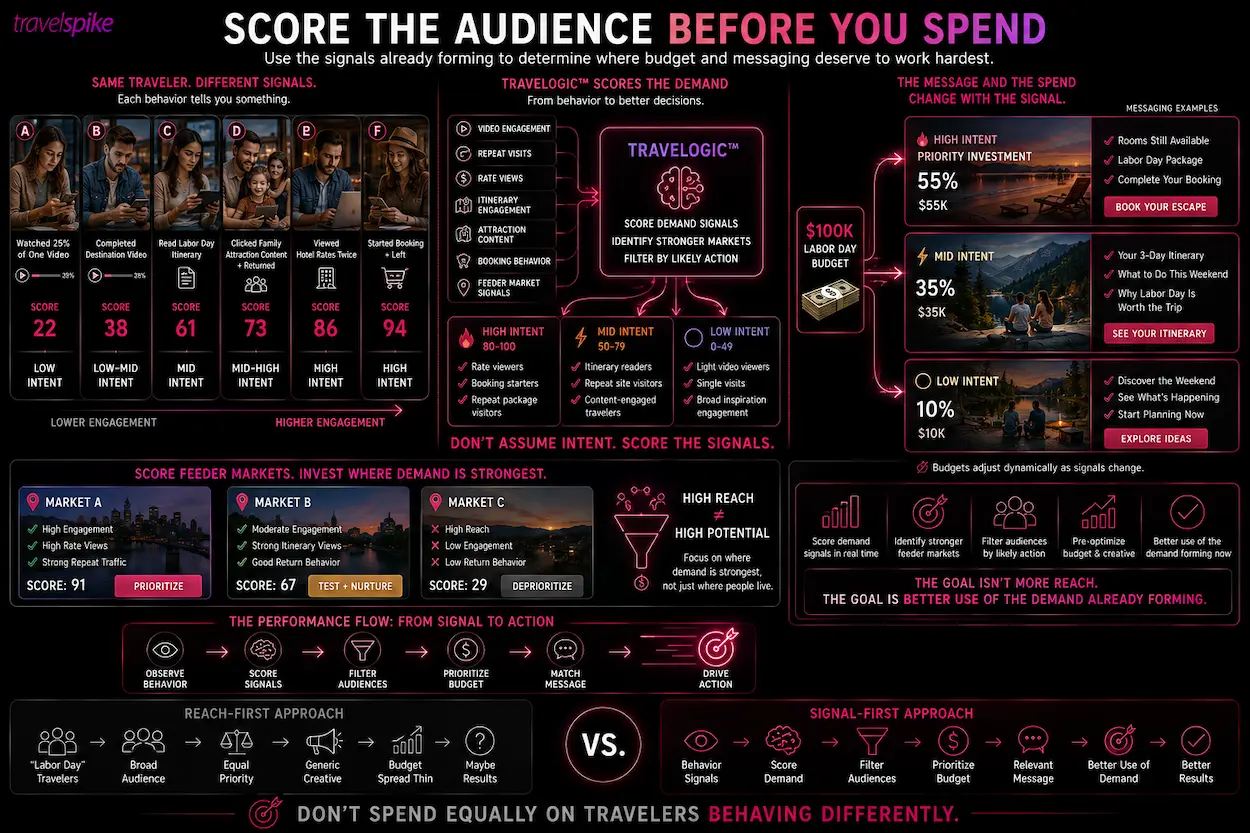
Labor Day is not the time to treat every traveler the same. The smarter move is to score audiences based on behavior.
Someone who clicked a summer offer in July is different from someone who watched a destination video once. A traveler who viewed hotel rates is different from someone who read an itinerary. A family that engaged with attraction content is different from a couple browsing fall escapes.
Each behavior tells you something.
High-intent audiences may need urgency, availability, package value, or a direct booking path. Mid-intent audiences may need itinerary support, trip ideas, or proof that the experience is worth the spend. Low-intent audiences may need inspiration, but they should not receive the same budget priority as travelers already showing deeper engagement.
This is where Travelogic™ can support performance strategy by helping brands score demand signals, identify stronger feeder markets, and filter audiences based on likely action instead of broad assumptions.
The goal is not more reach. The goal is better use of the demand already forming.
Filter the Message by Motivation
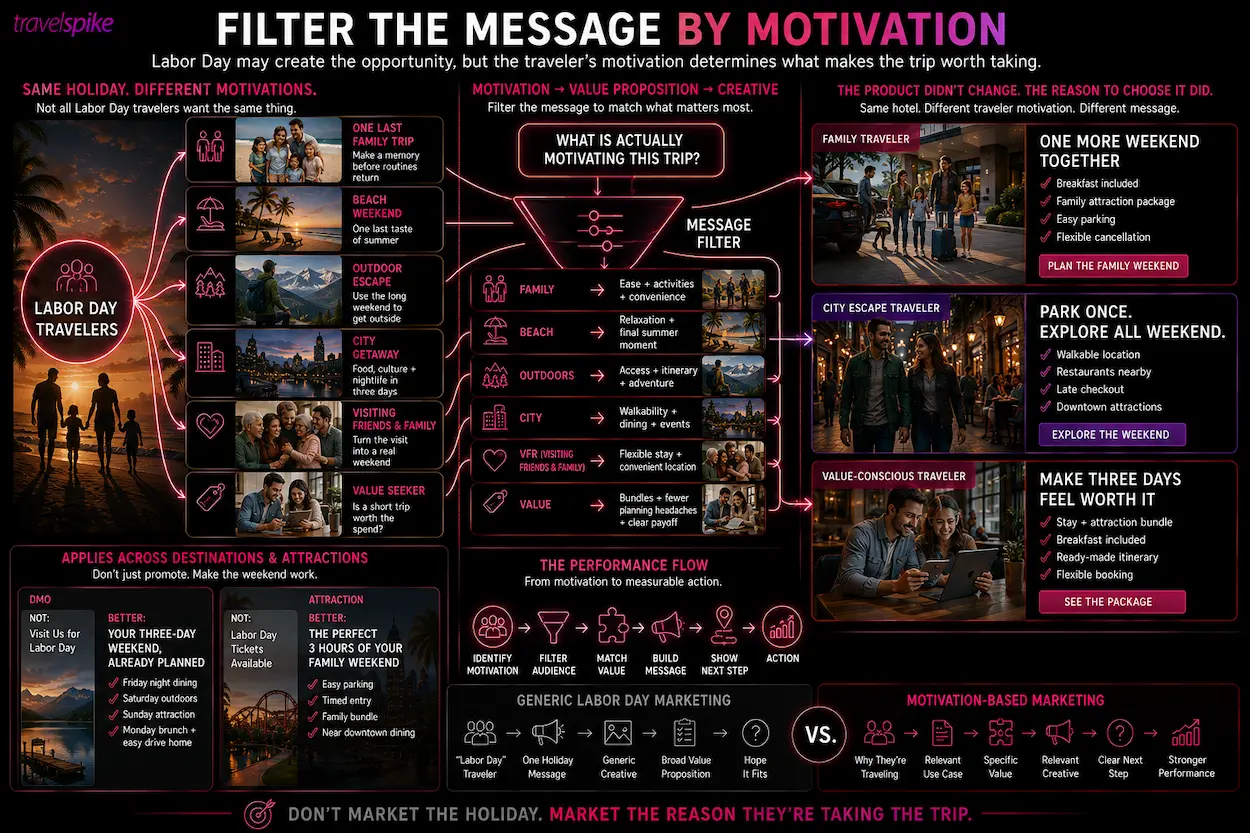
Labor Day travelers are not all motivated by the same thing.
Some are trying to squeeze in one last family trip. Some want a beach weekend. Some are looking for national parks, cruises, city escapes, or attractions. Some are visiting friends and relatives. Some are testing whether a short trip is worth the cost.
That means the message should not be generic.
A hotel should not only promote rooms. It should promote ease, location, flexibility, parking, breakfast, walkability, or bundled value.
A destination should not only say “visit for Labor Day.” It should show how the weekend can work: what to do, where to stay, how to avoid friction, and why the timing makes sense.
An attraction should not only promote tickets. It should explain why the experience is worth adding to a short holiday itinerary.
Performance improves when the message matches the traveler’s actual reason for considering the trip.
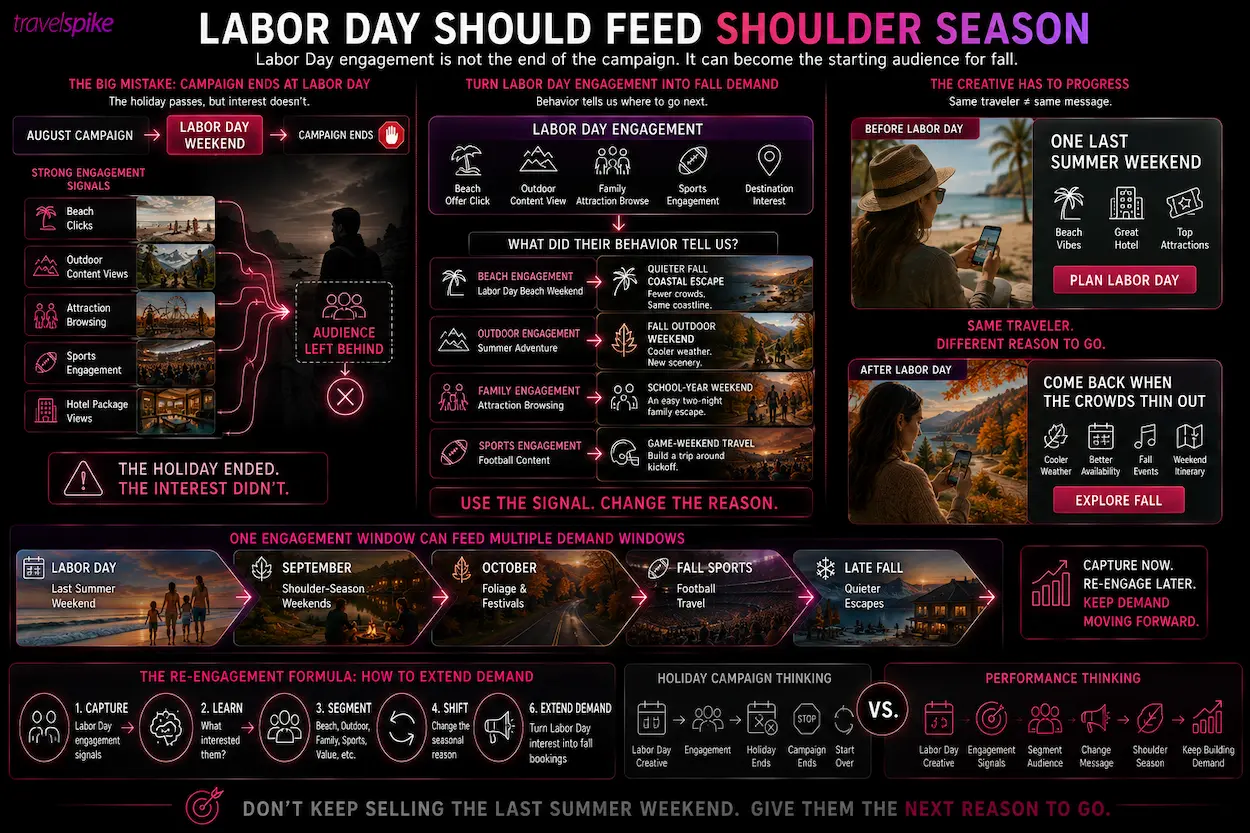
Labor Day Should Feed Shoulder Season
The biggest mistake is treating Labor Day as a standalone campaign. It should also become a data collection and re-engagement moment for fall.
Travelers who engage with Labor Day creative may not all book. That does not make them low value. Some may be better fits for September weekends, October festivals, fall foliage, football travel, heritage trips, or quieter shoulder-season escapes.
The Labor Day audience can help build the next campaign.
A traveler who clicked a beach offer may respond to a less-crowded fall coastal weekend. Someone who engaged with outdoor content may be a fall adventure prospect. A family who browsed attractions may respond to a school-year weekend trip. A sports traveler may be ready for NFL or college football weekend messaging.
The key is to change the next message.
Do not keep pushing the same Labor Day creative after the holiday passes. Shift from “last summer weekend” to “next reason to go.”
Use Context to Capture Intent Earlier
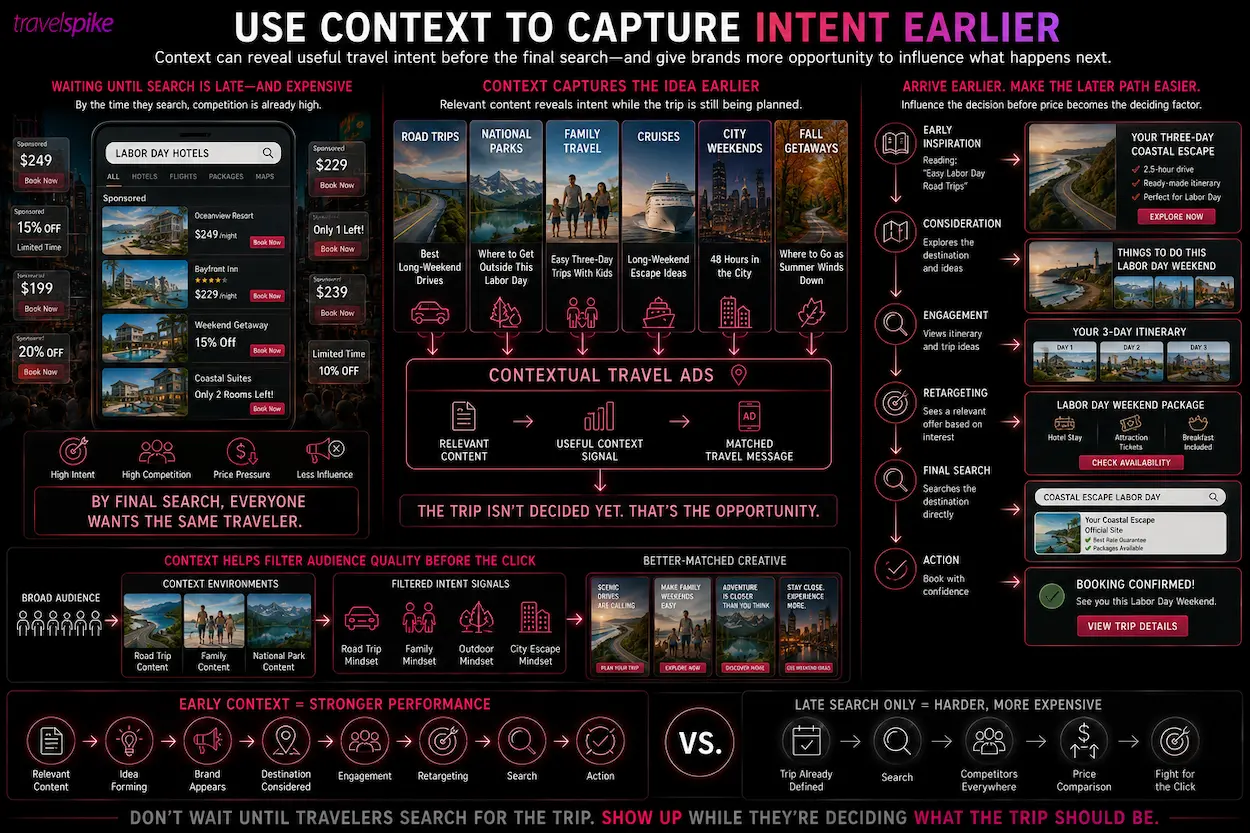
Labor Day performance is not only about late-stage search. By the time someone is comparing final prices, competition is already high.
Contextual Travel Ads can help brands appear earlier in relevant environments where travelers are still shaping their plans. Someone reading about road trips, national parks, family travel, cruises, city weekends, or fall getaways is already showing a useful signal.
That context helps filter audience quality before the click.
And because Labor Day decisions are compressed, appearing earlier in the planning process can make the conversion path more efficient later.
Measure Action, Not Just Activity
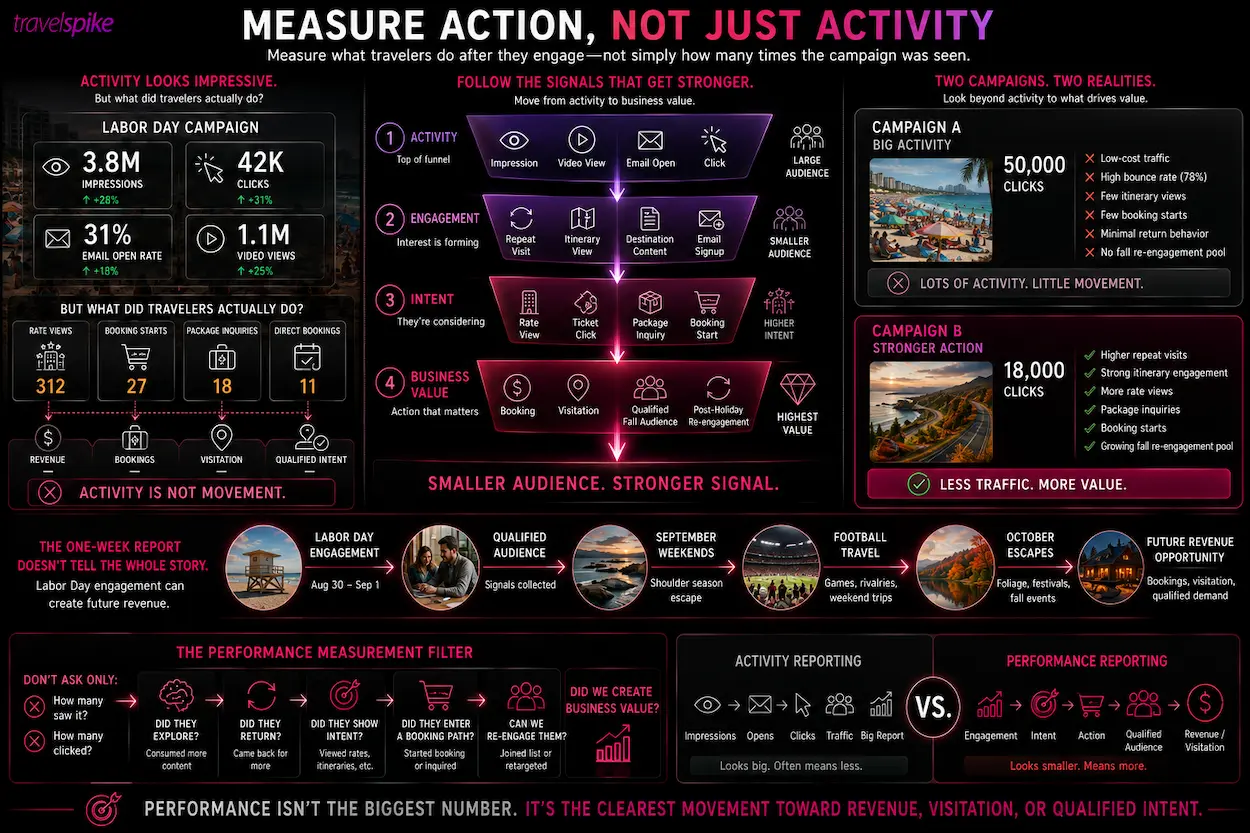
Labor Day reporting should not stop at impressions, clicks, or open rates.
Travel brands should look at action signals: rate views, booking starts, itinerary engagement, ticket clicks, package inquiries, repeat visits, email signups, and post-holiday re-engagement pools.
A campaign that drives cheap traffic but no meaningful movement is not performing. A campaign that builds a smaller but higher-quality audience for fall may be more valuable than it looks in a one-week report.
That is the shift travel marketers need to make. Performance is not always the biggest number.
It is the clearest movement toward revenue, visitation, or qualified intent.
The Takeaway
Labor Day is more than the unofficial end of summer. It is the final summer performance window and the first real handoff into shoulder season.
The brands that win will not simply push one more holiday offer. They will score demand, filter audiences, match messages to motivation, and use the weekend to build the next wave of traveler action.
Summer may be ending.
But the smartest travel marketers are already turning Labor Day behavior into fall performance.