
Fall Sports Are Travel’s Next Performance Window
Fall sports are not just a media opportunity for travel brands. They are a performance window.
As August wraps up, the travel industry is moving out of peak summer mode and into one of the most valuable attention periods of the year. NFL season is approaching. College football is returning. Fans are planning weekends, road trips, watch parties, tailgates, rivalry travel, hotel stays, and group experiences.
For travel marketers, that matters because live sports does something most media cannot: it creates shared attention at scale.
The NFL closed its 2025 regular season averaging 18.7 million viewers per game across TV and digital, the league’s second-highest mark since Nielsen began tracking in 1988. That was also up 10% from the prior season. College football showed the same attention power, with ABC posting its best season since 2006 and averaging 6.9 million viewers across 46 regular-season games. (ESPN Press Room)
Those are not passive impressions. They are emotionally invested audiences.
Sports Attention Creates Travel Behavior
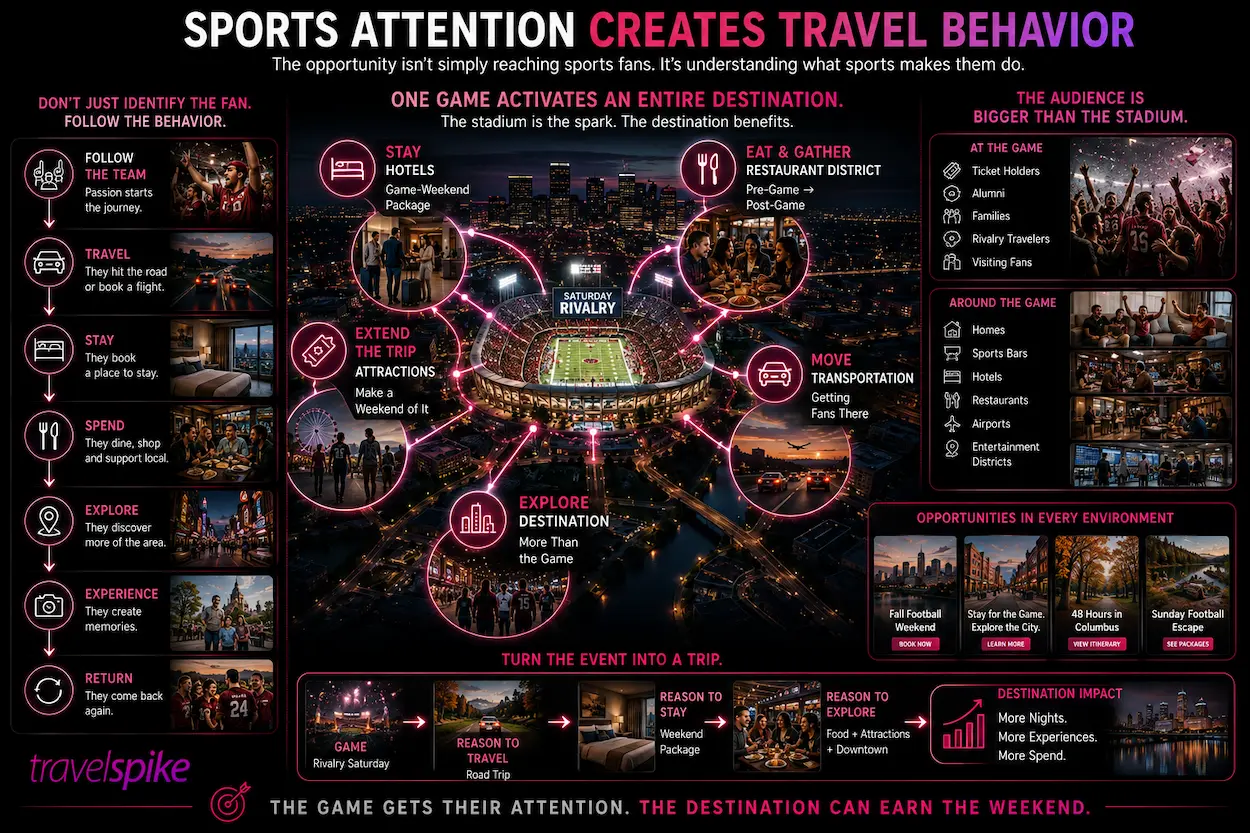
Travel brands often separate sports from tourism too cleanly. But sports creates real travel behavior.
Fans travel to games. Alumni return to college towns. Families build weekends around teams. Friends plan trips around rivalry matchups. Visitors look for hotels, restaurants, attractions, transportation, and things to do before and after the event.
Even fans who are not physically attending games are still participating in sports culture. They gather in homes, bars, hotels, restaurants, airports, and entertainment districts. That creates opportunities for destinations, hotels, attractions, and travel brands to position around the experience, not just the stadium.
A hotel can promote game-weekend packages. A DMO can build a fall sports itinerary. An attraction can reach families traveling with fans. A restaurant district can connect pre-game and post-game demand. A regional destination can promote a weekend escape around Sunday football or college football Saturday.
The opportunity is not simply to reach sports fans.
The opportunity is to understand what sports makes people do.
Live Sports CTV Should Be Treated Like Performance
Too many brands still treat sports video as awareness. That is outdated.
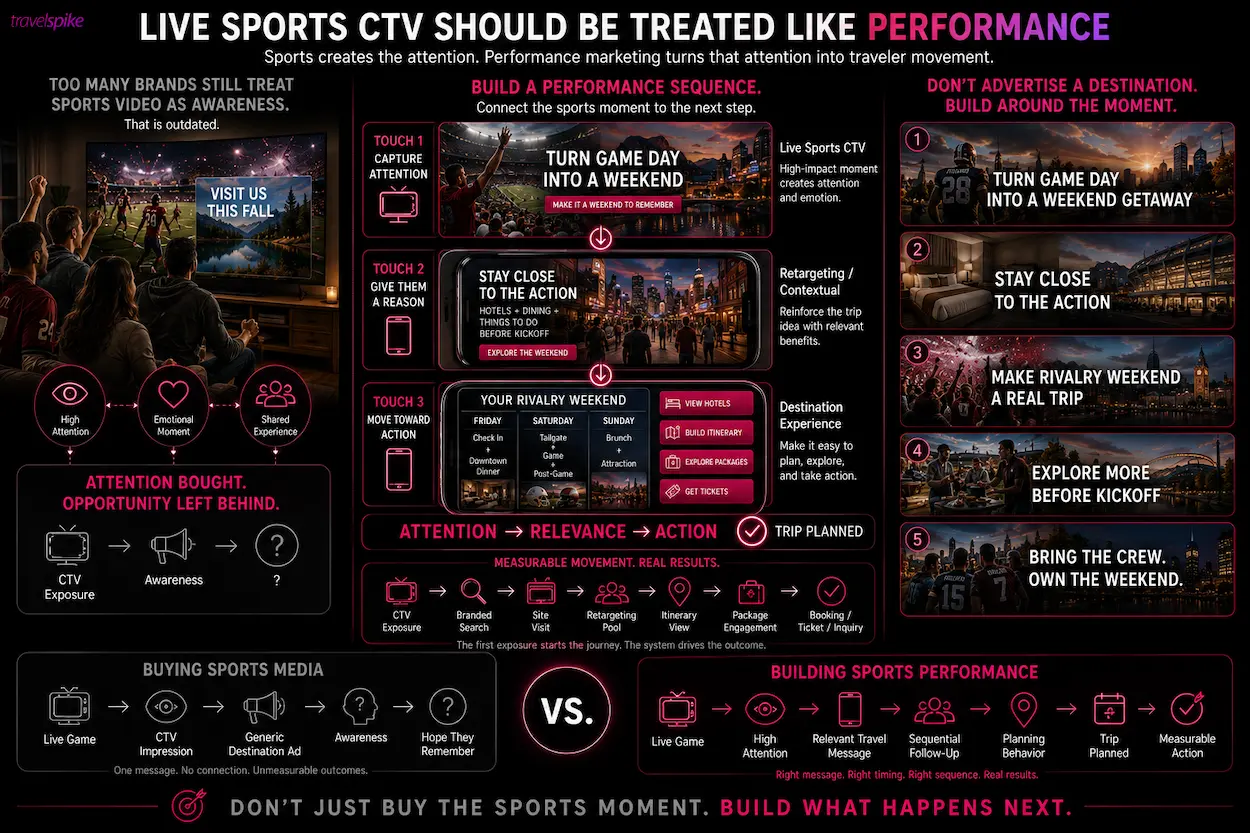
Live Sports CTV can support performance when it is connected to the next step. The first exposure creates attention. The second touch gives the traveler a reason to engage. The third touch moves them toward planning, booking, ticketing, itinerary views, or package consideration.
That sequence matters because sports attention is often immediate, emotional, and social. If a travel message connects to that moment, it can influence behavior more effectively than generic display or low-attention impressions.
But the creative has to be built for the environment.
“Visit us this fall” is too broad.
Better messaging connects the sports moment to the travel use case:
- Turn game day into a weekend getaway.
- Stay close to the action.
- Make rivalry weekend a real trip.
- Explore more before kickoff.
- Bring the whole crew and build the weekend around the moment.
That is the difference between buying media and building performance.
August Is the Time to Build the Audience
The fall sports opportunity does not begin with kickoff. It begins in August.
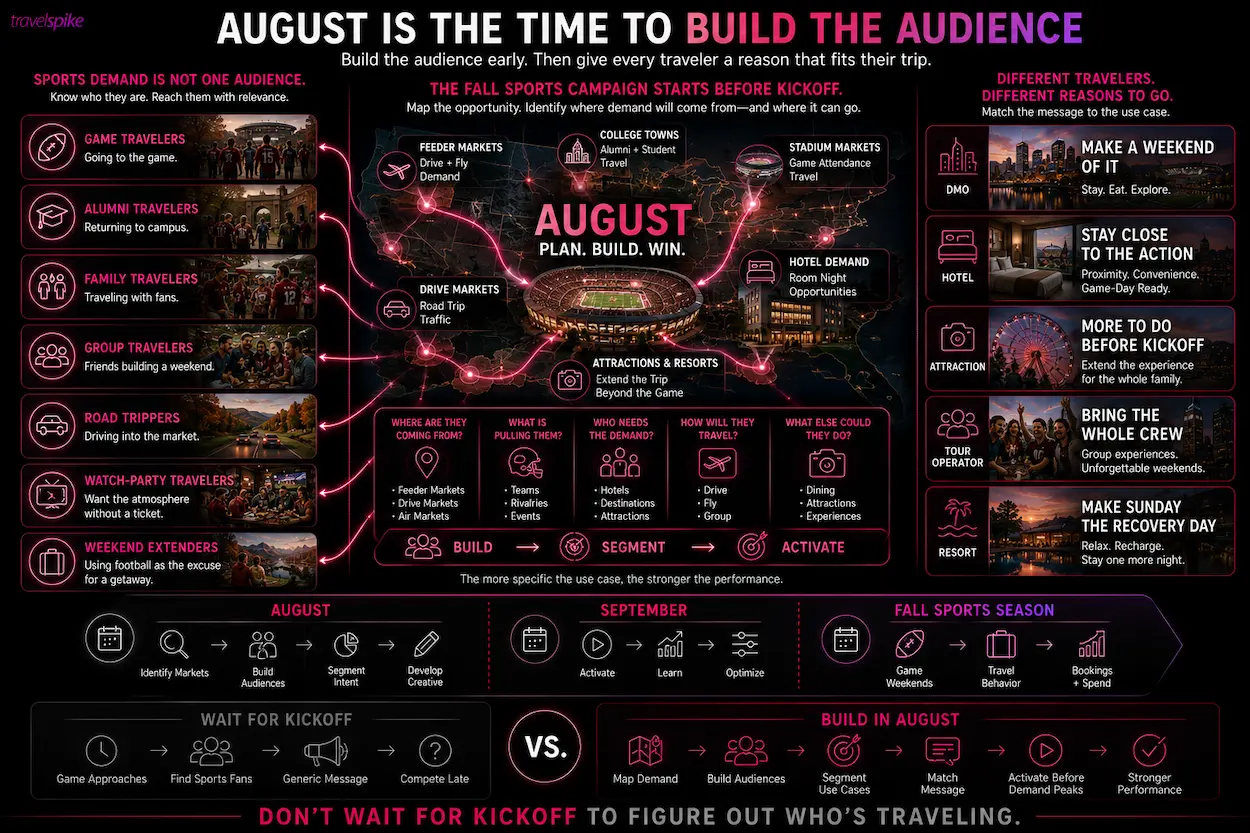
This is when travel brands should be building and segmenting audiences around upcoming demand. Which feeder markets matter? Which teams drive regional travel? Which college towns need hotel demand support? Which attractions benefit from visiting families? Which destinations can position around fall weekends, not just fall foliage?
Brands should also think beyond the obvious game-attendee segment.
There are sports travelers, watch-party travelers, alumni travelers, family travelers, group travelers, road trippers, and visitors who use the game as an excuse to do something else.
Each audience needs a different message.
- A DMO may focus on “make a weekend of it.”
- A hotel may focus on proximity and convenience.
- An attraction may focus on things to do before or after the game.
- A tour operator may focus on group activity.
- A resort may focus on Sunday recovery or Monday extension.
The more specific the use case, the stronger the performance.
Measure Movement, Not Just Reach
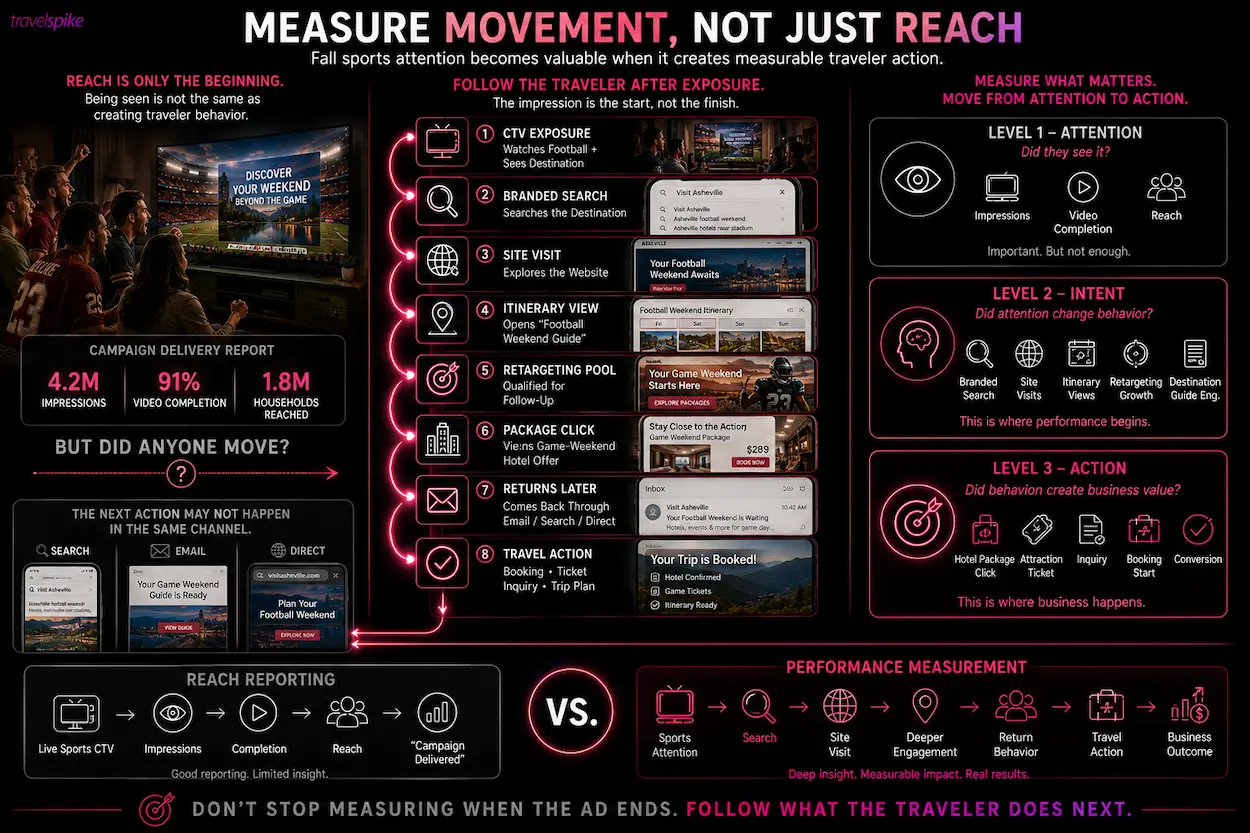
Live sports campaigns should not be judged only by impressions. Travel brands should look at what happens next.
Are viewers visiting the site? Are they searching the brand? Are they engaging with itinerary pages? Are they entering retargeting pools? Are they clicking hotel packages, attraction tickets, or destination guides? Are they returning later through search, email, or direct traffic?
That is where performance lives. The goal is not just to be seen during football season.
The goal is to turn fall sports attention into measurable traveler action.
The Takeaway
Fall sports give travel brands one of the clearest attention opportunities of the year.
But the brands that perform will not be the ones buying sports media generically. They will be the ones connecting live sports attention to real travel behavior: weekends, groups, hotels, attractions, road trips, and destination experiences.
NFL and college football are not just entertainment calendars. They are travel calendars.
August is the moment to build the strategy before the season starts.