
The World Cup Is Over. The Travel Opportunity Isn’t.
The 2026 FIFA World Cup ended Sunday, July 19, with Spain defeating Argentina 1-0 to become world champions for the second time.
But for travel brands, the opportunity did not end with the final whistle.
Mega-events do not stop influencing travel behavior the moment the trophy is lifted. They create a longer tail of movement, attention, memories, content, and future intent. Some visitors stay after the event. Some extend trips. Some return home with new destination awareness. Some start thinking about the next sports trip, international event, family vacation, or city they want to visit because of what they watched, experienced, or saw online.
That is the part many travel brands miss. The World Cup was not only a tournament. It was a massive travel behavior signal.
The 2026 World Cup unfolded over 39 days and 104 matches across the U.S., Canada, and Mexico. That level of scale does not disappear overnight. It creates weeks of content, search behavior, social sharing, hotel activity, restaurant spend, airport movement, and destination exposure that travel marketers can still learn from and act on.
The real question now is not “How do we market during the World Cup?”
It is “How do we use the attention and traveler behavior it created after the event is over?”
The Post-Event Window Matters
Many campaigns treat major events as a live-window opportunity.
That is understandable. During the event, attention is obvious. Fans are watching. Travelers are moving. Cities are active. Hospitality demand is visible.
But the post-event window can be just as valuable because intent changes shape.
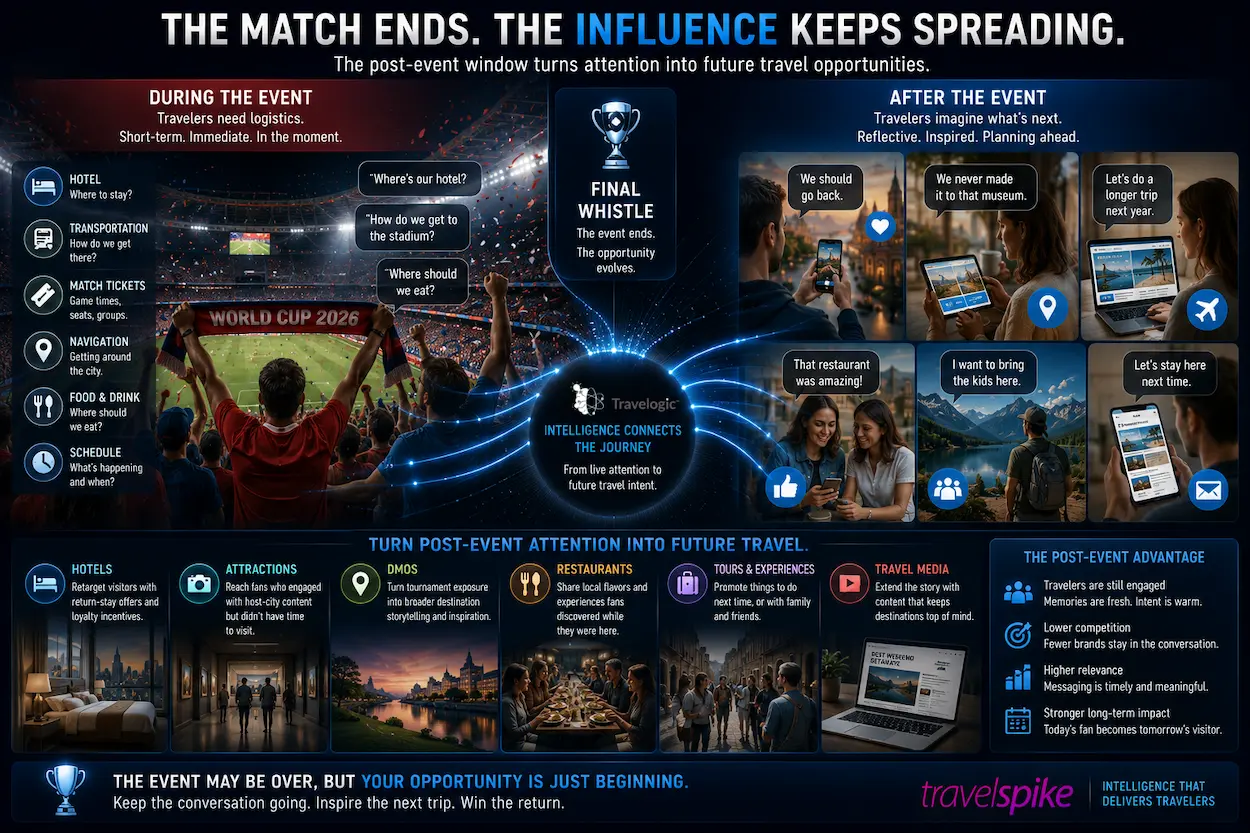
During the tournament, a traveler may be focused on logistics: matches, hotels, transportation, schedules, and group plans. After the tournament, they are more reflective. They are sharing photos, talking about the trip, following teams, revisiting destinations, and thinking about where they would go next.
This is where travel brands can move from event-based urgency to future-trip influence.
Hotels can retarget visitors with return-stay messaging. Attractions can reach travelers who engaged with host-city content but did not have time to visit. DMOs can turn tournament exposure into broader destination storytelling. Restaurants, tours, and local experiences can build content around “what fans discovered while they were here.”
The event may be over, but the audience is still warm.
The Data Shows the Spending Was Broader Than the Stadium
The World Cup also showed that the value of major sporting events extends beyond match attendance.
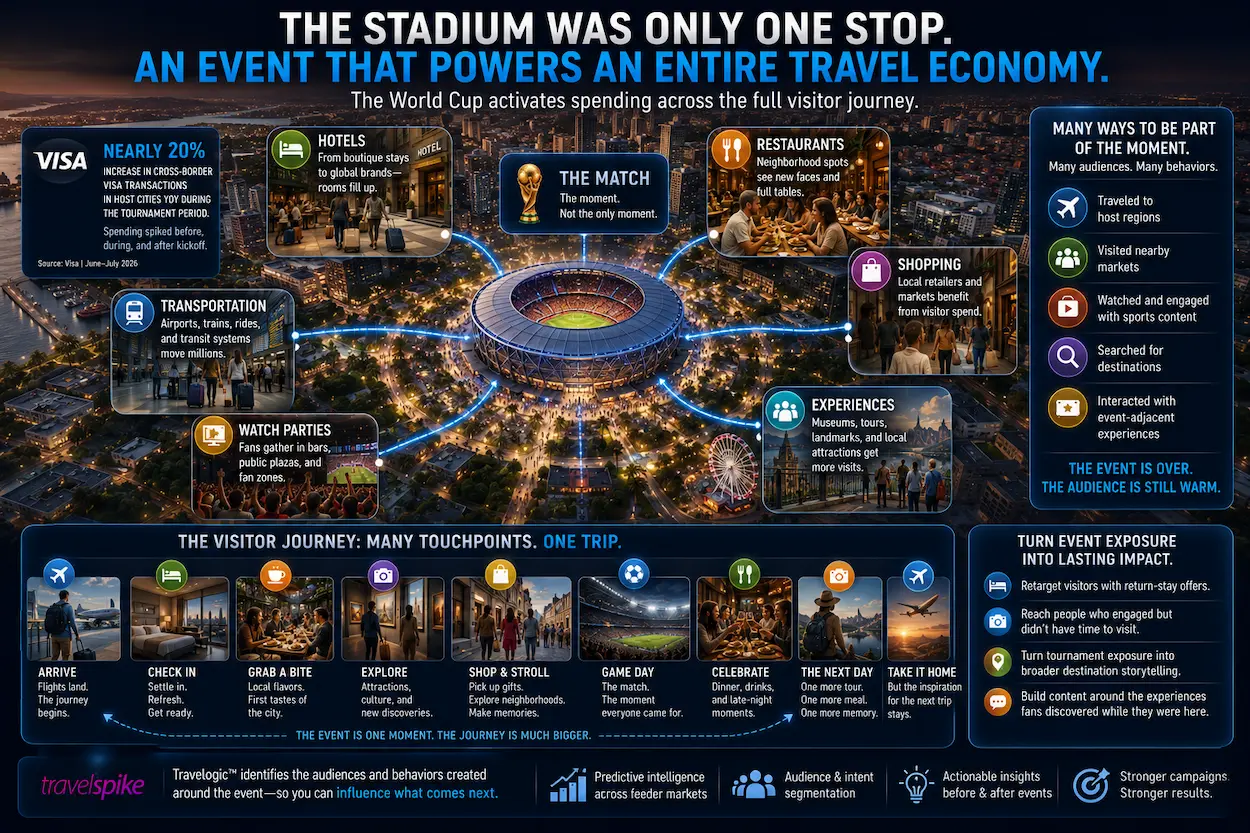
Visa reported that cross-border Visa transactions in FIFA World Cup 2026 host cities increased nearly 20% year over year during the tournament period, with spending spikes occurring before, during, and after kickoff. The company specifically noted that the benefits reached businesses serving everyday visitor needs, including neighborhood restaurants, independent retailers, hotels, and transit providers.
That is the strategic point.
The travel economy around a mega-event is not limited to tickets. It includes the full visitor journey: where people stay, eat, shop, explore, gather, and spend time before and after the main event.
For travel marketers, this means the post-event strategy should not only target fans who attended matches. It should target behaviors created around the event.
That includes, people who traveled to host regions, people who watched from nearby markets, people who engaged with sports content, people who searched for destinations tied to the tournament, and people who interacted with event-adjacent experiences.
Retarget the Behavior, Not Just the Event
The worst thing travel brands can do now is let World Cup engagement sit in a campaign recap. This data should become part of the next audience strategy.
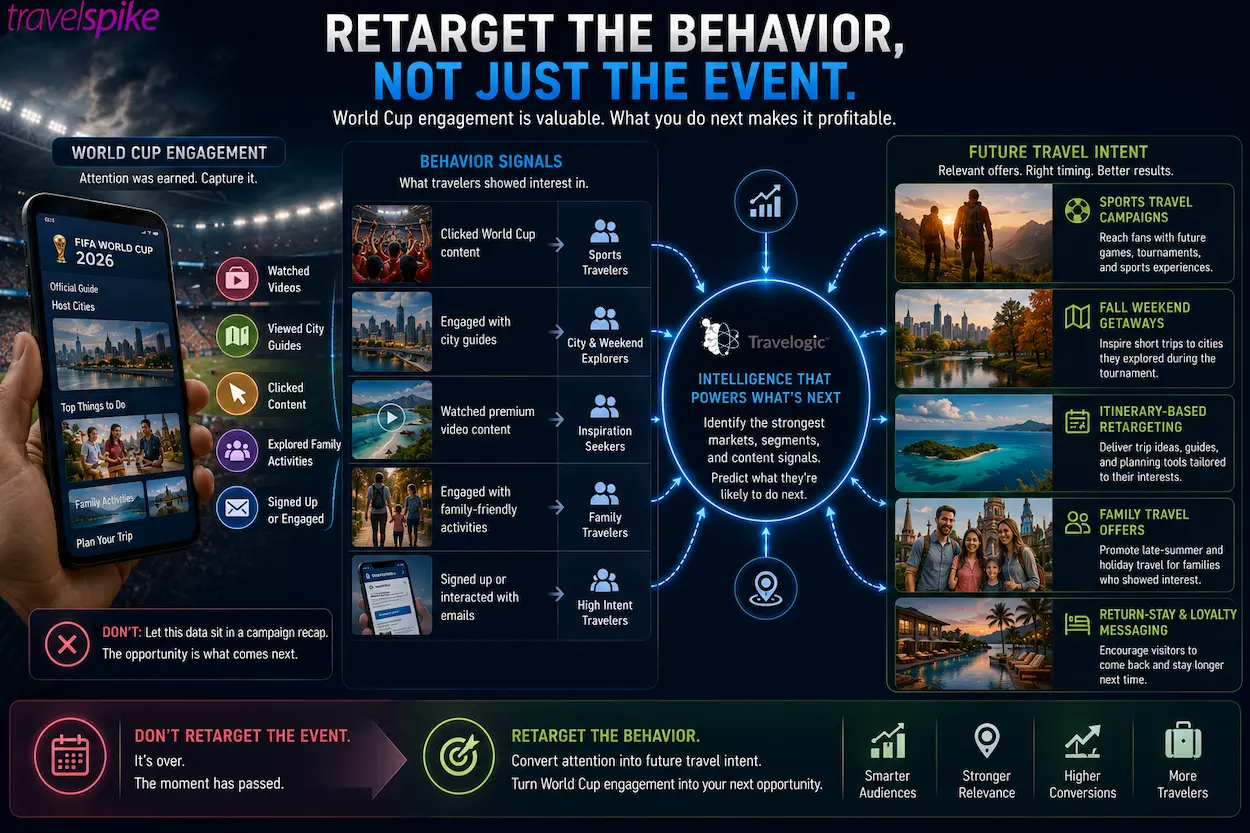
A traveler who clicked World Cup content may be a strong fit for future sports travel campaigns. Someone who engaged with a city guide may be open to a fall weekend trip. A traveler who watched premium video content may need itinerary-based retargeting. Someone who engaged with family-friendly activities during the tournament may be a fit for late-summer or holiday travel messaging.
This is where tools like Travelogic™ can help interpret which markets, audience segments, and content signals showed the strongest opportunity. Instead of treating World Cup campaigns as finished, travel brands can use the behavior to inform what comes next.
The goal is not to keep running World Cup creative forever. The goal is to convert World Cup attention into future travel intent.
Shift the Message From “Come Now” to “Come Back”
Post-event messaging should feel different from live-event messaging.
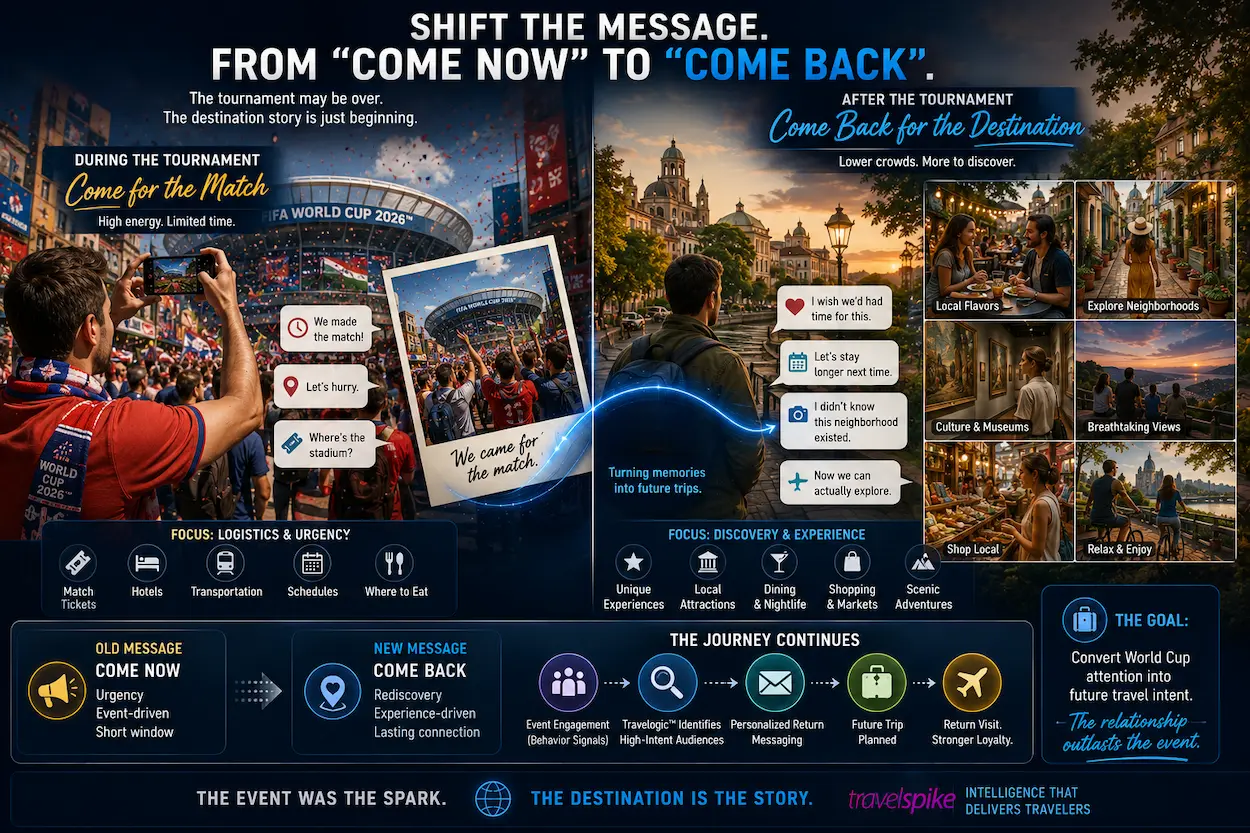
During the tournament, urgency made sense: watch here, stay here, book now, visit during match week.
After the tournament, the stronger message is about rediscovery.
“Come back when the crowds are gone.”
“Explore what you missed during match week.”
“Turn your World Cup memory into your next trip.”
“Experience the destination beyond the event.”
That type of messaging works because it acknowledges the moment has passed while still giving travelers a relevant reason to re-engage.
For host cities and surrounding markets, this is especially important. Many visitors came for soccer, but the next campaign should show them the destination beyond the stadium.
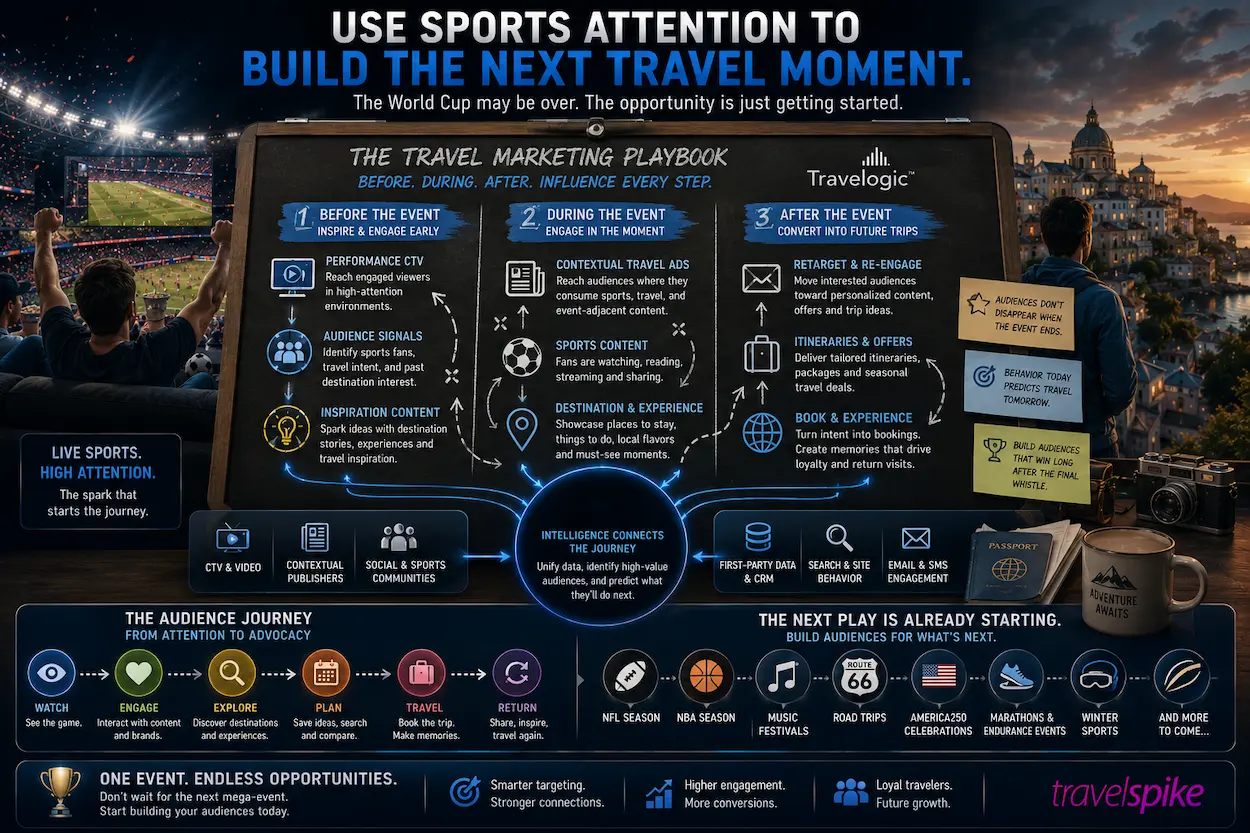
Use Sports Attention to Build the Next Travel Moment
The World Cup also gives travel brands a playbook for future event-driven marketing.
Live sports creates high attention. Travel creates emotional action. When the two are connected well, brands can influence people before, during, and after the event.
Performance CTV for Travel Brands can support future sports-driven campaigns by placing travel messaging in high-attention viewing environments. Contextual Travel Ads can help reach audiences consuming sports travel, destination, and event-adjacent content. Retargeting can move those audiences toward itineraries, offers, and trip planning after the live moment ends.
The World Cup may be finished, but the behavior it revealed is highly usable. People will continue traveling for sports, culture, events, fandom, and shared experiences.
High performing travel marketers will not wait for the next mega-event to start building those audiences.
The Takeaway
Spain won the World Cup. But travel brands still have work to do.
The tournament created attention, movement, spending, content, and audience signals that can still support future campaigns. The brands that win the post-event window will be the ones that use those signals quickly.
Because the end of a major event is not the end of travel opportunity.
It is the start of the next one.