
Black Friday and Travel Tuesday Campaigns Should Start Before November
Black Friday and Travel Tuesday should not be the first time a traveler hears from a brand.
That is the mistake most travel marketers make.
They wait for the deal window, launch the offer, and expect travelers to act because the discount is strong. But travel is not a simple impulse purchase. Travelers need dates, budgets, companions, PTO, flights, hotel options, destination confidence, and a reason to believe the trip is worth it.
By the time Travel Tuesday arrives, the hyperforming brands already know which audiences are warm, which offers are likely to convert, and which trip motivations deserve more budget.
Hopper reported that during Travel Deal Tuesday 2024, it saw more deals on that day than on Black Friday and Cyber Monday combined, and nearly three times more trips were planned on Travel Deal Tuesday compared with Black Friday. Hopper also noted that its 2025 Travel Deal Tuesday included deals of up to 40% off popular destinations with participating travel brands.
That is why early Novemeber matters. The offer window may be later, but the performance work starts now.
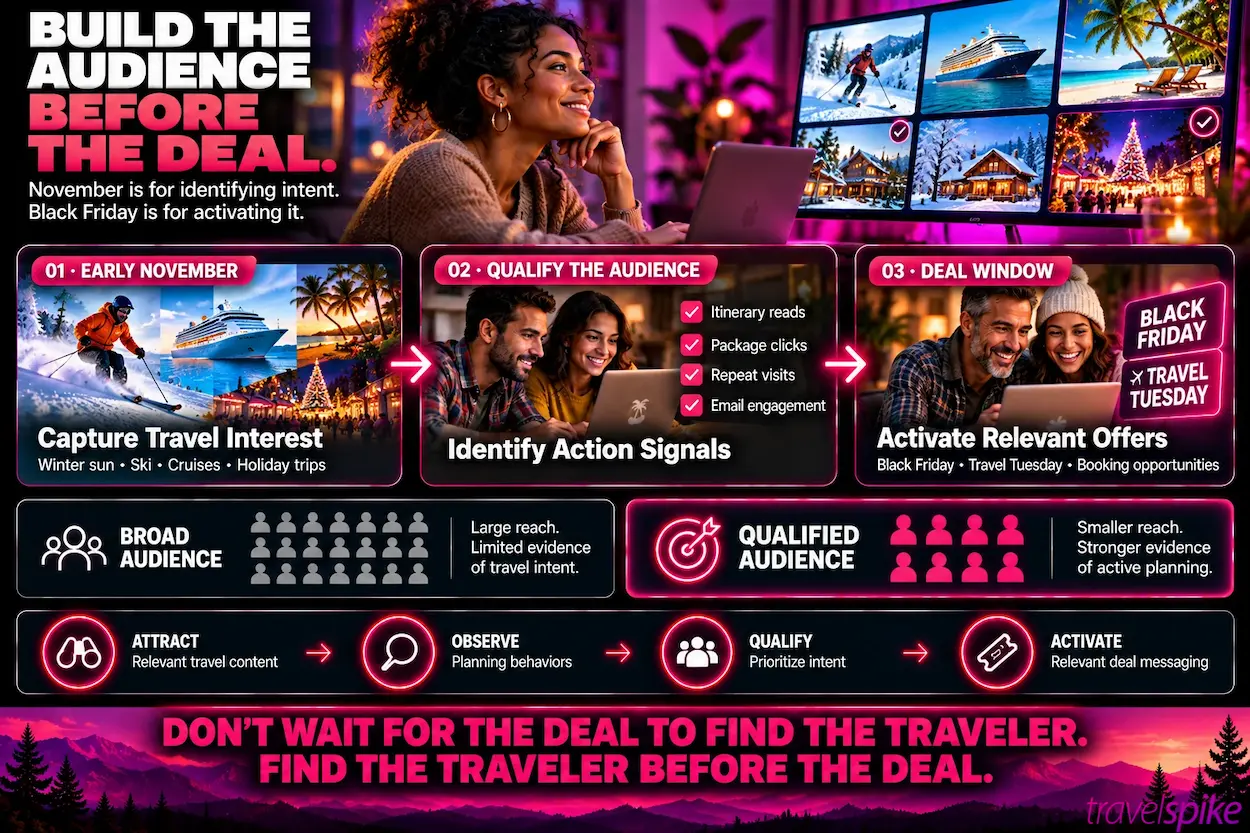
Build the Audience Before the Deal
A discount performs better when it reaches someone who already has intent. That is why early November should be used to build and qualify audiences.
Travelers who engage with winter travel content, holiday planning pages, cruise itineraries, ski packages, warm-weather escapes, family trips, or destination guides should be scored now. By the time Black Friday and Travel Tuesday arrive, marketers should know which travelers are closer to action.
The goal is not only to build a large audience, the goal is to build a useful one.
A smaller audience of itinerary readers, package clickers, repeat visitors, and email engagers may be more valuable than a broad audience that only saw one ad.
Test the Message Before the Offer Window
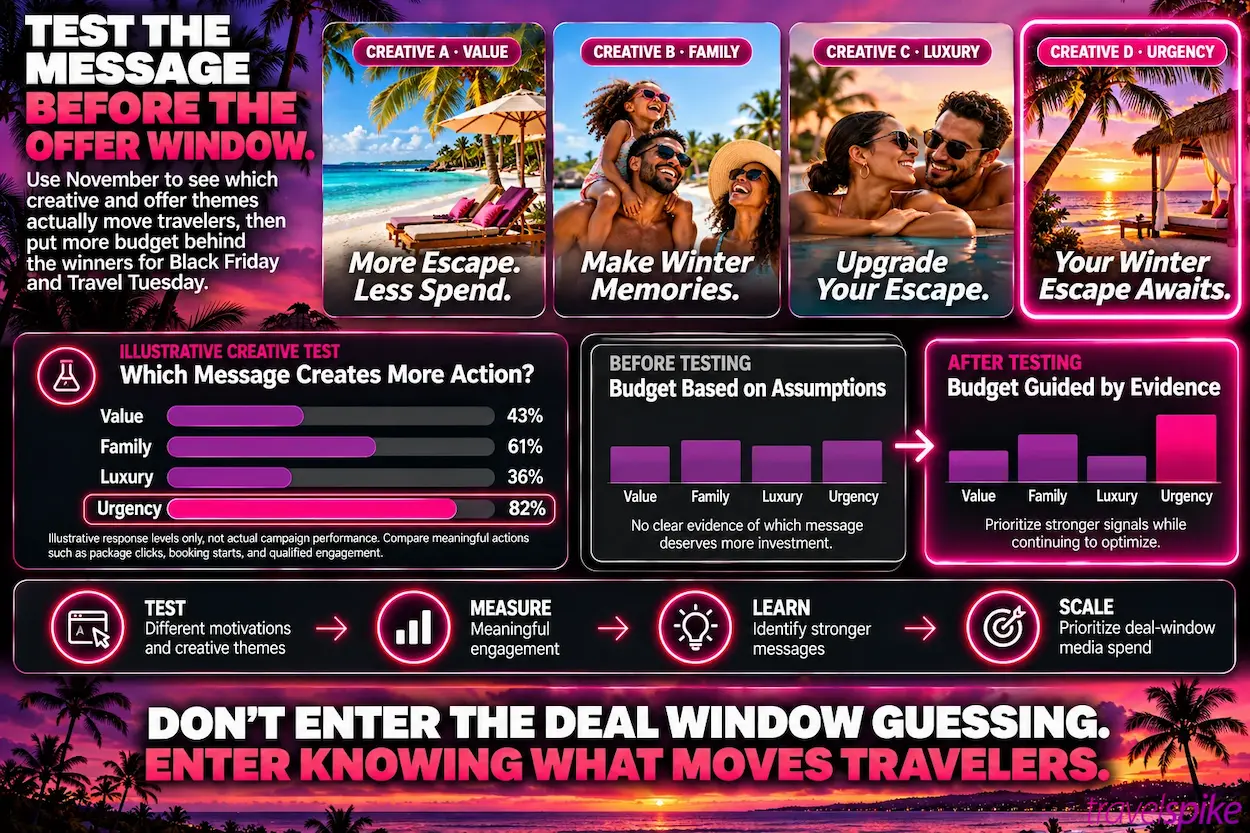
November is also a good time to test creative themes.
Do travelers respond more to value, timing, warmth, family, adventure, luxury, ease, or limited availability? Do they click holiday content or winter sun? Do they engage with cruises, attractions, ski trips, or city weekends? Do they respond to “book early,” “limited-time,” “make it easy,” or “upgrade the trip”?
Those signals can shape the Black Friday and Travel Tuesday offer. Without testing, brands may enter the deal window guessing. With testing, they can shift the budget toward messages that already show movement.
Deal Shoppers Still Need a Reason to Go
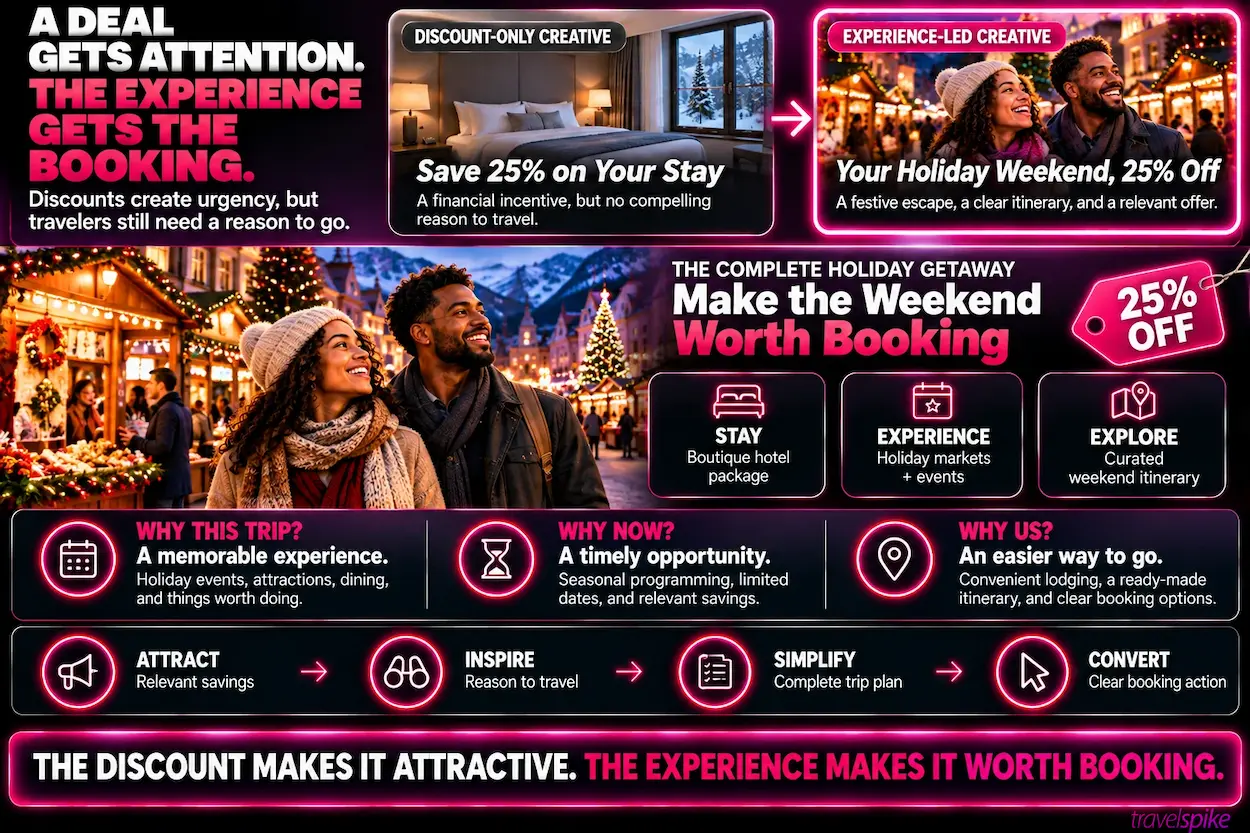
A deal can create urgency, but it rarely creates the entire trip idea by itself. Travel marketers still need to answer why this trip, why now, and why us.
A hotel should not only promote a percentage off. It should connect the offer to a winter weekend, holiday event, sports trip, cruise departure, family visit, or warm-weather escape.
A destination should not only promote savings. It should create an itinerary.
An attraction should not only discount tickets. It should show why the experience is worth adding to the trip.
Performance improves when the offer is connected to a real travel motivation.
CTA Can Help Buy Qualified Traffic Before the Peak
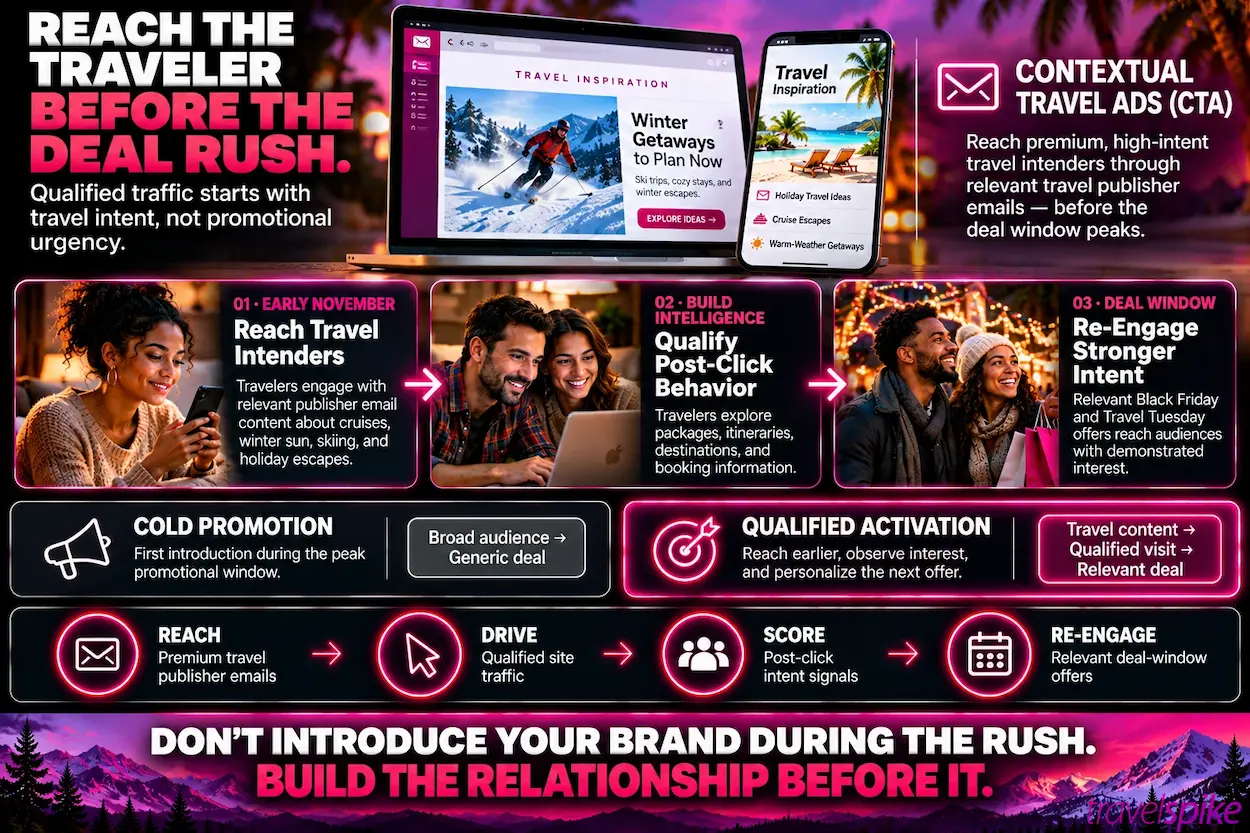
Contextual Travel Ads can be useful before the deal window because they help brands reach premium, high-intent travel intenders while they are consuming travel content.
This matters because many travelers are still forming the trip idea in November. They may not be searching for a specific Black Friday deal yet, but they are reading about holiday travel, winter escapes, cruises, ski trips, city weekends, or family getaways.
CTA gives brands a way to buy qualified traffic before the competitive deal period, score that behavior, and then re-engage the strongest audiences when the offer goes live.
That is a better performance setup than introducing the brand cold during peak promo noise.
The Follow-Up Matters as Much as the Deal
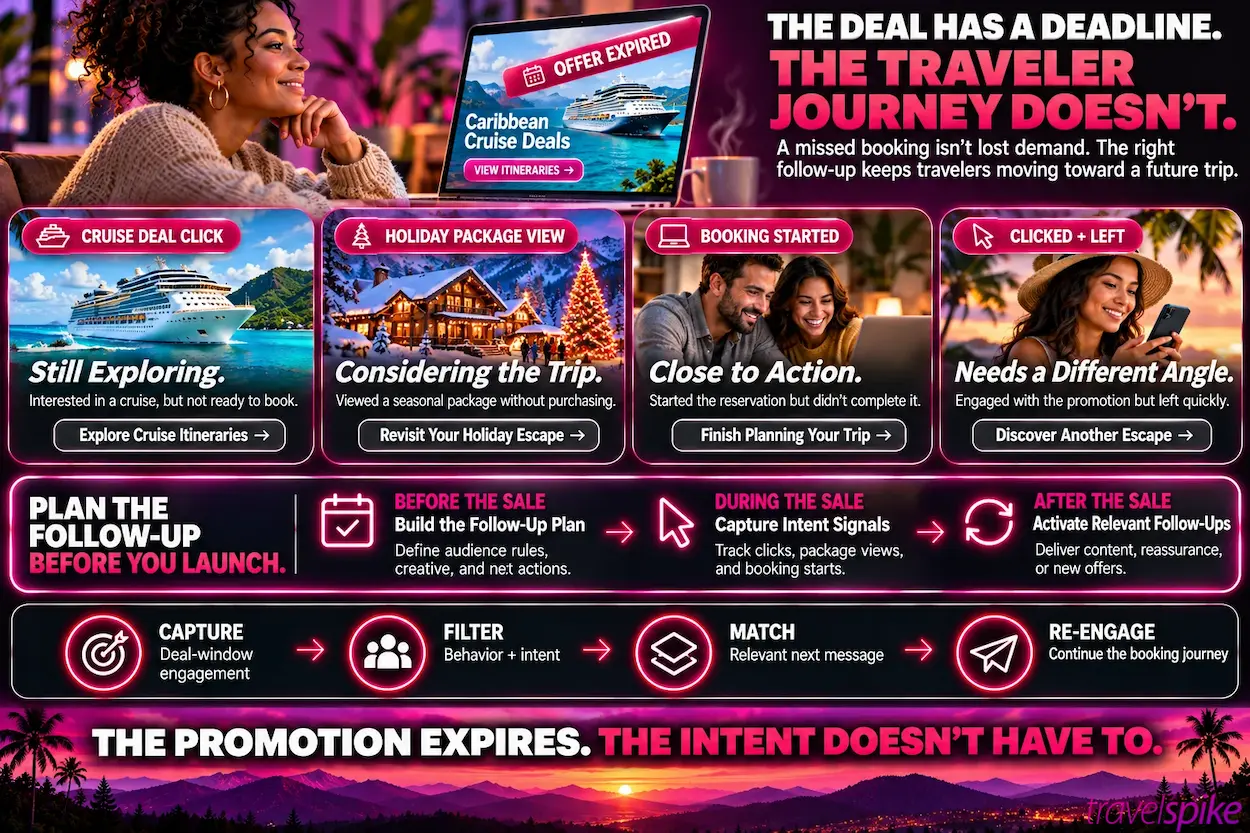
Black Friday and Travel Tuesday campaigns should not end when the offer expires. Some travelers will click but not book. That behavior still matters.
A traveler who clicked a cruise deal may need itinerary content later. A traveler who viewed a holiday package may need reminder messaging. A traveler who started a booking path may need urgency or reassurance. A traveler who clicked but bounced may need a different offer or simpler landing page.
The post-deal retargeting path should be planned before the campaign launches.
The Takeaway
Black Friday and Travel Tuesday are performance moments, not just promotion moments.
The brands that win will not wait until late November to find their audiences. They will use early intent to score interest, filter trip motivations, test creative, build qualified traffic, and enter the deal window with a stronger understanding of who is ready to act.
A deal can close demand. But November is where brands prepare it.