Fall Experiences Are Carrying Demand Deeper Into October
October travel is no longer just leftover shoulder season.
For many travelers, October is becoming a better time to go. The weather can be more comfortable, crowds may be more manageable, seasonal events are active, and experiences give travelers clear reasons to plan shorter, more intentional trips.
That shift matters for performance marketing.
When experiences carry demand deeper into the fall, brands need to stop treating October like a slower bridge between summer and the holidays. It is a month where travelers are still choosing, comparing, and booking around specific things to do.
GetYourGuide reported a 210% year-over-year increase in experiences booked in European destinations and the northern hemisphere from late September through October. The company analyzed booking data for shoulder-season experiences between September 15 and October 31 in 2024 and 2025.
That is a major signal, experiences are not just add-ons. They are increasingly part of the trip decision.
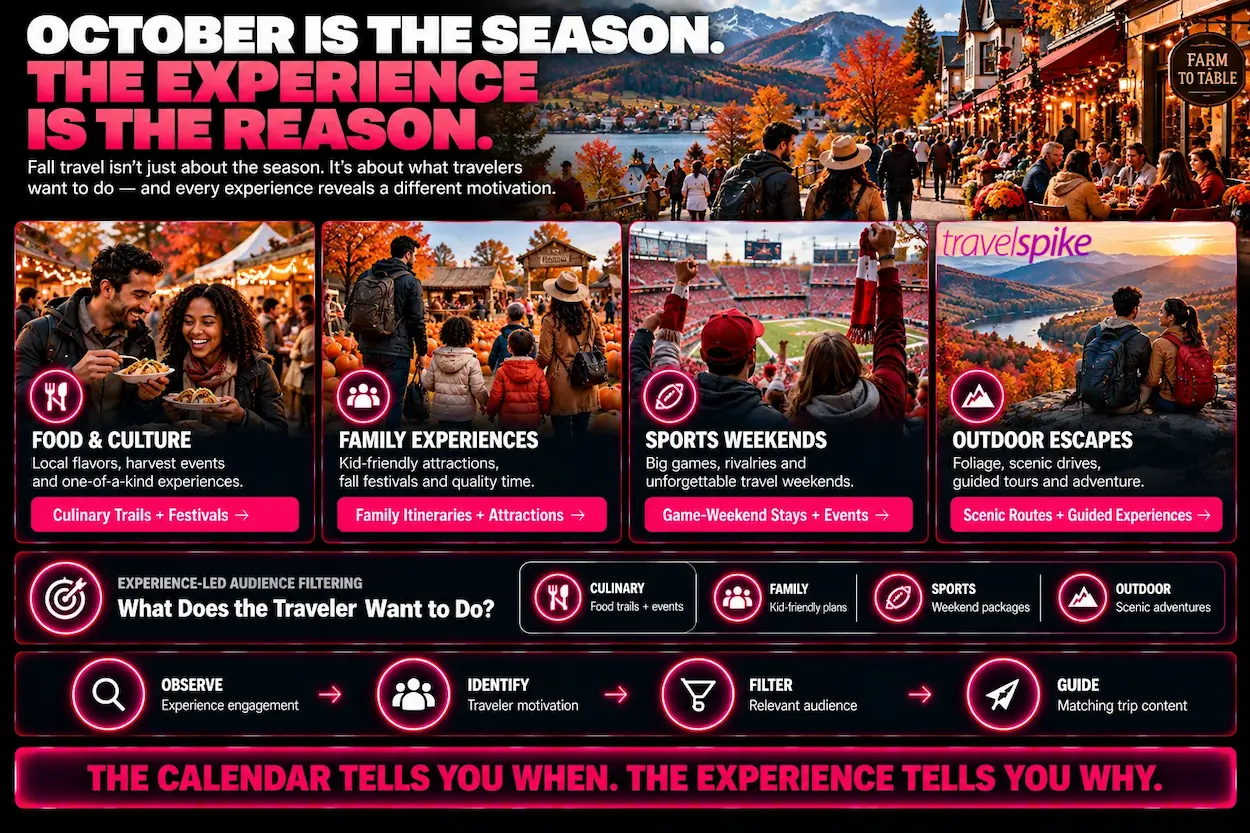
October Travelers Need a Reason, Not a Season
“Fall travel” is not enough by itself, the traveler needs a reason.
That reason may be foliage, food, harvest events, ghost tours, festivals, concerts, sports weekends, guided tours, museums, family attractions, outdoor adventure, scenic drives, or cultural programming.
Each experience reveals a different travel motivation.
A food traveler is not the same as a family traveler. A foliage road tripper is not the same as a sports traveler. A traveler booking a museum tour may need different creative than someone looking for outdoor adventure.
Performance marketing should filter audiences by what they want to do, not just when they want to travel.
Experiences Help Short Trips Feel Worth It
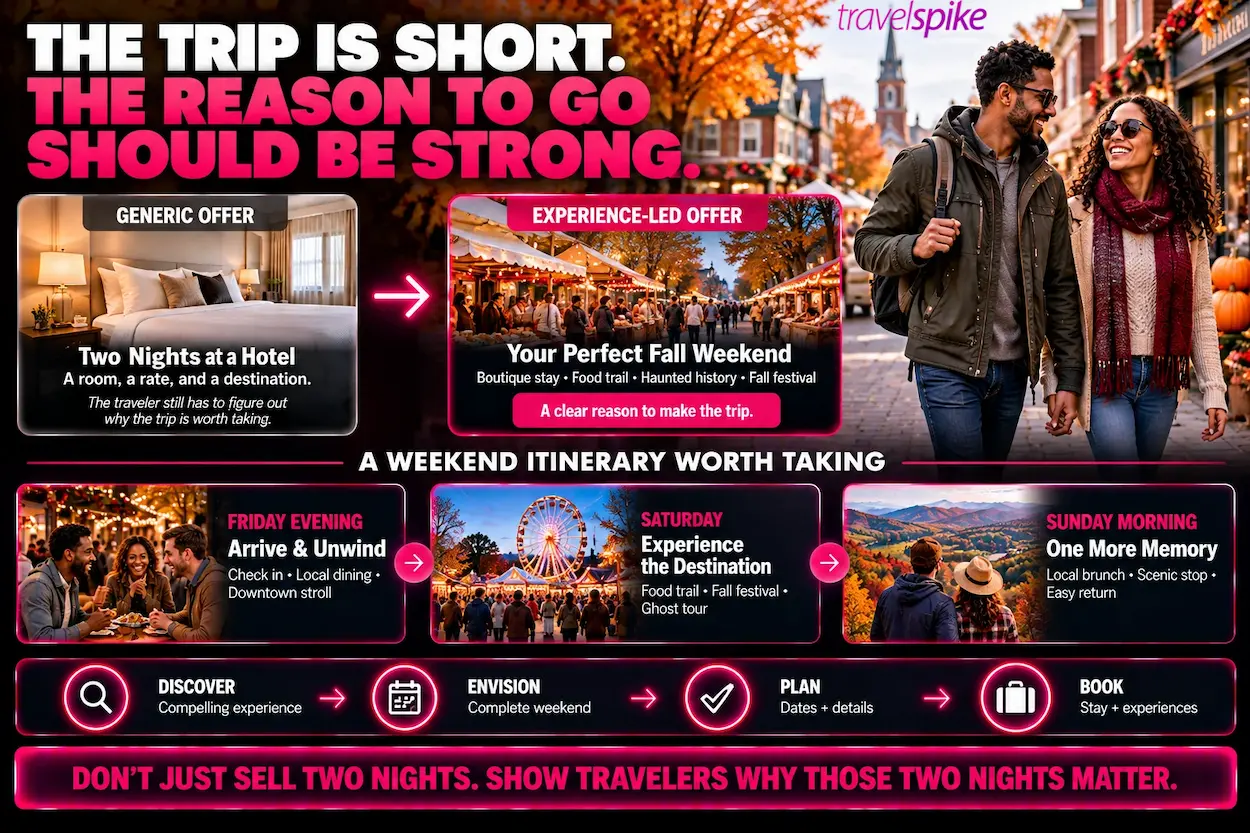
October often lends itself to shorter trips.
A two-night weekend. A regional road trip. A quick city escape. A family day trip that becomes an overnight stay.
For shorter trips, the experience has to work harder. Travelers need confidence that the trip will be worth the time and cost.
That is why experience-led marketing matters.
A hotel room by itself may not create urgency. A complete fall weekend might. A destination homepage may not convert. A curated food trail or haunted history itinerary might. A generic attraction message may not be enough. A limited-time event with clear dates and easy booking can move action.
The more specific the experience, the easier it is for the traveler to picture the trip.
Score Experience Signals
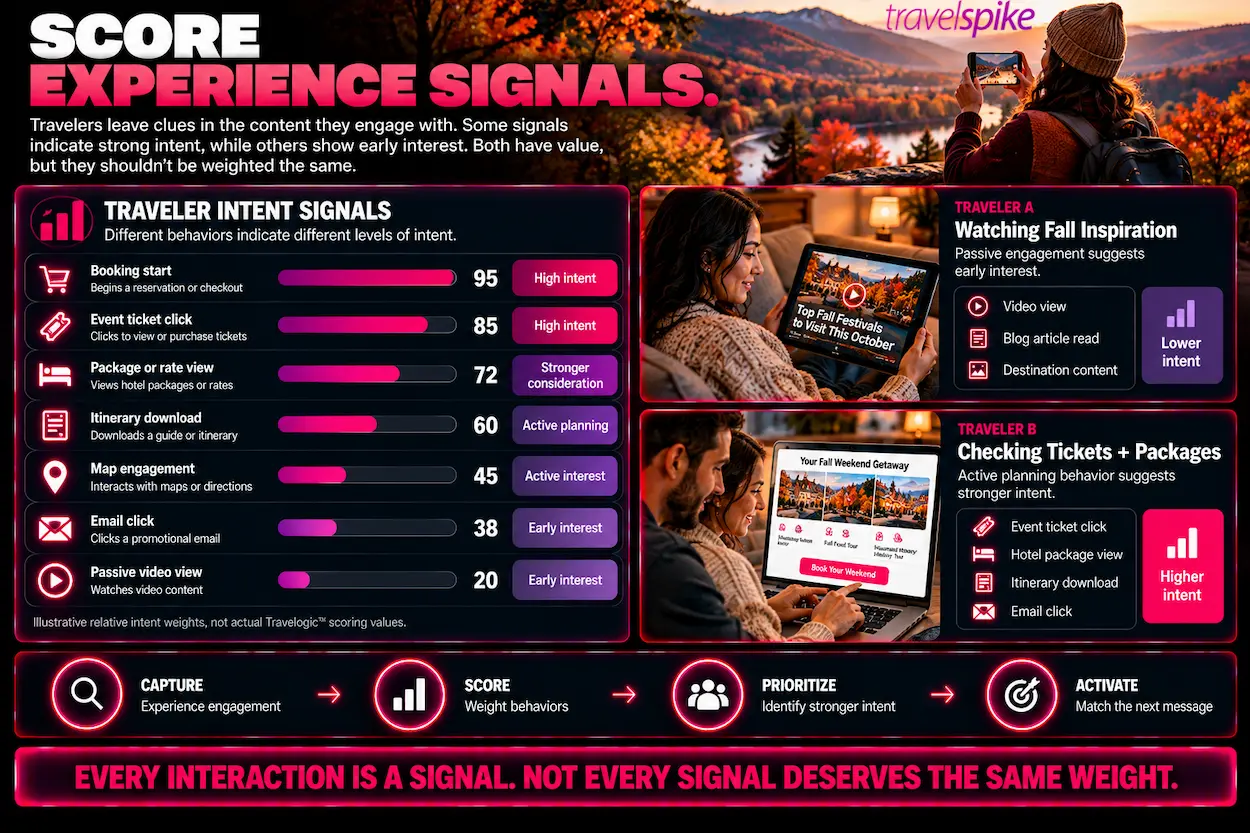
Travelers leave clues in the content they engage with.
Someone clicking a fall festival article is sending a different signal than someone viewing hotel rates. Someone watching a food trail video is different from someone reading a family itinerary. Someone searching for haunted attractions may have a much shorter decision window than someone planning a winter escape.
These signals should be scored. High-intent experience signals may include ticket clicks, itinerary downloads, repeat visits to event pages, package views, map engagement, email clicks, and booking starts.
Lower-intent signals may include passive video views or broad destination content.
Both have value, but they should not be weighted the same.
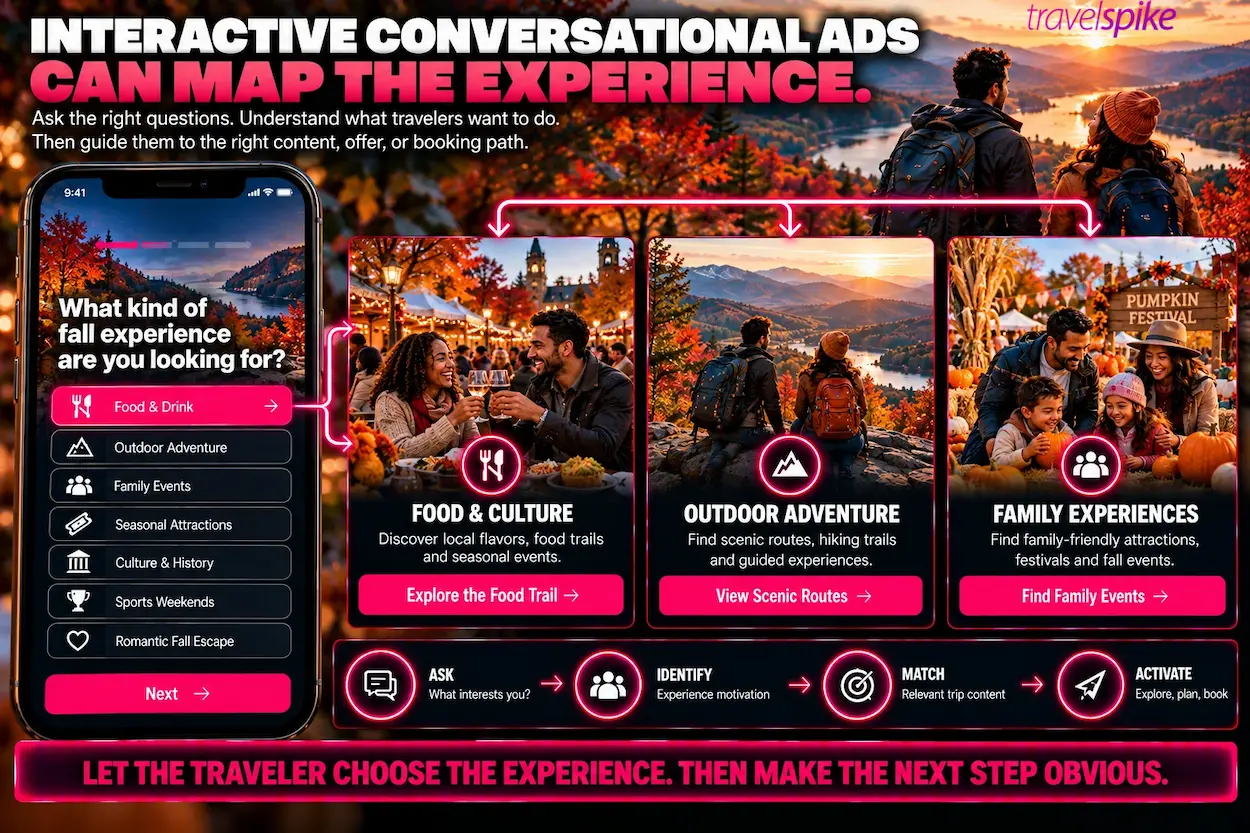
Interactive Conversational Ads Can Map the Experience
Interactive Conversational Ads can help brands identify what type of October experience a traveler wants.
- Food and drink?
- Outdoor adventure?
- Family events?
- Seasonal attractions?
- Culture and history?
- Sports weekends?
- Romantic fall escape?
Once the traveler responds, the brand can guide them to the right landing page, offer, itinerary, or booking path.
That is where performance improves. The traveler does not have to dig through generic content. The campaign filters the motivation and makes the next step easier.
Co-Ops Make Experience Demand Stronger
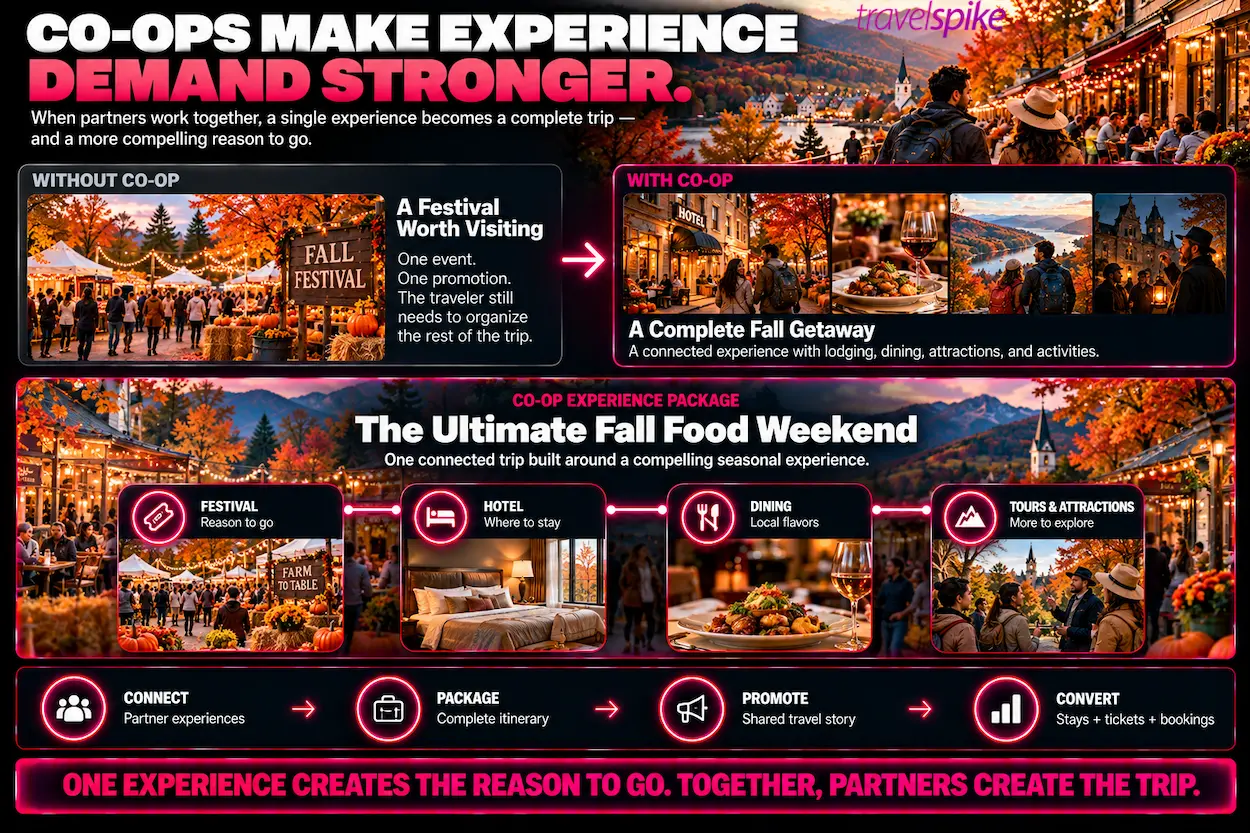
Experience-led travel is also naturally built for co-ops.
A festival needs hotels. A hotel needs nearby things to do. A DMO needs partners. Attractions need visitors. Restaurants benefit from event traffic. Tours help extend the stay.
When partners package the trip together, the traveler sees more value.
A fall food weekend with hotel offers, restaurant partners, and guided experiences is stronger than separate ads from each partner. A haunted weekend with lodging, tours, dining, and attraction tickets is easier to act on than a generic “visit this fall” campaign.
Co-ops turn individual experiences into a complete trip.
The Takeaway
October demand is increasingly experience-led, travelers are not just looking for a fall destination. They are looking for a reason to go now.
The brands that perform will score experience signals, filter travelers by motivation, and connect the right audience to the right itinerary, offer, or booking path.
October is not a waiting room before holiday travel, it is an active performance window for brands that can turn experiences into action.