
Holiday Travel Planning Starts in October. Are Brands Filtering Early Intent Yet?
Holiday travel does not begin when the suitcase comes out.
It begins when families start comparing dates, checking flight prices, discussing PTO, deciding who is hosting, looking at hotel availability, and weighing whether the trip is worth the cost.
That means October is already a holiday travel planning month.
For travel marketers, the opportunity is not only to capture late holiday bookings. It is to identify early planners, score their behavior, and guide them toward the right seasonal path before the market gets louder in November and December.
AAA regional surveys released in September 2026 found that many travelers begin planning Thanksgiving, Christmas, and New Year’s trips during September and October, while far fewer wait until November or December. AAA also reported that 26% of Floridians begin holiday planning in September or October compared with 10% who wait until November or December, and similar AAA surveys found September/October planning shares of 29% in Georgia, 24% in Illinois and North Carolina, and 18% in Wisconsin.
That is a clear performance signal.
The traveler may not be ready to book today, but they are already thinking.
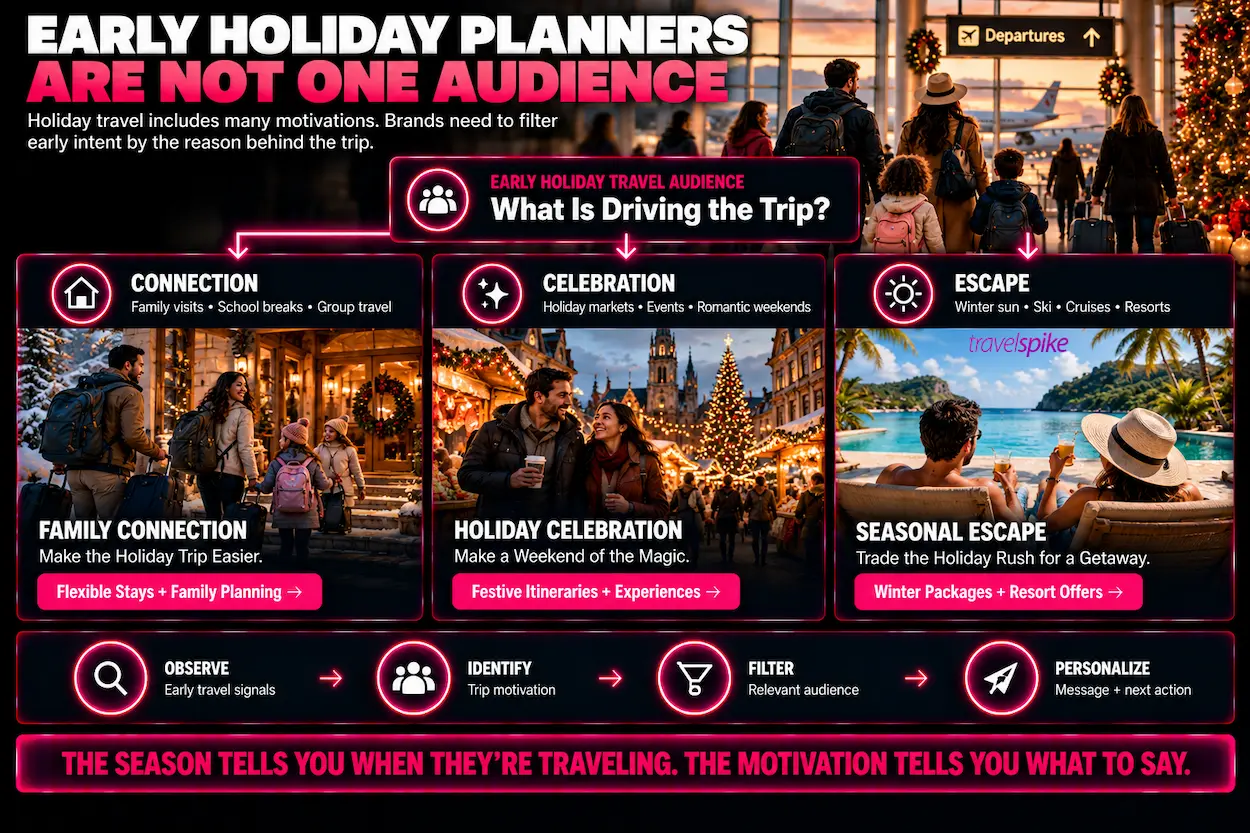
Early Holiday Planners Are Not One Audience
Holiday travel includes many motivations.
Some travelers are visiting family. Some are escaping family. Some are planning winter sun. Some are booking ski trips. Some are choosing cruises. Some are looking for city holiday events, Christmas markets, New Year’s celebrations, theme park trips, or warm-weather resorts.
A broad “holiday traveler” audience is too flat. Brands need to filter early intent by the reason behind the trip.
A family traveler may need convenience and flexible lodging. A couple may need a festive weekend. A group traveler may need package value. A parent may need school-break timing. A luxury traveler may need a premium winter escape. A cost-conscious traveler may need proof that booking now makes sense.
The earlier brands can identify motivation, the better they can shape the next message.
October Is the Time to Build the Audience
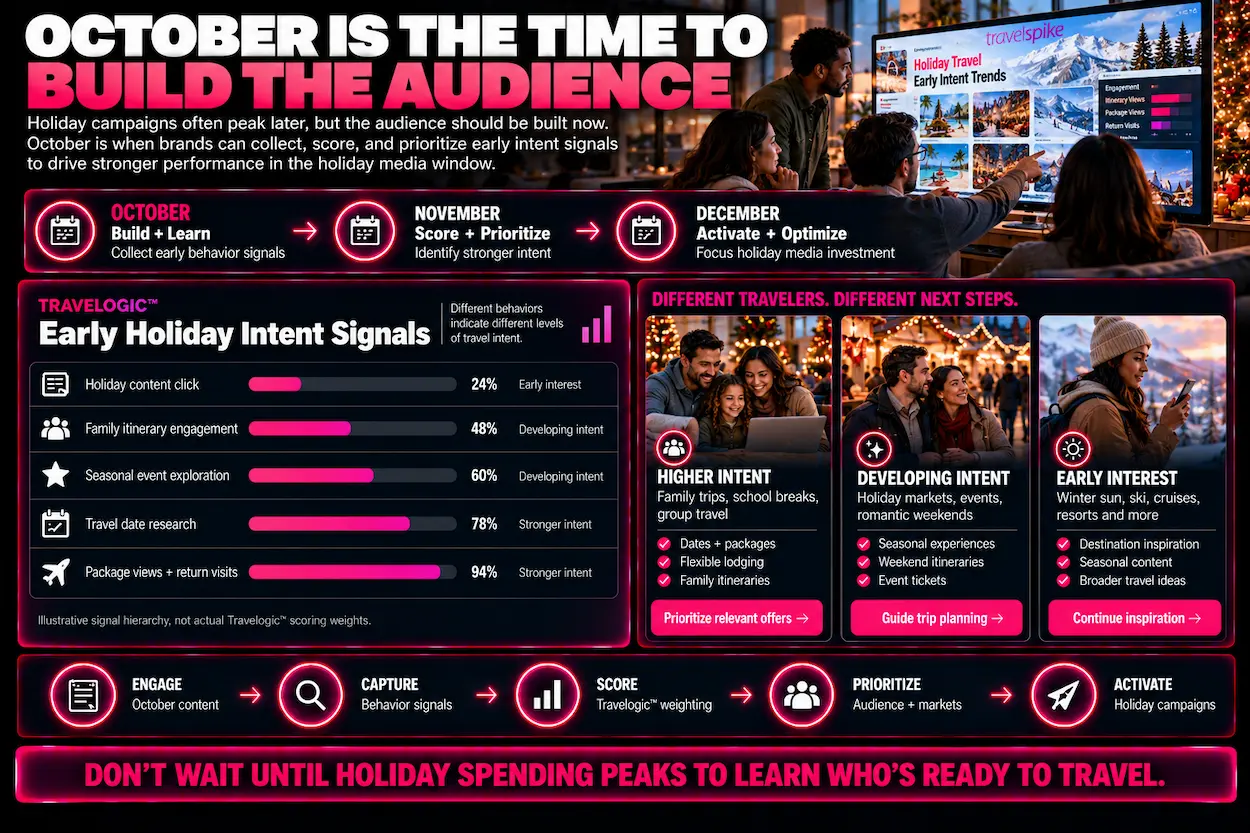
Holiday campaigns often peak later, but the audience should be built now.
That means October content, email, CTA, CTV, paid social, and landing pages should not only push offers. They should create signals.
- Which travelers click holiday content?
- Which ones look at dates?
- Which ones view packages?
- Which ones engage with family itineraries?
- Which ones explore seasonal events?
- Which ones return after seeing pricing?
Those behaviors should be scored and weighted before the heavier holiday media window.
Travelogic™ can help brands prioritize the audiences and feeder markets showing stronger early holiday intent, so media does not get spread evenly across weak and strong signals.
Seasonal Creative Should Answer Planning Questions
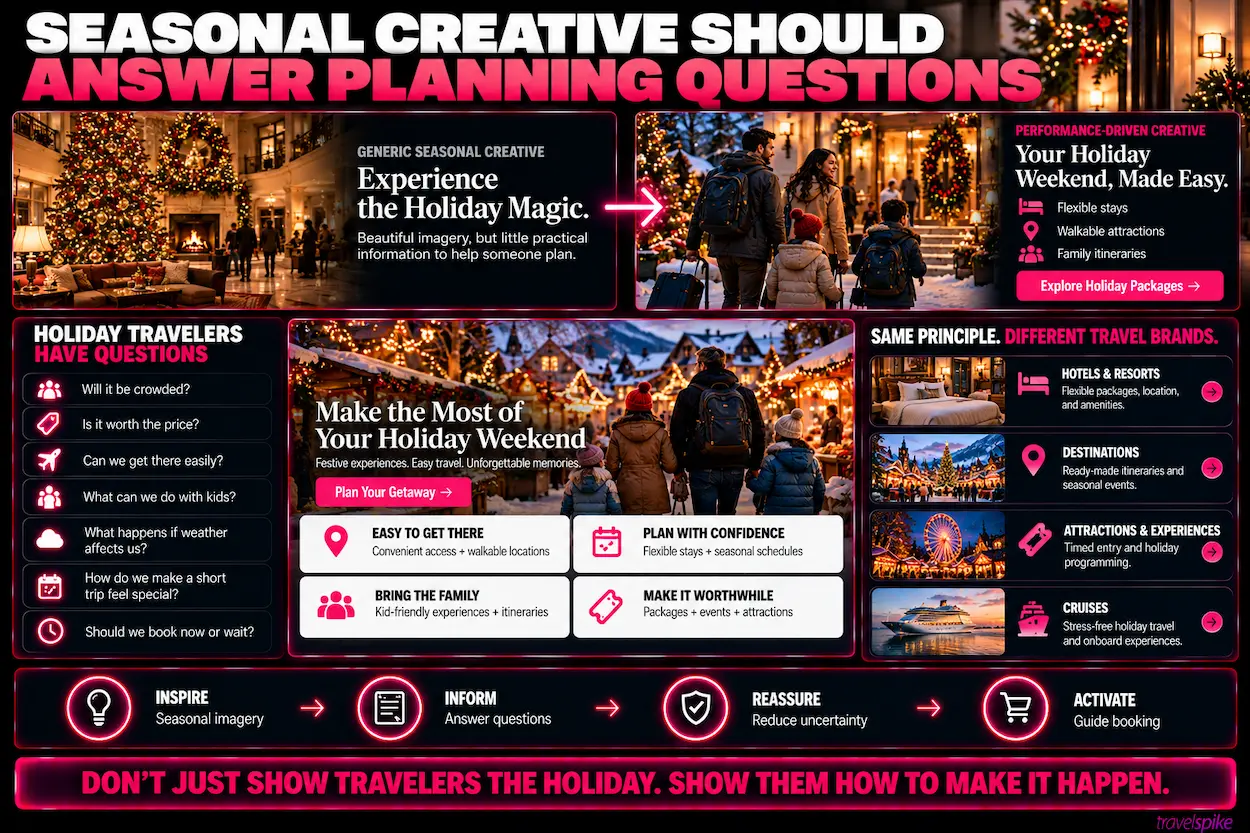
Holiday travelers often have practical questions.
- Will it be crowded?
- Is it worth the price?
- Can we get there easily?
- What can we do with kids?
- What happens if weather affects us?
- How do we make a short trip feel special?
- Should we book now or wait?
Performance creative should answer those questions instead of only showing festive imagery.
A hotel can promote flexible packages and location. A destination can promote ready-made holiday itineraries. An attraction can promote timed entry or seasonal programming. A cruise brand can promote stress-free holiday travel. An airline or airport can emphasize access and timing.
The message should reduce planning friction.
Interactive Conversational Ads Can Separate Motivations
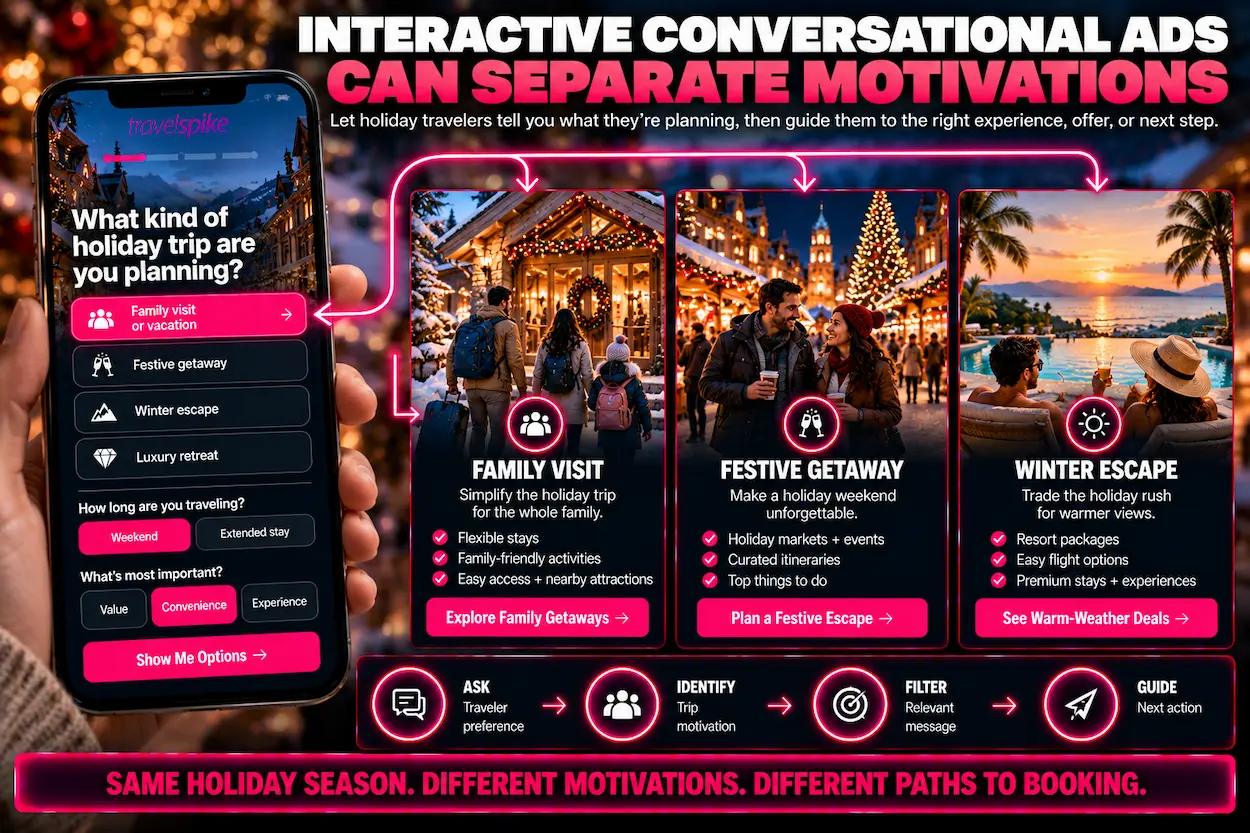
Interactive Conversational Ads can help travel brands ask holiday travelers what they are planning.
- Family visit or vacation?
- Warm weather or winter experience?
- Budget-conscious or premium?
- Holiday lights or outdoor adventure?
- Local event or overnight trip?
Those responses can guide travelers to the right landing page, resource, booking path, or follow-up sequence.
That is useful because holiday travel is personal. Two people may both be “holiday travelers,” but one is trying to simplify a family visit and another is trying to create a luxury escape.
They should not receive the same path.
The Takeaway
October is not too early for holiday travel marketing.
It may be the right time to identify the travelers who are already planning and score the signals that show who is most likely to act.
The brands that perform will not wait until the holiday market is crowded. They will filter early intent, weight stronger behaviors, and guide each traveler toward the seasonal experience that matches their reason to go.