
Set-Jetting, Halloween, and MicroAdventures: Why Travel Brands Should Create Their Own Seasonal Story
Halloween is one of the clearest examples of how story can move travelers.
People do not only visit haunted attractions, ghost tours, historic hotels, creepy small towns, movie-inspired destinations, or after-dark theme park events because they need something to do. They go because the story makes the place feel different.
That is why Halloween is such a strong moment for travel marketers.
It turns a location into a scene, an attraction into a plot, and a weekend trip into something people can talk about before, during, and after the visit.
That is also why set-jetting matters.
Expedia’s Unpack ’26 report projected screen-inspired travel could become a potential $8 billion industry in the U.S. alone, and Expedia reported that 81% of Gen Z and Millennial travelers now plan getaways based on what they have seen on screen. Expedia’s Set-Jetting Forecast also notes that 13% of U.S. travelers surveyed reported booking a trip after seeing a destination on-screen. expedia
The lesson is not that every destination needs a Netflix show. The lesson is that stories create demand.
Halloween Is Built for Story-Led Travel
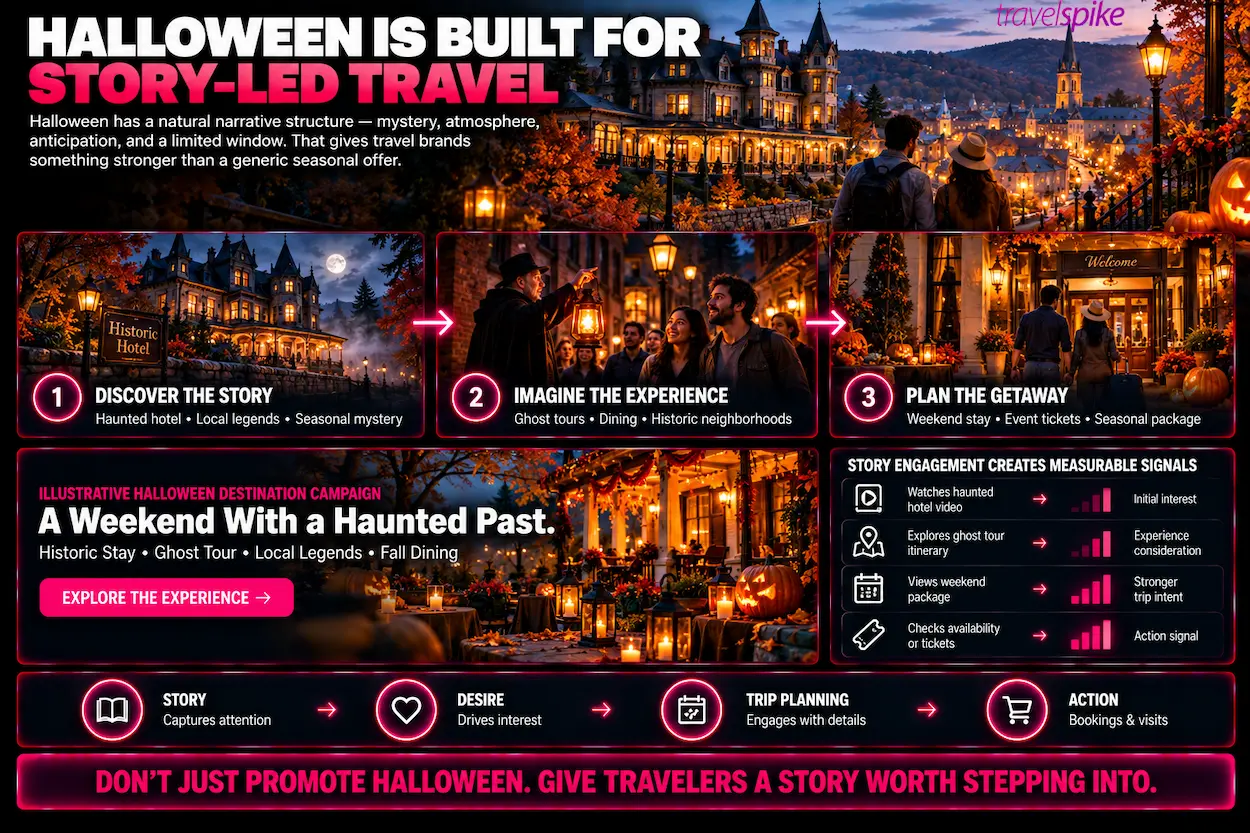
Halloween has a natural narrative structure.
There is mystery. There is atmosphere. There is anticipation. There is a limited window. There are characters, settings, traditions, and rituals.
That gives travel brands something stronger than a generic seasonal offer.
- A historic hotel can tell a haunted weekend story.
- A destination can connect ghost tours, old neighborhoods, cemeteries, restaurants, and local legends.
- An attraction can turn a limited-time event into a must-see experience.
- A small town can build around folklore, harvest culture, or a cinematic fall feel.
- A resort can create a seasonal storyline across dining, décor, programming, and packages.
The performance opportunity is to turn those stories into measurable traveler action.
MicroAdventures Helps Brands Create Their Own Demand
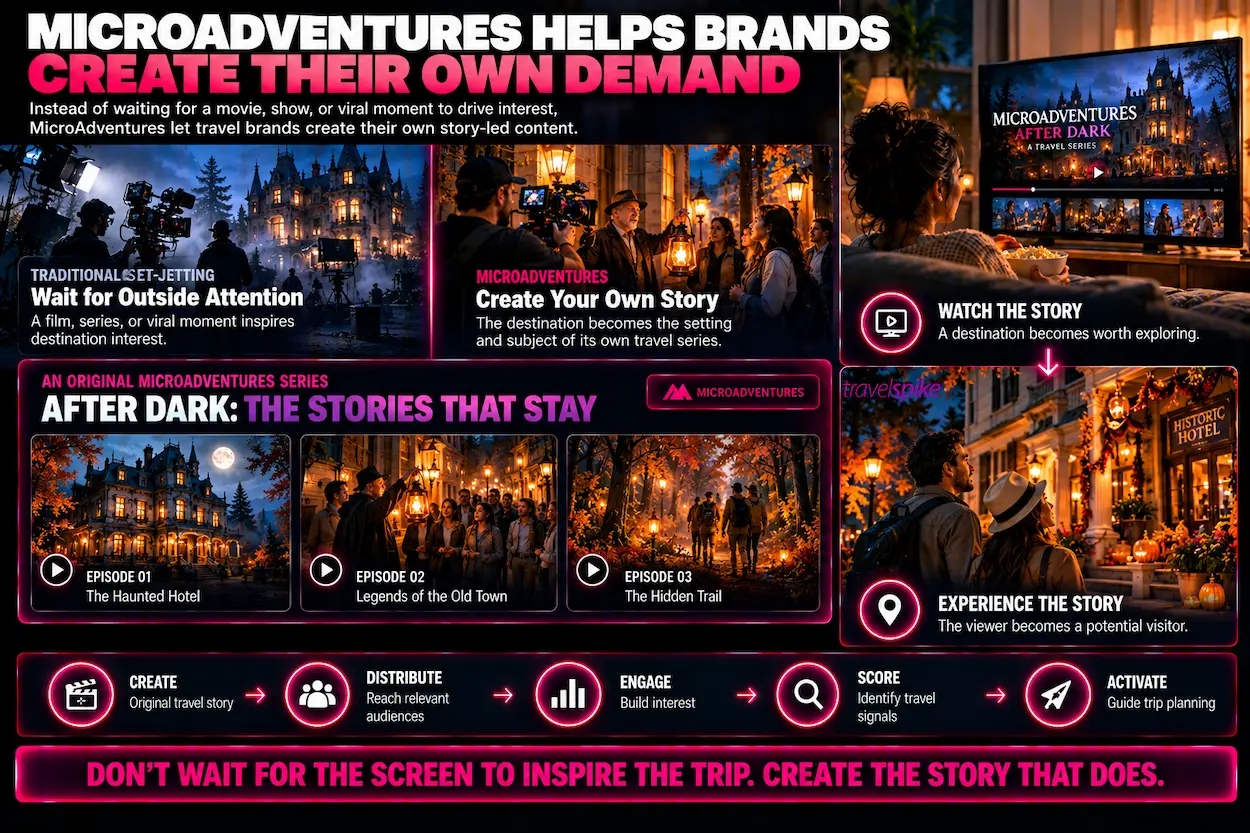
Set-jetting often depends on outside media. A movie, show, influencer, or viral moment puts the destination in front of travelers, and the destination benefits from the attention.
That is powerful, but it is also unpredictable. MicroAdventures give travel brands another path.
Instead of waiting for a production company or entertainment platform to create demand, brands can create their own story-led travel content. A MicroAdventure can turn a destination, attraction, hotel, or seasonal experience into a serialized story that gives travelers a reason to care before they ever see a booking page.
For Halloween, that could mean a short-form series around haunted history, local legends, fall road trips, behind-the-scenes attraction builds, ghost tour routes, hidden seasonal experiences, or a character-led journey through a destination.
The point is not to make an ad look like entertainment, the point is to use entertainment logic to create travel intent.
The Story Needs a Booking Path
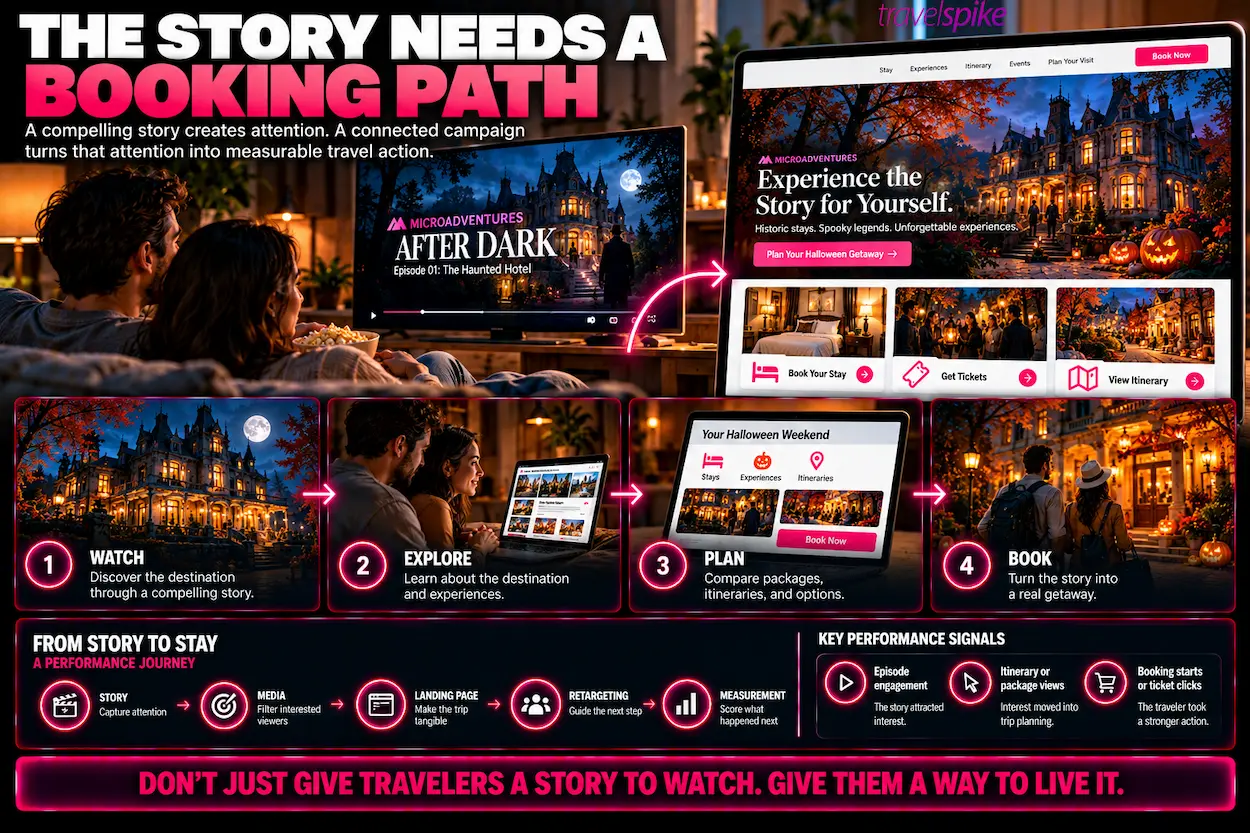
Story alone is not enough. A traveler may watch a Halloween travel series and feel interested, but the campaign still needs to guide them toward action.
That is where performance marketing matters.
- The story creates attention.
- The media plan filters the audience.
- The landing page turns the story into a trip.
- The retargeting sequence moves viewers toward booking, tickets, packages, or itineraries.
- The measurement plan scores what happened next.
A MicroAdventure should not end with “that was cool.” It should make the next step obvious.
Book the weekend. View the itinerary. Explore the attraction. Buy tickets. Download the guide. Plan the route. Share the trip.
Seasonal Stories Can Extend Beyond October
Halloween is an obvious use case, but the same logic applies across the seasonal calendar.
Holiday lights. Winter markets. Spring festivals. Summer road trips. America250. Sports weekends. Food trails. Outdoor adventures. Cultural events.
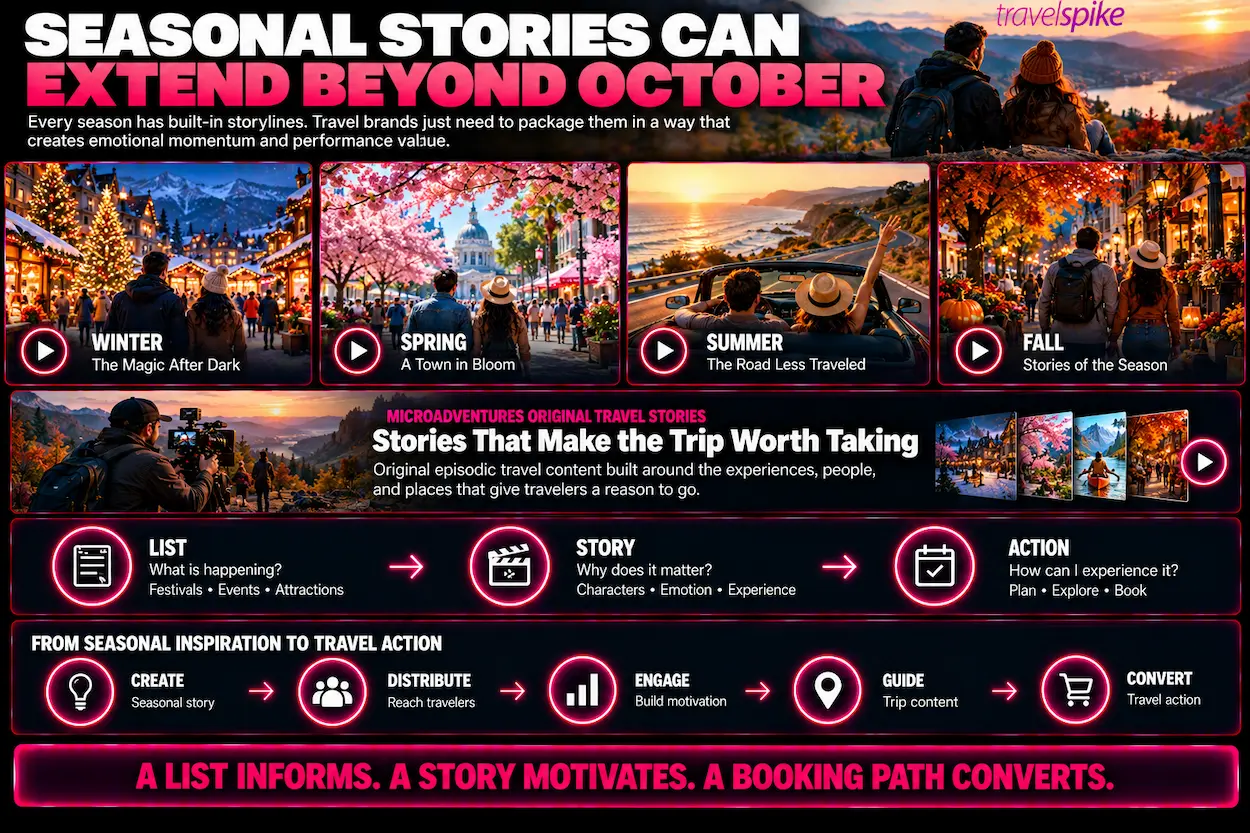
Each season has built-in storylines. Travel brands just need to package them in a way that creates emotional momentum and performance value.
MicroAdventures can help brands move from just listing things to do, to showing why the trip matters.
That distinction is important.
A list informs, a story motivates, a booking path converts.
The Takeaway
Halloween and set-jetting both point to the same performance truth: travelers are moved by stories. They do not only choose places. They choose moods, scenes, emotions, characters, and reasons to imagine themselves there.
MicroAdventures give travel brands a way to create that kind of demand intentionally.
Instead of waiting for a screen moment to make a destination famous, brands can build their own story, distribute it in premium traveler environments, and connect it to measurable action.
Halloween is a seasonal moment, the story is the performance strategy.