
October Is an Airline Deal Window. Travel Brands Should Use It to Score Flight-Led Demand.
Airfare is often one of the first signals that turns trip dreaming into trip planning.
When travelers see a flight deal, the trip becomes more real. A destination moves from “maybe someday” to “should we go?” A hotel search follows. Then attractions, restaurants, transportation, tours, and itineraries enter the decision.
That is why October matters.
Expedia’s 2026 Air Hacks Report found that July, October, and November are the travel months with the most flight deals available through Expedia’s Flight Deals data. The report also said Flight Deals surfaces fares at least 20% lower than the typical predicted price for that route, and that U.S. domestic travelers can save 14% by flying on Tuesday instead of Sunday.
For travel marketers, that is not only an airline insight. It’s a demand signal.
If October is a strong deal window, then destinations, hotels, attractions, cruise lines, and DMOs should be looking at flight-led behavior as part of their performance strategy.
Flight Deals Create Planning Momentum
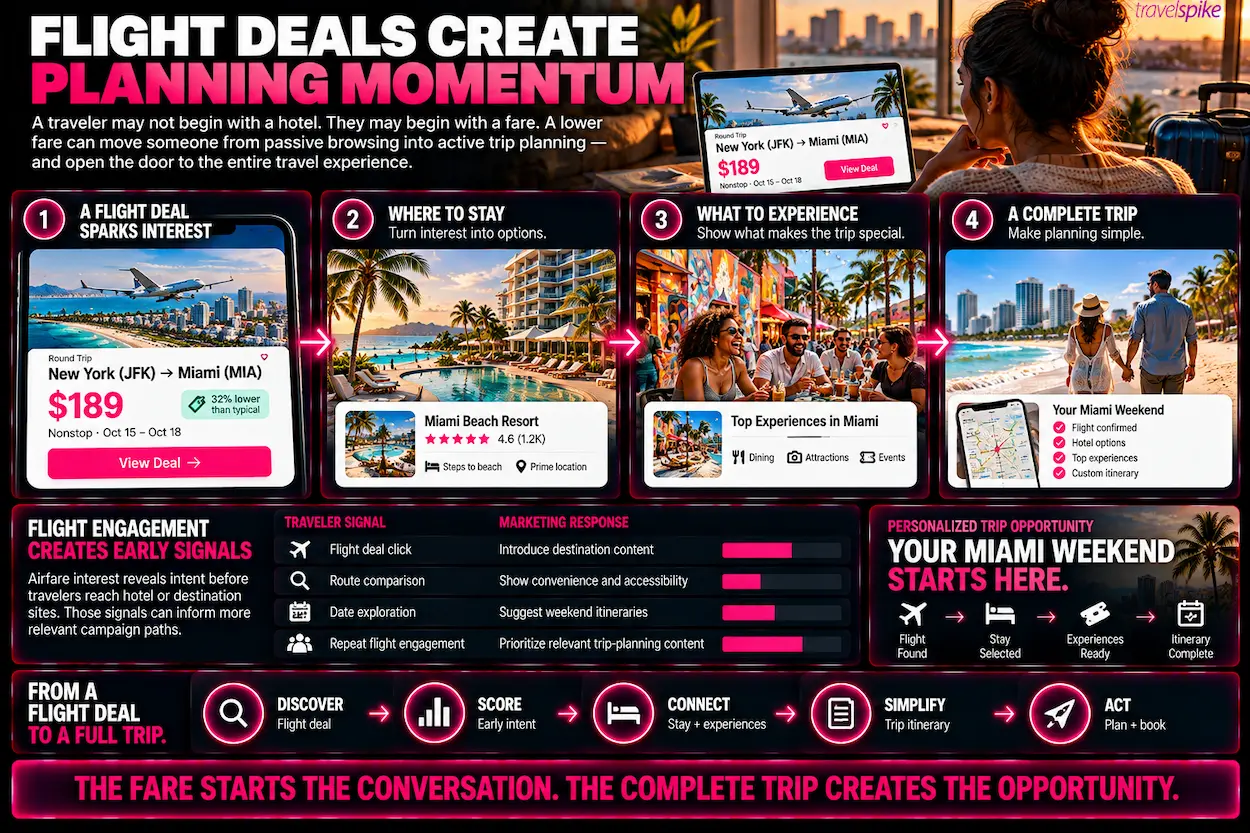
A traveler may not begin with a hotel. They may begin with a fare.
That matters because airfare can shape the entire trip decision. A lower fare can make a destination feel more accessible. A convenient route can make a short trip feel possible. A deal alert can move someone from passive browsing into active comparison.
Travel brands should treat flight engagement as an early signal of trip intent.
If travelers are reacting to airfare in October, marketers should not wait until they show up on hotel or destination sites later. They should score flight-led interest earlier and build campaign paths that make the rest of the trip easy.
That means showing the traveler what to do after the flight.
Where to stay. What to experience. How to build a weekend. Why the timing works. What is happening in-market. How to turn a deal into a complete trip.
Airports and Destinations Can Work Together
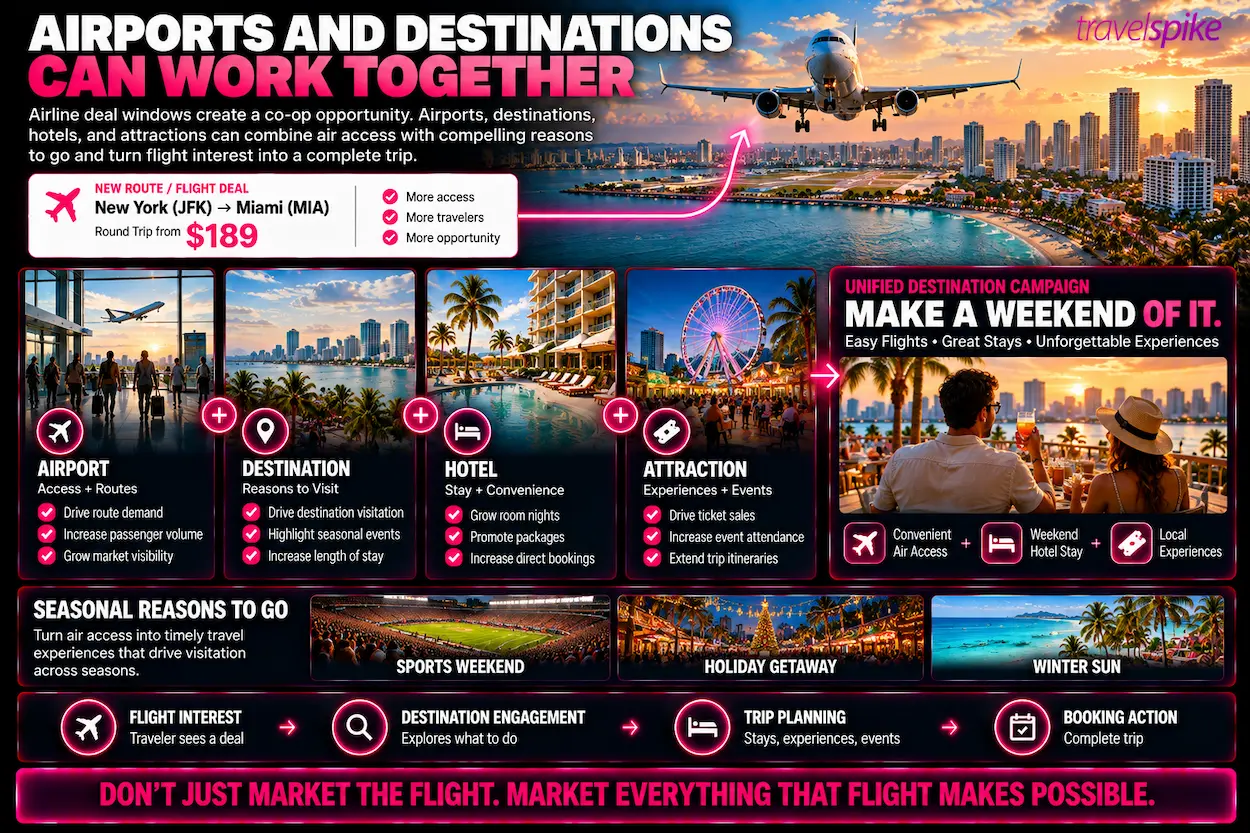
Airline deal windows are especially useful for airports and destinations.
An airport may care about route performance. A DMO may care about visitation. A hotel may care about room nights. Attractions may care about ticket sales. The traveler does not separate those pieces. They care whether the trip is worth booking.
That creates a co-op opportunity.
If a destination has strong air access, October is a good time to package that access with seasonal reasons to go: fall experiences, holiday planning, sports weekends, winter sun, cruises, events, or shoulder-season value.
The message should not only be “flights are available.” It should be “here is what that flight unlocks.”
Score the Difference Between Deal Seekers and Trip Planners
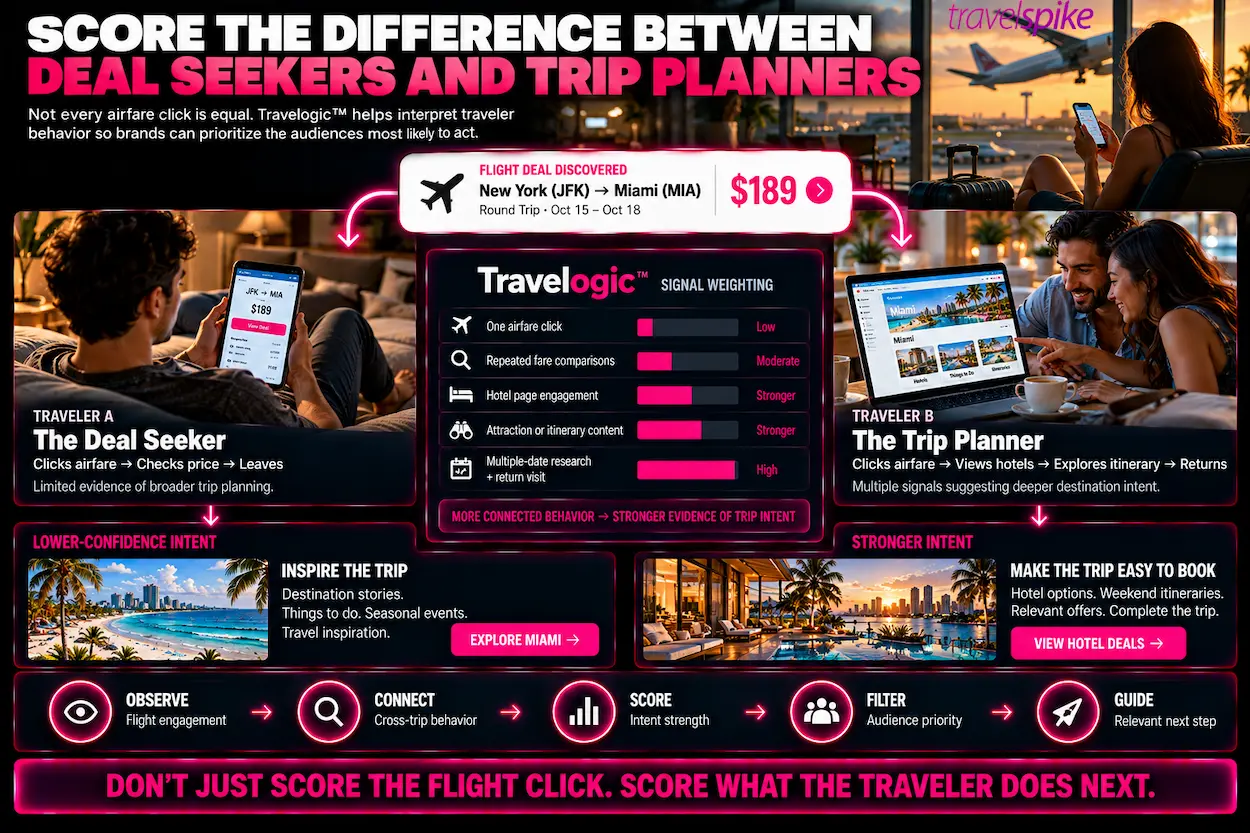
Not every airfare click is equal. Some travelers chase prices with no clear destination intent. Others are using airfare as the first step in a real trip decision.
Performance marketers need to score the difference.
A traveler who clicks a fare and immediately leaves may need more inspiration. A traveler who clicks airfare, then visits hotel pages, itinerary content, or attractions is showing stronger intent. A traveler who searches multiple dates or returns to the same destination deserves a higher weight.
Travelogic™ can help interpret these signals so travel brands can prioritize the audiences most likely to act.
The goal is not simply to find cheap-flight shoppers. The goal is to identify which flight-led signals are connected to real travel movement.
Contextual Travel Ads Can Capture Travel Mindset Earlier
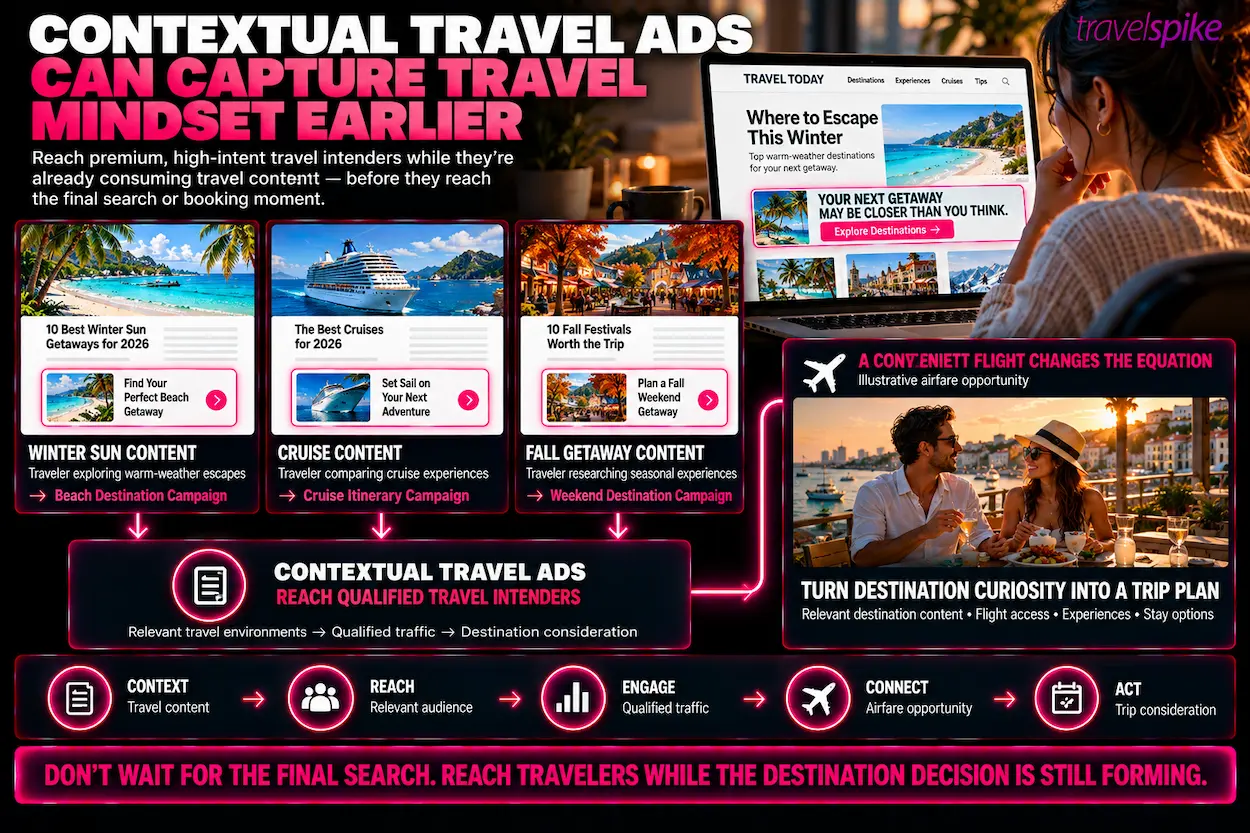
Contextual Travel Ads can help brands reach premium, high-intent travel intenders while they are already consuming travel content. That matters in an airfare deal window because travelers may be actively comparing where to go next.
A traveler reading about quick getaways, winter sun, cruises, fall festivals, or holiday travel may be one good fare away from moving into action.
CTA gives travel brands a way to buy qualified traffic from travel environments before the traveler reaches the final search or booking moment.
That can be especially valuable when airfare is shaping the destination decision.
The Landing Page Has to Complete the Trip
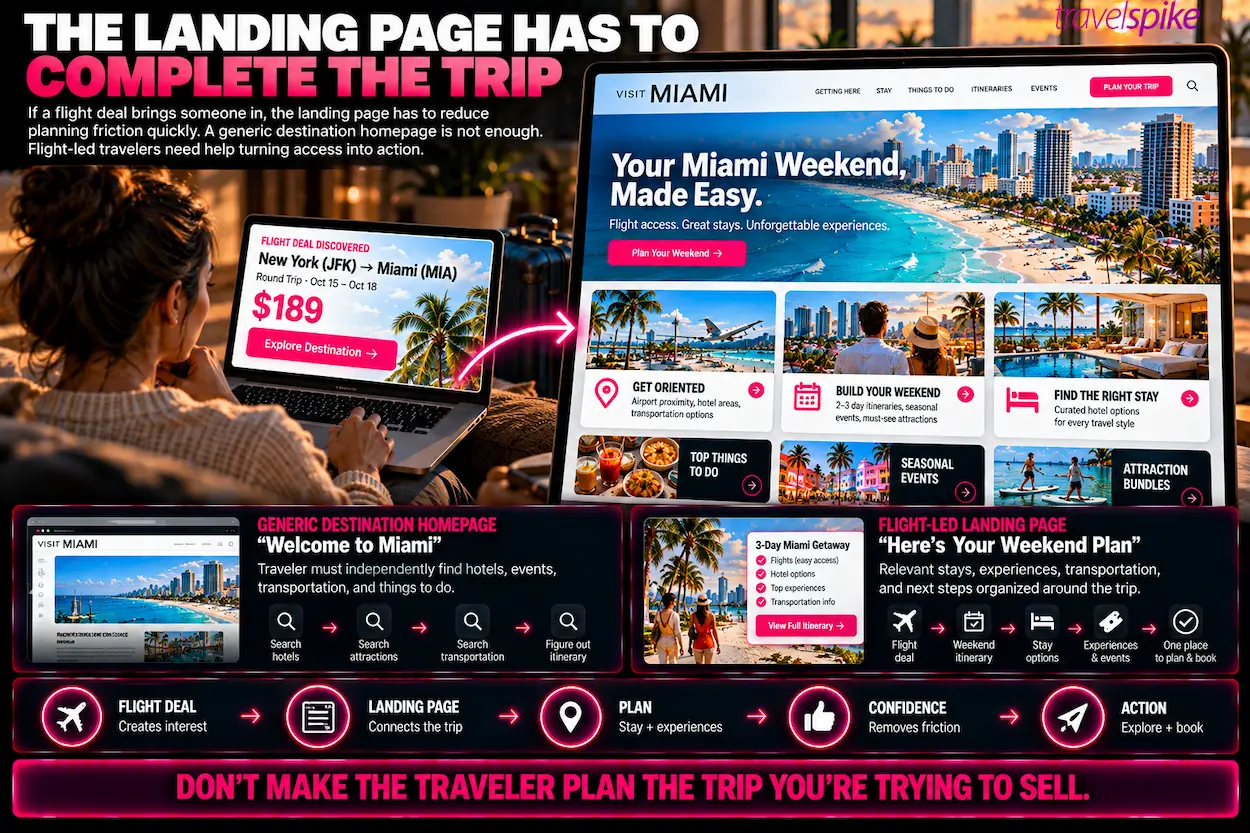
If a flight deal brings someone in, the landing page has to reduce planning friction quickly. A generic destination homepage is not enough.
Flight-led travelers need help turning access into action. A strong landing experience might include airport proximity, weekend itineraries, seasonal events, hotel areas, transportation options, attraction bundles, and clear next steps.
The easier the full trip feels, the more valuable the flight signal becomes.
The Takeaway
October’s airline deal window should not be viewed only as an airfare story. It is a performance opportunity for the broader travel ecosystem.
Flight interest can reveal early demand, but brands need to score it properly, filter high-intent behavior, and connect airfare motivation to hotels, experiences, attractions, and booking paths.
When travelers find a reason to fly, travel brands need to be ready with the reason to stay, explore, and spend.