
Q1 Performance Starts in October
October is not just the beginning of Q4. For travel marketers, October is also when Q1 performance starts taking shape.
That does not mean brands should panic about year-end budgets. It means the signals collected now can influence how campaigns perform in January, February, and March.
Travelers are already thinking beyond the current season. They are watching deal windows, planning winter trips, comparing holiday travel, searching for spring break, exploring cruise itineraries, and building early ideas for the year ahead.
The brands that wait until January to find those audiences may already be behind.
Expedia Group’s Q1 2026 Traveler Insights reported that the week of Black Friday, Cyber Monday, and Travel Tuesday drove a 15% week-over-week search increase in North America as travelers used deals to start planning 2026 trips. Expedia also found that during Q4, searches for both ski towns and beach destinations rose significantly from October to December, while North American travelers showed a 15% year-over-year increase in searches for June through August trips during Q4.
That is the key, Q1 does not start in Q1. It starts when travelers begin signaling what they want next.
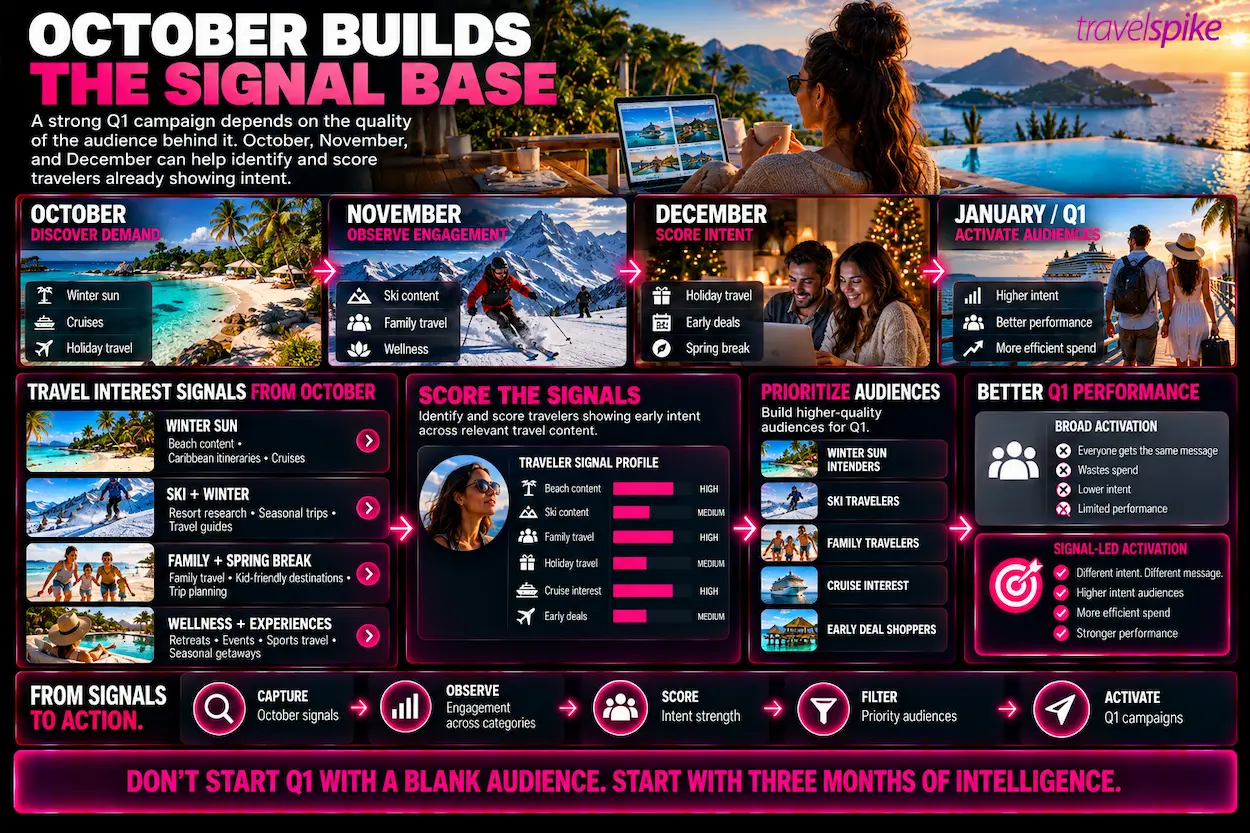
October Builds the Signal Base
A strong Q1 campaign depends on the quality of the audience behind it. October can help build that audience.
- Who is engaging with winter sun?
- Who is reading ski content?
- Who is clicking holiday travel?
- Who is looking at cruises?
- Who is considering spring break?
- Who is responding to early deal messaging?
- Who is engaging with family travel, wellness, sports travel, or seasonal experiences?
Those behaviors should be scored now.
A January campaign aimed at everyone will waste spend. A January campaign built from October, November, and December signals can prioritize audiences that have already shown intent.
That is the difference between broad activation and performance marketing.
Use October to Test the Reason to Go
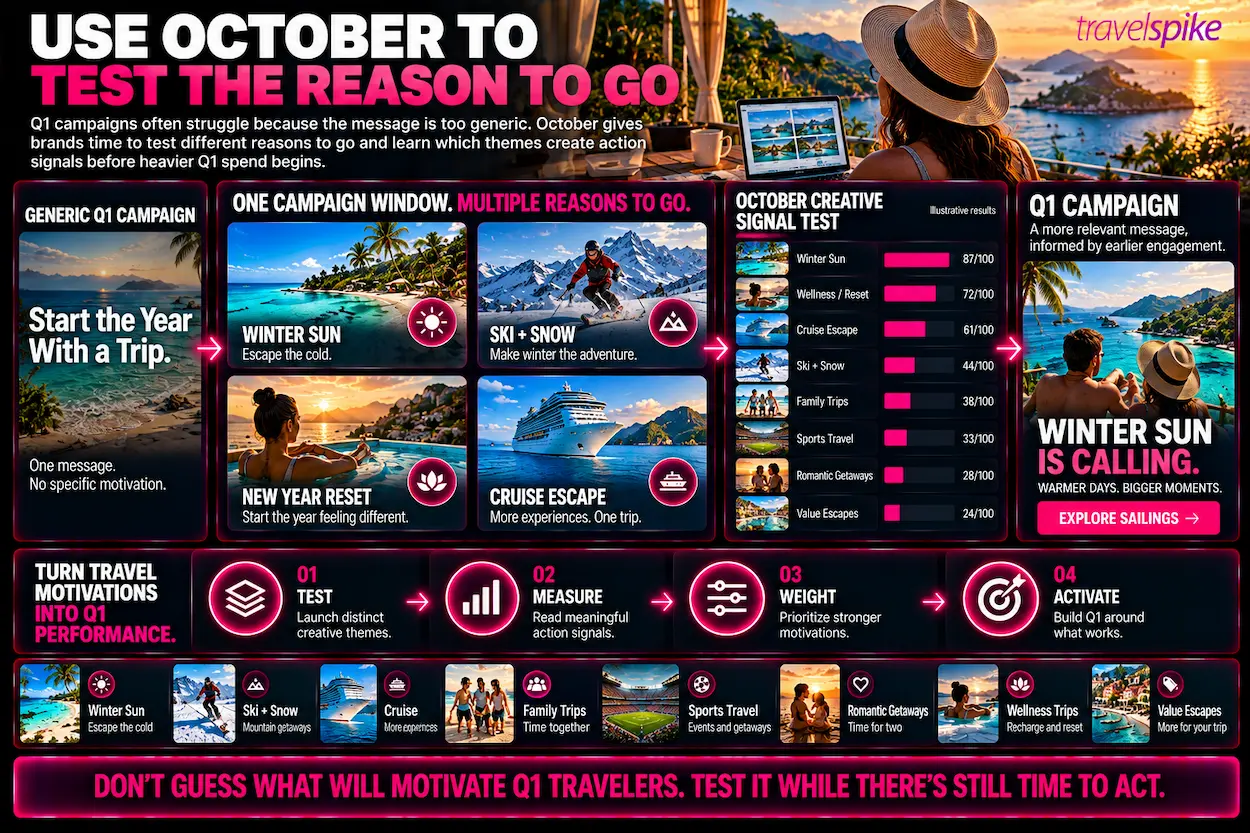
Q1 campaigns often struggle because the message is too generic.
“Start the year with a trip” may sound nice, but it does not tell the traveler why that trip makes sense.
October gives brands time to test the reasons that may matter later:
- New year reset.
- Winter sun.
- Ski and snow.
- Cruise season.
- Spring break planning.
- Sports travel.
- Romantic getaways.
- Wellness trips.
- Family trips before summer.
- Value-driven shoulder-season escapes.
Each one can be tested through content, email, CTA, CTV, social, and landing page engagement.
The goal is to learn which themes create action signals before heavier Q1 spend begins.
Weight Budget Toward Proven Signals
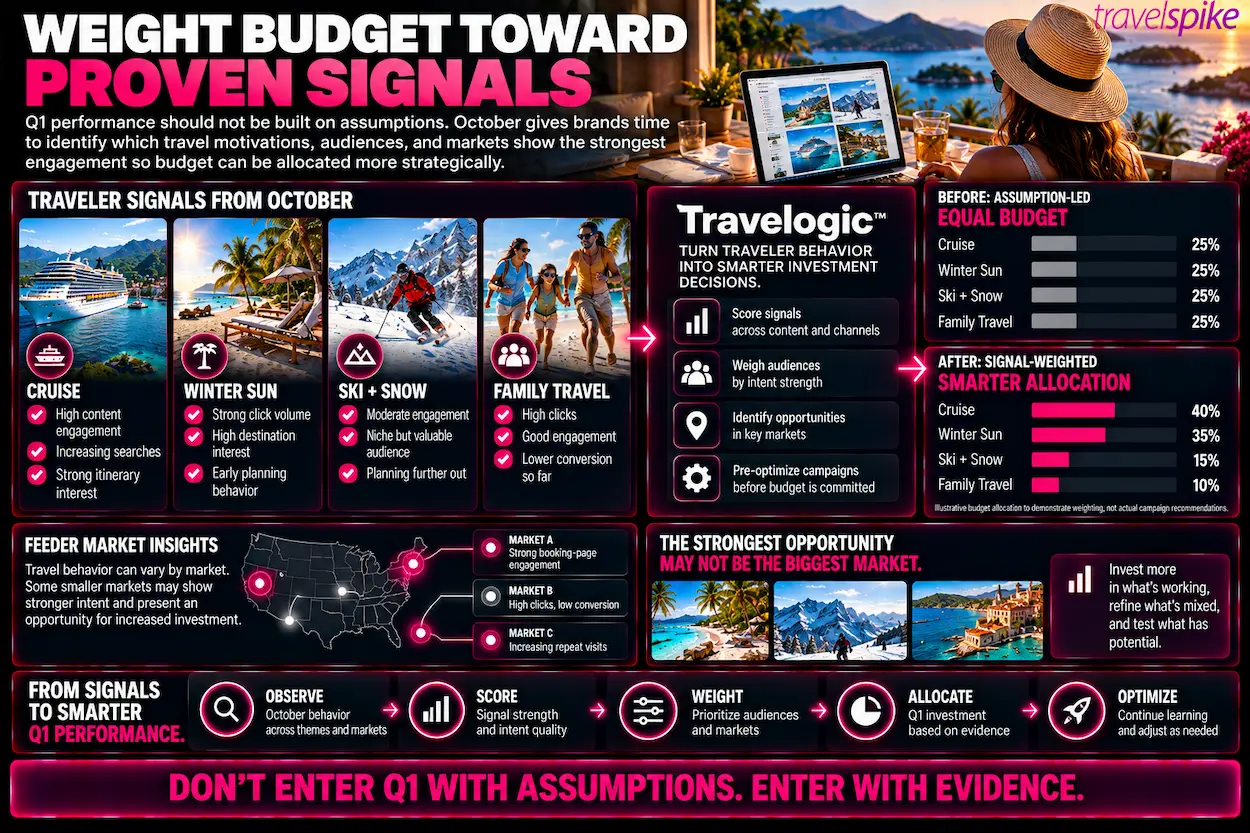
Q1 performance should not be built on assumptions.
If October content shows stronger engagement around cruises than ski, that matters. If warm-weather creative outperforms holiday market content, that matters. If family travel audiences click but do not convert, that matters. If a feeder market shows unusual movement, that matters.
Travelogic™ can help brands weigh these signals and pre-optimize campaigns before budget is committed too broadly.
That matters because Q1 can be a competitive window. Many brands are trying to capture new-year planning, winter getaways, spring break, and early summer interest at the same time.
The strongest position is to enter with evidence.
CTA Can Build Qualified Traffic Before January
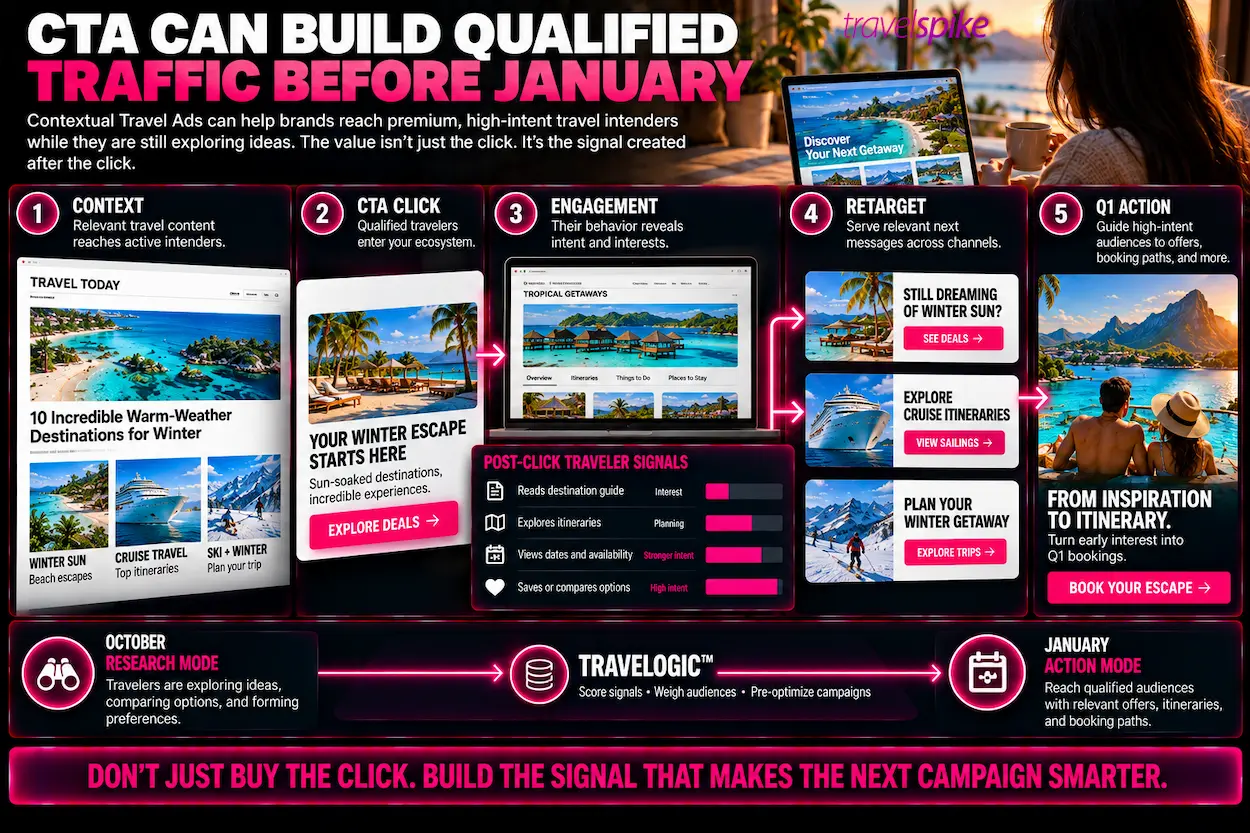
Contextual Travel Ads can help brands buy traffic from premium, high-intent travel intenders while those travelers are still exploring ideas.
That is especially useful before Q1 because many travelers are in research mode. They may not be ready to book, but they are reading travel content, comparing possibilities, and forming preferences.
CTA can bring those travelers into a brand’s ecosystem earlier. From there, brands can score engagement, retarget high-intent behavior, and guide audiences toward Q1 offers, itineraries, and booking paths.
The value is not just the click. It is the signal created after the click.
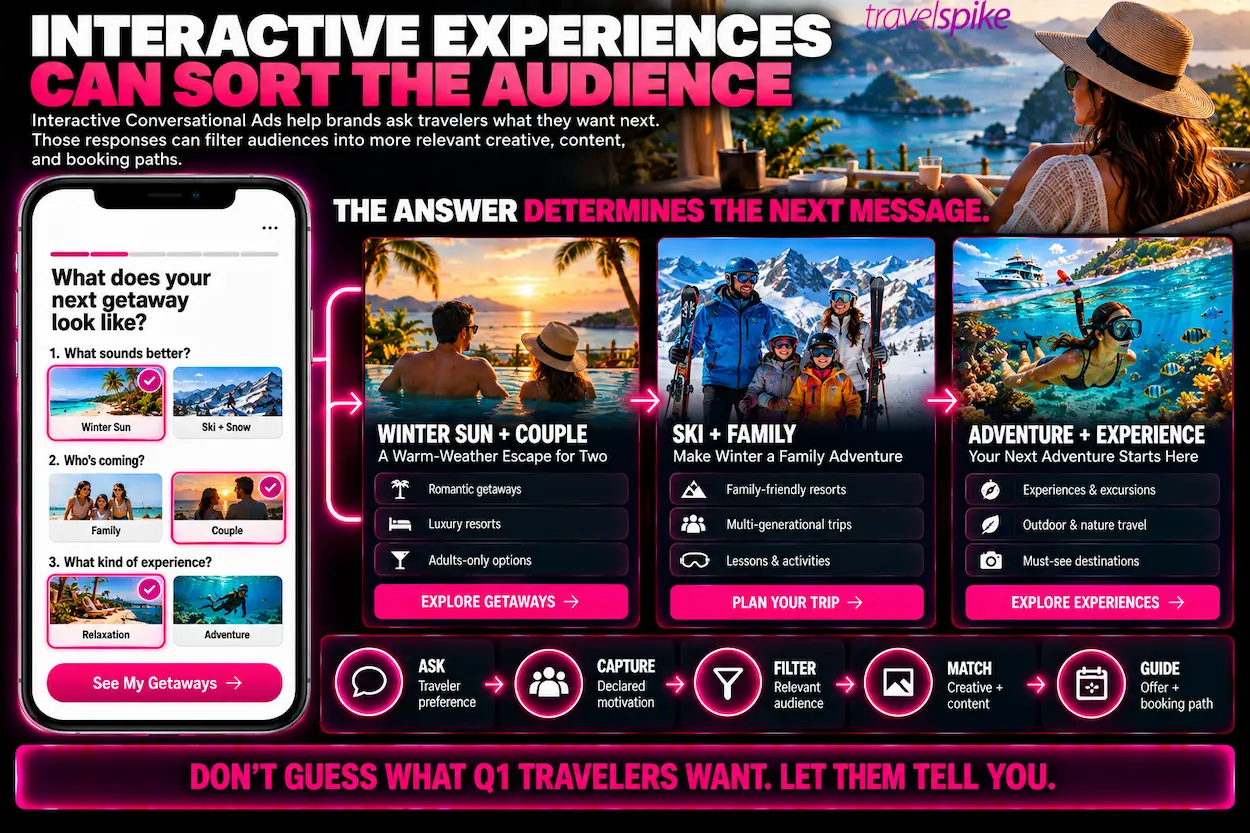
Interactive Experiences Can Sort the Audience
Interactive Conversational Ads can also support Q1 planning by helping brands ask travelers what they want next.
- Winter sun or ski?
- Family trip or couples escape?
- Cruise or land-based getaway?
- Relaxation or adventure?
- Short trip or major vacation?
- Budget-conscious or premium?
Those responses can filter audiences into more relevant creative, content, and booking paths. That is how brands avoid treating Q1 travelers like one broad segment.
The Takeaway
October is not just about finishing Q4, it’s about setting up Q1.
The travel brands that perform early next year will be the ones scoring signals now, filtering audiences by motivation, testing reasons to go, and weighting budget toward behaviors that show real movement.
Q1 performance does not begin when the calendar changes.
It begins when the traveler starts planning what comes next.