Halloween Travel Is Proof That Seasonal Experiences Drive Real Demand
Halloween is no longer just one night on the calendar.
For travel marketers, attractions, hotels, destinations, and experience operators, Halloween has become a full seasonal demand window. Haunted houses, pumpkin patches, ghost tours, fall festivals, after-dark zoo events, theme park haunts, immersive pop-ups, family trick-or-treat programming, and themed hotel packages all show the same thing: travelers respond when the reason to go is timely, emotional, and easy to understand.
That matters for performance marketing. A seasonal experience gives travelers a clear trigger. It answers the question most campaigns struggle with: why now?
The National Retail Federation’s 2026 Halloween survey expects Halloween spending to reach $13.5 billion this year, with 74% of consumers planning to celebrate. NRF also reported that average planned spending is $115.14 per person, and that more shoppers now begin before October than they did a decade ago.
That is not only a retail signal. It is a travel signal.
When consumers start planning earlier, spending more, decorating earlier, and treating Halloween as a season, travel brands have more chances to enter the planning window before the final weekend.
Seasonal Demand Is Easier to Score
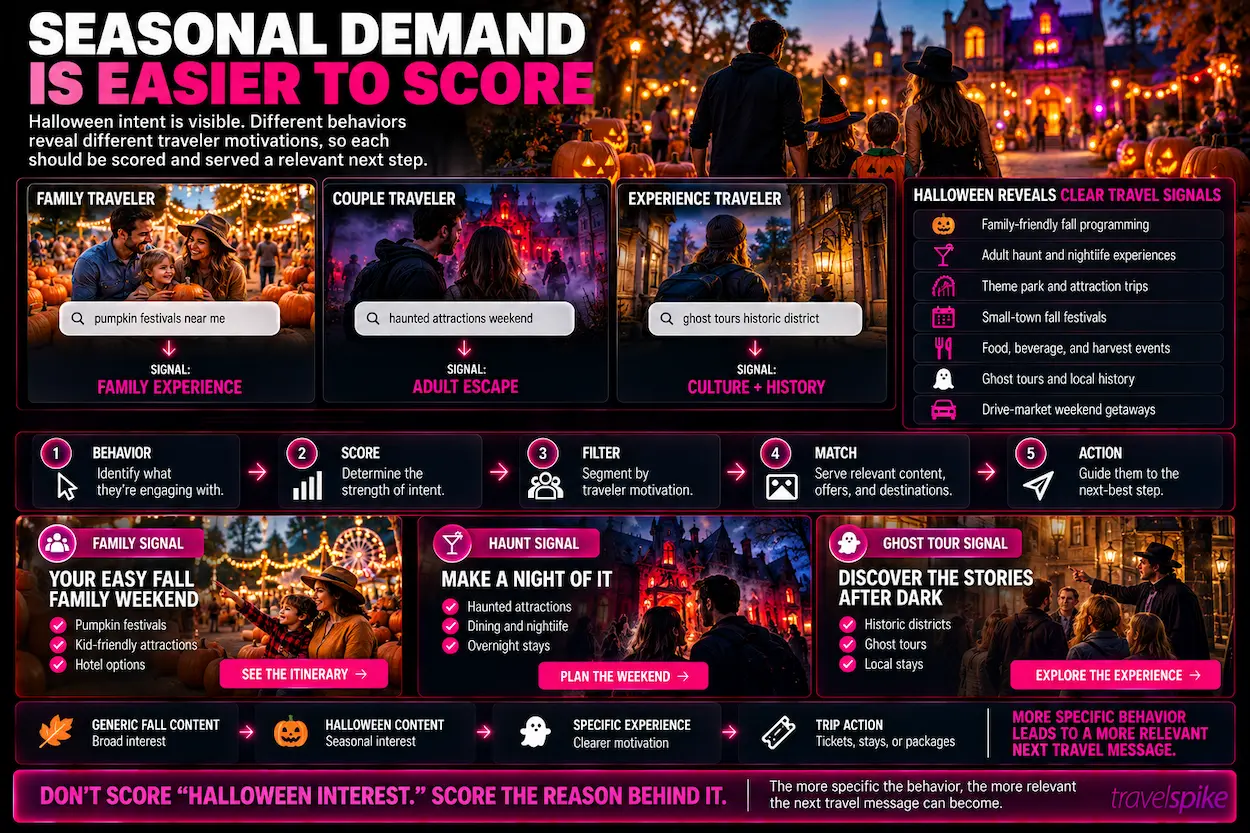
One reason Halloween works so well is that intent is visible.
A traveler reading about haunted attractions is not just browsing generic travel inspiration. A family looking at pumpkin festivals is signaling a different motivation than a couple looking for a scary weekend getaway. Someone clicking ghost tour content is not the same as someone searching for fall foliage or hotel deals.
Those behaviors should be scored differently.
Halloween demand gives marketers useful filters:
– Family-friendly fall programming.
– Adult haunt and nightlife experiences.
– Theme park and attraction trips.
– Small-town fall festivals.
– Food, beverage, and harvest events.
– Ghost tours and local history.
– Drive-market weekend getaways.
Each one points to a different traveler motivation.
A performance strategy should not push one broad Halloween message to everyone. It should score the behavior, filter the audience by motivation, and guide each traveler toward the next-best action.
The Experience Is the Product
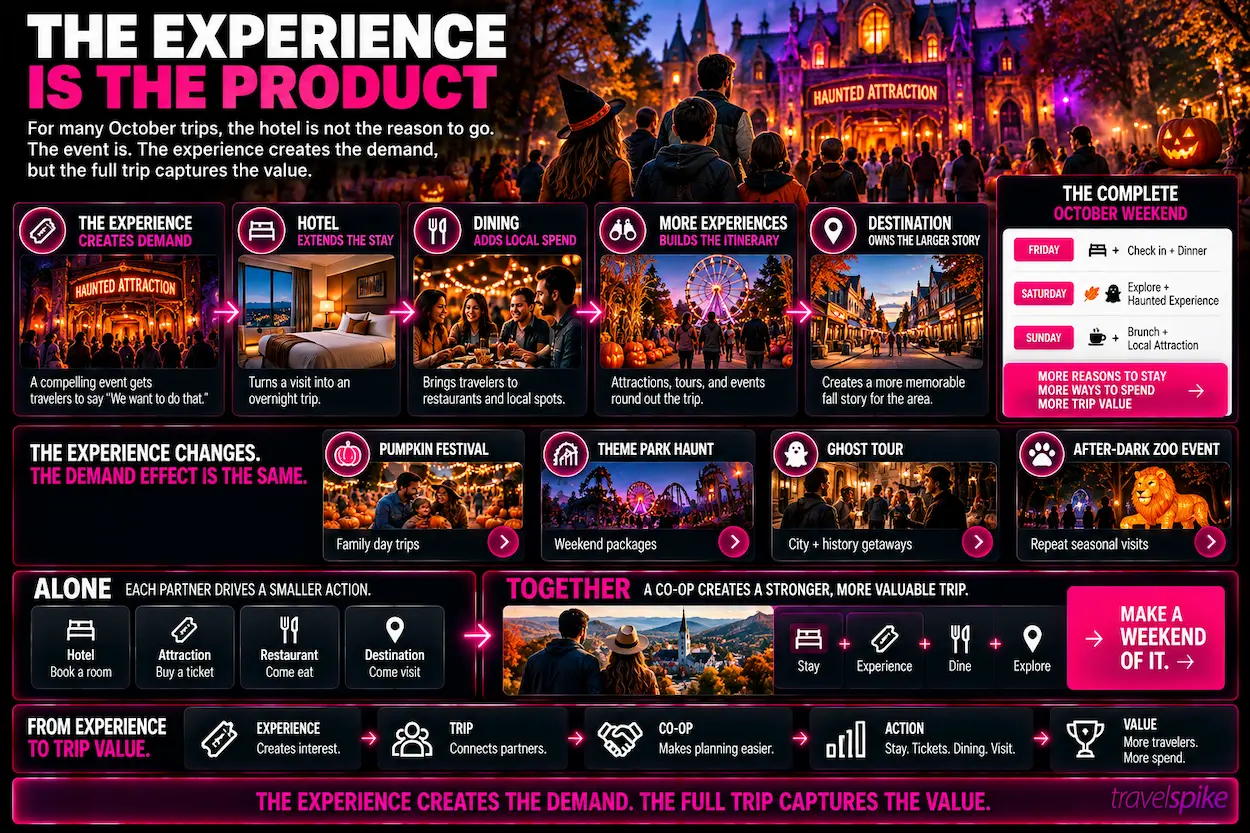
For many October trips, the hotel is not the reason to go. The event is.
That does not make hotels less important. It means hotels need to connect themselves to the experience. The same is true for DMOs, restaurants, attractions, tours, and transportation partners.
– A haunted attraction can drive hotel stays.
– A pumpkin festival can drive family day trips.
– A theme park haunt can drive weekend packages.
– A ghost tour can help a city tell a more memorable fall story.
– A zoo or aquarium after-dark event can turn a local audience into repeat seasonal visitors.
The experience creates the demand, but the full trip captures the value.
That is why co-op matters in October. A destination, hotel, attraction, and restaurant district can build a stronger trip together than each partner can build alone.
Creative Should Match the Traveler’s Version of Halloween
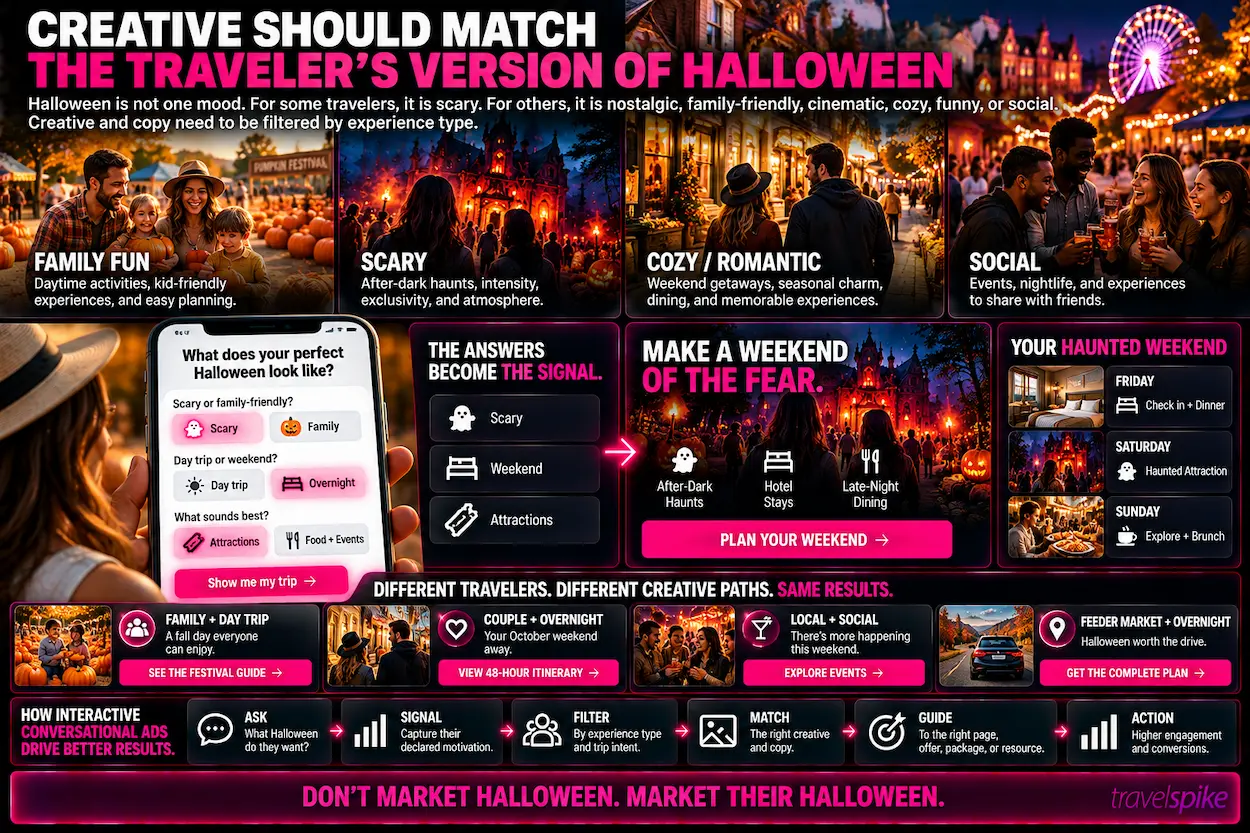
Halloween is not one mood. For some travelers, it is scary. For others, it is nostalgic, family-friendly, cinematic, cozy, funny, or social. That means creative and copy need to be filtered by experience type.
A family audience needs safety, ease, daytime activities, kid-friendly visuals, and clear planning resources. A haunt audience needs intensity, exclusivity, atmosphere, and urgency. A couple may need a weekend itinerary. A local audience may need a reason to return twice. A visitor from a feeder market may need hotel proximity, parking, and a complete plan.
Interactive Conversational Ads can be useful here because they allow brands to ask travelers what kind of seasonal experience they want. Scary or family-friendly? Day trip or weekend stay? Attractions or food? Local event or overnight escape?
That response becomes a performance signal.
The brand can then guide the traveler to the right landing page, offer, package, or resource.
October Should Build November and December Audiences
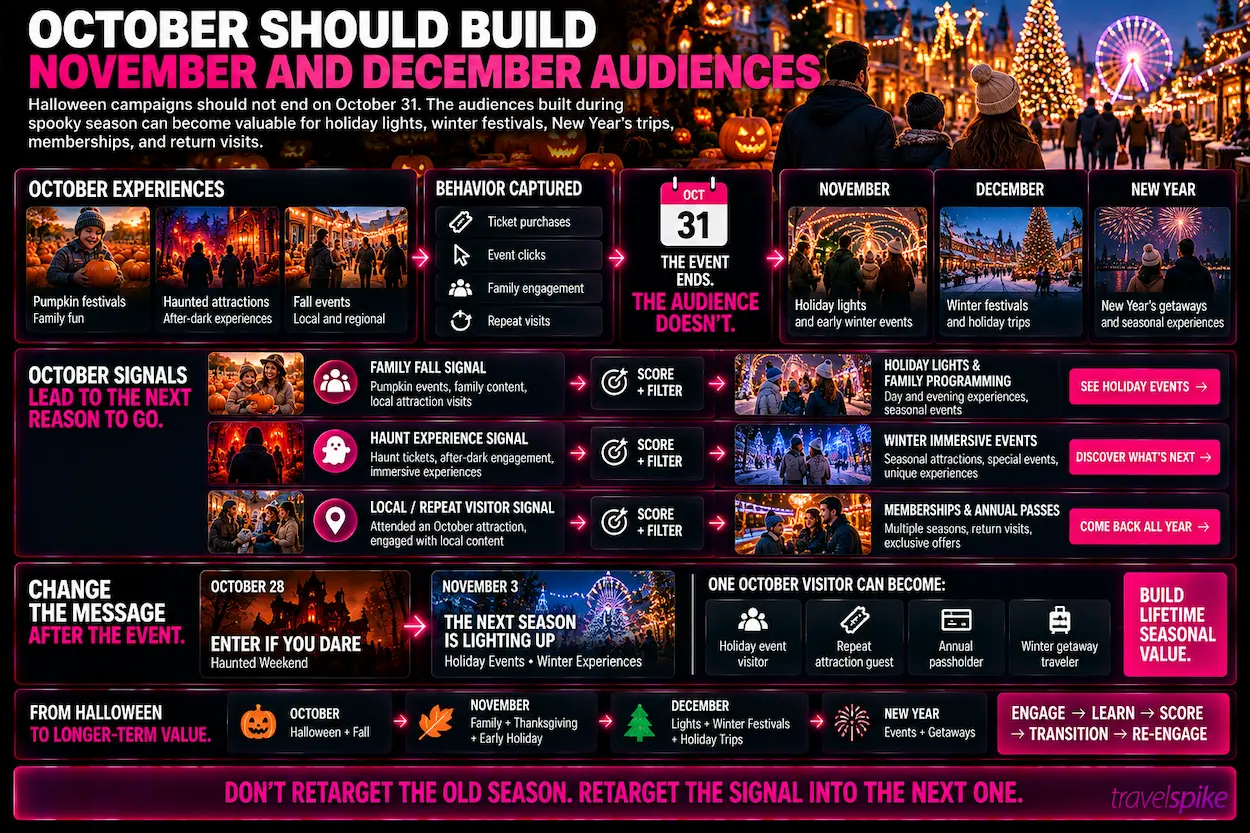
Halloween campaigns should not end on October 31. The audiences built during spooky season can become valuable for holiday lights, winter festivals, New Year’s trips, family programming, memberships, annual passes, and return visits.
A traveler who clicked a family pumpkin event may be a strong prospect for holiday lights. A visitor who bought haunt tickets may respond to a winter event or immersive experience. A local family who attended one October attraction may be worth re-engaging for memberships or seasonal bundles.
The key is to change the message after the event.
Do not keep selling Halloween once the moment passes. Use the behavior to score future intent and filter audiences into the next seasonal reason to go.
The Takeaway
Halloween proves that seasonal experiences can create real travel demand. The reason is simple: they are timely, emotional, specific, and easy to act on.
Travel brands that win in October will not treat Halloween as a gimmick. They will treat it as a performance window. They will score the strongest seasonal signals, filter audiences by motivation, weight the highest-intent behaviors, and connect the experience to the full trip.
Halloween is not just a holiday.
It is a reminder that travelers move when the reason to go is clear.