
Why September Retargeting Should Focus on Action Signals, Not Audience Volume
September is when warm audiences either convert or disappear.
All summer, travel brands paid to capture attention. Travelers watched videos, opened emails, clicked offers, read itineraries, compared hotels, explored attractions, browsed packages, and abandoned booking paths.
That activity should not sit in a report. It should become the foundation for September retargeting.
The mistake is treating every retargeting audience the same. A site visitor is not automatically high value. A video viewer is not automatically ready to book. An email opener may not be as important as someone who clicked a rate page. The performance question is not “how big is the audience?”
The performance question is “what action did they take?”
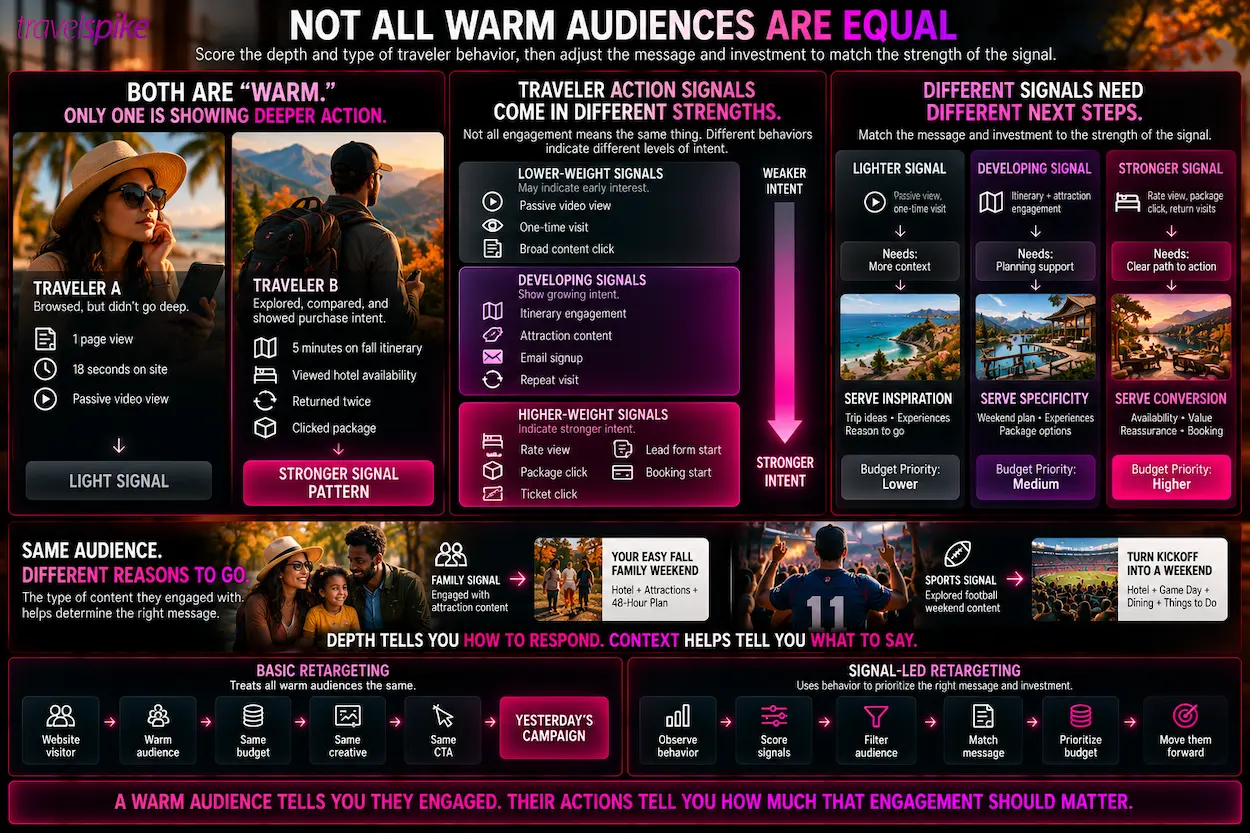
Not All Warm Audiences Are Equal
A traveler who spent five minutes on a fall itinerary is different from someone who bounced after one page.
A traveler who viewed hotel availability is different from someone who clicked a general destination blog. A family that engaged with attraction content needs a different next step than a sports fan who explored football weekend ideas.
Retargeting should begin by scoring action signals. High-weight signals may include booking starts, rate views, package clicks, repeat visits, itinerary engagement, ticket clicks, lead form starts, and email signups.
Lower-weight signals may include passive video views, one-time visits, or broad content engagement without depth. That does not mean lower-weight audiences have no value. It means they need different messaging and should not receive the same budget priority.
Friction Is Part of Travel
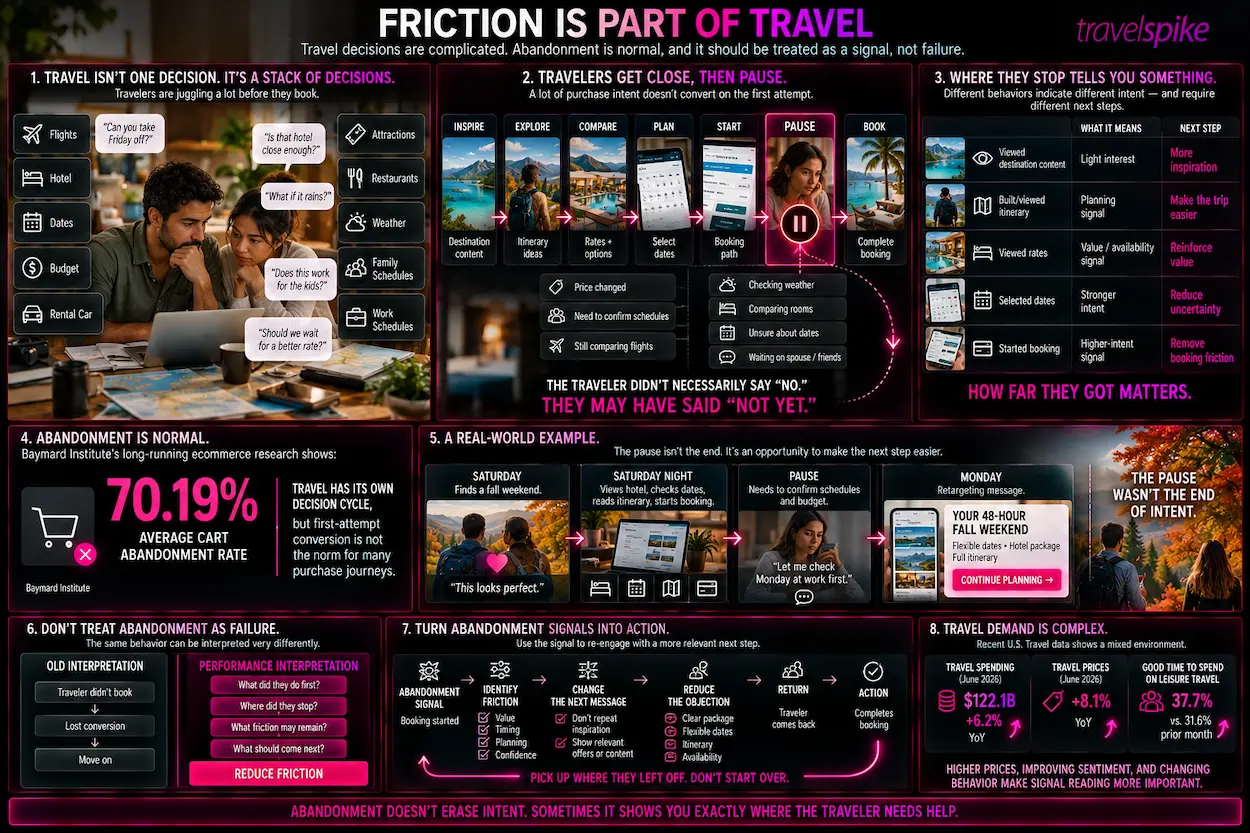
Travel decisions are complicated. People compare dates, budgets, rooms, flights, rental cars, attractions, restaurants, family schedules, and weather. They coordinate with spouses, friends, kids, coworkers, and budgets.
That is why abandonment is normal.
Baymard Institute’s long-running ecommerce research puts the average cart abandonment rate at 70.19%. While travel has its own decision cycle, the broader point applies: a large share of purchase intent does not convert on the first attempt.
For travel brands, abandonment should not always be treated as failure. It should be treated as a signal. The traveler got close enough to consider action. The next job is to reduce friction.
Change the Message Based on the Signal
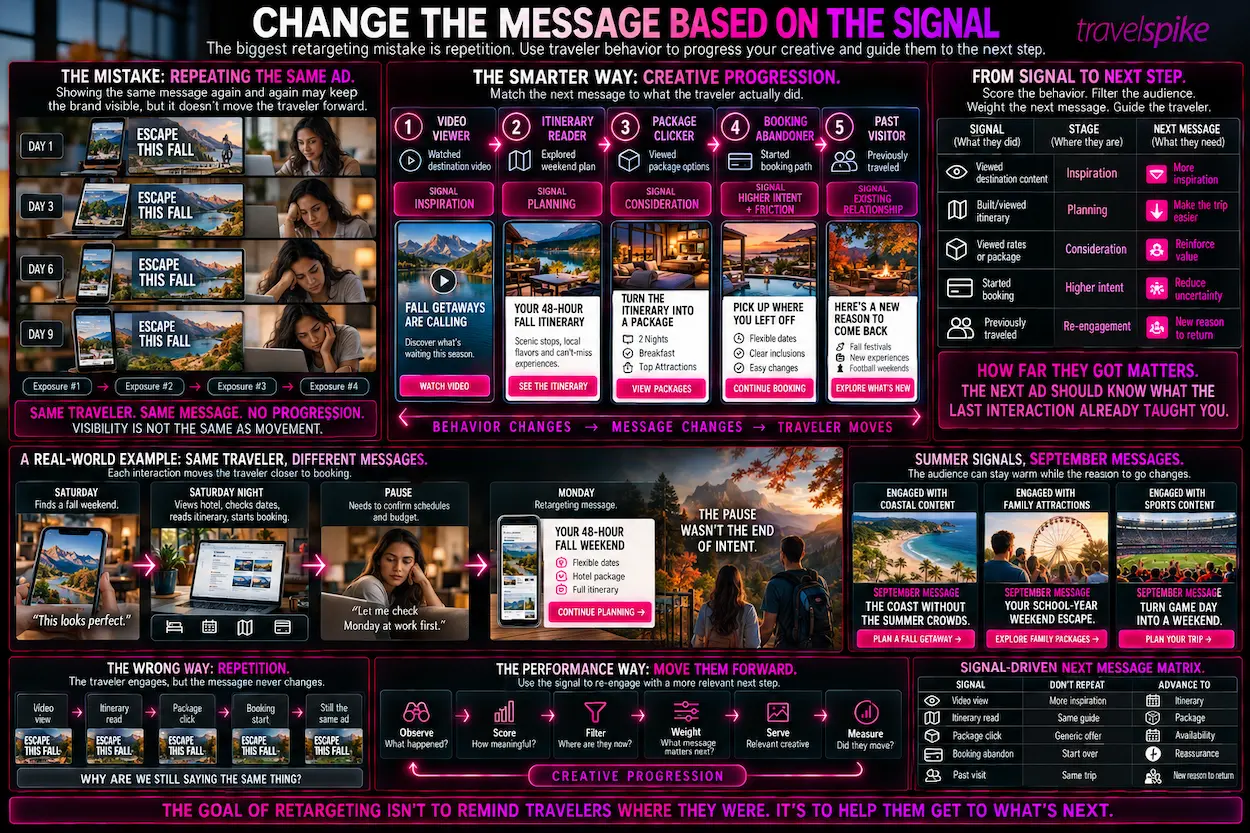
The biggest retargeting mistake is repetition. Showing the same ad again and again may keep the brand visible, but it does not necessarily move the traveler forward.
September retargeting should use creative progression.
- A video viewer may need an itinerary.
- An itinerary reader may need a package.
- A package clicker may need urgency.
- A booking abandoner may need reassurance.
- A past visitor may need a new reason to return.
The message should advance the traveler, not chase them.
This is where performance language matters. Score the behavior. Filter the audience. Weight the next message. Then guide the traveler toward the clearest action.
AI-Referred Visitors May Be More Educated
AI is also changing how retargeting should be interpreted.
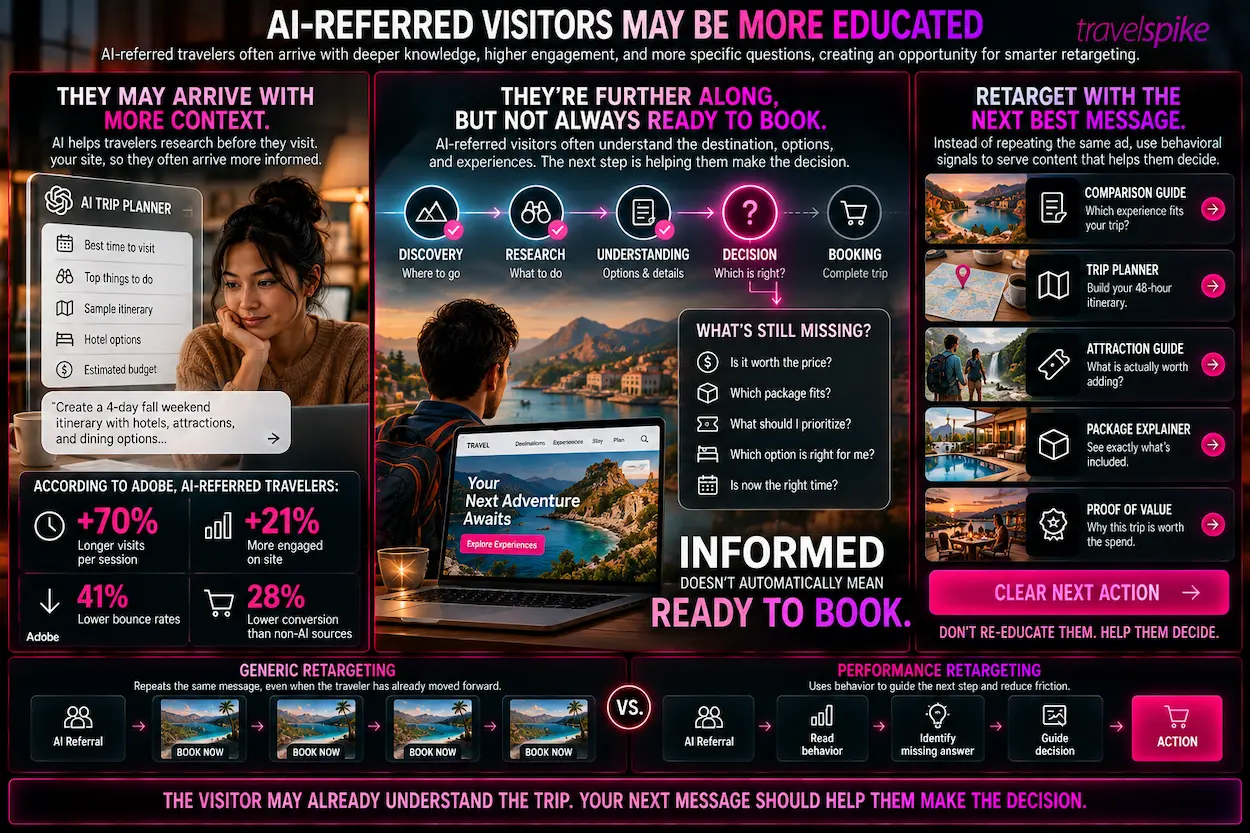
Adobe reported that AI-referred travelers spent 70% longer per visit than non-AI sources, were 21% more engaged, and had 41% lower bounce rates, even though AI-driven travel traffic still converted 28% less than non-AI sources.
That suggests some AI-referred travelers may arrive more informed but not fully ready to buy. They may need a more specific follow-up path.
Instead of pushing immediate booking only, brands can retarget them with comparison content, trip planners, attraction guides, package explainers, or proof of value.
The visitor may be educated. The brand still needs to guide the action.
Retarget for Fall, Not Yesterday’s Campaign
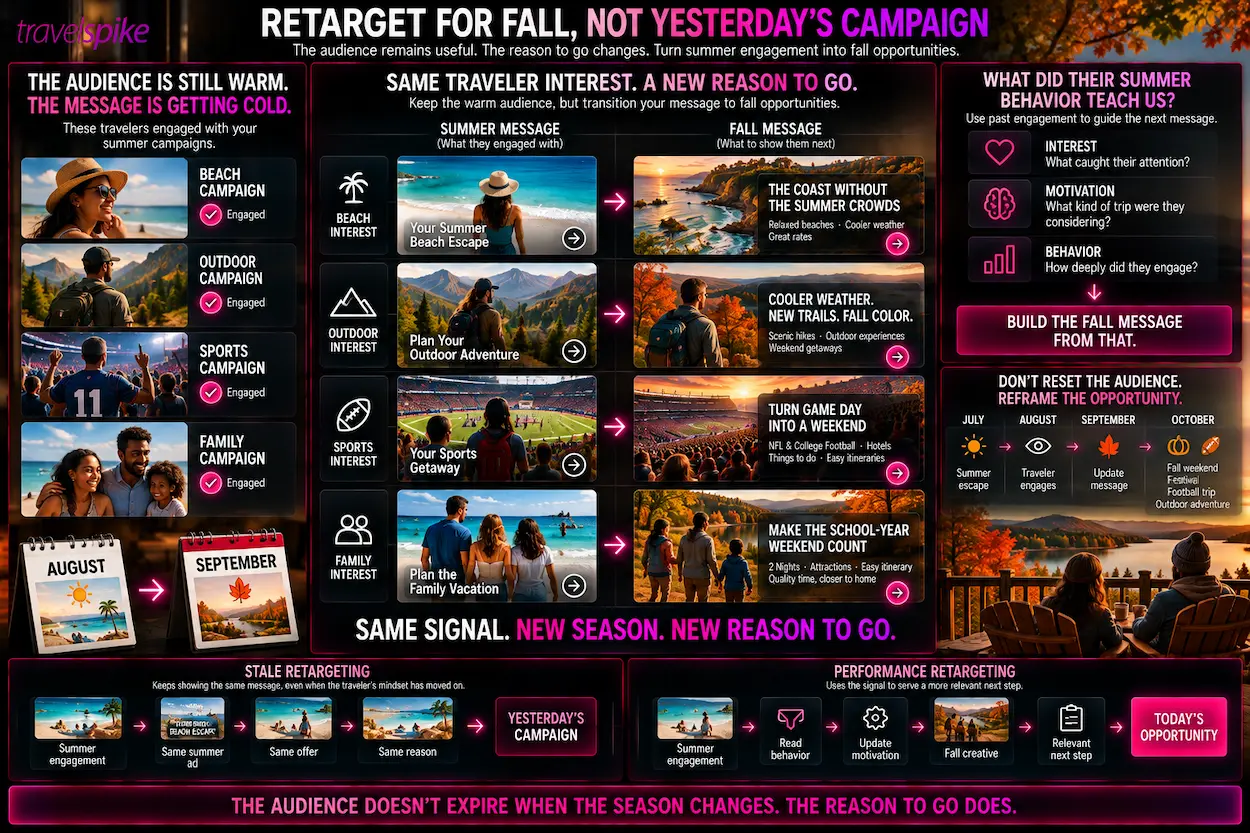
September retargeting should not only try to recover summer bookings. It should transition warm audiences into fall opportunities.
A traveler who clicked a beach campaign may respond to a lower-crowd coastal weekend. A traveler who engaged with outdoor content may respond to fall adventure. Someone who watched sports-related creative may respond to NFL or college football trip messaging. A family traveler may respond to a shorter school-year weekend.
The audience remains useful, but the reason to go changes. That is where many brands lose performance. They keep retargeting with the old seasonal message after the traveler’s mindset has moved on.
The Takeaway
September retargeting should be built around action signals, not audience volume.
The goal is not to follow every visitor equally. The goal is to prioritize the behaviors that indicate real intent and move those travelers into the right next step. The brands that perform will score the summer signals, filter by depth, weight the strongest behaviors, and retarget with messages that match the traveler’s current motivation.
Warm audiences are expensive to waste.
September is the month to make them work.