
Why Co-Op Travel Marketing Works Best When It’s Invisible to the Traveler
Co-op marketing has long been positioned as a practical solution: shared budgets, expanded reach, collective exposure. On paper, it makes sense. In practice, many co-op campaigns underperform…not because the idea is flawed, but because the execution doesn’t match how travelers think.
Travelers don’t plan trips in partnerships. They plan experiences.
The most effective co-op campaigns don’t feel coordinated. They feel cohesive. And often, the less visible the partnership, the more powerful the result.
Travelers Don’t Plan Trips in Silos
No traveler sets out to plan:
- a DMO trip
- a hotel-only trip
- an attraction-first trip
They plan a weekend, a getaway, a family experience, a long-awaited escape. Co-op marketing succeeds when it aligns with that mental model.
When campaigns are structured around partner visibility instead of traveler flow, friction appears. Multiple logos, competing messages, and disconnected calls-to-action force travelers to do the work of stitching the experience together.
The strongest co-ops remove that burden.
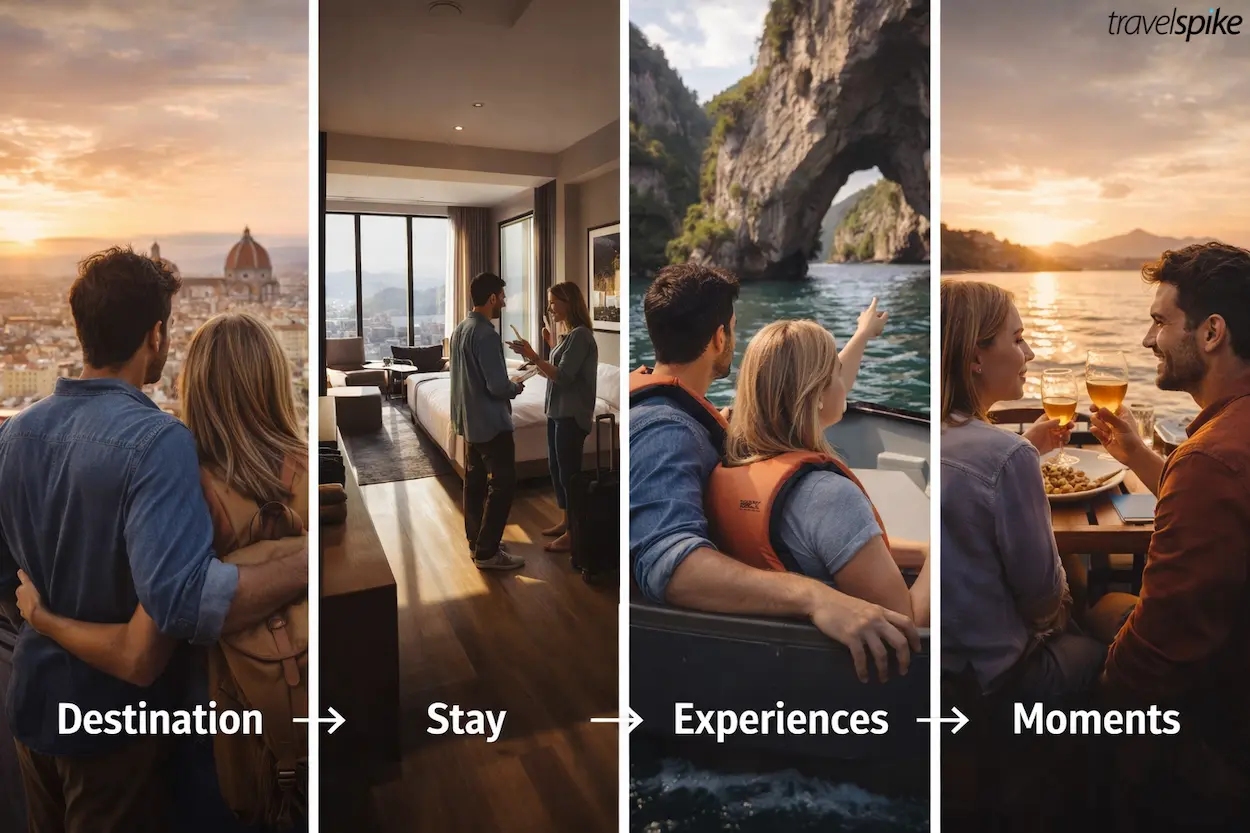
They present a unified story that mirrors how the trip would naturally unfold: destination ⟶ stay ⟶ experiences ⟶ moments, without asking the traveler to think about who paid for what.
Fragmentation Is the Silent Killer of Co-Op Performance
Most co-op campaigns don’t fail loudly. They fail quietly.
They generate impressions but not intent. Awareness but not momentum. Exposure without clarity.
This usually happens when:
- each partner insists on equal visibility
- messaging is layered instead of sequenced
- creative feels additive instead of integrated
Travelers don’t reward complexity. They reward coherence.
When co-op messaging feels fragmented, travelers disengage not because the offer isn’t appealing, but because the story isn’t clear.

The Best Co-Ops Feel Like One Brand, Not Many
High-performing co-op campaigns behave like a single brand experience, even when multiple partners are involved.
They share:
- one narrative
- one emotional hook
- one sense of purpose
Rather than competing for attention, partners align around a common traveler mindset. Messaging is sequenced naturally, not stacked simultaneously.
This is where intent alignment matters. When partners are connected through shared traveler signals like timing, interests, and seasonality. The co-op stops feeling like a collaboration and starts feeling like a recommendation.
Travelogic™ style intent frameworks support this quietly by ensuring co-op messaging reaches travelers who are already leaning toward the combined experience, not just the individual components.

Co-Op Campaigns Are Strongest Earlier in the Journey
Many co-op campaigns focus too heavily on conversion. While conversion matters, co-op value compounds earlier in the journey.
Early-stage co-ops:
- introduce complementary experiences
- help travelers visualize complete trips
- reduce planning effort
- create mental shortcuts
When travelers encounter a destination and its experiences together before they start planning, the partnership feels intuitive later. The hotel feels like the obvious place to stay. The attraction feels like a natural stop. The itinerary feels pre-built.
This is where co-ops quietly shape preference rather than fight for it.

Co-Op Is Not About Splitting Costs, It’s About Expanding Value
The most effective co-op campaigns don’t feel like compromises. They feel like upgrades.
When partners focus less on individual exposure and more on collective clarity, everyone benefits:
- DMOs strengthen destination storytelling
- Partners gain more qualified interest
- Travelers feel guided, not sold to
The irony of co-op marketing is this: the less visible the partnership mechanics are, the more successful the partnership becomes.
When travelers don’t notice the co-op, it’s working.