
What Improves ROI in 2026: AI Personalization in Travel Ads
Personalization is everywhere in travel marketing. But in 2026, the brands that win won’t be the ones who claim personalization, they’ll be the ones who use it to drive measurable ROI.
Because travelers are not asking for “personalized ads.” They’re asking for relevance, confidence, and reduced decision fatigue.
So let’s make this practical:
What forms of AI personalization actually improve performance and what’s just noise?
Start with the truth: personalization doesn’t fix a weak offer
AI can optimize delivery, but it can’t save a message that doesn’t matter.
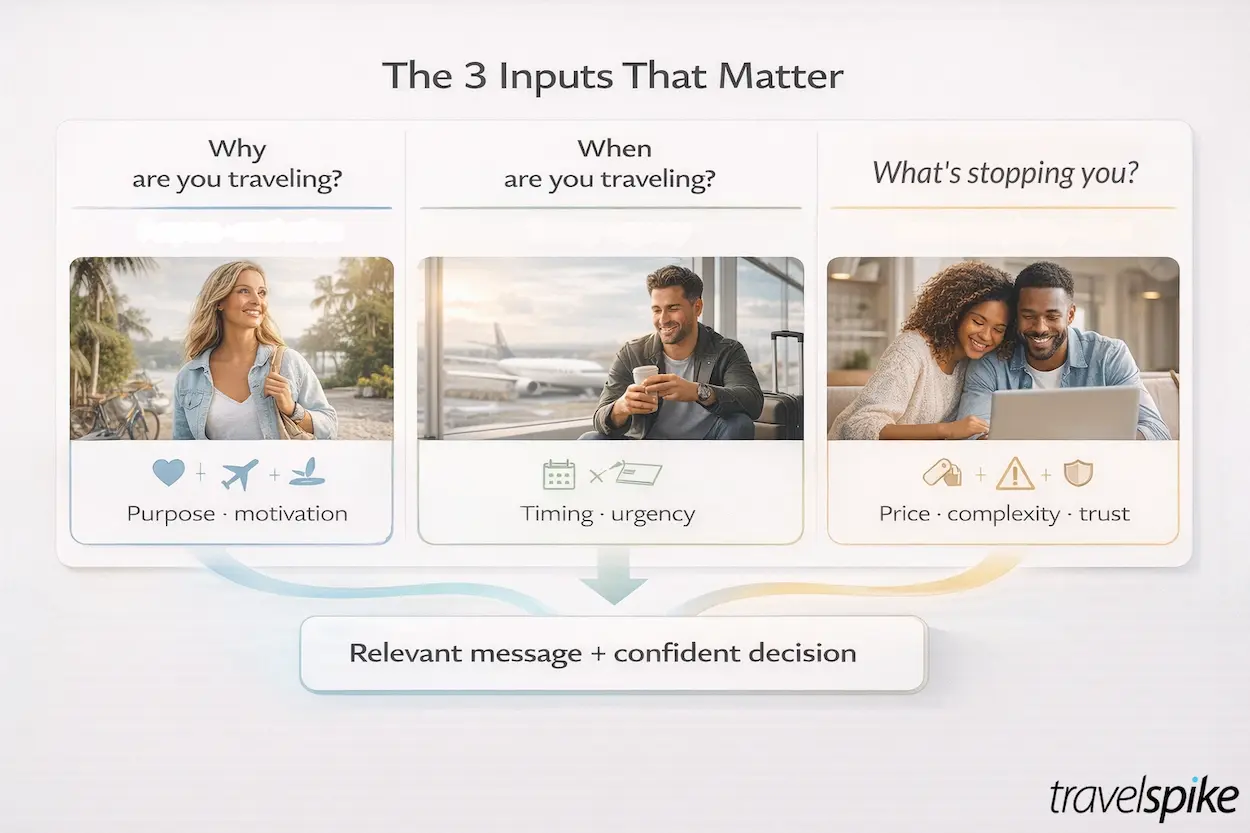
The best personalization starts with 3 core variables:
- Why are you traveling? (purpose / motivation)
- When are you traveling? (window / urgency)
- What’s stopping you? (price, complexity, trust, timing)
If your creative and landing experience answer those, AI becomes a multiplier.
DCO is the underused “ROI lever” for travel
Dynamic Creative Optimization (DCO) is ad tech that generates and serves creative variations in real time using data and contextual signals to improve relevance and performance.
For travel, DCO works because travel decisions are context-dependent:
- weather changes intent,
- school calendars change timing,
- events change pricing pressure,
- and traveler type changes what “value” means.

What “good personalization” looks like in 2026 travel ads
1) Segment by trip type, not demographics
Stop with “women 25–54.”
Start with:
- weekend reset,
- family escape,
- event trip,
- shoulder-season value seeker,
- multi-stop summer itinerary builder.
These segments behave differently and should see different creatives.
2) Personalize the promise
The promise is the emotional benefit:
- “easy getaway”
- “worth-it summer”
- “stress-free family trip”
- “see history + make memories”
- “be there for the moment”
You can rotate the promise by segment without changing the whole campaign.
3) Personalize the path
Personalization should guide the traveler to the next best step:
- itinerary,
- dates,
- package,
- attractions,
- booking page,
- or conversation.
That’s where AI becomes not just marketing, but a decision assistant.

Conversational ads: personalization that feels like help
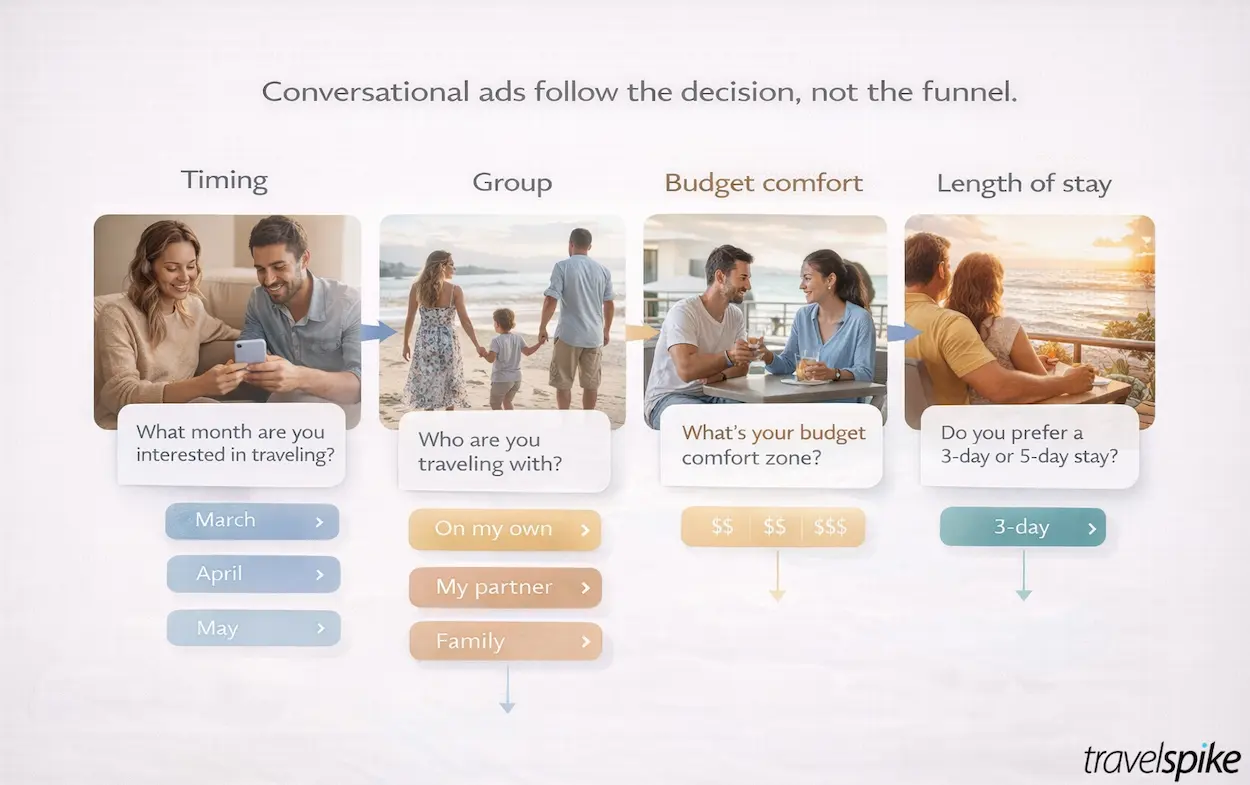
Conversational ads (or click-to-activate experiences) turn a static ad into a guided interaction:
- “What month are you traveling?”
- “Who are you traveling with?”
- “What’s your budget comfort zone?”
- “Want a 3-day or 5-day plan?”
Instead of forcing every traveler onto the same landing page, you build a branching experience that mirrors how humans decide.
This can be powerful for spring break and summer 2026 because travelers are overwhelmed by choices and price variability.
The 2026 event factor: personalization becomes a necessity
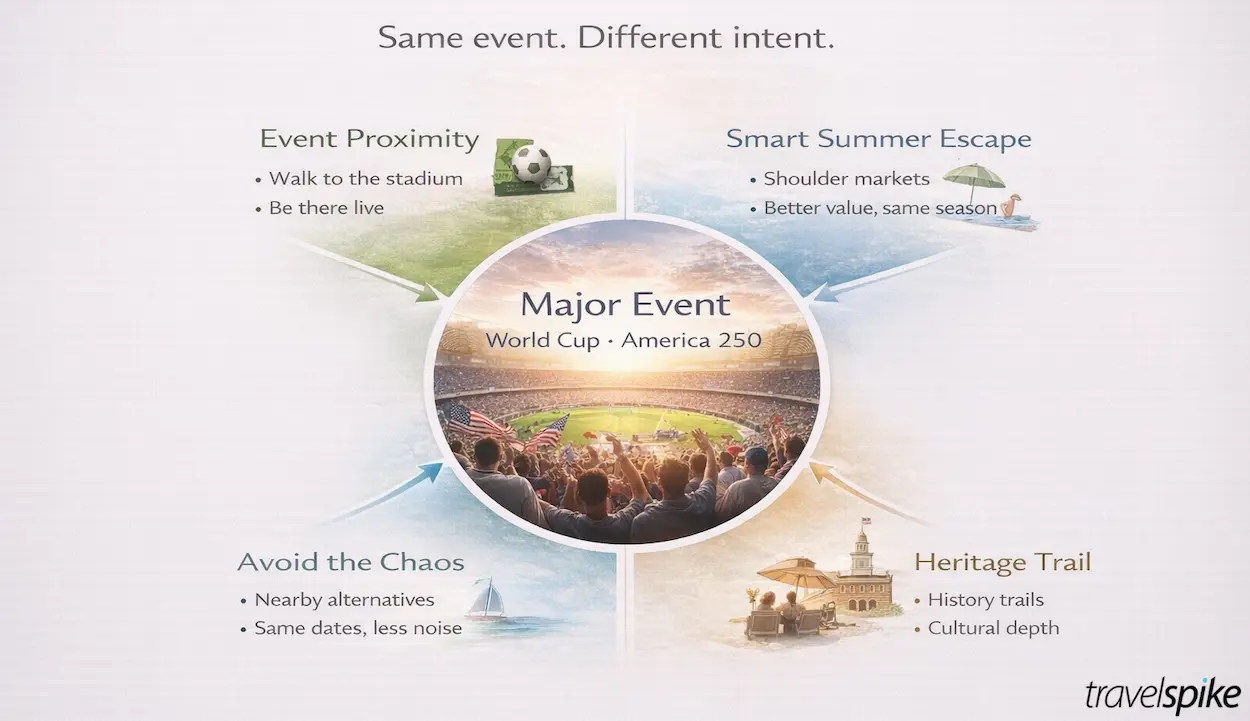
World Cup + America250 will create travel patterns that aren’t uniform.
Airbnb data suggests early World Cup travel demand is being shaped by specific host cities and travel party types. America250 content is already encouraging destinations to build interactive trails and story-driven experiences.
That means:
- Some travelers want “event proximity.”
- Others want “avoid the chaos.”
- Some want “heritage itinerary.”
- Others want “summer escape, but smart.”
If you market one message to all, you lose relevance.
A practical AI + personalization playbook for February
Step 1: Build 12–20 creative components
- 4 images (family, couples, friends, culture/history)
- 4 headlines (value, ease, experience, event tie-in)
- 4 descriptions
- 2 CTAs (plan / book)
Step 2: Let the system find winners
DCO learns combinations that perform by audience/context.
Step 3: Use predictive targeting to reduce waste
This is where Travelogic™ concept fits naturally: not “target everyone,” but prioritize audiences based on travel intent signals and likelihood to convert, so you get better CPA/ROI without simply increasing spend.
Step 4: Close the loop with retargeting
Personalization isn’t just the first impression. It’s the follow-up:
- watched video → show itinerary ad
- visited page → show comparison ad
- engaged in conversation → send tailored email

The goal isn’t “AI marketing.” It’s fewer wasted impressions and more bookings
In 2026, AI is table stakes. The edge is how you apply it:
- personalization that reduces uncertainty,
- dynamic creative that adapts,
- and targeting that prioritizes intent.
That’s how you earn performance, not by being trendy, but by being useful.