
The Summer 2026 Travel Marketing Playbook for World Cup and America 250 Demand
Summer 2026 won’t be driven by “summer vacation” alone.
It will be driven by reasons:
- reasons to go,
- reasons to book now,
- reasons to travel to specific places at specific times.
Welcome to the Reason-to-Travel Economy, where cultural moments shape demand as much as weather does.
This article is a practical playbook for travel marketers who want to:
- get ahead of demand,
- avoid overpriced last-minute competition,
- and use events to create measurable ROI.
Part 1: World Cup 2026 demand will spill beyond host cities
Early travel signals are already emerging. Airbnb has published World Cup 2026 travel trends highlighting demand patterns across host cities and trip types (including families and groups).
Even if you’re not a host city, you can win through:
- overflow lodging,
- pre/post trip add-ons,
- drive-to alternatives,
- fan fest travel,
- “avoid the surge” positioning.
Playbook moves:
- Create overflow positioning (“Stay 45 minutes away, save 30%”)
- Build multi-city itineraries (“Game in LA, coast road trip after”)
- Target feeder markets early (UK/US/Canada demand signals matter)
- Use CTV + retargeting to reach sports audiences with booking paths

Part 2: America250 narrative travel becomes performance marketing
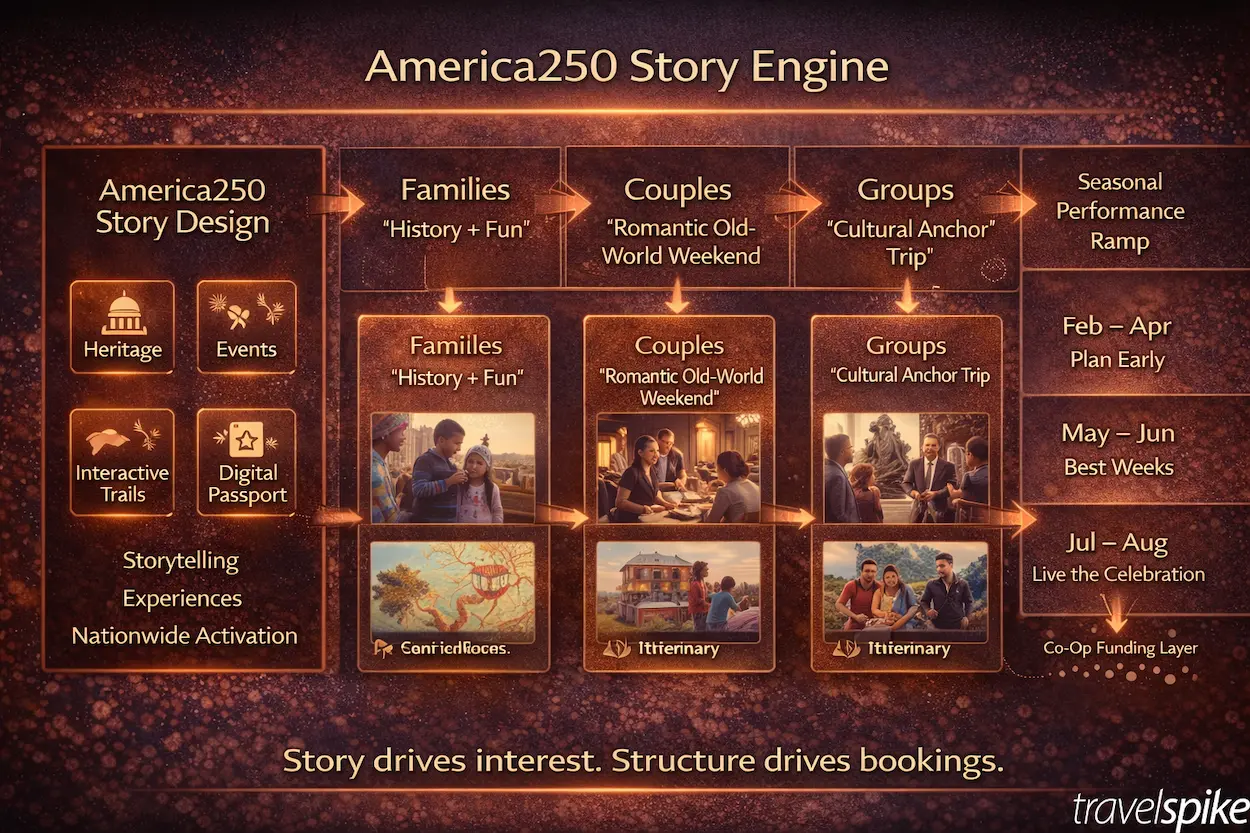
America250 is being framed as a nationwide opportunity for destinations to leverage storytelling, events, and interactive experiences.
The winners won’t be the destinations with the most history. They’ll be the destinations with the most story design.
Playbook moves:
- Build a trail / passport (digital check-ins, rewards, gamified history)
- Develop “heritage itineraries” by traveler type
- families: “history + fun”
- couples: “romantic old-world weekend”
- groups: “guys/girls trip with cultural anchor”
- Use seasonal ramp messaging
- Feb–Apr: “Plan your 250 trip early”
- May–Jun: “Best weeks to go”
- Jul–Aug: “Live the celebration”
- Partner funding (co-op) to scale activations
Part 3: Layer in the “other summer events” machine
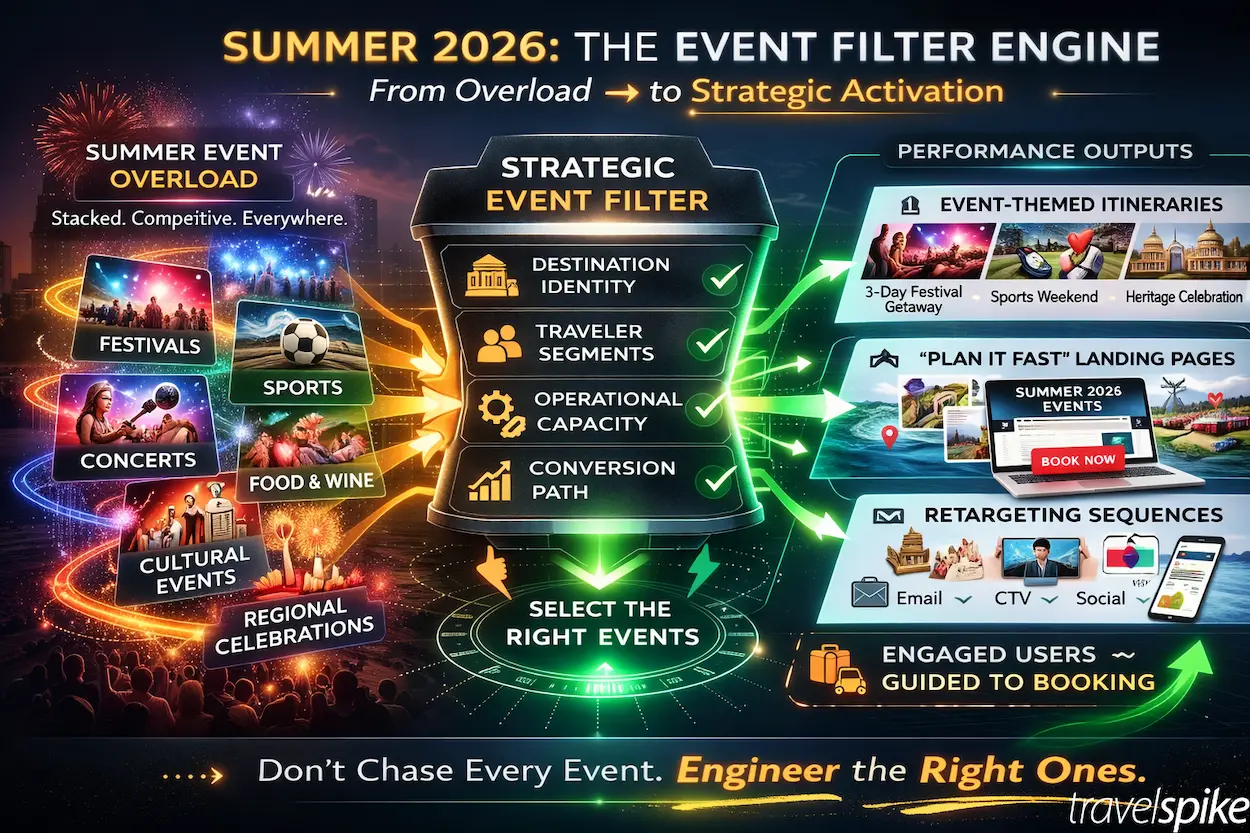
Summer 2026 will be stacked with festivals, concerts, sports, and regional celebrations. Your job is not to chase everything. It’s to build an event filter:
Choose events that match:
- your destination identity,
- your traveler segments,
- your operational capacity,
- and your conversion path.
Then design:
- event-themed itineraries,
- short “plan it fast” landing pages,
- and retargeting sequences for engaged users.
Part 4: The 2026 campaign architecture (simple + scalable)
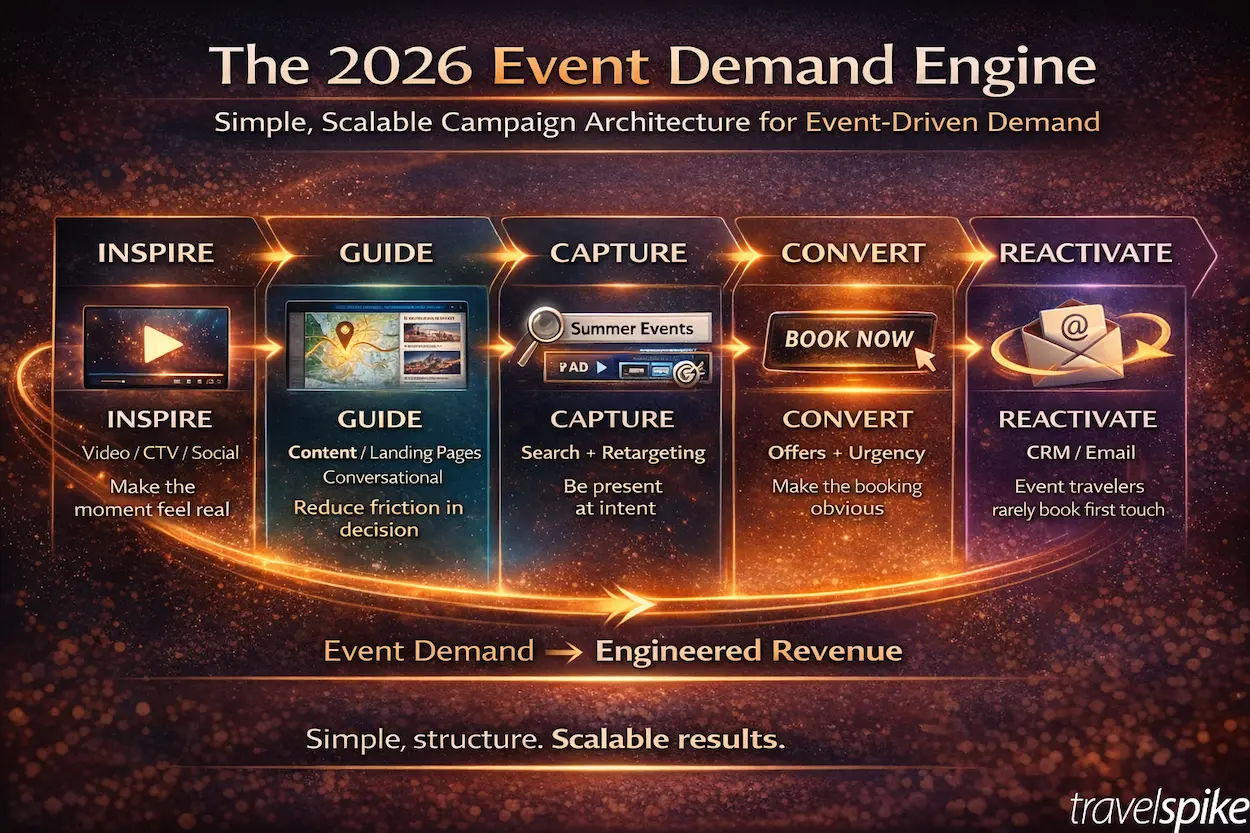
Here’s the structure that converts event-driven demand:
1) Inspire (video/CTV/social)
Make the moment feel real.
2) Guide (content/landing pages/conversational)
Help travelers decide without thinking too hard.
3) Capture (search + retargeting)
Be present when the traveler asks, “Should we do it?”
4) Convert (offers + urgency)
Make the booking step obvious.
5) Reactivate (CRM/email)
Because many event travelers don’t book on first touch.
Part 5: Where AI fits (light, but real)
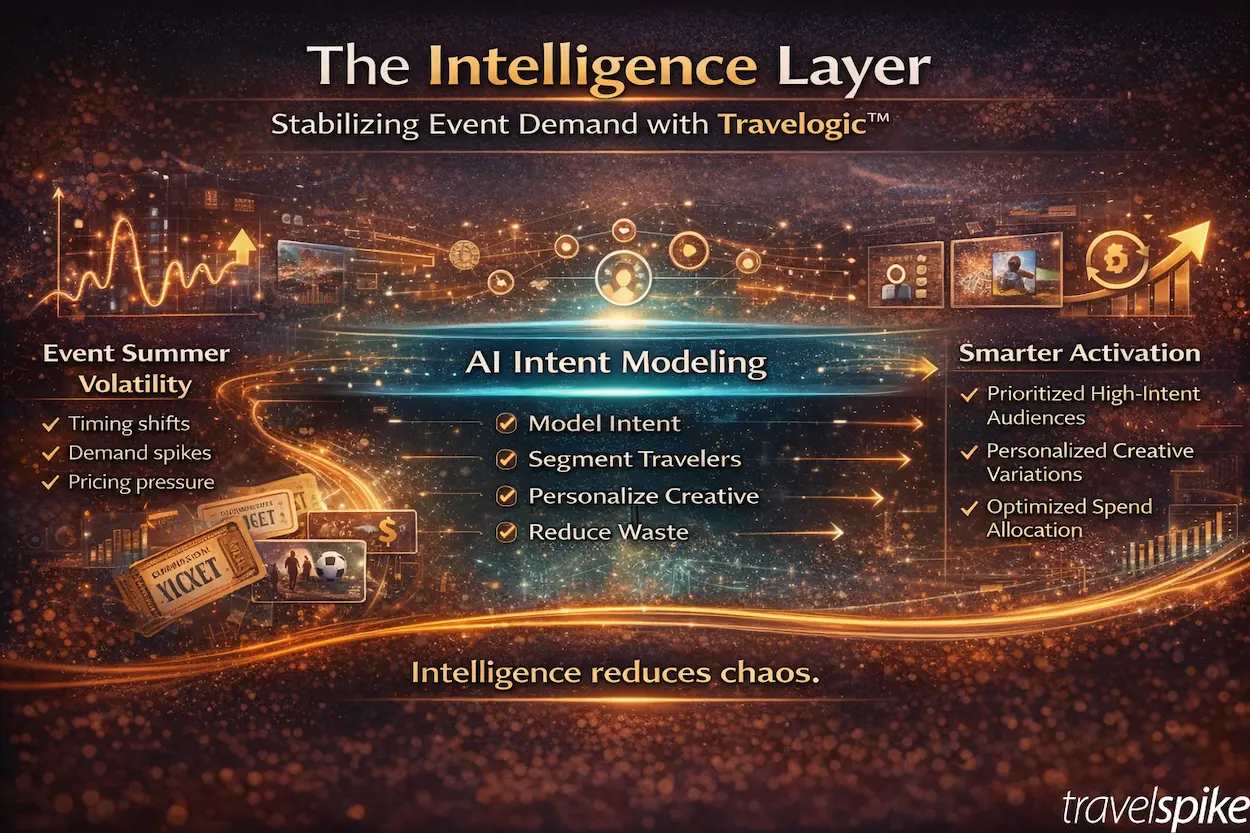
Event summers are chaotic for marketers because timing and demand fluctuate.
AI helps you:
- model intent,
- segment travelers,
- personalize creative,
- and reduce waste.
Travelogic™ approach is built around using travel behavior signals to prioritize audiences most likely to convert, especially useful when you’re spending into premium periods.
The takeaway
Summer 2026 will be big.
But “big” doesn’t guarantee ROI.
ROI comes from:
- showing up early,
- giving travelers clarity,
- and using events as demand magnets, not as last-minute hashtags.
If you treat the calendar like a campaign plan, you’ll turn cultural moments into measurable performance.