
Targeting High-Intent Travelers: How to Maximize ROI With Intent-Based Travel Marketing
Not all travelers are created equal – especially when it comes to booking intent. As a travel marketer, you know the drill: some people browsing your ads are just daydreaming, while others are one nudge away from booking. The key is telling the difference. Unfortunately, many campaigns still cast a wide net based on demographics or generic “travel interest,” and they end up wasting a fortune advertising to people who have no real plans to convert right now. The shift that’s boosting performance across travel marketing is a move toward intent-based strategy: focusing your spend on travelers who’ve signaled they’re ready to book. Why chase 1,000 casual lookers when you could capture the 100 serious planners? The payoff of zeroing in on high-intent audiences is huge – marketers report 2–3× higher conversion rates and substantially lower cost per acquisition when they leverage intent data. Even more eye-opening, identifying and targeting only truly interested travelers can prevent wasting up to 70% of your ad budget on tire-kickers. In an industry where every marketing dollar is precious, that’s a game-changer.
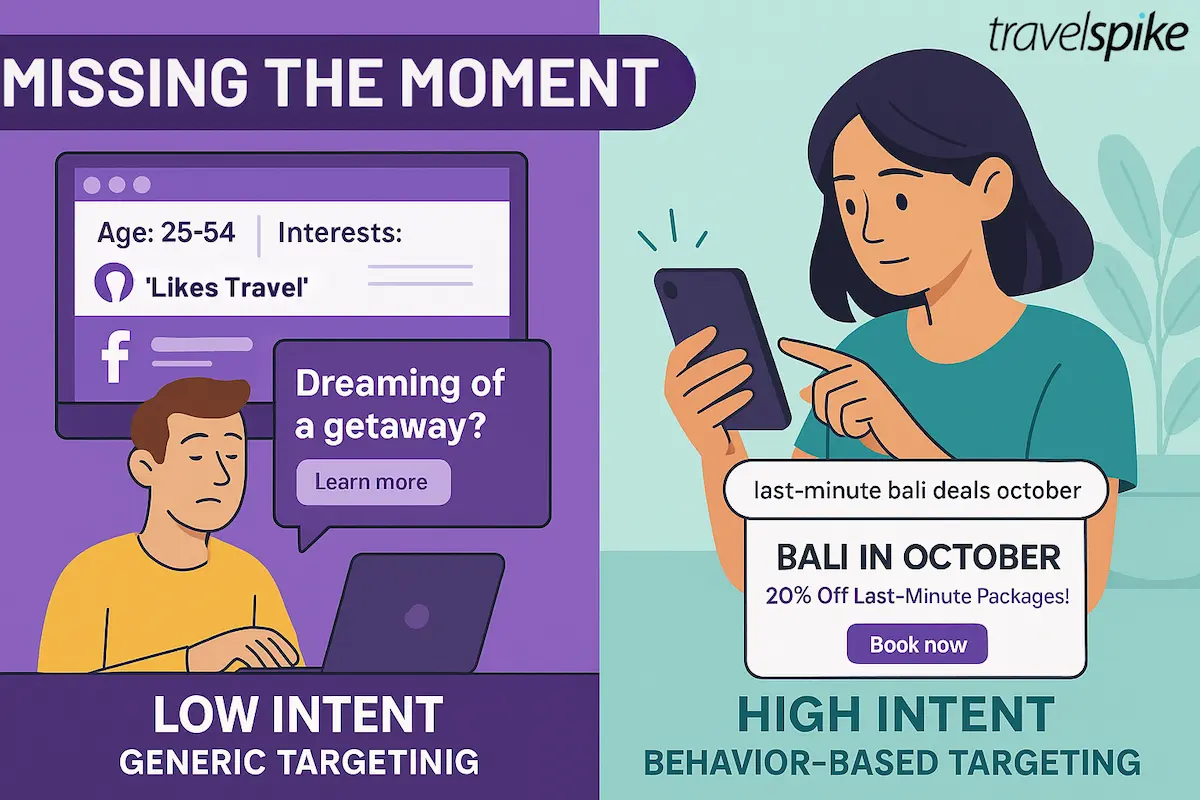
The Missed Opportunity: Too many travel brands still rely on proxies for intent (like age, income, or generic “travel enthusiast” profiles). They’ll target, say, adults 25-54 who like travel pages on Facebook and assume that’s good enough. The result? Their ads hit a lot of people who might travel someday but aren’t actually planning anything now – in other words, low intent. Meanwhile, that campaign could be missing the 35-year-old who hasn’t liked any travel pages but is currently scouring Google for “last-minute Bali deals October”. Traditional targeting would skip her, even though she’s a prime prospect to book next week. The gap is clear: behavioral signals trump demographics. If you’re not leveraging signals like recent search queries, travel site visits, price comparisons, or even content consumption (articles read, videos watched about destinations), you’re likely missing the moment of intent. And timing is everything – when a traveler is actively planning, a well-timed ad can clinch the booking. When they’re not, even the best ad will fall flat.
Strategy Shift – Find the Signal in the Noise: Advanced travel marketers are using AI-driven targeting to find those high-intent needles in the haystack. This is where Travelogic™ comes in. It sifts through oceans of data (from our TravelSpike network and beyond) to pinpoint people exhibiting patterns that predict an upcoming trip. We’re talking signals far more specific than “interested in travel.” Imagine being able to target “users researching Paris hotel reviews and checking flight prices from NYC” – that’s an audience likely to convert. AI can analyze thousands of past campaigns to learn what mix of behaviors typically leads to a booking. For example, Travelogic™ looked at over 10,000 campaigns and discovered combinations of actions that scream “ready to book”: someone who reads multiple ski resort reviews, checks airfare to Denver, and even glances at a long-range weather forecast might be planning a mountain getaway imminently. They might not fit the usual “skier” demographic on paper, but the intent signals are all there. By targeting these indicators, you focus your spend on travelers who are much more likely to convert, even if they don’t fit a classic profile. It’s quality over quantity – fewer impressions, more bookings.
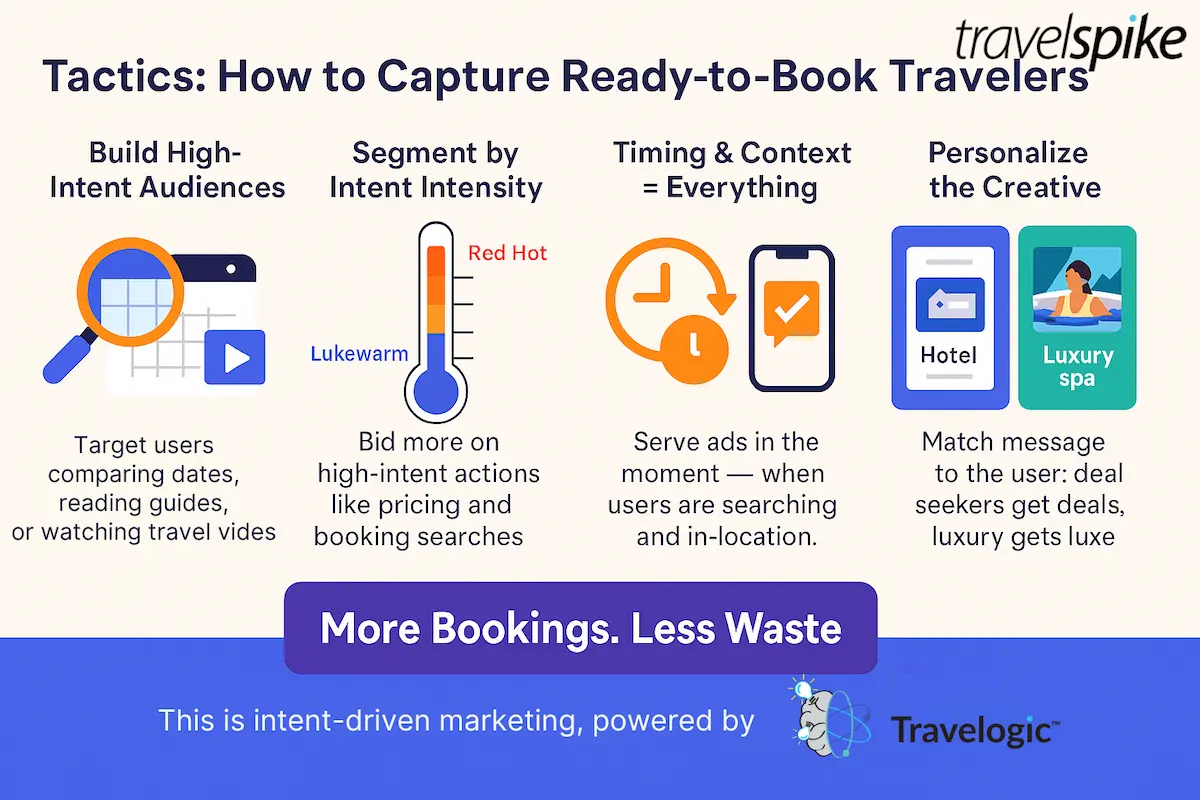
Tactics: How to Capture Ready-to-Book Travelers:
- Build High-Intent Audiences: Start by mining your own data. Who visited your booking engine but didn’t complete? Who searched date-specific availability or added to cart? These are your warmest prospects – re-engage them first. Next, expand outward: use tools (our Travelogic™ or others) to tap into broader intent signals. For instance, target people reading travel guides or watching YouTube vlogs about your destination or similar spots. These behaviors are gold. One travel data provider notes that leveraging real-time intent signals can boost conversion rates 2–3× and cut acquisition costs by 30–45% – because you’re hitting the accelerator with people already in gear.
- Segment by Intent Intensity: Not all intent is equal. Identify “red hot” signals (e.g. someone actively comparing prices on multiple sites) versus “lukewarm” signals (e.g. reading a general travel article). Allocate budget accordingly. If someone has visited your “Book now” page or searched specific dates, they deserve a stronger bid and a more urgent message (“Only a few spots left for your October getaway!”). Those just starting to browse (“Top 10 fall destinations”) might get a softer touch (“Dreaming of a fall escape? Here’s some inspiration…”). Travelogic™ helps here by scoring audiences based on how closely their behavior matches known conversion patterns – essentially telling you who’s most likely to book soon.
- Timing and Context Matter: Intent data is perishable. A user intensely shopping travel options today might be gone next week (either they booked or lost interest). That’s why real-time targeting is crucial. Update your audience pools continuously – even daily. Our platform YODA, for example, refreshes audience segments multiple times a day to ensure we hit people at the moment of decision. If someone’s been searching flight prices all afternoon, we want your ad in front of them this evening, not a month from now. Also, leverage geo-targeting and device context for intent audiences: if we detect someone in your drive market looking at your region’s attractions on mobile, push a “Spur-of-the-moment weekend trip?” ad via mobile apps right then. Match the message to their context (e.g., “Chicagoans: Leaf-peeping season is near – 2-hour drive to your perfect fall weekend!”).
- Personalize the Creative to the Intent: This merges with our personalization mantra – once you’ve identified what someone is after, make the ad speak to it. If behavioral data shows a user is interested in deals, highlight a discount or value-add. If they’ve been researching luxury spa resorts, lead with imagery of a spa and messaging about pampering. Intent targeting and personalization go hand-in-hand: one finds who is ready to book, the other dictates what will convince them. TravelSpike’s toolkit of Travelogic™ + YODA excels here – Travelogic finds the intent-driven audience, and YODA can automatically serve the best-performing creative variation for that specific intent profile (e.g. deal-focused creative to deal-seekers, upscale creative to luxury intenders).
The Payoff: Intent-focused marketing means less waste, more bookings. Instead of blasting 1 million people to find 1,000 who convert, you might target 100,000 and still get those 1,000 bookings – at a fraction of the cost. Intent data platforms routinely see conversion rates of 20–25% vs. 5–10% with traditional broad targeting. And marketers say when a lead comes from intent data, the conversion rate significantly improves ~57% of the time. Our own clients have felt it: campaigns that pivoted to intent-driven targeting saw immediate jumps in ROAS. One destination marketing campaign that used Travelogic™ to hone in on active trip planners more than doubled conversions while cutting CPM waste. Importantly, you’re also reaching travelers at the perfect moment – which builds goodwill. You’re helping them find what they want, when they want it, instead of irrelevant ads that annoy. That relevancy can boost brand perception and make future retargeting even more effective.
The bottom line: marketing to high-intent travelers is like fishing in a stocked pond. You know the demand is there; you just have to cast the right bait. By embracing an intent-based strategy, you outsmart competitors still spraying ads at anyone with a pulse. You’ll fill more rooms, seats, and tours with fewer ad dollars spent – the ultimate performance win.
🎯 Ready to Harness the Intent Advantage? Don’t let your budget evaporate on daydreamers. We’re offering a free Travel Intent Targeting Audit – we’ll analyze your current targeting, identify missed intent signals, and show you how to reallocate spend toward the travelers most likely to convert. No obligation, just actionable insight to boost your ROI.