
Summer 2026 Travel Demand Is Already Building. Here’s How to Stay Ahead.
Summer travel is always big. But summer 2026 is shaping up to be structurally different because demand won’t be driven only by seasonality…it will be driven by events.
We’re heading into a summer where:
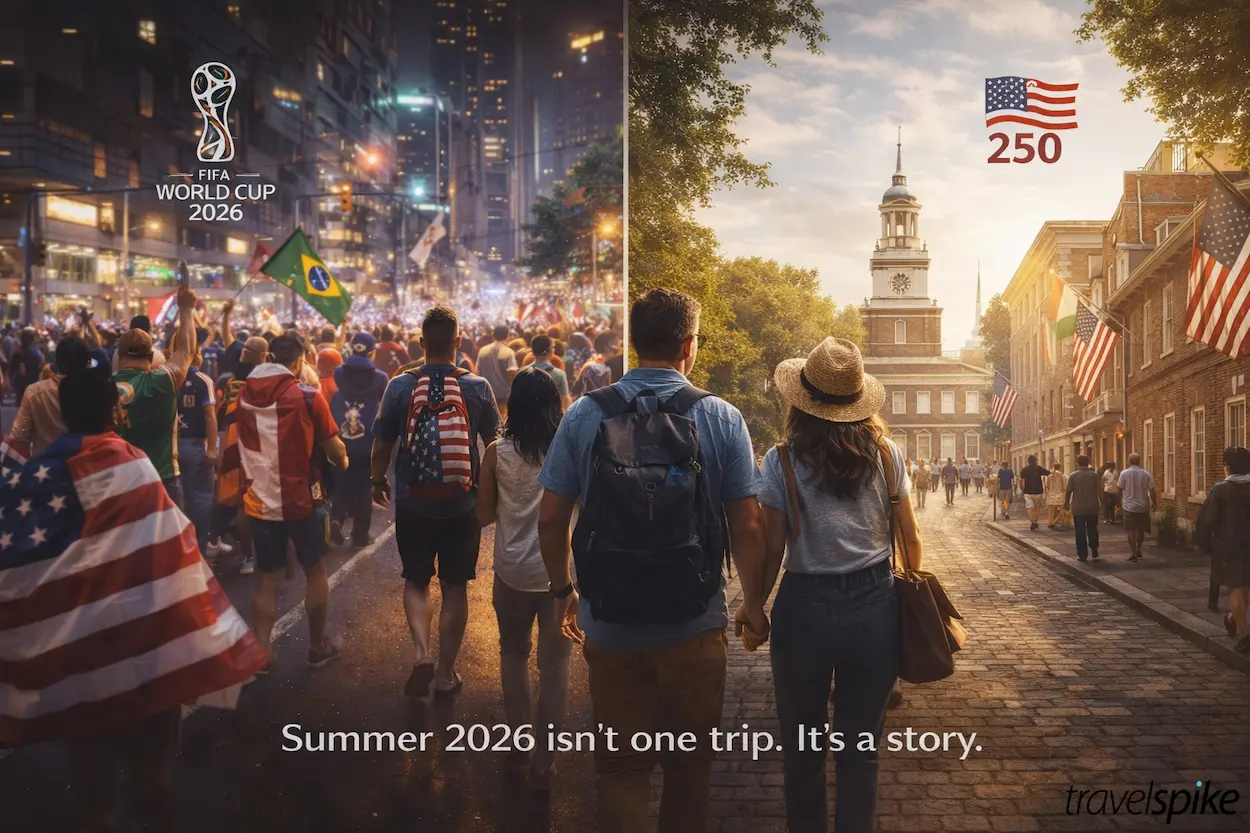
- the FIFA World Cup 2026 will pull travel across North America, and
- America250 will create a national travel narrative around heritage, history, and celebration.
In cities like Philadelphia, local tourism leaders are already forecasting major visitation and economic impact from 2026 events.
The opportunity for travel marketers isn’t just “run campaigns during summer.” It’s to build a system that captures event-driven demand before it spikes.
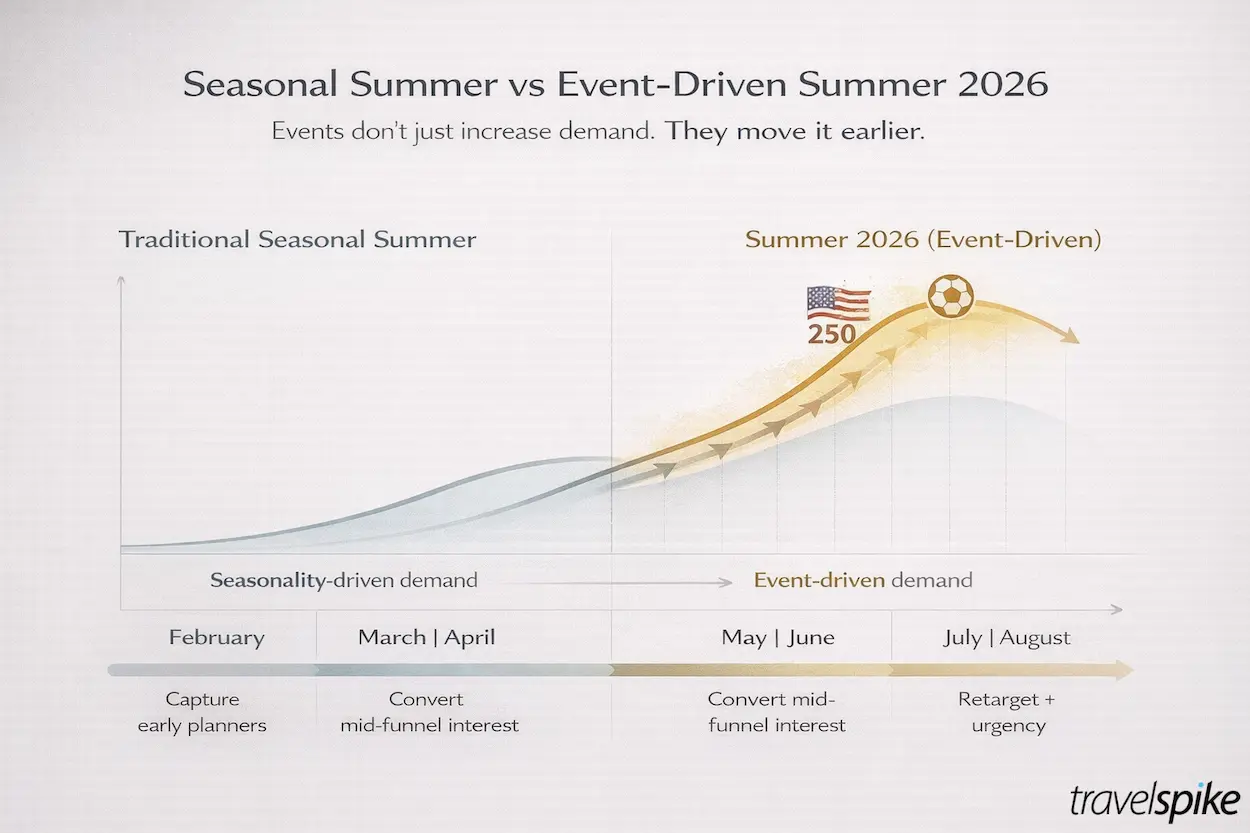
Demand is forming earlier than your media plan
If you wait until May to launch summer messaging, you’re competing at peak CPMs with everyone else who waited.
Instead:
- Use February to start capturing early planners (families, groups, event travelers)
- Use March/April to convert mid-funnel interest
- Use May/June for conversion + retargeting + urgency
This year, the “early planning” window will likely be amplified by major events that influence itinerary decisions.
World Cup demand patterns are already visible
Airbnb has already published early World Cup 2026 travel trends, noting which origin markets and host cities are seeing demand signals, and highlighting that families and groups make up a large share of trips.
Even if you’re not a host city, this matters because mega-events create:
- overflow stays,
- regional add-on trips,
- flight routing changes,
- and “I’m already there” itinerary expansion.
America250 isn’t one day, it’s a travel theme
America250 is already being positioned as a destination opportunity, with tactics like trails/passports, interactive storytelling, and local partner activations to turn sightseeing into participation.
The best play here isn’t “Run a July 4 campaign.” It’s “Build a 2026 narrative travelers can step into.”
Travelers don’t just want fireworks. They want meaning: history, culture, identity, belonging.
Summer 2026 will reward brands that market like planners, not promoters
Here’s the shift: event summers create complex travel logic.
People ask:
- “Where can I go that’s enjoyable but not chaotic?”
- “Can I make this a multi-stop trip?”
- “Is it going to be overpriced?”
- “What’s the smarter version of this trip?”
That’s your opening. Your marketing should feel like strategic guidance.
The Summer 2026 strategy stack
1) Build an “event overlay” into your audience strategy
Don’t just target “summer travelers.”
Target:
- sports travelers,
- heritage travelers,
- city-break travelers,
- family reunion travelers.
AAA research suggests many Americans plan travel around life events and special moments. That aligns with the event-heavy summer dynamic: travel becomes anchored to “a reason,” not a destination.
2) Use content as a conversion bridge
Your best summer assets won’t be pretty ads. They’ll be:
- itinerary builders,
- “where to stay to avoid the surge” guides,
- “how to do this trip smarter” explainers,
- “what to book early vs later” checklists.
These are SEO-friendly and convert well because they reduce uncertainty.
3) Personalize the route, not just the message
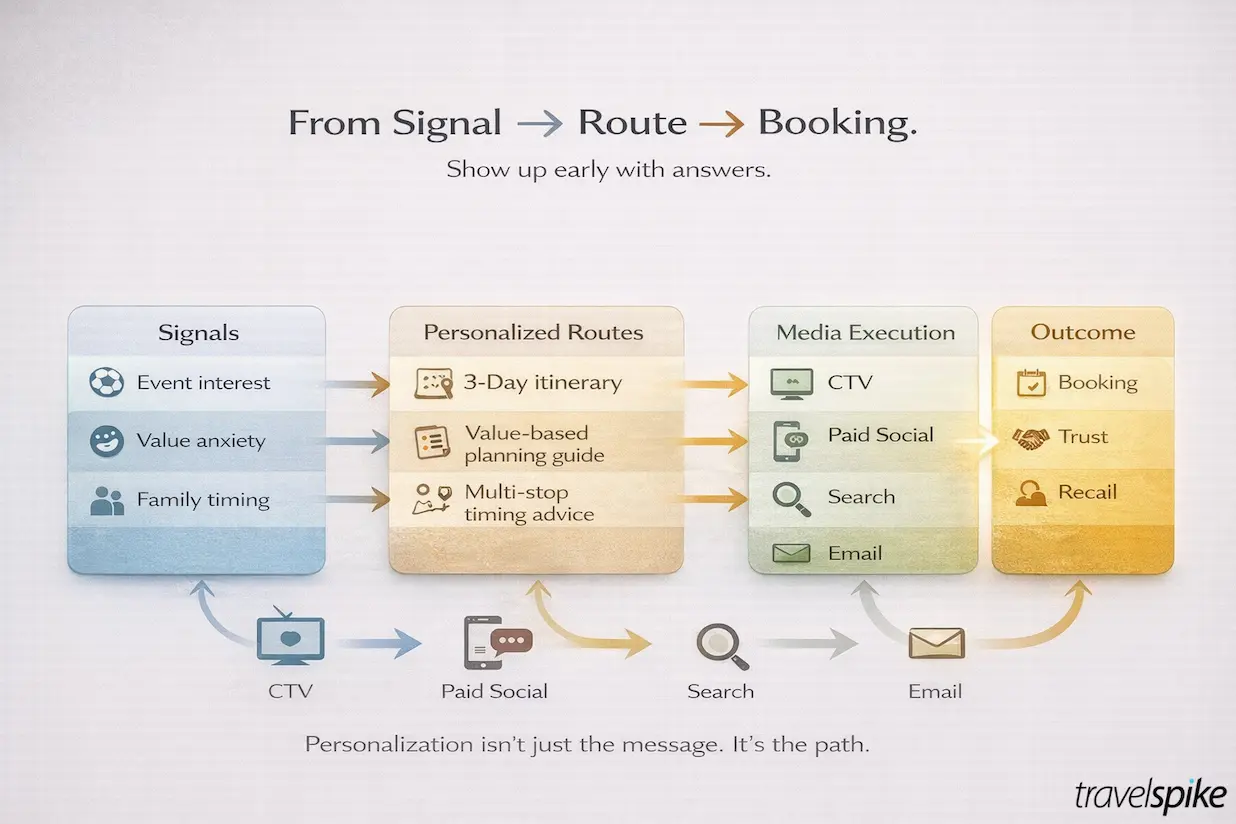
Personalization isn’t just name insertion. It’s serving the right travel “path.”
Example:
- If someone signals World Cup interest, serve “3-day city add-on itinerary”
- If someone signals America250 interest, serve “heritage trail / family trip / multi-generational planning”
- If someone signals “value anxiety,” serve “best weeks to travel for price + experience”
This is where predictive tooling matters. Travelogic™ is designed around pre-optimizing outcomes by using travel behavior signals to prioritize audiences more likely to convert, so budgets don’t get burned on low-intent reach.
4) Make your media mix reflect how decisions happen
Summer travel decisions are emotional first, rational second.
That’s why:
- CTV/streaming video builds desire,
- paid social keeps attention warm,
- search captures high intent,
- email/CRM closes the loop.
The brands that win summer 2026 will “show up early with answers”
A crowded summer doesn’t punish marketers who spend. It punishes marketers who arrive late and say nothing specific.
If your February content and campaigns help travelers plan smarter now, you earn trust and you’ll be the brand they remember when they’re ready to book.