
Holiday Travel Marketing 2025: Data-Driven Strategies to Maximize Bookings This Season
The 2025 holiday travel season is shaping up to be one for the record books. Americans are hitting the roads and skies in numbers, making this winter a critical window for travel brands to capture business. Nearly 80 million Americans traveled last Thanksgiving (a record high), and this year’s holiday travel is gearing up to be just as robust, the stage is set for a holiday travel surge unlike any we’ve seen. But with opportunity comes competition: travelers have more choices and are booking on their own terms – often later and closer to home than in years past. To win the season, travel marketers must leverage data-driven tactics that respond to these shifting behaviors in real time.
In this playbook, we’ll explore how to use timely data and strategic marketing to capitalize on 2025’s holiday travel boom. From embracing the last-minute booking wave to tailoring campaigns for the drive-market renaissance, these tips will help you maximize revenue and guest acquisition during the year’s busiest travel period.
Closer to Home, Later to Book: Understanding 2025’s Traveler Trends
First, let’s decode the traveler mindset this season. Economic jitters and a value-seeking mentality are influencing how and when people travel for the holidays. This year’s holidaymakers are “staying closer to home, booking later, and placing value at the heart of every decision.” In the U.S., nearly 90% of holiday travelers plan to drive rather than fly for winter vacations, preferring road trips and regional destinations over expensive long-haul flights. This drive-market focus represents a significant pivot – Americans are opting for nearby getaways, likely to save money and reduce hassle.
Booking behavior has changed as well. Travelers are compressing their booking windows, often waiting until a deal or compelling event (like Black Friday or Cyber Monday) before committing. Many are “holding out for deals” in November, causing demand surges around promotional events. For travel brands, this means the traditional early bird booking curve has shifted; a huge volume of bookings may come in very late. In fact, more than half of holiday bookings can happen in the final weeks leading up to the trip date, as undecided travelers finally lock in plans. For example, in Europe nearly 55% of holiday season bookings were still outstanding as of early October – a trend mirrored by U.S. travelers’ procrastination.
Another trend: value reigns supreme. After a “summer of savings” with lower airfares, consumers head into winter expecting bargains. They’re stretching budgets by choosing cheaper transport (hence the road trips) and shorter, closer-to-home stays. Flexible options (free cancellation, pay-later, loyalty points) and clear value propositions (like complimentary amenities) strongly sway decisions in this climate. Travel marketers must be attuned to these priorities; campaigns that highlight cost-savings, convenience, and comfort will resonate most with the 2025 holiday traveler.
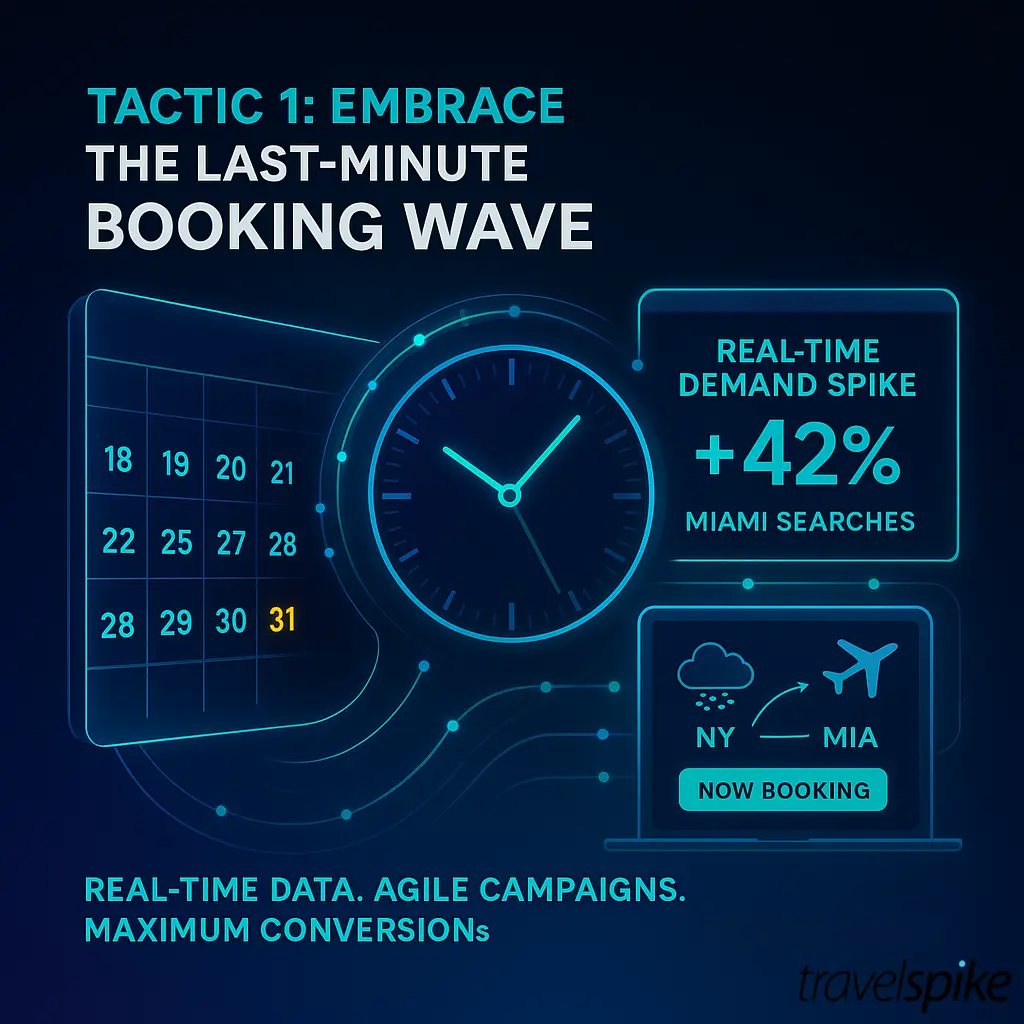
Tactic 1: Embrace (and Plan for) the Last-Minute Booking Wave
When travelers book late, marketers must market late. Instead of locking your holiday campaign budget in September, stay agile and keep powder dry for late-season pushes. Monitor booking trends and be prepared to ramp up promotions on short notice. For instance, if you see an uptick in website searches for Christmas-week stays in early December, deploy a targeted flash sale to convert that intent. Real-time data is your friend here: tools like predictive analytics can alert you to incoming demand spikes. Travelogic™ for example, can forecast interest surges by analyzing millions of data points (from weather to social buzz). If a cold snap hits the Northeast, a smart system might predict a spike in searches for Florida vacations and prompt you to dial up ads for Miami getaways.
Moreover, adapt your messaging to instill urgency without panic. Phrases like “Still finalizing your holiday plans? It’s not too late to book & save!” acknowledge the procrastinator mindset and provide a timely nudge. Highlight limited inventory warnings (“Only 3 rooms left for New Year’s Eve”) to push action. Always-on marketing is key during this period of rolling demand. Unlike the old-school approach of a single early holiday campaign, an always-on approach means continuously running and refreshing ads from fall through New Year’s. You remain visible whenever the customer is ready to book (which increasingly is at the last minute).
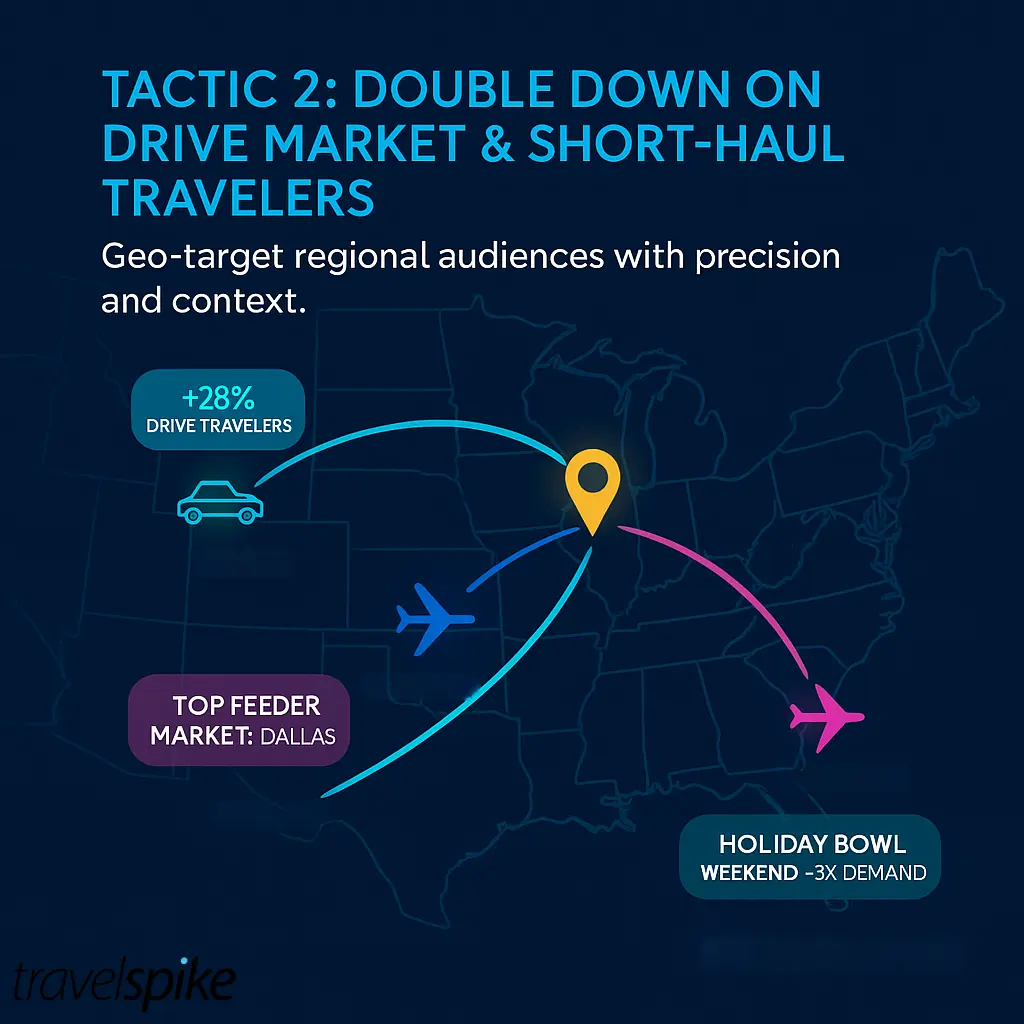
Tactic 2: Double Down on the Drive Market and Short-Haul Travelers
With so many Americans driving to holiday destinations, it’s crucial to geo-target your marketing to travelers already within your region. Identify the top feeder markets within a 300-mile radius of your destination or property, and concentrate spend there. If you’re a Colorado ski resort, for example, focus on Texas and California audiences who are likely to fly in, but don’t forget the huge drive markets within Colorado or neighboring states. Craft campaigns that speak to the road trip experience: “Hit the highway for a holiday getaway – scenic routes await!” Promote perks like free parking, maps of local scenic drives, or discounted gas cards to sweeten the deal for drivers.
Data supports this local focus. Despite a rise in domestic flights (+4% YoY), outbound international bookings from the U.S. have declined (e.g. down 5% to Mexico, 8% to Caribbean), meaning more Americans are sticking to U.S. destinations. Even inbound international travel to iconic U.S. cities is down double-digits, so domestic tourism is the growth engine. Destinations and hotels can capitalize by marketing regional attractions, “staycation” packages, and short-haul flight deals. A flexible, region-centric strategy not only captures travelers who are avoiding long flights, but also builds goodwill with drive-market customers who may return for long weekends throughout the year.
Leverage local data too. Your own city’s event calendar is an asset: is there a big college bowl game, winter festival, or NFL playoff game nearby during the holidays? That presents a chance to draw in crowds driving in for those events (combining sports tourism with holiday travel – a powerful combo). We’re seeing tourism boards actively target sports fans; in fact, the tourism sector leads new NFL sponsorship deals in 2025, outpacing all other industries. This underscores how important regional sports and events are for travel promotions. If big games or holiday events are happening in your area, create packages around them (e.g. “Stay with us for the Holiday Bowl – special rate and tailgate kit included!”).
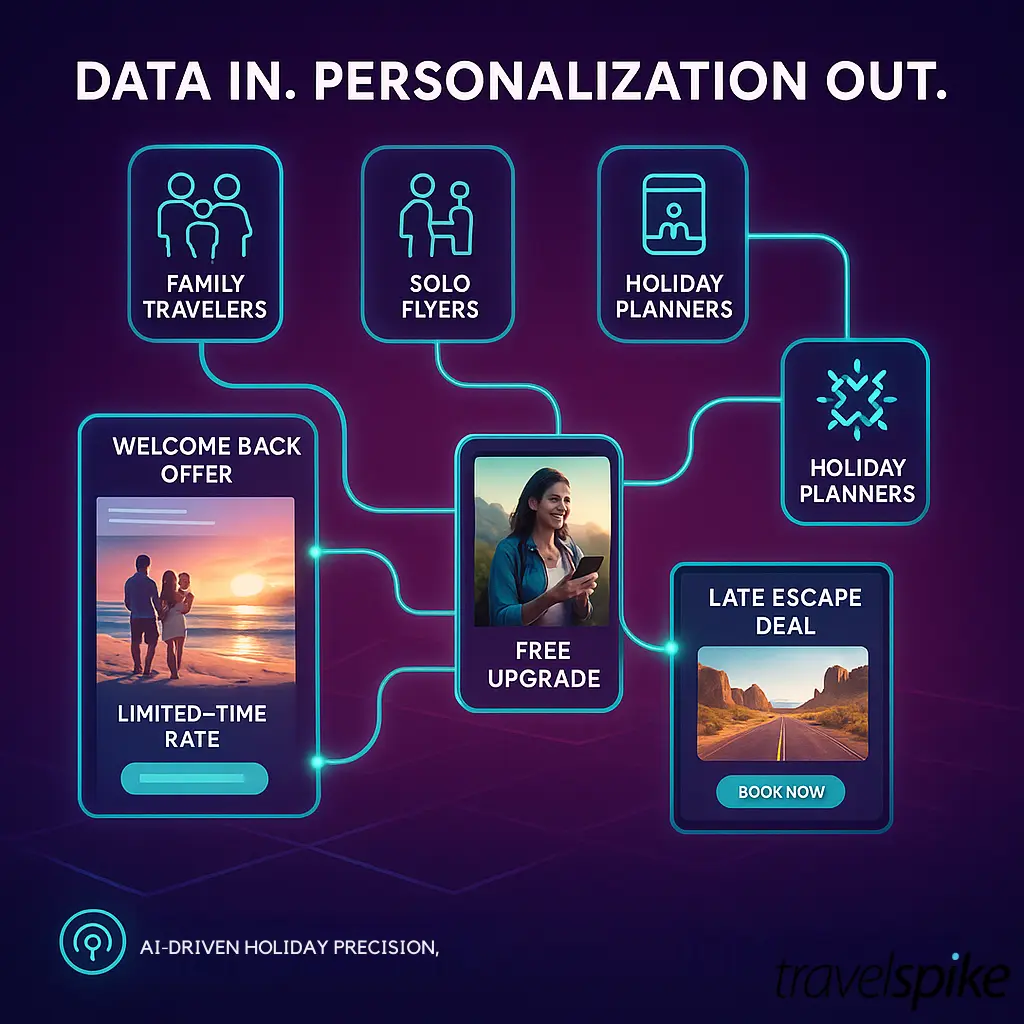
Tactic 3: Harness First-Party Data to Personalize Outreach
When competition for travelers’ attention is fierce, personalization can be your differentiator. Tap into your first-party data (website behavior, past guest profiles, email engagement) to tailor holiday marketing messages to each segment. Did a family travel with you last Christmas? Send them a “Welcome back for another holiday!” note with a special rate. Noticed someone abandon a booking for Thanksgiving week? Use retargeting ads or a gentle email reminder with an added incentive (“Secure your Thanksgiving trip now and enjoy a free upgrade – limited time!”).
Being data-driven also means segmenting by behavior and intent. For example, segment out the extreme last-minute bookers (those who booked within a week in prior years) and hit them with “late escape” deals in mid-December. Conversely, identify early planners (some people did book winter holidays in October) and target them in November with ancillary offers (like pre-booking airport transfers or New Year’s Eve event tickets at the destination). The more you can mirror the customer’s planning cycle, the more relevant your messaging will be.
If your team lacks the capacity for deep data mining, consider partnering with travel adtech experts. TravelSpike’s Travelogic™ methodology, for instance, uses travel data to create custom audience segments and predictive models. That kind of intelligence can automatically target “family road trippers” versus “solo flyers” with different creatives, or adjust bidding strategies if certain traveler types suddenly spike in activity. The result is higher conversion rates and more efficient spend – crucial in a season when every conversion could be hard-won.
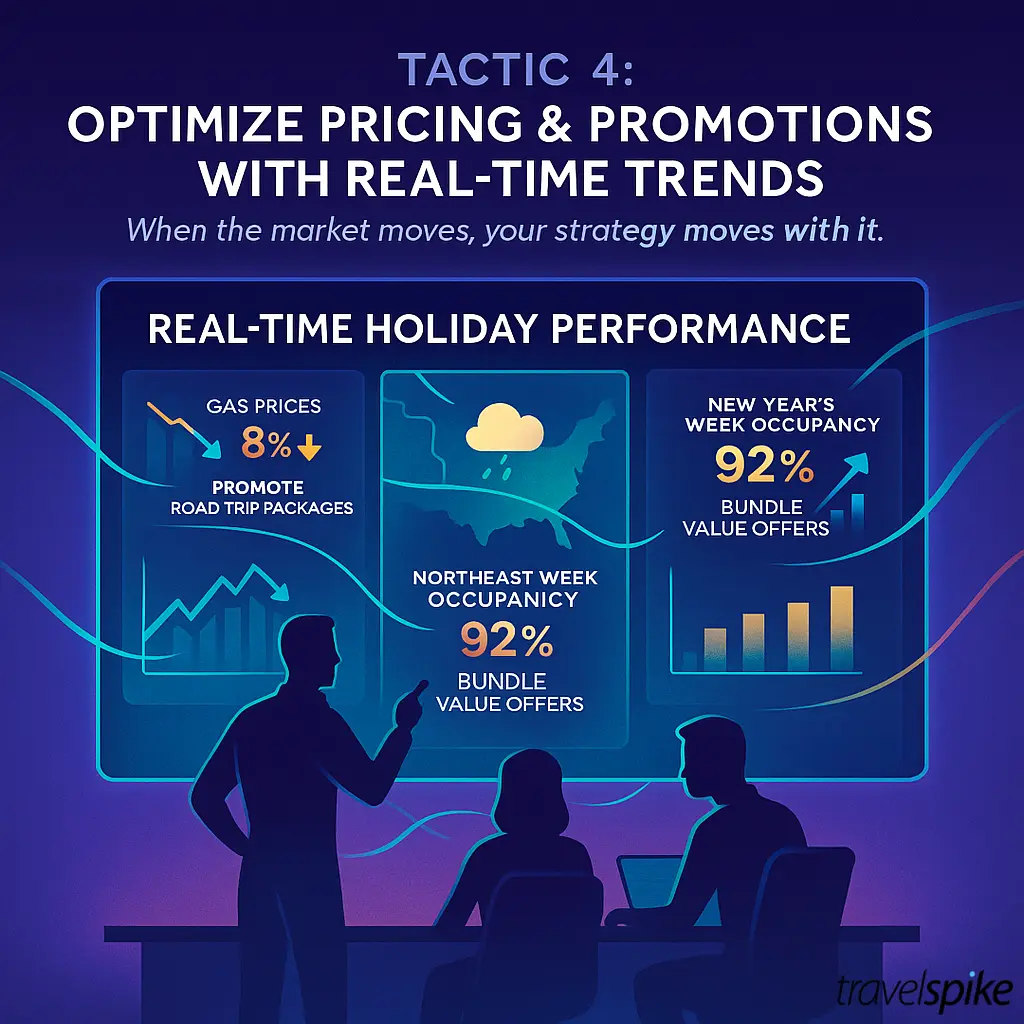
Tactic 4: Optimize Pricing and Promotions with Real-Time Trends
Holiday travel pricing is notoriously volatile. Stay nimble by aligning your pricing and promotions with real-time market trends. If bookings are pacing slower than expected for a certain week, introduce a timely promotion (like waiving resort fees for any bookings made in the next 3 days). Conversely, if demand is red-hot (say your advance bookings for New Year’s are nearly full), capitalize with value-add bundles rather than discounts: travelers will pay a premium, but you can enhance their experience (throw in New Year’s party tickets or a spa credit) to justify the rate and build satisfaction.
Also monitor macro trends: fuel prices, weather forecasts, and news events can all sway travel decisions. In late 2024, for example, U.S. gas prices dipped under $3/gallon around Thanksgiving, the lowest in years. A similar dip in 2025 could further encourage driving – a trigger to perhaps promote road-trip packages or partnerships with gas stations. Or, if a winter storm is predicted to hit the Northeast right after Christmas, a Florida DMO might immediately ramp up ads about sunny getaways and flexible “storm relief” cancellation policies to entice storm-weary Northerners.
Data should guide these moves. Set up dashboards or alerts for key metrics (website searches, booking engine look-to-book ratios, etc.). When you spot an anomaly – a surge from a particular city, a drop in conversion on a certain date – dig in and respond with a tactical adjustment. Many travel brands now employ war rooms during peak seasons, where marketing, revenue management, and operations collaborate daily on pricing and promotion decisions. This cross-functional, data-sharing approach ensures you’re not flying blind through the frenetic holiday period.
Win the Holiday Season with Confidence and Precision
The 2025 holiday travel surge represents a massive opportunity for those travel marketers ready to meet the moment. By understanding the nuances of this year’s traveler behavior – last-minute bookings, drive-centric trips, deal-seeking mindsets – and deploying data-driven tactics in response, you can outmaneuver the competition and capture a larger share of the demand. Every tactic boils down to being proactive and responsive: use data to anticipate needs, and be prepared to pivot as trends evolve through the weeks of Thanksgiving, Christmas, and New Year’s.
This season will reward the prepared and the nimble. Now is the time to put these data-driven strategies into action. Audit your current holiday marketing plan – are you leveraging your data fully? Are you ready for the last-minute rush? If you need expert support, consider partnering with a travel marketing specialist like TravelSpike. With our Travelogic™ data engine and performance-focused approach, we help brands stay one step ahead of traveler trends and capture demand in real time. The 2025 holiday travel boom is here – equip your team with the insights and agility to win the season, delight your travelers, and finish the year stronger than ever. Happy (data-driven) holidays!