
Fall 2025 Travel Trends: How Marketers Can Capitalize on Autumn Travel Demand
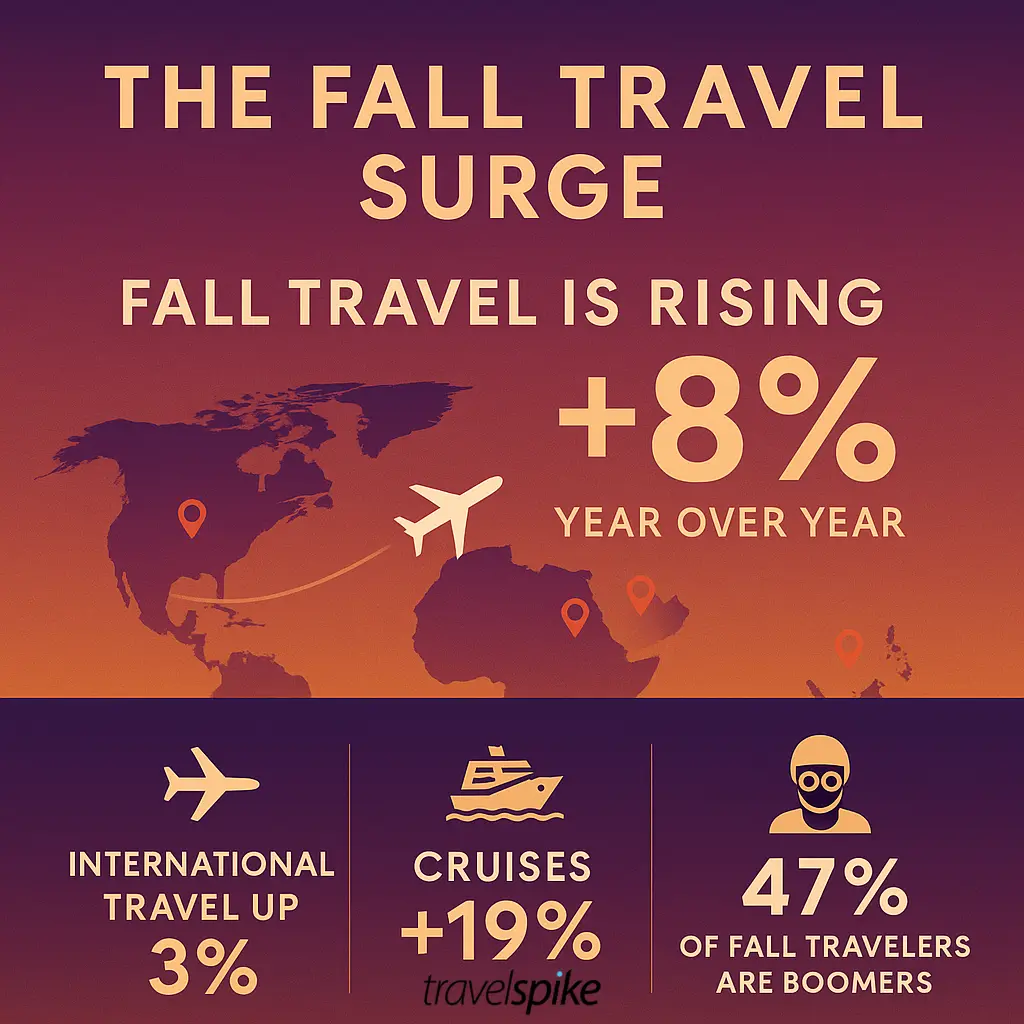
As summer fades, the travel industry isn’t slowing down in fact, fall travel is on the rise. Autumn has traditionally been a shoulder season, but recent trends show robust growth in travel during September through November. In 2024, overall travel was up 8% in the fall compared to the prior year. Americans are seizing the “back-to-travel” spirit post-pandemic, and with kids back in school, many see fall as the ideal time for getaways. Fall is the ideal time to travel, travelers enjoy fewer crowds and better deals in autumn, especially for international trips. For travel marketers, these trends signal an opportunity to adjust strategies and capture the growing autumn tourism market.
Autumn Travel Boom: Who’s Going Where?
According to AAA booking data, demand for both flights and cruises jumps in the fall. In 2024, domestic flight bookings for fall were up about 1% and international flights up 3% year-over-year – modest but notable growth. Cruises saw even bigger surges (19% increase in domestic cruise bookings) as travelers take advantage of cooler weather and seasonal cruise itineraries. Notably, older travelers (Boomers) are leading the charge on fall travel. Boomers made up 47% of fall travelers in 2024, a big jump from 34% the year before. This suggests that retirees or empty-nesters, freed from school schedules, are embracing autumn trips in large numbers. In contrast, Gen Z’s share of fall travelers actually dipped slightly, perhaps because younger folks took their “big trips” in summer.
Where are people going in the fall? AAA’s top fall destinations for 2024 were led by Orlando (no surprise, as families squeeze in Disney trips and Food & Wine at Epcot after summer). Other popular U.S. spots included Boston and Denver, likely boosted by leaf-peeping tourism and outdoor fall activities. In fact, classic “fall foliage” regions are booming – New England, the Rocky Mountains, and Pacific Northwest all saw spikes in demand from travelers seeking autumn colors. Internationally, Europe is a star for fall: Italy became the #1 overseas destination in fall 2024, with 12% of American travelers heading there (surpassing even Mexico). Historic cities like Rome, Paris and London made AAA’s top international list as well. The appeal is clear – milder weather, cultural festivals, and fewer crowds than summer. Travel costs have remained relatively stable too; fall flight and hotel prices in 2024 were on par with the previous year, so travelers aren’t feeling priced out.
These trends provide rich insights for marketers. If a huge chunk of your audience is taking fall cruises or Europe tours, your campaigns and content can reflect that. Highlight trending destinations (e.g. “Experience Italy’s autumn truffle season” or “New England fall road trips”) in your fall marketing creative. Knowing that Boomers are a big fall segment, you might lean into channels that index higher with older audiences (like Facebook or travel TV programming) and messaging that resonates (comfort, bucket-list experiences, multigenerational trips). Meanwhile, don’t ignore younger travelers entirely – many still travel in fall, often chasing unique experiences like Halloween events or off-peak adventures.
Marketing to the Fall Traveler
To capitalize on autumn travel interest, emphasize the unique perks of fall getaways. This is where an innovative content strategy pays off. Consider running campaigns themed around fall’s attractions: brilliant foliage drives, harvest festivals, wine tasting tours, football weekend trips, or spooky Halloween destinations. The key is to tap into what makes fall travel enticing. For example, an airline might advertise “Lower Autumn Airfares – Travel after summer and save” if data shows prices dip slightly in October. A destination marketing organization could launch a social media series on “Top 10 Fall Photo Ops” to lure Instagrammers with autumn scenery. Since crowds are smaller in fall, marketers can play that up: “Visit Europe in the fall – no lines, no heat, just culture.” This speaks to experienced travelers who deliberately avoid peak season. Indeed, many fall travelers relish smaller crowds and cost savings on everything from gas to hotels.
Timing and targeting are also important. The fall travel window (Sep–Nov) is relatively short, so use urgency in your marketing – “Last chance for a fall escape!” in late October, for instance. Leverage last-minute booking behavior: a sizable share of travelers book within 5 weeks of travel in the holiday season, and similarly some fall trips are spontaneous. Flash sales or 48-hour fall discounts can capture those impulse travelers. At the same time, segment your audiences: older travelers planning leaf-peeping tours might be researching weeks in advance (target them with early fall campaigns), whereas young professionals might book a quick weekend trip on a whim (target them with retargeting ads and email in mid-fall when they start feeling the “need a vacation” itch).
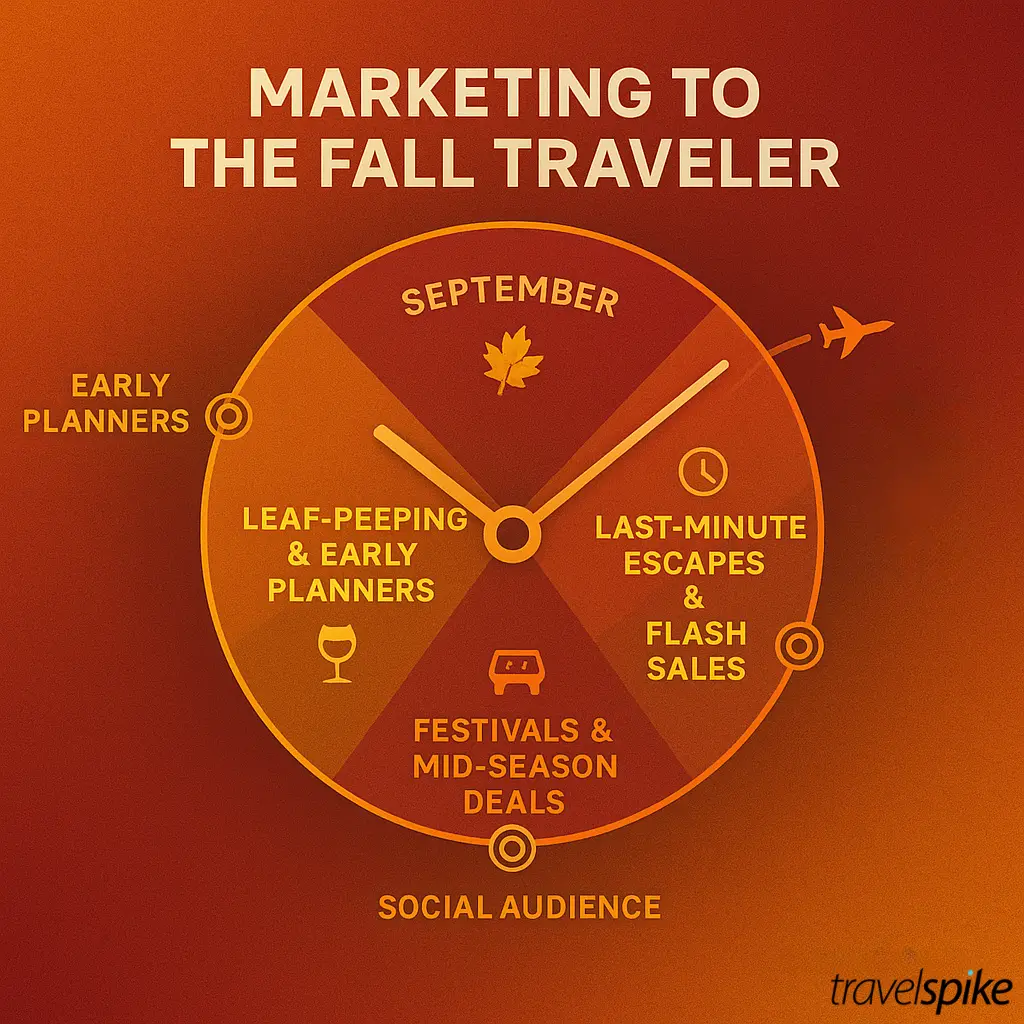
Marketers should also tailor their channels. Social media is a powerful tool for fall travel inspiration – think gorgeous autumn visuals on Instagram or TikTok. User-generated content can be gold here: encourage past fall travelers to share their best fall photos or travel tips with a branded hashtag. On the flip side, email newsletters in early fall can remind loyalty program members of expiring points or fall promotions, nudging them to take a trip. And don’t overlook traditional mediums; for example, outdoor billboard or radio ads in September can catch commuters’ attention with “fall break” ideas (especially effective for regional drive destinations).
Lastly, consider partnering with travel-specialist ad networks or data platforms. These can help identify people actively seeking fall trips. TravelSpike, for instance, focuses on reaching “Highly Active Travelers” and can target those showing intent to travel in the near term. By tapping into such networks, your fall-themed ads for, say, a Napa Valley wine tour package could be served to users who have been reading travel blogs or browsing flight options recently. In summary, fall is no longer an off-season – it’s peak opportunity for innovative travel marketing. Brands that adjust their messaging to the season, leverage the latest traveler data, and celebrate what’s special about autumn travel will harvest excellent results this fall.