
DCO in 2026: How Travel Brands Win Big Event Demand Without Bigger Budgets
Spring break and summer 2026 won’t behave like a normal season. It’s not just “peak travel”, it’s peak travel stacked on top of tentpole demand.
You’ve got:
- spring break planning windows compressing and shifting earlier,
- summer leisure surging as usual,
- the 2026 FIFA World Cup pulling global and domestic travel into North America,
- and America 250 creating a year-long wave of events, heritage trips, and “once-in-a-generation” travel reasons.
Here’s the problem: most travel campaigns still ship one set of creative, one message, and one landing path, and then hope targeting does the heavy lifting.
In 2026, targeting alone won’t be enough. Demand will fragment by who, why, when, and what event is driving the trip. The brands that win won’t be the ones who spend more. They’ll be the ones who adapt faster.
That’s what Dynamic Creative Optimization (DCO) is built for.
But not the watered-down version of DCO that just swaps a headline. The 2026 version of DCO is bigger:
DCO becomes a real-time “trip assembler”, matching each traveler to the right reason-to-go, the right itinerary angle, the right offer, and the right timing before they bounce.
Below is how to think about DCO strategically for spring break, summer, World Cup, and America 250 in a way that feels innovative, not tactical.
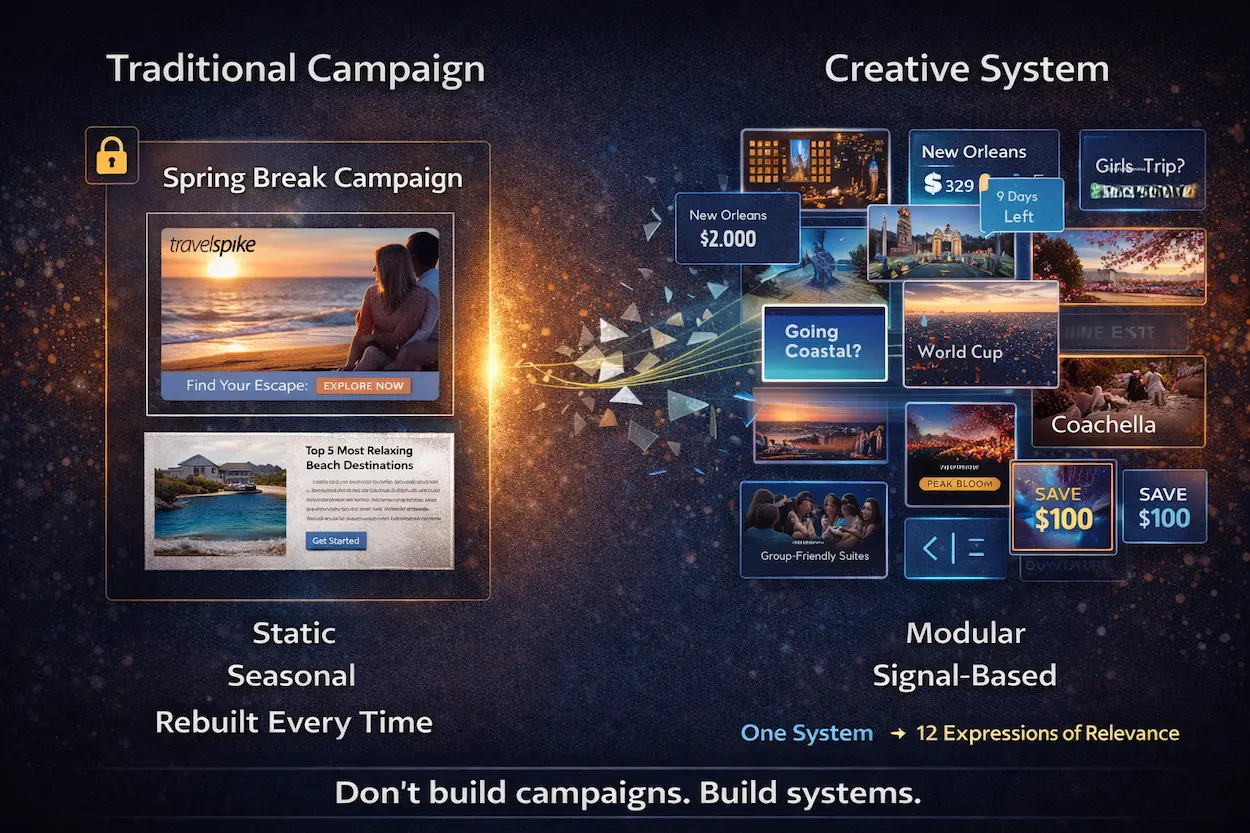
1) Stop Building “Campaigns.” Start Building a Creative System.
A traditional campaign assumes stability:
- one seasonal concept
- one hero video
- one set of banners
- one landing page
2026 won’t reward stability. It will reward responsiveness.
DCO lets you move from a campaign mindset to a creative system:
- a set of modular assets
- assembled dynamically based on traveler signals
- updated without constantly rebuilding everything
If your creative system can swap the story based on intent, you don’t need 12 separate campaigns for spring break, summer, World Cup, and America 250. You need one system that can express 12 versions of relevance.
This is the difference between “running DCO” and actually using DCO as a competitive advantage.
2) Optimize to the Reason-to-Go, Not the Destination
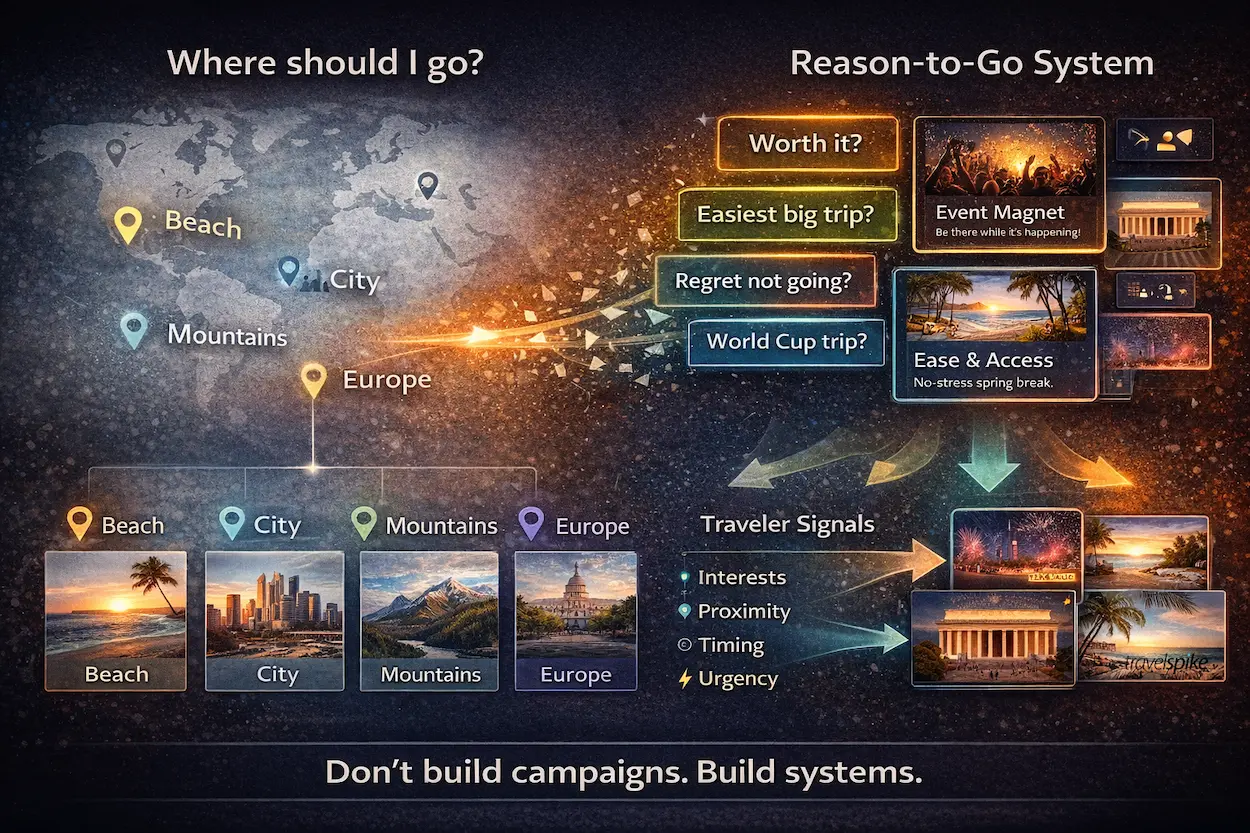
Destinations don’t win because they exist. They win because they attach themselves to a reason.
Travelers aren’t thinking:
“Where should I go?”
They’re thinking:
- “Where can we go that’s worth it?”
- “What’s the easiest big trip we can pull off?”
- “What’s the trip we’ll regret not doing?”
- “How do we make the World Cup trip happen?”
- “What America 250 events are actually worth traveling for?”
Your DCO strategy should map creative modules to reason-to-go archetypes, like:
- Event Magnet: “Be there while it’s happening.”
- Heritage / History: “Do the iconic trip this year.”
- Ease & Access: “No-stress spring break.”
- Group Momentum: “Plan together, travel together.”
- Flex Value: “Peak moments, smart timing.”
Then DCO assembles the version that fits the traveler’s signals: their interests, proximity, timing, and urgency.
This is also where Travelogic™-style intent becomes useful without being loud: if you already know what someone is leaning toward, DCO can serve the right reason-to-go without guessing.
3) Treat Spring Break and Summer as Different Psychologies
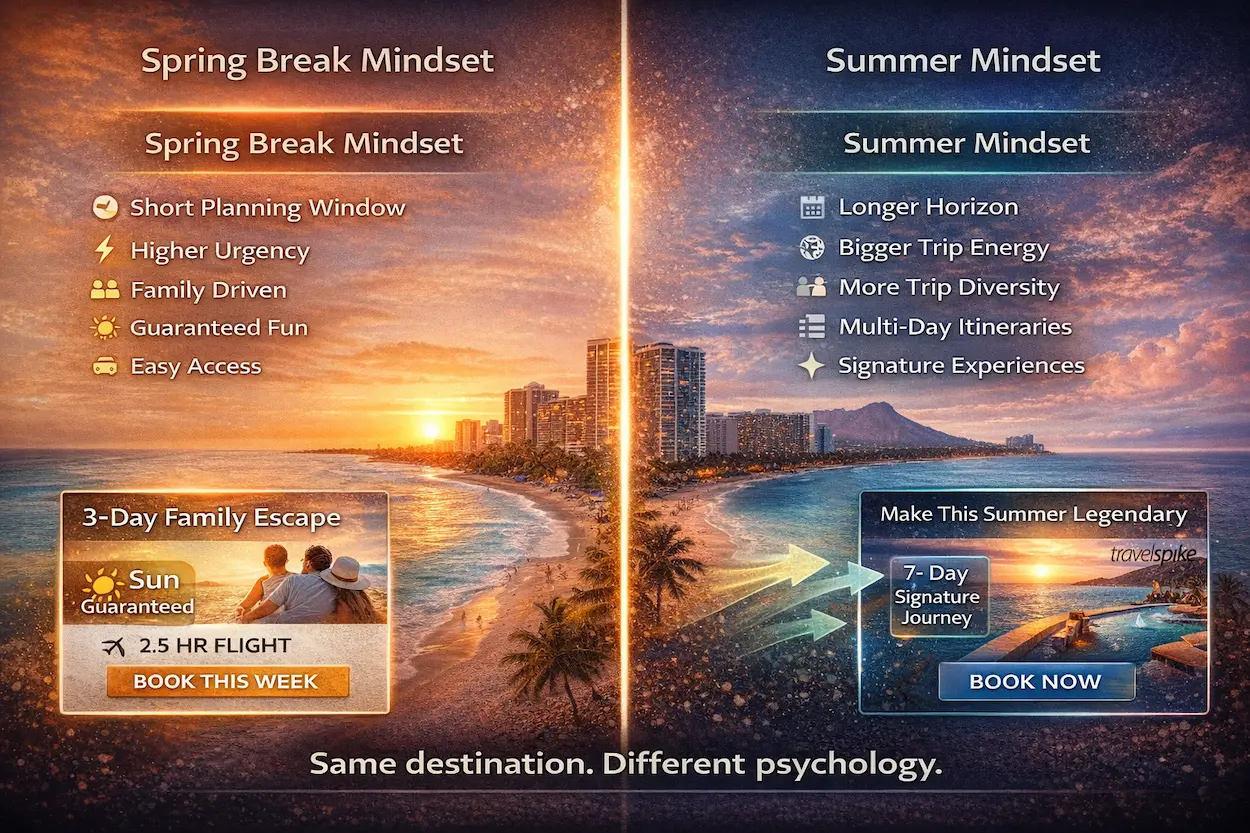
Spring break isn’t just “summer lite.” It’s a different decision framework.
Spring break behavior:
- shorter planning window
- higher urgency
- more family-driven
- more “easy” and “guaranteed fun”
- less tolerance for friction
Summer behavior:
- longer horizon (or earlier pre-booking)
- more trip diversity (families, couples, groups)
- higher willingness to compare options
- more openness to “big trip” narratives
Your DCO modules should reflect this difference:
- Spring break modules emphasize simplicity, quick itineraries, family-friendly anchors, weather confidence, and drive/fly ease.
- Summer modules emphasize “big trip energy,” multi-day itineraries, signature experiences, and planning momentum.
Same destination. Same brand. Different psychology.
DCO is how you respect that psychology at scale.
4) Build World Cup Creative Like a Travel Product, Not an Awareness Campaign
The World Cup isn’t a theme. It’s a travel product category.
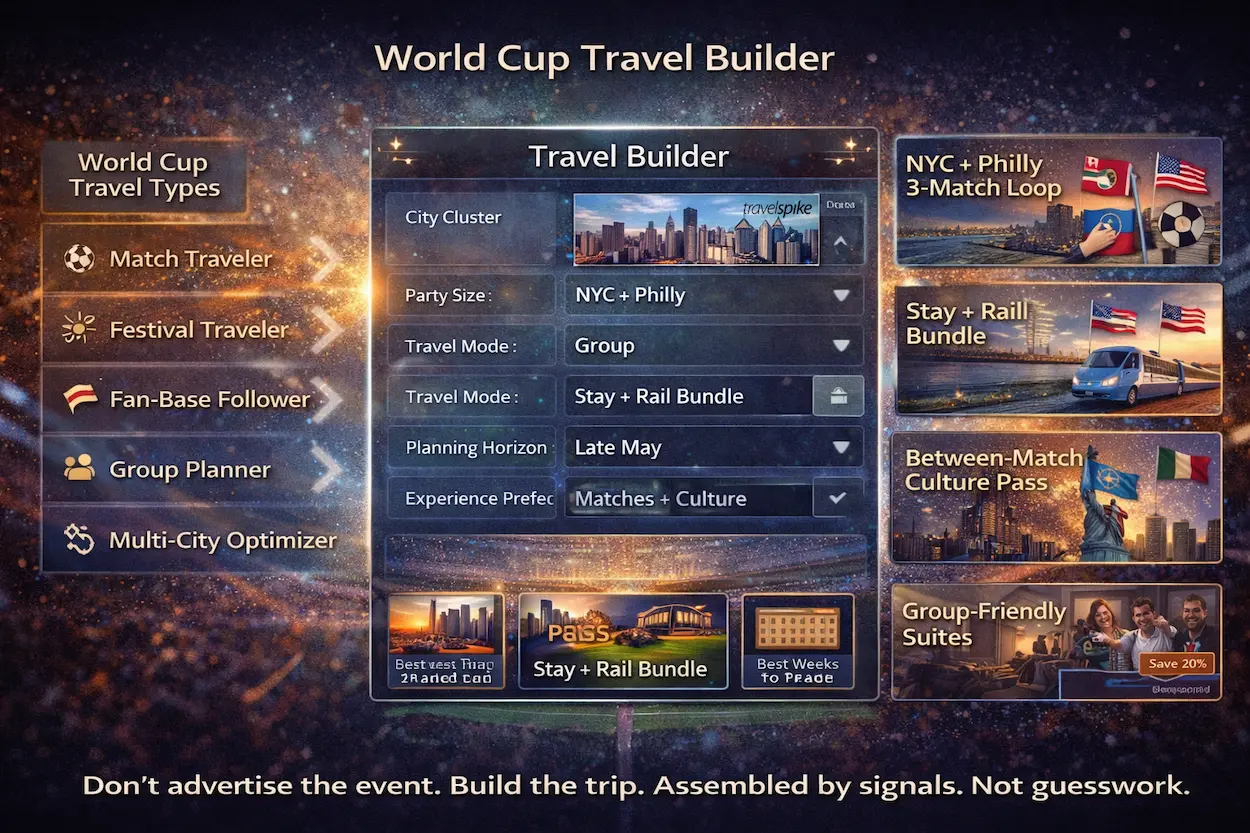
Travelers will segment naturally into:
- Match travelers (specific games/cities)
- Fan-base travelers (follow their team)
- Festival travelers (the atmosphere more than the match)
- Group planners (friends/family coordinating)
- Multi-city optimizers (itinerary builders)
If your creative treats all of them the same, you’ll waste spend and miss the intent.
DCO should assemble World Cup creative by:
- city cluster (closest host city, multi-city loop)
- party size (solo vs group)
- travel mode (drive, fly, rail)
- planning horizon (now vs later)
- experience preference (matches, culture, nightlife, outdoors)
And your offers shouldn’t be generic. DCO can dynamically surface:
- “Stay + transit bundles”
- “3-day city itineraries”
- “Between-matches experience packs”
- “Best weeks to book / travel”
This is where DCO becomes an itinerary engine, the ad doesn’t just advertise the event, it helps the traveler assemble the trip.
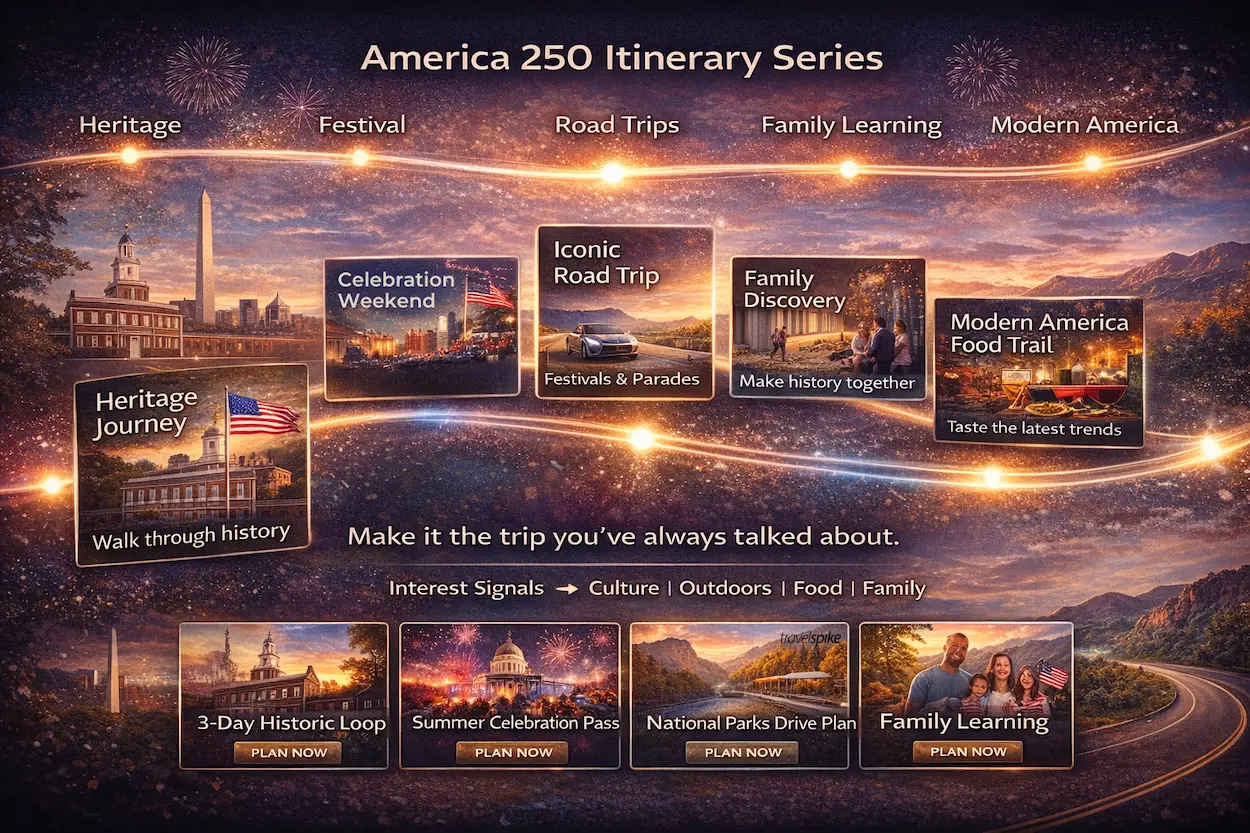
5) Make America 250 Feel Like a Once-in-a-Generation Itinerary Series
America 250 will be a long wave of celebrations, not one moment. That’s an advantage if you treat it correctly.
The winning approach won’t be a single “America 250” creative. It will be a series of modular storylines that DCO can rotate based on what resonates.
America 250 modules could include:
- Heritage trips (historic districts, landmarks, museums)
- Festival + event travel (parades, concerts, commemorations)
- Iconic road trips (drive markets + scenic routes)
- Family learning trips (kids-friendly + educational framing)
- “Modern America” angles (food scenes, arts, neighborhoods)
The trick is not to make it feel like a history lesson. Make it feel like permission:
“This is the year to do the trip you’ve always talked about.”
DCO can personalize the narrative based on interest signals (culture, outdoors, food, family) and make America 250 feel relevant, not generic.
6) The Real Innovation: DCO as a Sequenced Journey, Not a Single Ad
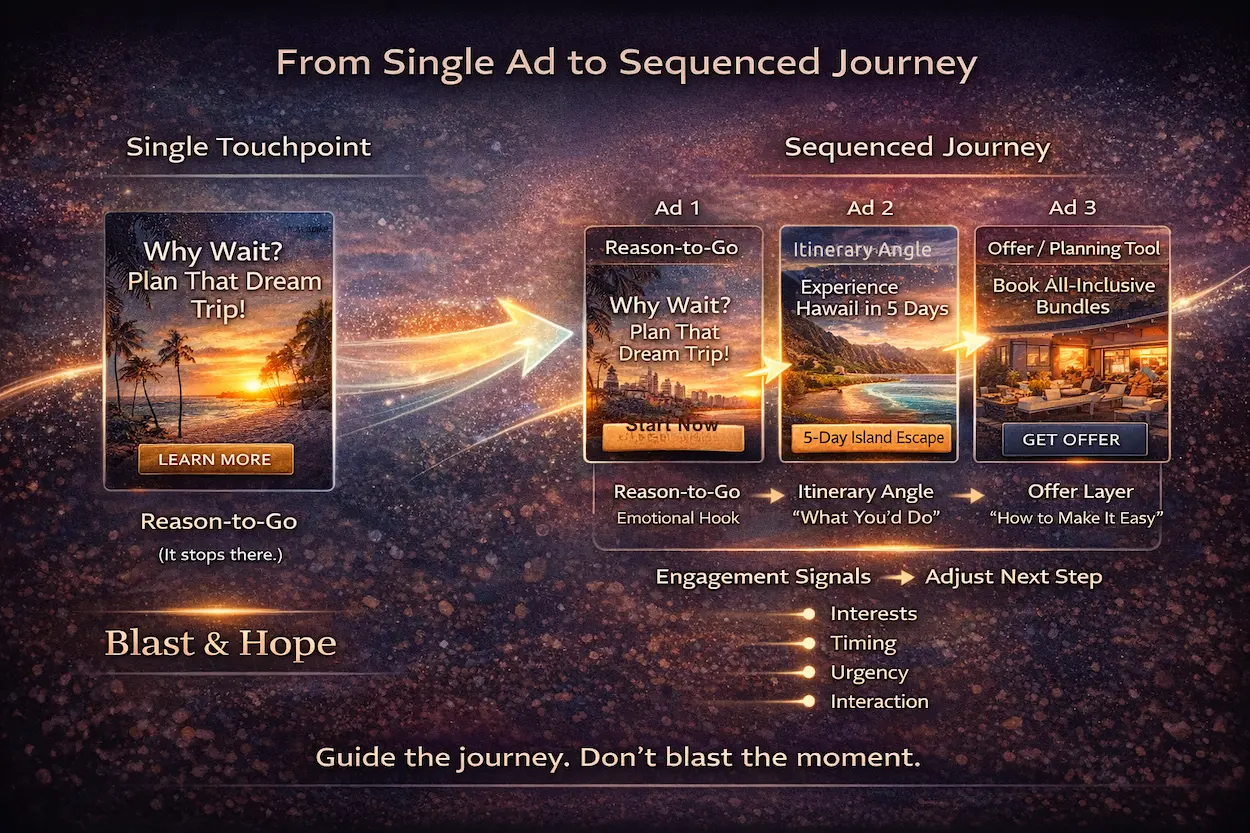
Most brands use DCO inside one touchpoint. The more innovative use in 2026 is sequencing:
- Ad 1: reason-to-go + emotional hook
- Ad 2: itinerary angle (what you’d do)
- Ad 3: offer or planning tool (how to make it easy)
That sequence can adapt in real time based on what the traveler engages with.
This is how you avoid the common 2026 mistake: blasting peak-season creative at everyone and hoping it lands.
Instead, you guide people toward the version of the trip they’re already leaning toward, and you do it with less waste.
Bottom line
Spring break and summer 2026 will reward brands that can move at the speed of demand, especially with the World Cup and America 250 amplifying travel intent in different directions.
DCO is the lever that makes that possible, not because it’s “personalized,” but because it turns your marketing into a system that can:
- adapt to traveler psychology,
- assemble itineraries and offers dynamically,
- and attach your brand to the reasons people will travel in 2026.
If 2026 is a year of tentpole travel, the winning creative won’t be louder, it’ll be more adaptive, more specific, and built to meet travelers where their intent is forming.