
Co-Op Travel Marketing: How Destination Partners Can Boost Reach and ROI Together
No travel marketer is an island. In an industry built on partnerships, think tourism boards teaming with airlines, hotels, attractions, and tour operators. It’s no surprise that co-operative marketing (“co-op marketing”) has emerged as a game-changing strategy. Co-op marketing is all about teaming up to do more with less. Imagine doubling your campaign’s audience reach without doubling your budget…that’s the promise of co-op marketing for the travel and tourism world.
What is Co-Op Marketing (and Who Is It For)?
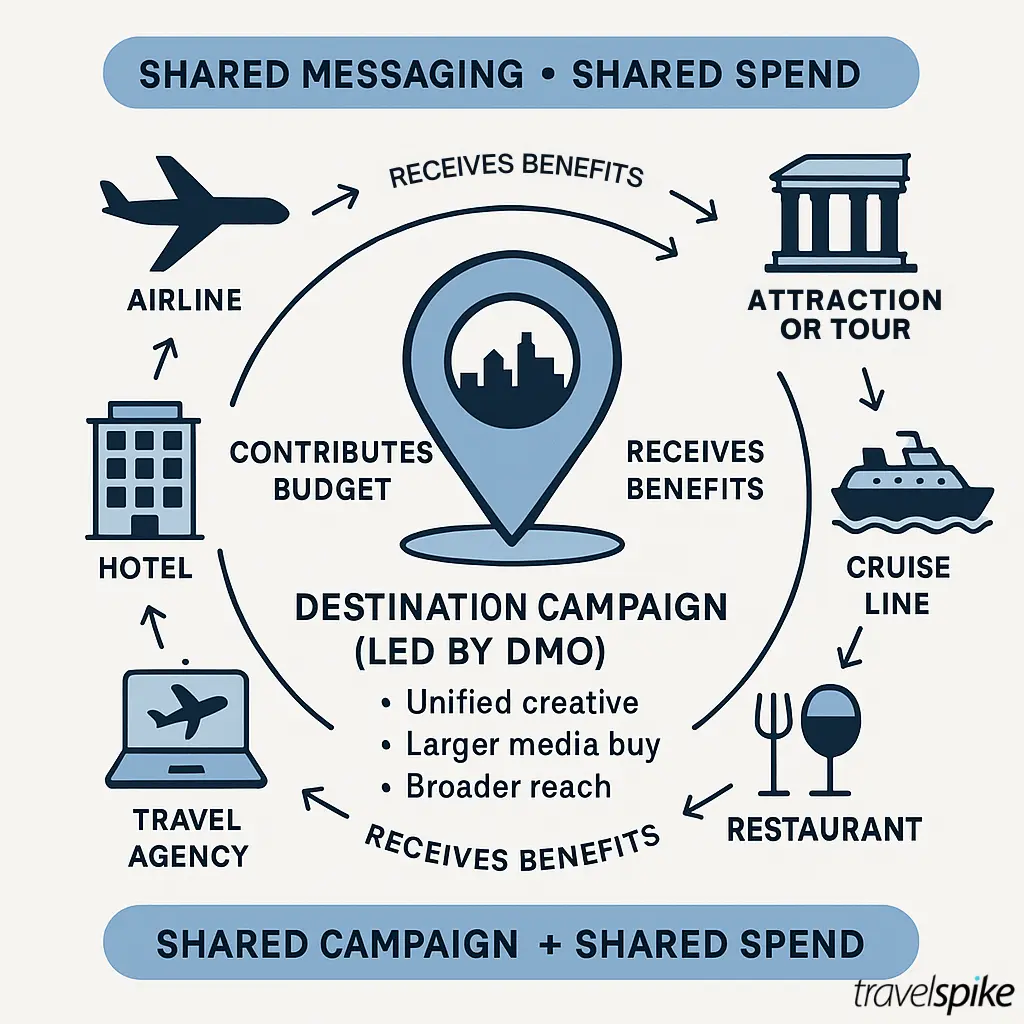
At its core, co-operative marketing is a partnership approach to advertising where two or more organizations share resources, costs, and campaigns to promote their offerings together. In the travel and tourism industry, this typically means multiple travel players banding together under a unified campaign. For example, a Destination Marketing Organization (DMO) might join forces with local hotels, attractions, airlines, or tour operators to pool their marketing budgets and speak with one voice. Instead of each business running its own smaller, separate ads, they cooperate on a bigger, bolder campaign that highlights the destination and the partners within it.
Such a co-op program is often hosted or led by a DMO or other umbrella organization, such as a state tourism board focused on promoting a destination (city, region, or country). That lead partner brings in others. Such as major hotel brands and airlines down to museums, tours and even restaurants, into a shared marketing initiative. Everyone pitches in budget or in-kind support, and in return everyone gets to ride the wave of a larger, more impactful campaign than they could afford alone. In practical terms, the DMO might handle the creative messaging and media buy, ensuring the campaign stays on-brand for the destination, while the participating businesses are featured or mentioned as part of the experience being promoted.
Who participates?
Co-op marketing in travel is wonderfully inclusive. Typical players include: Destination marketers (DMOs), tourism boards or city/state tourism offices often act as initiators because they benefit from overall destination visitation. Hotels and resorts join to fill rooms; attractions and tours join to sell tickets; airlines and cruise lines might join to increase passenger bookings tied to that destination. Even travel agents or tour operators can be part of co-ops, aligning package deals with the campaign’s message. Essentially, any stakeholder who profits from more people visiting a destination or booking travel experiences could be a co-op partner. By uniting, these stakeholders create a win-win: the destination gains appeal as a cohesive package, and each partner brand gains exposure to a wider audience of potential travelers drawn in by that collective appeal. Co-op marketing, in short, lets travel businesses pool together funds and messaging to bring in ideal travelers.
The Two Big Benefits of Travel Co-Op Campaigns
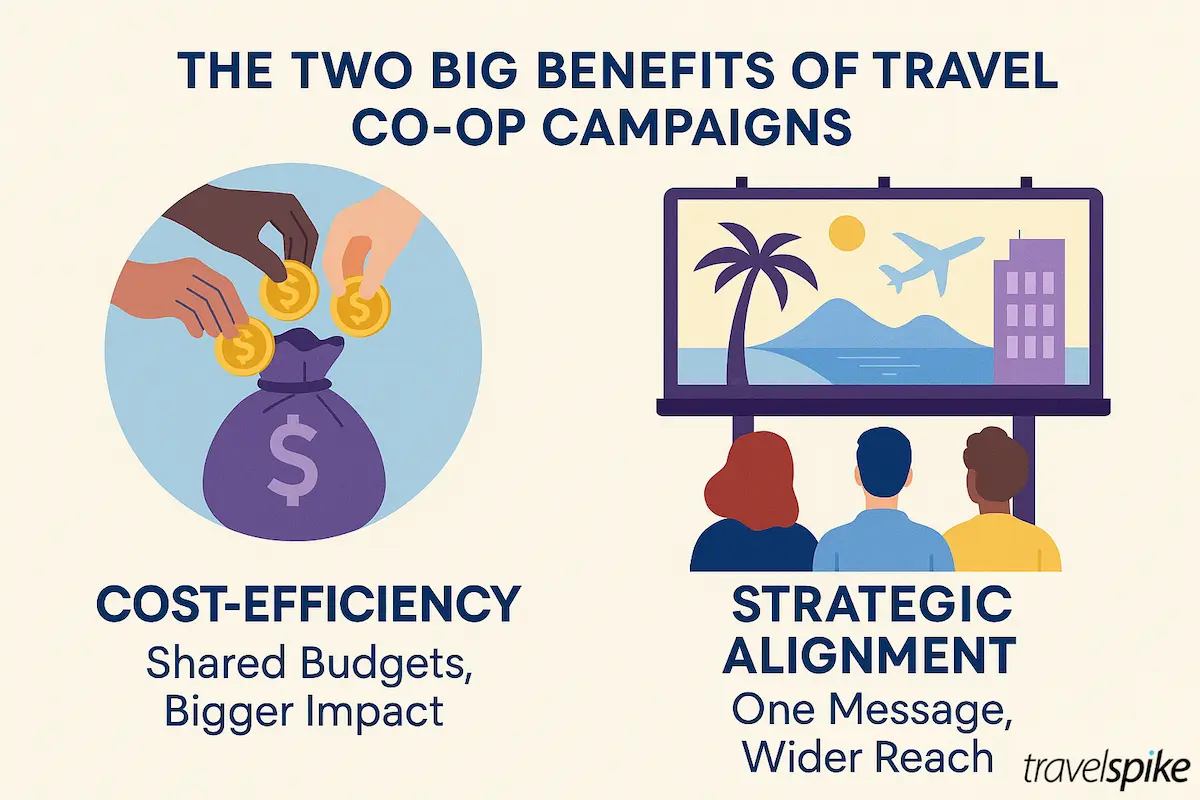
Why bother coordinating with other organizations when you could just run your own ads? Simply put, a well-run co-op campaign lets you punch above your weight. Let’s spotlight the two biggest benefits for travel marketers: cost-efficiency and strategic alignment.
- Cost-Efficiency – Shared Budgets, Bigger Impact: Marketing isn’t cheap, especially if you aim to reach national or international travelers. Co-op marketing tackles this head-on by splitting the costs among partners. Each participant contributes a portion to the ad spend, so no single brand bears the full burden. By pooling funds, the total budget grows, unlocking marketing opportunities that would be out of reach individually. Larger pooled budgets mean access to high-visibility channels, think prime-time digital placements, expansive video campaigns, or premium programmatic ad inventory. A smaller solo budget could never compete in that space. As a result, everyone gets more bang for each buck. In short, co-op marketing delivers economies of scale: when you buy ads in bulk together, you often get better rates and broader distribution, maximizing ROI for everyone involved.
- Strategic Alignment – One Message, Wider Reach: Beyond just saving money, co-op campaigns offer a strategic advantage that solo efforts can’t match: a unified, amplified message. By collaborating, partners can align their marketing under a single compelling storyline or theme – showcasing, for example, an entire destination experience rather than just one hotel or attraction. This shared messaging and branding creates a bigger impact on the audience. Travelers see a coordinated, consistent promotion wherever they encounter it (online, social, email, etc.), which builds stronger recognition and trust. Instead of fragmented ads shouting over each other, co-op partners speak in harmony, reinforcing each other’s offerings.
Strategic alignment also translates to audience scale. Each partner brings their own audience to the table, the destination has its fan base, the hotel has its loyal customers, the airline has its traveler list, and a co-op campaign cross-pollinates these groups. You’re not just marketing to your own followers anymore, but to each other’s followers as well, exponentially expanding your reach. This kind of cross-promotion means a destination ad might be seen via an airline’s newsletter, or a hotel deal might be pushed on the tourism board’s website. The outcome: a far wider net cast to capture potential visitors. In fact, in a recent survey 75% of tourism boards said the top benefit of co-op programs is the ability to reach wider audiences with stronger combined buying power. Which is essential for scale and impact that no single brand could achieve alone. And importantly, alignment doesn’t mean any brand gets diluted; with good planning, each partner’s identity (logos, messaging points) still shines through, but now in the context of a bigger narrative that resonates even more with travelers.
High-Impact Ways to Co-Op: Common Campaign Formats
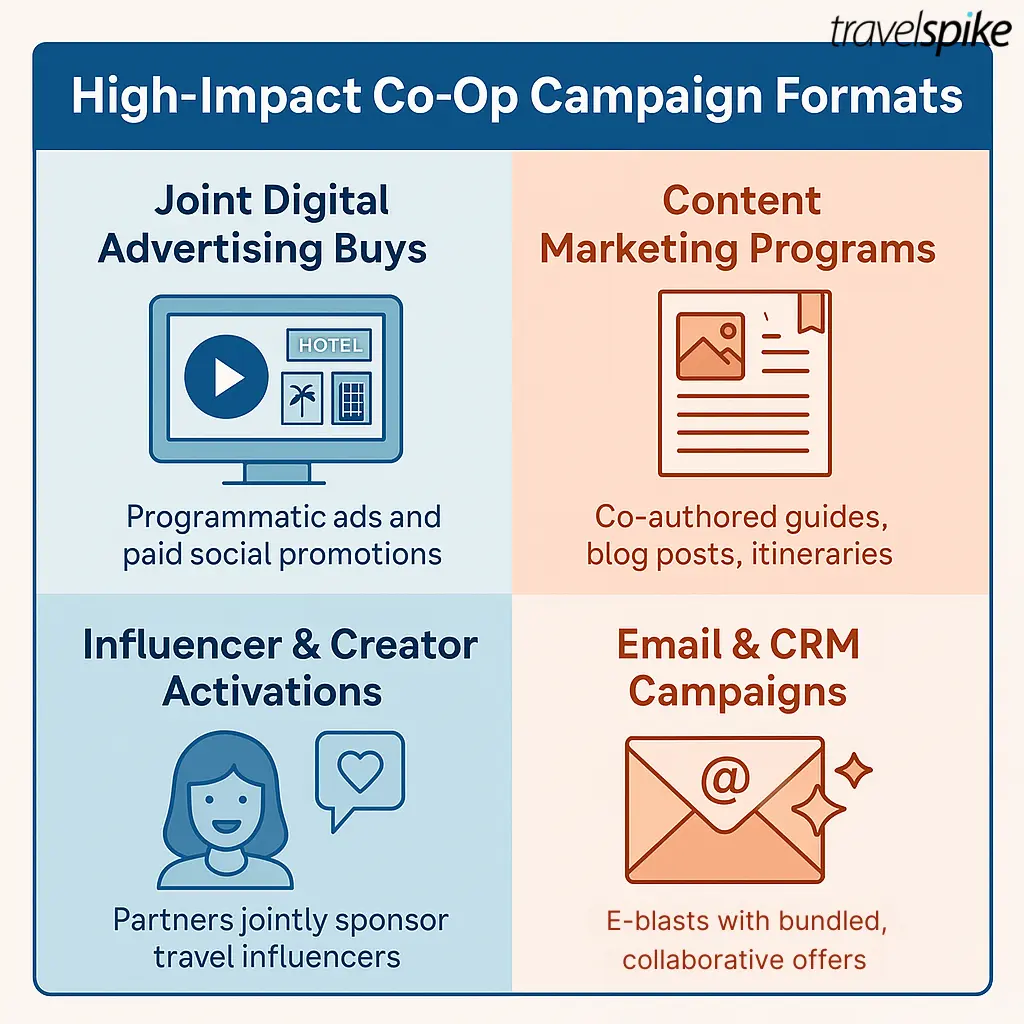
One reason co-op marketing is so exciting is the creative campaign formats it makes possible. When partners pool their resources, they can execute multi-channel campaigns that engage travelers at every touchpoint. Here are some of the most common (and effective) co-op campaign formats in travel:
- Joint Digital Advertising Buys: Perhaps the most popular co-op approach is running collaborative digital ad campaigns. Partners chip in to purchase online ad placements – from programmatic display ads on travel websites, to paid social media ads, to connected TV (CTV) targeting travel planners. These ads are often co-branded (e.g. a banner might feature a destination slogan alongside a hotel and airline logo) or follow a consistent design template. By buying as a group, co-op partners can afford premium inventory and larger-scale campaigns that ensure everyone gets seen. For example, a pooled budget might fund a high-impact video ad showcasing the destination with mentions of participating hotels and tours at the end.
- Content Marketing Programs: Content is king in travel marketing, and co-ops allow for richer content initiatives. This could include co-authored blog series, travel guides, or sponsored articles that feature multiple partners. For instance, a DMO might publish a “3-Day Getaway Guide” to the city, highlighting a partner hotel, a local attraction, and a featured tour, all woven into a narrative that inspires readers. Each partner contributes either funding or content (like insider tips or images) and all are prominently featured.
Similarly, co-op content programs might involve creating downloadable itineraries, e-books, or even video series (like a mini documentary of the destination) that incorporate several brands. The benefit is a deeper storytelling vehicle than a banner ad partners can collectively educate and inspire travelers while subtly promoting their services. And because costs are shared, you can invest in higher production value: professional writers, photographers, or videographers who make the destination and partners shine. Co-branded storytelling like this not only drives engagement but ensures the marketing message is consistent across channels.
- Influencer & Creator Activations: Influencer marketing has exploded in travel, and co-ops are leveraging it in creative ways. In a co-op influencer campaign, partners jointly sponsor a travel influencer (or a team of content creators) to experience the destination and showcase all their brands in one trip. For example, a tourism board, resort, and theme park might co-host a family travel influencer for a week – the influencer’s posts and videos will highlight flying Airline X to get there, staying at Hotel Y, and visiting Attraction Z, all under the campaign’s hashtag. Each partner gets exposure through the influencer’s authentic storytelling, at a fraction of the cost it would take to hire the influencer solo for each brand. Influencer co-ops can massively amplify reach and give campaigns a relatable, human voice. They also yield a library of user-generated style content each partner can reuse. Many DMOs have found that collaborating with influencers and content creators brings a fresh perspective and expanded reach to their joint campaigns. It’s a win-win: the influencer gets a more comprehensive story to tell (making their content richer), and the partners split the bill while enjoying the social media buzz across multiple audiences.
- Email & CRM Campaigns: Another effective format is co-op email marketing. Here, one partner’s established email list can be used to promote the others in a coordinated way. For instance, a DMO might send a dedicated co-op e-blast to its subscriber base showcasing a seasonal package deal that includes a partner airline discount, a hotel promo code, and an event ticket. Or partners might do a series of cross-promotional newsletter features – one week the attraction is highlighted in the hotel’s newsletter, next week the hotel deal is highlighted in the DMO’s newsletter, and so on. Email campaigns leverage the trust and attention each brand already has with its customers, transferring some of that goodwill to the co-op partners. With careful planning, you can segment audiences so the content is highly relevant (targeting, say, past visitors of the destination with a “come back and save” collaborative offer). Like other channels, splitting the effort makes it easier to design attractive, professional emails and potentially use a fancier CRM platform or data tool than a single partner might invest in alone. The result is wider reach into engaged inboxes and often a measurable boost in conversions, since the audience is already warm to at least one of the brands.
(And that’s not all – co-op campaigns can also extend to channels like out-of-home billboards or airport signage featuring joint promos, trade show collaborations, multi-partner booking bundles on OTAs, and more. The key is a unified approach across whatever channels make sense, fueled by shared investment.) In practice, the best co-op campaigns are multichannel – using a mix of paid and owned media like social, search, video, influencer, email, and display to surround the traveler with consistent, collaborative messaging.
Clearing the Hurdles: Addressing Co-Op Challenges & Misconceptions
Co-op marketing sounds great and it is, but any collaboration comes with questions and potential pitfalls. As a savvy travel marketer, you might be thinking: “This all sounds complicated. How do we ensure it’s fair? How do we measure success for everyone? Will my brand get lost in the mix?” These are valid concerns. Let’s address some common challenges and misconceptions around co-op marketing, and how you can overcome them (often with the help of modern tools and data strategies):
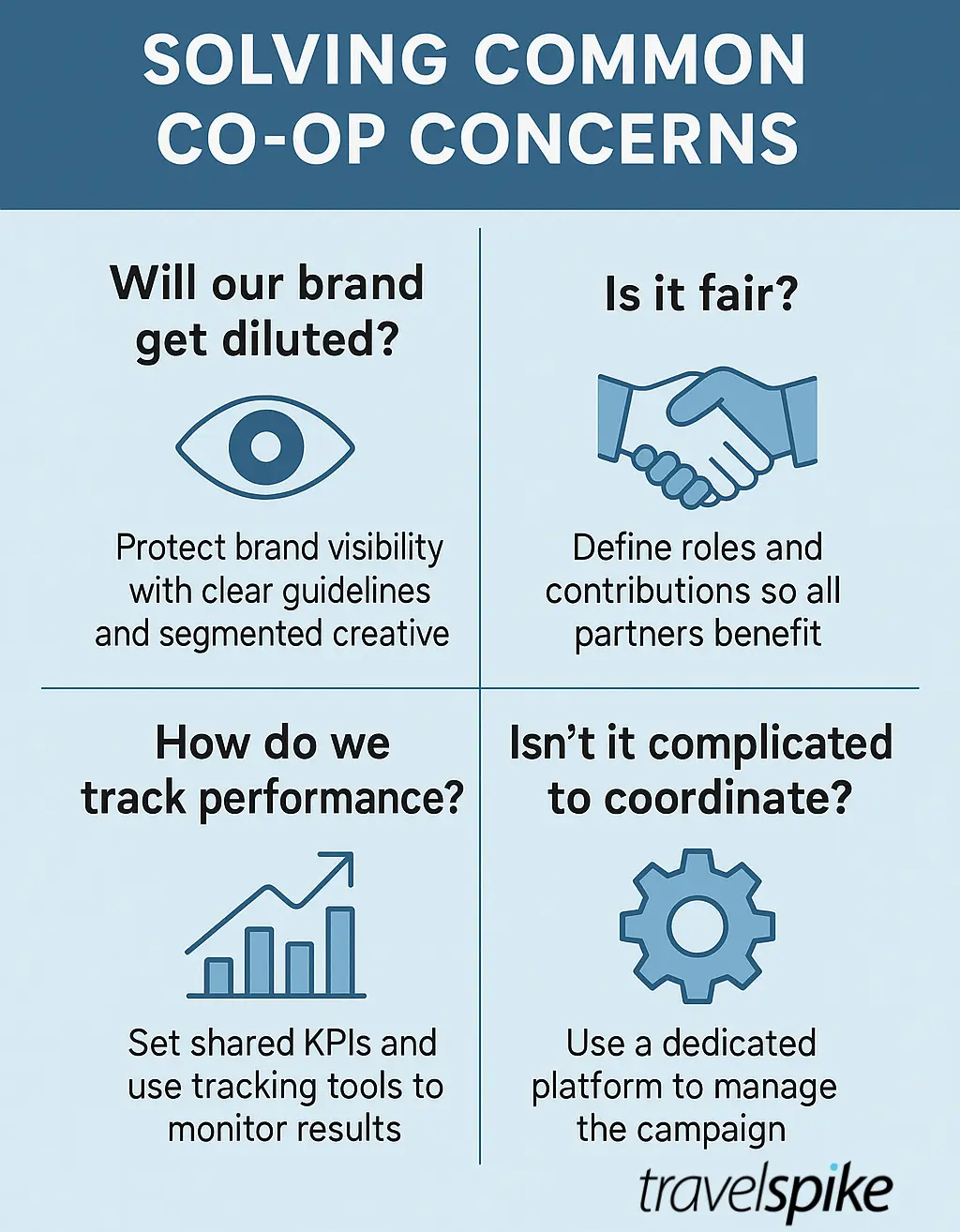
- “Will our brand get diluted or lost?” – Some partners worry that joining a group campaign means their individual brand won’t shine as bright. After all, if five logos share one ad, won’t it be cluttered? The truth is, a well-designed co-op program actually protects and even enhances brand integrity. Clear agreements and brand guidelines up front ensure every participant’s logo, name, and unique selling points are presented appropriately (e.g. determining logo sizes, messaging tone, etc.). In fact, co-op arrangements often require brands to adhere to a high standard of consistency, avoiding off-brand messages that can prevent brand drift. Each brand is still distinctly recognizable, just now associated with a bigger story that can elevate its appeal. Additionally, co-op campaigns can segment creative to spotlight each partner in turn: for example, rotating which partner is foregrounded in different ads or social posts. Advanced marketing platforms even allow dynamic creative optimization, where different audience segments see different partner highlights, ensuring relevancy. Far from diluting your brand, a co-op done right can boost your credibility by linking you with other reputable brands and a cohesive destination message. The key is collaboration in the creative process, all partners should review and agree that the campaign represents them well. When that happens, everyone’s brand emerges stronger, not weaker, through the power of association.
- “Is it fair? Are we getting as much as we give?” – Fairness is a top concern, especially when partners differ in size. Smaller players might fear a big brand will hog the limelight, while bigger sponsors want to know their larger investment is justified by results. The solution is to define roles, contributions, and expectations clearly from the start. A solid co-op marketing agreement or plan should spell out who contributes how much budget, what deliverables or placements each partner is guaranteed, and how success will be measured. It’s not always an even 50/50 split, often larger organizations put in more funding while smaller ones contribute in-kind or a smaller buy-in – but the outcomes can be balanced so each party gets a return. For example, a hotel that pays 40% of a campaign might expect roughly 40% of the ad impressions or leads, or perhaps exclusive billing as the “official hotel” in the messaging. Many co-ops use a tiered structure: premier partners pay more to get featured more prominently, while smaller partners pay less for a lighter presence. Transparent communication is critical: all partners should see what each is contributing and agreeing to. Regular check-ins during the campaign allow adjustments if one partner is lagging in exposure.
Big brands get local authenticity and niche audiences they couldn’t reach alone, and small brands get the broad exposure and professionalism they couldn’t afford alone. The rising tide lifts all boats, as long as you navigate together with a fair compass.
- “How do we track performance (and who gets credit)?” – Measurement can be tricky in any marketing campaign, and with multiple stakeholders it can feel doubly complex. One partner might care about website visits, another about ticket sales, another about hotel bookings, and how do you attribute which results came from which piece of the co-op campaign? In the past, this uncertainty led some to shy away from co-ops. But today, data and analytics tools have removed much of the guesswork. By setting clear KPIs for the campaign (e.g. total ad impressions, clicks, bookings, etc. with breakdowns per partner) and using tracking technology, you can actively monitor performance. Modern co-op campaigns often use unique tracking links, promo codes, or landing pages for each partner within a unified campaign framework. This way, when a tourist sees the joint ad and clicks to book the hotel, the hotel knows it came from the co-op effort; when they buy an attraction ticket, that gets tracked separately, and so on. Shared dashboards allow all partners to see the collective results and their individual outcomes. This level of transparency not only proves the value to each participant, it builds trust, no one feels in the dark about whether the co-op delivered.
Yes, it requires upfront work to set up measurement systems everyone agrees on, but the payoff is huge: clarity on ROI for each partner, and insights that can make the next co-op campaign even better. In fact, data clarity is so important that many co-op programs now come with dedicated reporting portals or third-party analytics support to crunch the numbers for the group.
- “It sounds complicated to coordinate.” – Or put another way, who’s driving this bus? Joint campaigns do involve a lot of moving parts, multiple creatives, approvals from several stakeholders, and pooled budgets require admin. However this is where a strong lead partner or platform makes all the difference. Typically, the organizing entity (often the DMO or a lead brand) will act as the co-op coordinator, handling the project management and using their agency or tools to execute the campaign. Increasingly, co-op marketing is facilitated by specialized platforms (enter Travelogic™, for example) that make it dramatically easier to manage. Travelogic™ is a travel-focused marketing platform that brings all the pieces together: it uses AI-driven targeting and optimization to ensure the right ads reach the right travelers at the right time, and it centralizes all the performance data in one place for partners to review. By leveraging proprietary travel data and intelligence, a tool like Travelogic™ can enhance targeting precision and boost campaign performance for every participant. It can also automate the more tedious bits like budget pacing for each partner, and even creative customization for different audiences.
The result? Less guesswork, less hassle. Co-op members can focus on strategy and let the platform handle the heavy lifting of execution and optimization. Advanced AI-driven ad tech yields less waste and more precision in targeting than old-school methods, which is exactly what you need when every partner’s dollar counts (and can be tracked). So while coordination is a challenge, the combination of a clear governance structure and cutting-edge marketing tech turns co-op campaigns into a well-orchestrated symphony rather than a chaotic jam session.
Too long didn’t read (TLDR): The challenges of co-op marketing: ensuring alignment, fairness, and accountability are very real, but they’re also very solvable. With upfront planning, good communication, and the help of data-driven platforms like Travelogic™ to provide targeting precision and transparent reporting, co-op campaigns can run smoothly and deliver impressive outcomes. In fact, many perceived “cons” of co-marketing (like losing control or unclear results) flip into strengths once you have the right framework: you gain more control over a bigger campaign than you’d ever have alone, and you gain clearer insight by pooling data and learning together. The tourism industry is increasingly finding that the benefits vastly outweigh the hurdles, which is why more than 60% of DMOs are already running co-op campaigns today.
Making Co-Op Marketing Work for You – Together!
Co-operative marketing in travel is more than a trend, it’s fast becoming a cornerstone of successful destination and travel brand strategy. In an era of tight budgets and high expectations, co-op campaigns embody the mantra “stronger together.” By sharing costs, you multiply your reach; by aligning messages, you amplify your impact. Destination marketers, hotels, airlines, attractions – everyone in the travel ecosystem stands to gain from the synergy co-op marketing creates. It’s a bold, collaborative approach that marries the creativity of storytelling with the cold hard metrics of performance marketing, delivering results that no one partner could achieve alone.
If you’re a travel marketer hungry for greater ROI and a broader audience, it might be time to ask: Who can we team up with? Whether you join an existing co-op program or forge a new partnership, you’ll be tapping into a network effect that can propel your marketing to new heights. And you won’t be doing it blindly – with tools like Travelogic™ providing data-driven targeting and clarity, you can partner up with confidence, knowing exactly how your shared campaigns are fueling your goals.
Ready to turn “you vs. the world” into “let’s conquer this together”? The opportunities are out there – from state tourism board co-ops, to city-wide hotel+attraction packages, to regional alliances spanning air, lodging, and experiences. Co-op marketing lets you think bigger while being smart with resources. It’s about uniting under a common vision of what makes your destination or travel product special, and broadcasting that far and wide as a cohesive force. The travelers will feel that energy and coordination – and they’ll respond by choosing your destination or service, knowing it promises a well-rounded, harmonized experience.
Let’s see if we already have a co-op program built for you.