
AI and Intent Data in Travel Marketing: How to Future-Proof Campaign ROI
The travel marketing world is evolving at breakneck speed. What worked in 2015 (or even 2021) just doesn’t cut it in 2025. AI-driven targeting, intent data, dynamic content, automation – these aren’t buzzwords anymore, they’re baseline requirements for staying competitive. Destination marketers, hotel CMOs, tour operators alike are all facing a stark choice: embrace the new era of AI-powered, data-fueled marketing or get left behind. It might sound blunt, but we’re at an inflection point. The brands leaning into advanced performance tech today are seizing market share, while the laggards are seeing diminishing returns. As evidence, a recent survey showed 83% of businesses have made AI a key part of their strategy, and 80% plan to up their use of marketing automation by 2025. The leaders are already on board – if you’re not, the gap is only going to widen. The future of travel marketing belongs to those who can combine human creativity and strategy with AI’s superpowers: crunching vast data for insights, predicting traveler intent, personalizing at scale, and optimizing every dollar in real time.
The Risk of “Doing Nothing Different”: Let’s be real – it’s comfortable to stick with familiar marketing playbooks. Maybe your team has run the same types of campaigns for years (a little paid search, some social ads, seasonal email blasts) and they’ve done “okay.” But as traveler behaviors shift and digital channels get noisier, an okay strategy can quickly slide into poor performance. We’re already seeing it: rising acquisition costs, lower ad engagement as audiences tune out generic messaging, privacy changes making old targeting methods less effective. If you’re a hotel marketer still relying on broad third-party data and static ads, or a DMO doing the same old seasonal campaigns without real-time optimization, you may have noticed diminishing returns. The truth is, consumer expectations have evolved – travelers anticipate that brands will anticipate their needs (thanks, algorithms!). And big players (think OTAs, major airlines, mega hotel chains) are pouring resources into AI and data to capture demand more efficiently. The gap between AI-powered haves and have-nots is growing. Doing nothing new isn’t staying in the same place; it’s starting to fall behind. The cost of inaction will show up in wasted budget, lost bookings to savvier competitors, and an uphill battle to catch up later.
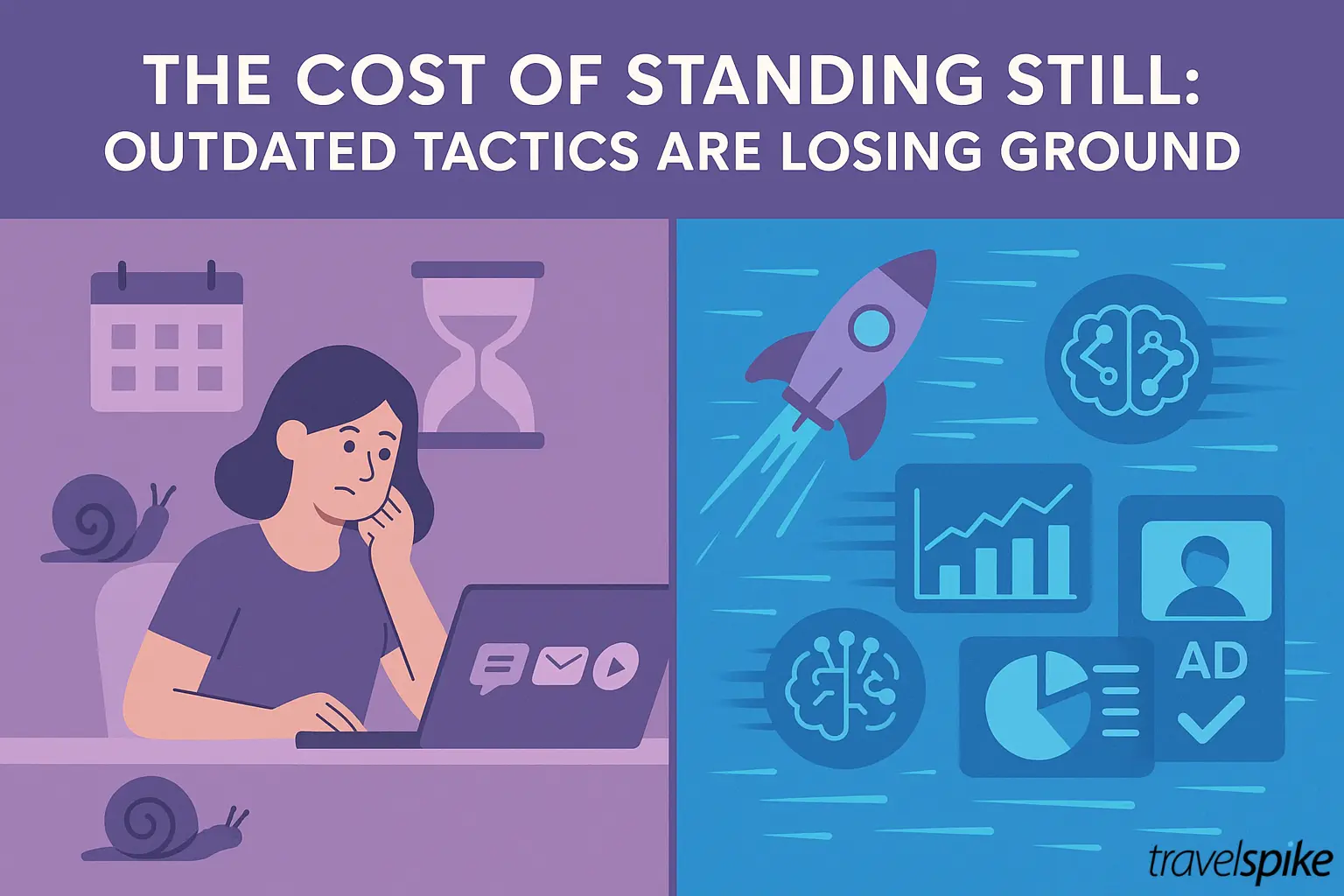
What “Future-Proof” Looks Like: So what does it mean to embrace this next era? It’s not about replacing your team with robots or chasing every shiny tech toy. It’s about layering smart technology onto sound strategy to amplify results. Here’s a snapshot of a future-proofed travel marketing approach:
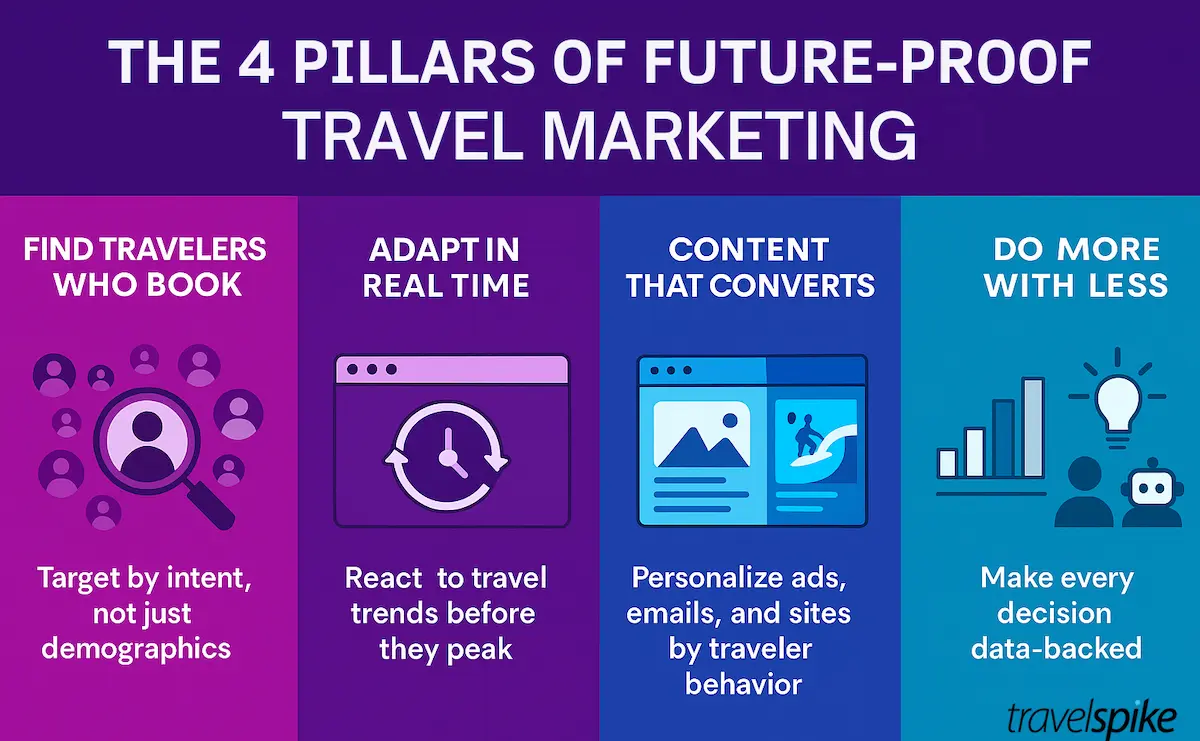
- AI-Enhanced Targeting: You still define your marketing goals and understand your audience segments, but you let AI tools like Travelogic™ extend your vision. They find patterns in traveler behavior you can’t see with the naked eye – maybe identifying a niche segment of urban millennials without kids who, data shows, are highly likely to take weekend trips in shoulder season. Ten years ago, you’d target big demographics and miss these micro-audiences; today, AI ensures you find the convertible customers. This means every campaign is hitting the people with the highest propensity to book, not just a broad bucket of “maybe interested” folks.
- Real-Time Adaptability: Future-proof campaigns are alive. They shift and re-shape based on real-world signals. Using YODA or analogous AI optimization, your bids, budgets, and even creatives adjust on the fly. If a competitor’s flash sale suddenly floods the market, your campaign might automatically down-bid on certain keywords and pivot to push a different package where there’s less noise. If a new travel trend emerges (say, a TikTok video makes a hidden beach go viral), your always-on system catches the demand spike and allocates spend to capitalize on it this week, not next quarter. In essence, your marketing is never caught flat-footed – it’s responsive, nimble, and hyper-efficient with spend.
- Personalized, Dynamic Content Everywhere: From ads to email to website, personalization is standard. AI ensures that the creative a user sees is tailored to their profile and intent. This extends beyond ads – your website might reorganize content based on a visitor’s known interests (showing family-friendly activities up front to a mom, or surf lessons to a 20-something solo traveler). Your emails are triggered by behavior and filled with dynamic offers that reflect what that person wants. Achieving this at scale is no longer science fiction – tools exist now to make it practical. And it yields a virtuous cycle: better experience for the traveler, better conversion for you. (Remember, personalized offers can generate 3 times the ROI of generic ones.)
- Data-Driven Decision Making (Kill the Guesswork): The future belongs to marketers who treat data as their north star. Gut feeling and past experience are valuable, but you validate every important decision with data. You’re running experiments constantly (A/B tests, multivariate tests), and you let results guide you – even if they defy old assumptions. Maybe you always thought European travelers book way ahead, but your data now shows a subset who book last-minute city breaks. Boom – you spin up a quick campaign to target that behavior. Being data-driven also means you invest in attribution and analytics; you know exactly which touchpoints drive value thanks to AI that can assign credit across a complex journey. This lets you optimize your media mix confidently and justify your budget with clear ROI metrics (music to any CMO’s ears).
- Lean, Mean, and Collaborative: An often overlooked aspect – future-proof marketing teams work smarter, not harder. AI and automation free your human talent from drudgery. A small team can manage dozens of campaigns because AI handles the repetitive tasks (optimizing bids, pulling reports, updating segments). For example, at TravelSpike our team of 10 can manage 45+ active campaigns simultaneously – something that would have taken a whole floor of people in the old days. This means you don’t necessarily need a huge staff or budget to compete; you need the right tech leverage. It also means your team’s time is reallocated to strategy, creativity, partnership-building – the human elements that AI can’t replace. The companies nailing this are seeing not just better marketing results, but happier, less-overwhelmed marketing teams.
Lead the Pack (Don’t Chase It): Adopting AI and intent-driven strategies isn’t about jumping on a trend; it’s about establishing a lasting advantage. We often say, the goal is to make your marketing so effective and efficient that competitors ask “What’s their secret sauce?” Right now, we’re in a period where these tools are still an edge for those who use them well. But in a few years, they’ll be ubiquitous. The early adopters are reaping outsized gains – some travel brands using AI report 25% higher booking rates after implementation, and countless case studies show dramatic drops in acquisition cost when focusing on better targeting. By leading now, you set yourself up to dominate your segment. By waiting, you’ll be scrambling to catch up later under more pressure. It’s akin to the early days of online marketing – those who embraced digital first in travel (think OTAs in early 2000s) soared, those who hesitated fell behind. We’re at a similar crossroads with AI and data-driven personalization.
The future of travel marketing will be intent-focused, AI-optimized, and personalization-rich. Brands that combine these will deliver such seamless, relevant experiences that customers gravitate to them naturally. And isn’t that what we all want? Marketing that doesn’t feel like “marketing” to the customer, but rather helpful inspiration and timely service. That’s a recipe for loyalty, repeat visits, and strong advocacy – the endgame for any travel brand.
🎯 Don’t Just Adapt – Thrive. The next era is here, and it’s ready for you. If you’re reading this thinking “we need to do this, but how?”, let’s chat. No hype, just a clear plan to future-proof your marketing and outpace the competition. The brands that act today will be the success stories of tomorrow – let’s make sure you’re one of them.