
2026 Travel Marketing Trends: Why “Reasons to Go” Will Outperform Destinations
Travel demand isn’t slowing in 2026. But the why behind it is changing.
For years, travel marketing centered around place:
- The beach.
- The skyline.
- The mountains.
- The hotel.
But as we move deeper into 2026 with the World Cup, America250, major concerts, sports, cultural festivals, and seasonal events stacking the calendar. Travelers aren’t just choosing destinations.
They’re choosing reasons to go.
Welcome to the Reason-to-Go Economy.
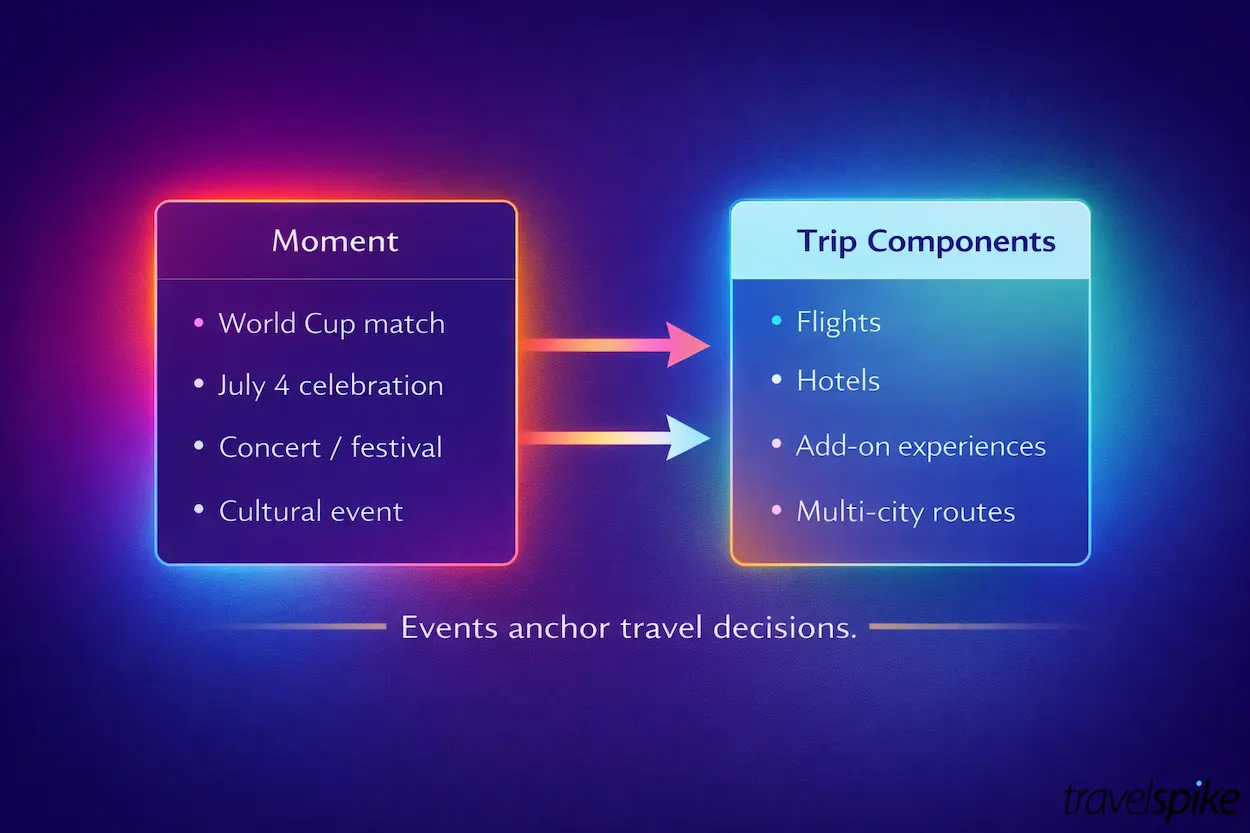
Travelers Are Anchoring Trips to Moments
Open any travel search pattern right now and you’ll notice something:
Searches are increasingly tied to:
- “World Cup host city travel”
- “Fourth of July celebration events”
- “Best places to travel for [concert/festival]”
- “Where to stay near…”
This isn’t casual browsing. It’s intent anchored to an event.
Travelers are no longer asking:
“Where should we go this summer?”
They’re asking:
“What’s happening — and how do we be there?”
That shift changes how you market.
Why This Matters for Spring + Summer 2026
Summer 2026 isn’t just another seasonal peak. It’s layered:
- FIFA World Cup across North America
- America250 celebrations nationwide
- Normal summer travel
- Sports, music tours, cultural moments
That creates overlapping demand curves.
The brands that win won’t just say “Visit us this summer.”
They’ll say:
- “Be here when it happens.”
- “Turn the game into a getaway.”
- “Make this the summer you remember.”
This is emotional positioning, but it’s also strategic.
The Smart Move: Market the Moment, Not the Map
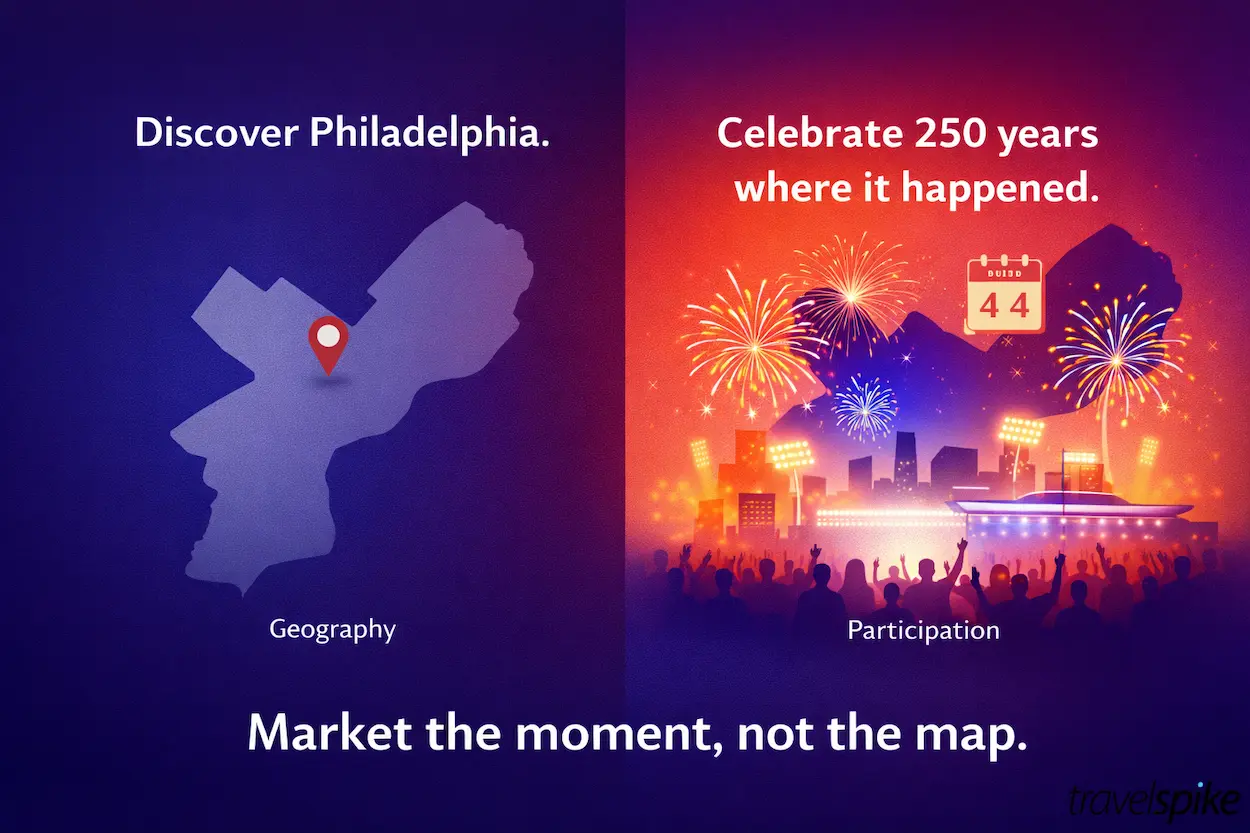
Traditional travel ads sell geography. Modern travel ads sell participation.
Instead of:
“Discover Philadelphia.”
Try:
“Celebrate 250 years of history where it actually happened.”
Instead of:
“Stay in Dallas.”
Try:
“Make your World Cup trip smarter, stay 20 minutes from the stadium and skip the surge.”
The difference? Specificity. Moments reduce indecision.
AI Makes “Moment Marketing” Scalable
Here’s where it gets interesting. The reason-to-go economy isn’t just creative strategy, it’s targeting strategy.
If someone is:
- consuming sports content,
- reading about event tickets,
- searching for specific dates,
- engaging with summer travel inspiration,
Those signals matter. Behavior > demographics.
This is where predictive modeling becomes powerful. Platforms built around travel-specific behavior signals like Travelogic™ can prioritize audiences based on likelihood to travel tied to event timing, not just broad “travel interest.”
That means:
- less wasted reach,
- stronger mid-funnel engagement,
- better ROAS when demand spikes.
You’re not chasing “travelers.” You’re activating “event-driven travelers.” Big difference.
CTV + Culture: Where Attention Still Lives
Another trend emerging right now? Premium live environments are regaining power.
Live sports. Streaming premieres. Major cultural broadcasts.
These are environments where:
- attention is concentrated,
- devices are shared,
- and second-screen behavior is high.
When a travel brand aligns with a cultural moment in those environments, it doesn’t feel like interruption, it feels like relevance.
Think:
- “Your trip starts here.”
- “Make this weekend count.”
- “Be part of the story.”
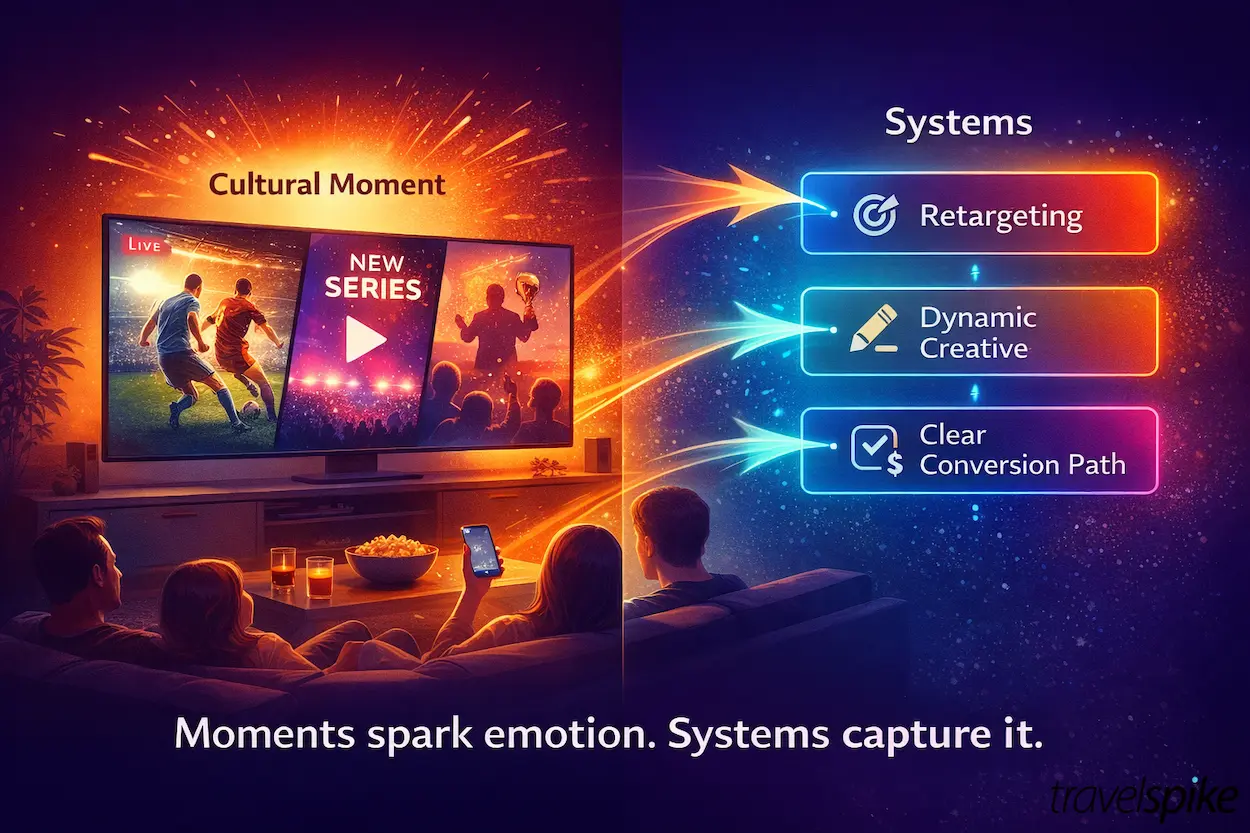
The key is pairing that top-funnel inspiration with:
- retargeting,
- dynamic creative,
- and clear conversion paths.
Moments spark emotion. Systems capture it.
Why This Trend Is Bigger Than 2026
Event-driven travel isn’t temporary.
Consumers increasingly:
- tie spending to experiences,
- prioritize memory-making over material purchases,
- and plan around culture instead of calendar.
The travel brands that build a repeatable “moment marketing” framework will outperform brands that only run generic seasonal campaigns.
That framework looks like:
- Identify high-intent cultural anchors
- Build event-specific messaging lanes
- Use behavioral signals to prioritize in-market audiences
- Personalize landing experiences
- Retarget aggressively during decision windows
It’s not more complicated. It’s just more precise.
The Takeaway
Summer 2026 will be big. But scale alone doesn’t create ROI.
Relevance does.
The destinations, hotels, airlines, and attractions that win won’t simply show up during peak season.
They’ll show up when travelers feel something, and they’ll make it easy to turn that feeling into a booking.
That’s the reason-to-go advantage.
And if you’re planning right now, you’re still early enough to build it.