
2026 Travel Marketing Forecast: What Will Actually Move the Needle This Year
Every year brings a flurry of trend forecasts, but as a travel marketer, you only care about one thing: what will actually drive results? As we look to 2026, it’s time to cut through the hype. From DMOs to hotel chains, everyone’s asking which emerging strategies will truly move the needle on bookings, engagement, and ROI; versus which are just buzzwords. In this futurecasting exercise, we’ll zero in on the trends and shifts poised to have real impact throughout 2026. Here’s where travel marketing is headed, and how you can stay ahead of the curve.
1. AI-Powered Targeting Becomes a ROI Engine
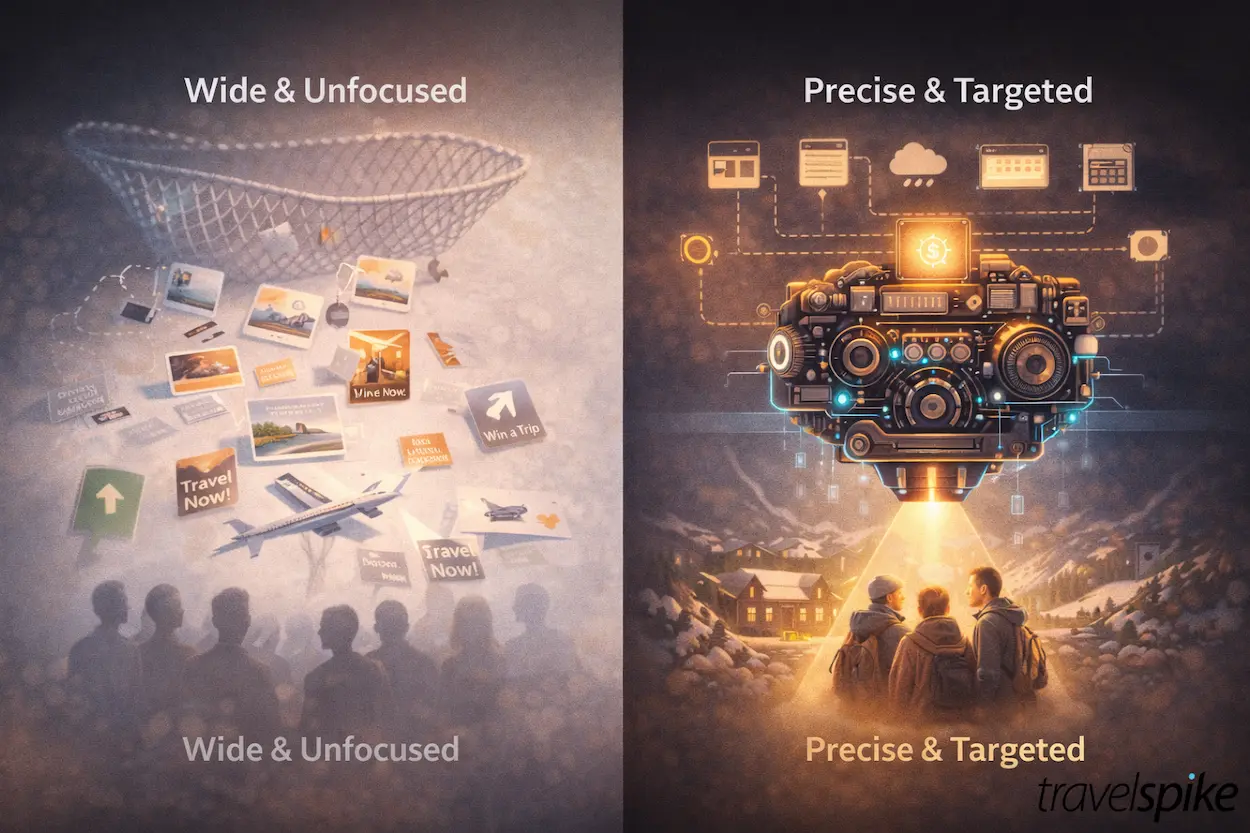
We’ve heard for years that AI will transform marketing, but 2026 is the year it actually delivers in travel. The difference? Precise, predictive targeting at scale. Instead of generic demographic slices (“women 25-34 interested in travel”), AI lets us target intent, timing, and context with uncanny accuracy. Platforms like Travelogic™ are already leveraging predictive algorithms to analyze millions of data points. From search behavior, to past booking patterns and the ability to score which audiences are most likely to convert next. The results are campaigns that waste less budget on the indifferent, and focuses spend on travelers who are ready to book now.
Expect AI-driven tools to optimize every step of the funnel in 2026. Dynamic creative that auto-tailors images or copy to each viewer’s profile? Check. Chatbots and voice assistants recommending trips (and upselling add-ons) based on real-time conversation context? Already happening. Crucially, AI will help travel marketers anticipate demand spikes before they happen. For example, predictive models might flag an uptick in interest for alpine resorts if an early snowstorm is forecasted, allowing you to launch targeted promos instantly. By using AI for smarter timing and placement, brands can capture travelers’ attention at the exact moment they’re inclined to convert.
TLDR: Better targeting = better ROI, period. When DMOs activate high-intent audiences instead of casting a wide net, they see tangible lifts in engagement and booking rates. In 2026, AI isn’t hype; it’s horsepower for your marketing engine.
2. First-Party Data (and the Death of Cookies) Separates Winners from Losers
If 2025 was a dress rehearsal for the cookieless future, 2026 will be opening night. Third-party cookies, which long enabled easy ad targeting, are either gone or going fast due to privacy changes. That puts first-party data: the information you collect directly from your customers, firmly in the spotlight. Travel brands that spent the last couple years building up robust email lists, loyalty programs, and direct booking data will now reap the rewards. Those who didn’t, may feel like their targeting capabilities suddenly went dark.
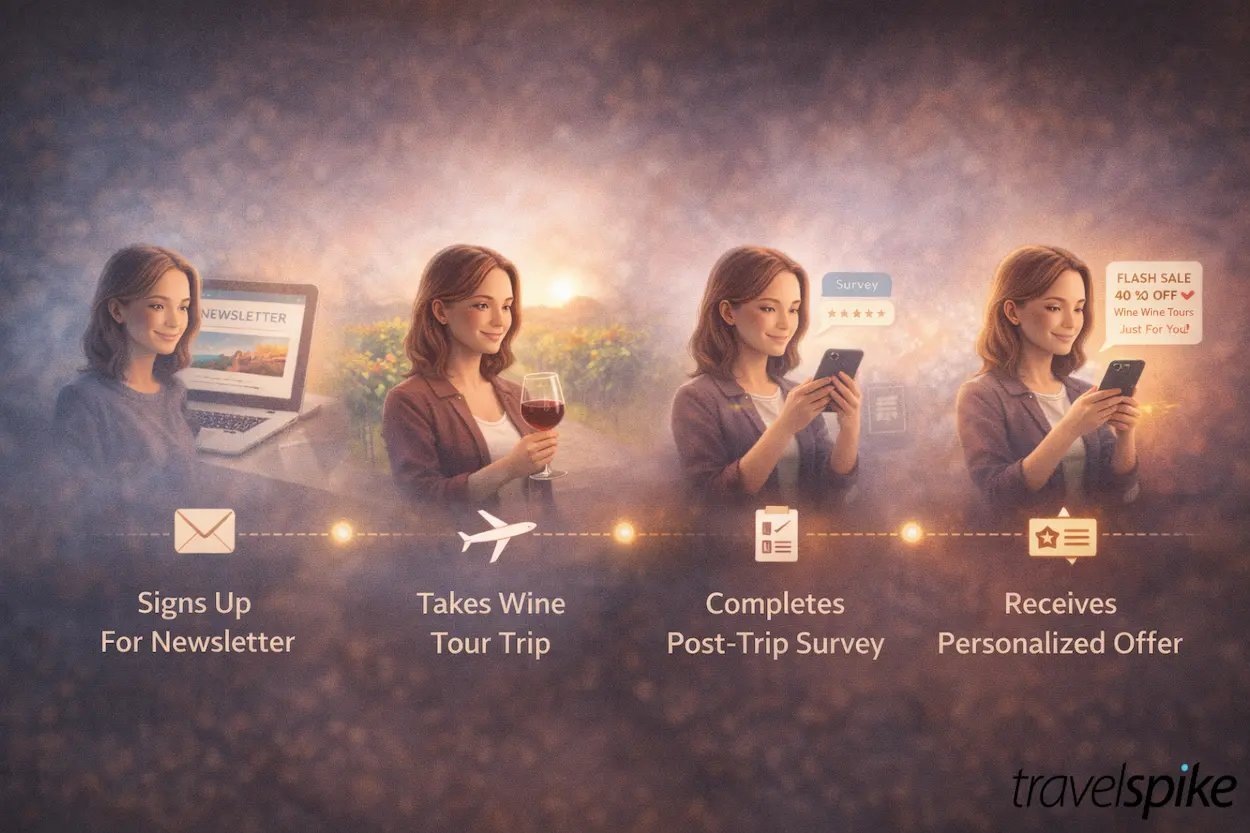
Why is this trend a game-changer? Because owning the relationship with the traveler is more critical than ever. More Trips, More Touchpoints: Smart travel marketers are using owned channels to engage travelers throughout the journey, from a trip inspiration newsletter (capturing that email sign-up) to a post-trip SMS survey (gathering feedback and preferences). Each interaction is a chance to learn more about the traveler and tailor future offers. During 2026, the ability to create micro-segments (e.g., “West Coast foodies who took a wine tour in the last 18 months”) based on first-party data will distinguish the campaigns that feel personal from those that feel like spray-and-pray.
Moreover, first-party data fuels your AI and marketing tech. A predictive support tool like Travelogic™ is only as good as the data feeding it. With richer proprietary data, your AI models can predict and personalize with far greater accuracy. It’s no wonder that across industries, companies from The New York Times to Disney are aggressively prioritizing first-party data strategies ahead of cookie deprecation, travel is no exception.
TLDR: Relying on intermediaries (OTAs, big ad platforms) siphons off margin and insight. Brands that cultivate direct relationships can market more cost-effectively and convert higher. For example, an airline with a strong loyalty app can push a flash sale notification to a targeted group (say, families who flew last spring break) and fill seats quickly, all without paying third-party ad fees. In 2026, expect higher ROI from owned audiences, and conversely, rising acquisition costs for those who must pay to reach travelers that used to be accessible via cookies.
3. Experience-First Marketing Converts Better than Price-First
Travel marketing is shifting from selling a destination or a deal, to selling an experience and a feeling. “Experience-first marketing” means the focus of campaigns is on the rich, unique, emotional payoff the traveler gets, rather than the technical specs or discounts. In practice, this looks like: instead of advertising “5-night package in Bali – $999”, the campaign leads with the narrative: “Find serenity in a Balinese wellness retreat, complete with sunrise yoga facing the volcano.” The price or call-to-action follows the story, not the other way around.
Several drivers make this more than just a fluffy idea. For one, travelers (especially younger generations) show a clear preference for brands that connect with their why. 2026 is being heralded as the “Year of the Whycation”, where travelers start with purpose: reconnecting with family, exploring heritage, improving health, etc. According to Hilton’s 2026 trends report, globetrotters are increasingly asking “why am I traveling?” before “where am I going,” signaling a movement toward intentional trips. For travel marketers, aligning your messaging to these motivations is key. If 2025 taught us anything, it’s that people remember how you made them feel in your marketing. An authentic story or a relatable moment can be far more persuasive than a slew of bullet-point amenities.
Additionally, “experience-first” means showcasing user and community stories. We’ve seen brands like Airbnb succeed by marketing the experience (living like a local, unique stays) over the commodity (a room night). Destinations are increasingly highlighting travelers’ testimonials, local ambassador stories, or immersive videos that let viewers virtually experience a slice of the trip. Notably, trust plays a big role here: content that feels human and real wins trust, whereas overtly polished sales pitches can breed skepticism.
TLDR: Emotion drives decisions. A compelling narrative about a cultural festival or a transformative hike creates desire and inspiration, which ultimately drive bookings more effectively than a generic discount banner. Moreover, experience-first content tends to be highly shareable and engaging, extending your reach organically. For example, a DMO that produces a heartfelt short video of a traveler rediscovering their ancestral roots in the destination might spark hundreds of shares, each one a tacit endorsement that attracts new visitors. The ROI here is in meaningful engagement that leads to conversion. During 2026, expect the highest-performing campaigns to be those that make people say “I want that experience” rather than “That’s a good deal, maybe someday.”

4. Big Screen, Small Screen Synergy: CTV and Mobile for Full-Funnel Impact
One of the most actionable shifts for 2026 is how travel marketers orchestrate media channels. We’re seeing a powerful synergy between Connected TV (big screens) and mobile/social (small screens) that drives travelers from inspiration to booking. In fact, the mantra emerging is: “Big screens inspire. Small screens convert.” Here’s what that means.
Connected TV (CTV) – streaming video ads on platforms like Hulu, Roku, or YouTube on smart TVs, has become a mainstream channel for travel advertising. With ~88% of U.S. households now having CTV access in 2025 and streaming usage at an all-time high, travel brands are investing accordingly. CTV is ideal for top-of-funnel inspiration: you can tell a story with sight, sound, and motion on the largest screen in the house, capturing viewers’ imaginations. For example, a tourism board can run a 30-second spot showing the majestic landscapes and vibrant culture of their region during a streaming TV show, planting the seed of interest. These ads aren’t cheap, but they offer unprecedented targeting (by episode, geography, interest, etc.) and they’re actually measurable! A huge improvement over traditional linear TV. Importantly, CTV viewers are often in a relaxed, receptive mindset, meaning your travel dreamscapes have a strong emotional impact.
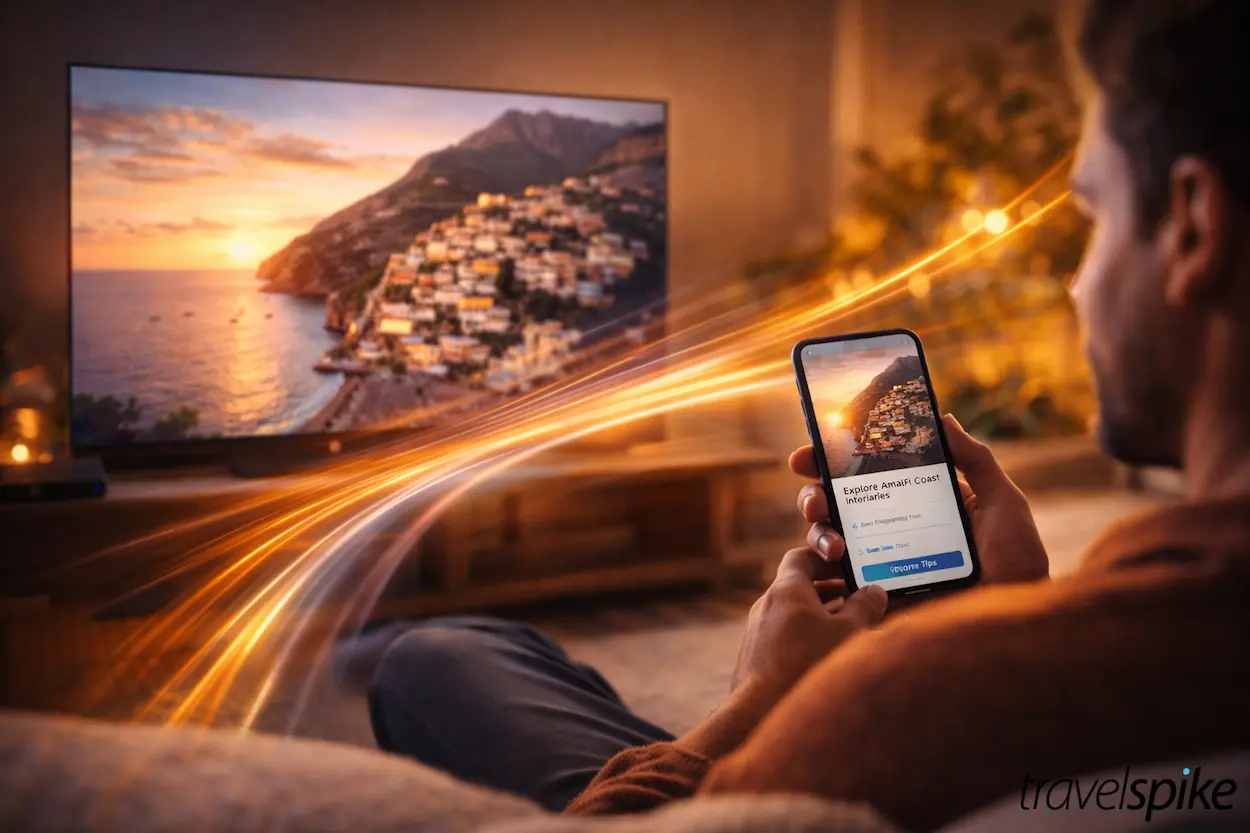
Now pair that with the small screen, mobile devices and social media. After seeing that inspiring CTV ad, a potential traveler might later get a follow-up on their phone: maybe a social ad with a specific call-to-action (“Explore travel itineraries for that destination”) or a YouTube retargeting video. This is where performance marketing kicks in to seal the deal. Mobile is where people research and book trips, so it’s the natural place to retarget interest generated from the big screen. Perhaps your CTV ad drew them to your website; your job now is to re-engage them on mobile with a timely offer or more details, via Instagram, Google search ads, or even a well-timed email.
TLDR: This one-two punch mirrors how consumers actually behave. They discover on big screens, decide and act on small screens. By aligning your media plan to this, you drive a full-funnel effect: increased brand interest translating to more conversions. The numbers back it up, data shows CTV ad spending is soaring (projected to hit $33 billion in 2025 in the U.S. as more advertisers follow viewers to streaming) and it’s especially effective when integrated with digital. For instance, a hotel chain reported significantly higher booking rates when users were exposed to both a CTV brand ad and a mobile retargeting ad, compared to mobile ads alone.
In 2026, expect more travel marketers to allocate budget to CTV + digital packages. At TravelSpike, we’ve seen clients have success using our platform to run connected TV campaigns around key tentpole events (Olympics, World Cup, etc.) and then using Travelogic™ data to retarget those exposed audiences online. The key takeaway: blending channels isn’t optional, it’s the performance edge. If you’re still running siloed TV or social campaigns without linking them, now’s the time to integrate and watch your marketing “full-court press” drive real results.
5. Voice and Visual Search Optimization – The New Discovery Ecosystem
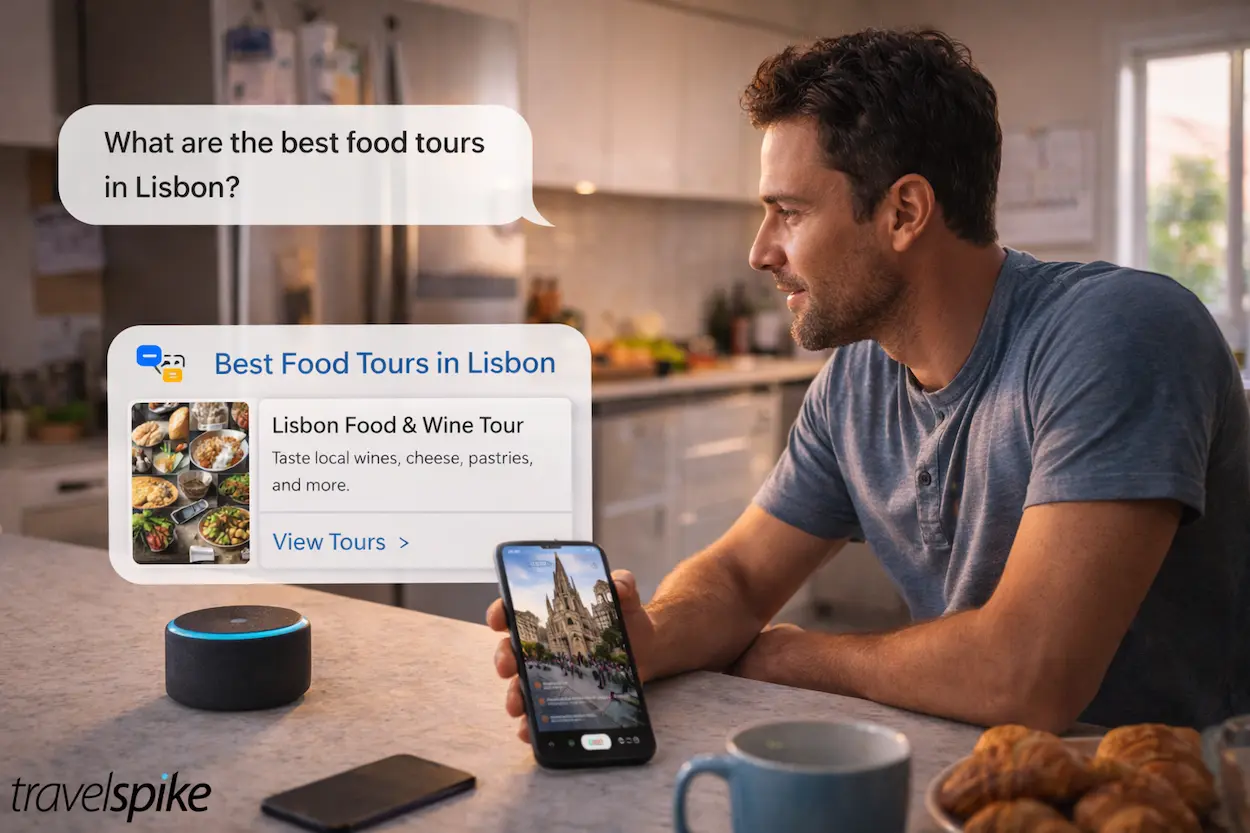
Travel discovery is no longer confined to typing into a search bar. In 2026, the rise of voice search, visual search, and AI-driven answer engines will dramatically influence which brands get noticed. Already, a significant share of travel queries are happening via voice assistants, travelers asking Alexa or Siri, “What are the best boutique hotels in New Orleans?” or “Find flights to Cancun next weekend.” Likewise, visual search is gaining traction: think travelers snapping a photo of a landmark with Google Lens or Pinterest’s Lens to learn what it is and find tours or info related to it. On top of that, Google and Bing’s AI summary features (and tools like ChatGPT’s browsing plugins) are starting to give one-shot answers to travel questions, pulling from web content.
For travel marketers, optimizing for these new discovery methods is critical. It means structuring your content in Q&A formats, using natural language that matches how people speak questions. For voice, ensure your SEO includes long-tail, conversational phrases (“where can I find live music in Nashville tonight?”) so that your content is the one Alexa reads off. For visual, make sure your images are well-tagged and that you have content ready to catch those visual searches (e.g., a rich description of that landmark and why it’s worth visiting, plus a call-to-action like “Book a tour”). Additionally, schema markup and structured data on your site help AI engines digest your information and present it in their answers.
This isn’t futuristic fluff, it’s meeting travelers where they are. A 2025 study showed voice queries for travel are climbing steadily, and anecdotal evidence suggests more travelers use features like Google Lens when exploring cities (snap a pic of a restaurant to see reviews, etc.). DMOs, in particular, should pay attention: many official destination sites have the factual info that voice assistants hunger for. If you provide clean, structured answers (operating hours, top attractions, local tips), you increase the odds that the AI “concierge” will surface your content to the user.
TLDR: Simply put, if you’re not optimized for these emerging search modes, you risk invisibility in key moments. On the flip side, early adopters can gain an outsized share of organic reach. For example, a tour operator that crafts a FAQ page with questions like “What are the must-see hidden gems in Paris?” might get picked up verbatim by an AI overview on “hidden gems in Paris,” driving a surge of traffic and leads their way. In 2026, capturing demand isn’t just about Google rank anymore. It’s about being the trusted answer wherever the question is asked. Those who do will see more high-intent traffic flowing in without proportional increases in ad spend, effectively boosting marketing efficiency.
Looking Ahead: Focus on What Works
The future isn’t about chasing every shiny object, it’s about honing in on the strategies that truly impact your bottom line. In 2026, travel marketing will be defined by smarter targeting, genuine connections, integrated media, and adaptive discovery. By prioritizing AI-driven insights, building a fortress of first-party data, crafting experience-led messaging, leveraging media synergies, and optimizing for how travelers really search, you’ll be investing in tactics that deliver real returns.
At TravelSpike, our mission is to help travel brands and destinations cut through the noise and execute on what works. Whether through our predictive Travelogic™ platform or our full-funnel campaign expertise, we empower you to focus on performance.
As you plan for 2026, consider partnering with a team that’s already living in that future. Let’s make those trend forecasts come true, together, with strategies that drive travelers to your door (and onto your flights, into your hotels, and beyond). The future of travel marketing is promising and it starts now, with you taking action on the insights that matter most.